
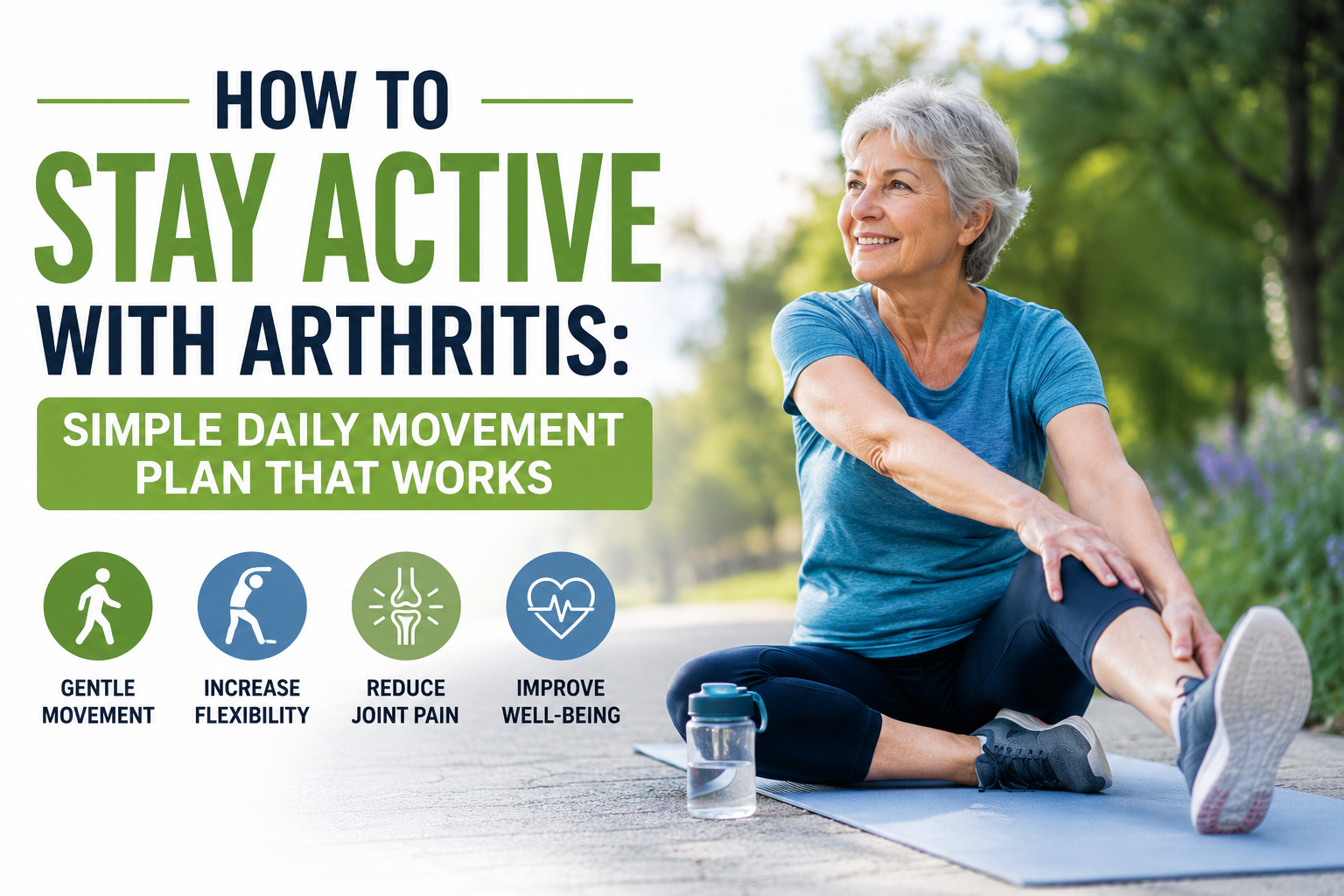
Living with arthritis can feel frustrating. One day your joints cooperate. The next day your knees sound like a bowl of breakfast cereal every time you stand up. Many people stop moving because they fear pain or joint damage. Ironically, that often makes arthritis worse.
Research consistently shows that regular movement helps reduce stiffness, improve mobility, support joint function, and lower pain levels for many people with arthritis. The key is not extreme workouts or fitness trends. The real solution is smart, consistent movement that fits your body and your lifestyle.
If you have been searching for how to stay active with arthritis without making your joints angry, this guide will help you build a realistic routine that actually works in daily life.
This arthritis activity guide focuses on sustainable habits, joint friendly movement, and practical strategies backed by trusted medical sources.
Why Movement Matters When You Have Arthritis

Many people think rest protects painful joints. Short rest periods can help during flare ups, but too much inactivity weakens muscles and stiffens joints.
Many women also notice increased stiffness and mobility issues during hormonal changes, especially after menopause. You can also read our guide on “Joint Pain After Menopause: Causes, Symptoms & Best Relief Tips.”
Movement supports your body in several ways:
- It keeps joints flexible
- It improves circulation
- It strengthens supporting muscles
- It reduces stiffness
- It helps maintain a healthy weight
- It improves mood and energy
Think of your joints like a rusty door hinge. Gentle movement acts like oil. Complete inactivity often makes everything feel tighter and more painful.
That does not mean you need to run marathons or join a bootcamp class filled with people named Chad yelling motivational quotes. Smart movement beats intense movement every time.
Understanding Arthritis Before Starting Exercise
Arthritis is not one single condition. The two most common forms are osteoarthritis and rheumatoid arthritis.
Osteoarthritis usually develops from wear and tear over time. Rheumatoid arthritis is an autoimmune condition where the immune system attacks joint tissues.
No matter the type, many people share common symptoms:
- Joint stiffness
- Swelling
- Pain
- Reduced mobility
- Fatigue
A successful daily movement arthritis plan should adapt to your symptoms instead of ignoring them.
Some days your body may feel strong and capable. Other days it may demand slower movement and extra recovery. Learning to adjust without quitting completely is one of the best living with arthritis tips you can learn.
The Biggest Mistake People Make With Arthritis
People often swing between two extremes.
They either avoid movement completely or overdo activity on good days.
Both approaches create problems.
If you stay inactive for long periods, muscles weaken and joints stiffen. If you suddenly do too much activity, your joints may flare up for days afterward.
Consistency matters more than intensity.
A realistic arthritis activity guide focuses on manageable daily habits instead of occasional heroic workouts.
How to Stay Active With Arthritis Safely
Before starting a new exercise routine, talk with your doctor or physical therapist if you have severe pain, advanced arthritis, or other medical conditions.
Once you get medical guidance, focus on four core movement categories:
Flexibility Exercises
Gentle stretching improves mobility and reduces stiffness.
Flexibility exercises work especially well in the morning when joints feel tight. Simple stretches for the neck, shoulders, hips, knees, and ankles can improve range of motion.
The <a href=”https://www.arthritis.org/health-wellness/healthy-living/physical-activity”>Arthritis Foundation</a> recommends regular stretching as part of an active lifestyle joints routine.
Try slow movements and avoid bouncing stretches. Stretching should feel gentle, not painful.
Strength Training
Stronger muscles reduce stress on painful joints.
You do not need heavy weights to build strength. Resistance bands, light dumbbells, or bodyweight exercises can help support joint stability.
Focus on controlled movements and proper form.
Good beginner exercises include:
- Chair squats
- Wall pushups
- Step ups
- Resistance band rows
- Leg raises
Two or three short strength sessions per week can support long term joint health.
Low Impact Cardio
Cardio improves heart health, stamina, and weight management without excessive joint stress.
Joint friendly cardio options include:
- Walking
- Swimming
- Cycling
- Water aerobics
- Elliptical training

Walking remains one of the easiest ways to stay active with arthritis because it requires little equipment and fits into daily life.
Even short walks count.
A ten minute walk after meals may feel more manageable than one long session.
Balance Exercises
Arthritis can affect stability and coordination. Balance exercises help reduce fall risk and improve confidence.
Simple exercises include:
- Standing on one foot
- Heel to toe walking
- Tai chi
- Gentle yoga
According to the <a href=”https://www.nia.nih.gov/health/exercise-physical-activity”>National Institute on Aging</a>, balance training becomes increasingly important as adults age.
A Realistic Daily Movement Plan for Arthritis
Many fitness articles sound like they were written by robots who believe everyone wakes up at 5 AM to drink green juice and do burpees.
Real life looks different.
People have work, stress, fatigue, bad sleep, family responsibilities, and joints that sometimes behave like grumpy coworkers.
This realistic daily movement arthritis plan focuses on practical consistency.
Morning Routine
Morning stiffness affects many people with arthritis.
Start slowly instead of jumping out of bed like an action movie character.
Begin with gentle movement for 5 to 10 minutes.
Try:
- Shoulder rolls
- Neck stretches
- Ankle circles
- Gentle knee bends
- Wrist stretches
A warm shower before movement may also reduce stiffness.
If possible, take a short walk in the morning sunlight. Walking helps loosen joints and improve circulation.
Midday Movement
Long sitting periods often worsen stiffness.
Try moving every 30 to 60 minutes throughout the day.
Simple movement breaks can include:
- Walking around the room
- Stretching your hips
- Standing during phone calls
- Light household activity
These small movement sessions matter more than people realize.
Research from the <a href=”https://www.mayoclinic.org/diseases-conditions/arthritis/in-depth/arthritis/art-20047971″>Mayo Clinic</a> suggests that regular movement helps reduce joint pain and fatigue.
Evening Activity
Evening movement should help the body relax instead of exhausting it.
Good evening options include:
- Gentle yoga
- Stretching
- Easy walking
- Water exercises
Avoid intense exercise close to bedtime if it interferes with sleep.
How to Exercise During Arthritis Flare Ups
Flare ups happen. They do not mean failure.
During painful periods, adjust activity instead of stopping completely.
You can often continue gentle movement such as:
- Range of motion exercises
- Slow walking
- Water therapy
- Gentle stretching
Reduce intensity and duration when needed.
The goal during flare ups is maintaining mobility without aggravating symptoms.
If pain sharply increases during activity and lasts for hours afterward, your body may need a lighter approach.
Best Activities for People With Arthritis
Some exercises place less stress on joints than others.
Walking
Walking remains one of the most accessible exercises for arthritis.
Start with short distances and supportive footwear.
Flat surfaces usually feel easier on knees and hips than uneven terrain.
Swimming and Water Aerobics
Water supports body weight and reduces joint pressure.
Many people with arthritis find water exercise more comfortable than land based activity.
Warm water pools may also help reduce stiffness.
Cycling
Stationary bikes and outdoor cycling provide low impact cardio.
Recumbent bikes may feel more comfortable for people with knee or back pain.
Tai Chi
Tai chi combines slow movement, balance, and body awareness.
Research published by the <a href=”https://www.rheumatology.org/”>American College of Rheumatology</a> supports tai chi as a helpful activity for improving function in some arthritis patients.
Yoga
Gentle yoga can improve flexibility and mobility.
Choose beginner or arthritis friendly classes when possible.
Avoid forcing positions that strain painful joints.

Weight Management and Arthritis
Extra body weight increases pressure on weight bearing joints like the knees and hips.
According to the <a href=”https://www.niams.nih.gov/health-topics/osteoarthritis”>National Institute of Arthritis and Musculoskeletal and Skin Diseases</a>, even modest weight loss can reduce stress on joints.
Movement and nutrition work together.
You do not need a perfect diet. Focus on sustainable habits like:
- Eating more vegetables
- Choosing lean proteins
- Limiting highly processed foods
- Staying hydrated
An active lifestyle joints strategy becomes easier when your body carries less joint stress.
The Mental Side of Staying Active With Arthritis
Arthritis affects more than joints.
Chronic pain can affect motivation, confidence, and mental health.
Many people feel discouraged when activity becomes harder than it used to be.
That emotional response is normal.
Instead of comparing yourself to your younger self or to fitness influencers online, focus on progress that matters in real life.
Can you walk longer without stiffness?
Can you climb stairs more comfortably?
Can you move with less fear?
Those improvements matter.
Small wins build momentum.
Common Exercise Myths About Arthritis
“Exercise Wears Out Your Joints”
Appropriate movement actually supports joint health.
High impact overtraining may cause issues, but moderate activity helps most people manage symptoms more effectively.
“Pain Means You Should Stop Completely”
Mild discomfort during movement does not always mean damage.
Sharp or severe pain deserves attention, but gentle activity often helps stiffness improve.
“You Need Intense Workouts to See Results”
Consistency beats intensity.
A realistic arthritis activity guide focuses on sustainable movement habits.
Ten minutes daily often helps more than one exhausting workout every two weeks.
Tips for Staying Consistent
Building a long term routine matters more than short bursts of motivation.
Here are some practical living with arthritis tips that support consistency:
Choose activities you enjoy. If you hate the workout, you probably will not continue it.
Schedule movement into your day like an appointment.
Use supportive shoes and comfortable clothing.
Track progress based on mobility and energy instead of only weight or fitness goals.
Listen to your body without becoming afraid of movement.
Celebrate small improvements.
Some days your workout may simply be walking around the block without feeling stiff afterward. That still counts.
When to Seek Medical Advice
Talk with your healthcare provider if you experience:
- Sudden swelling
- Severe joint pain
- Significant mobility loss
- Pain that worsens consistently with exercise
- New symptoms
A physical therapist can also help create a personalized daily movement arthritis plan.
Frequently Asked Questions
How can I stay active with arthritis without making joint pain worse?
The best way to stay active with arthritis is to choose low impact activities like walking, swimming, cycling, and gentle stretching. Start slowly, listen to your body, and stay consistent with daily movement. Regular exercise can help reduce stiffness, strengthen muscles, and improve joint flexibility over time.
What is the best daily movement plan for arthritis?
A good daily movement arthritis plan includes light stretching in the morning, short walking sessions during the day, and gentle exercises like yoga or water aerobics in the evening. The goal is to move regularly without overloading painful joints.
Is walking good for people living with arthritis?
Yes, walking is one of the best activities for people living with arthritis. Walking supports joint mobility, improves circulation, helps manage weight, and strengthens muscles around the joints. Supportive shoes and shorter walking sessions can make movement more comfortable.
How much exercise should someone with arthritis do daily?
Most health experts recommend at least 150 minutes of moderate physical activity per week for adults with arthritis. That equals about 20 to 30 minutes of movement daily. People with arthritis can split exercise into shorter sessions to reduce joint stress and stay active more comfortably.
What exercises should people with arthritis avoid?
People with arthritis should avoid high impact exercises that put excessive stress on painful joints, especially during flare ups. Activities like heavy jumping, intense running, or deep squats may worsen discomfort for some individuals. Low impact exercises are usually safer for maintaining an active lifestyle joints routine.
Final Thoughts
Learning how to stay active with arthritis does not require perfection. It requires patience, consistency, and realistic expectations.
You do not need extreme workouts, expensive gadgets, or trendy fitness challenges.
Your joints usually respond better to steady movement, smart recovery, and daily habits that support mobility over time.
Some days will feel easier than others. That is normal.
The goal is not becoming pain free overnight. The goal is maintaining strength, mobility, confidence, and independence as much as possible.
A sustainable active lifestyle joints routine can help you move better, feel stronger, and improve your quality of life without overwhelming your body.
Start small. Stay consistent. Your future joints will probably appreciate the effort, even if they still complain a little during rainy weather.
Sources
Centers for Disease Control and Prevention (CDC) – Physical Activity and Arthritis
Arthritis Foundation – Physical Activity for Arthritis
National Institute on Aging – Exercise and Physical Activity
Mayo Clinic – Arthritis Exercise Benefits
American College of Rheumatology – Patient Resources
National Institute of Arthritis and Musculoskeletal and Skin Diseases – Osteoarthritis
Author Bio
Jennifer Collins is a wellness researcher and natural health writer focused on adults over 40. With 3+ years of experience in digital health content, Jennifer specializes in making science-backed nutrition and lifestyle strategies easy to follow and apply.
Health Disclaimer
This content is for informational purposes only and is not intended to diagnose, treat, or cure any disease. Always consult your healthcare provider before making changes to your diet or health