
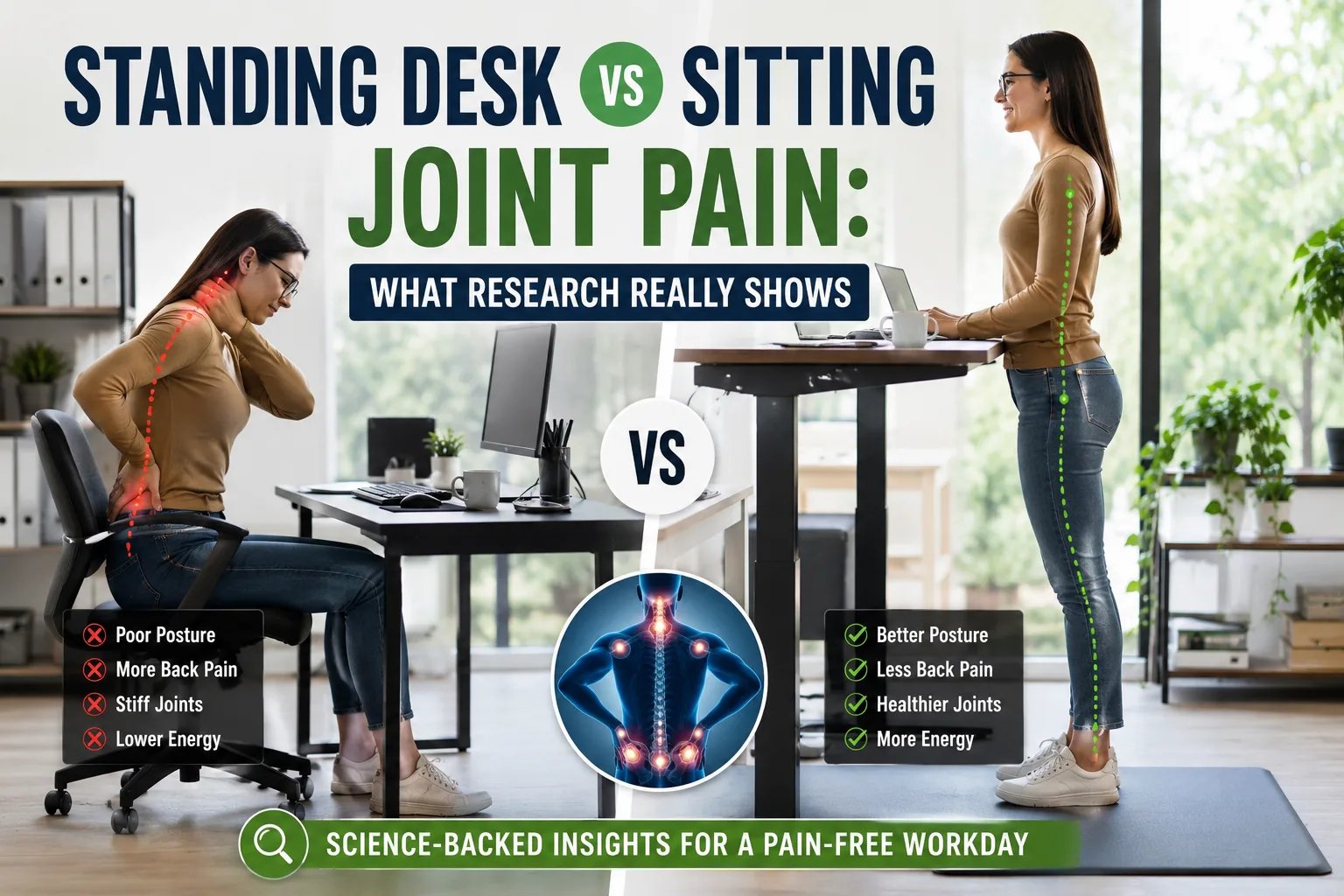
If your back feels stiff after work or your knees complain louder than your boss during Monday meetings, you are not alone. Millions of people spend long hours at desks every day, and many now ask the same question: does a standing desk really help, or does sitting remain the better option for joint comfort?
The debate around standing desk vs sitting joint pain has grown fast over the last decade. Social media influencers praise standing desks like miracle machines. Office workers post dramatic “before and after posture” photos. Meanwhile, some experts warn that standing too long can also create pain.
So, what does the actual research show?
The answer sits somewhere in the middle. Standing all day is not the solution. Sitting all day is not great either. Your body wants movement, variety, and proper support. Research consistently shows that alternating between sitting and standing works better for most people than doing either one for hours without breaks.
This guide explains what science says about standing desks, posture, ergonomic joint health, and how to create a desk setup that supports your body instead of punishing it.
Table of Contents
Why Sitting for Long Hours Causes Back and Joint Problems
Human bodies did not evolve to stay frozen in office chairs for eight or ten hours daily. Long periods of sitting reduce muscle activity, tighten hip flexors, and place pressure on the lower spine.
Researchers from the Mayo Clinic explain that prolonged sitting increases stress on spinal discs and weakens core muscles over time. Poor sitting posture also affects neck alignment, shoulder tension, and joint mobility.
Many office workers lean forward while typing, crane their neck toward screens, or slump into chairs after a few hours. That combination often creates what physical therapists call “desk posture syndrome.”
The result can include:
- Lower back stiffness
- Neck and shoulder pain
- Hip tightness
- Knee discomfort
- Wrist strain
- Reduced circulation
A poor desk setup joint pain issue usually develops slowly. People rarely wake up one morning with severe posture problems. Instead, pain builds gradually from repeated habits.
Research published in the journal Occupational and Environmental Medicine found that prolonged sedentary behavior strongly relates to musculoskeletal discomfort, especially in the lower back and neck.
Your body likes motion. Sitting removes much of that natural movement.
Does a Standing Desk Help Back Pain?
The short answer is yes, but only when used correctly.
Several studies suggest that standing desks may reduce discomfort in the lower back and shoulders. Researchers from the Centers for Disease Control and Prevention studied workers using sit stand desks and found a significant reduction in upper back and neck pain after several weeks.
The keyword here is “sit stand.”
A standing desk back pain benefit usually appears when users alternate positions throughout the day. Standing for short periods activates muscles, improves posture awareness, and reduces continuous pressure on the spine.
However, standing nonstop creates its own issues.
People who stand too long may develop:
- Foot pain
- Knee strain
- Leg fatigue
- Lower back pressure
- Swollen ankles
Your body does not enjoy extremes. Think of posture like your favorite playlist. Repeating one song for eight hours eventually becomes unbearable.
Experts from Harvard Health recommend changing positions regularly instead of staying seated or standing continuously. Movement appears more important than the actual position itself.
Standing Desk vs Sitting Joint Pain: What Research Really Says
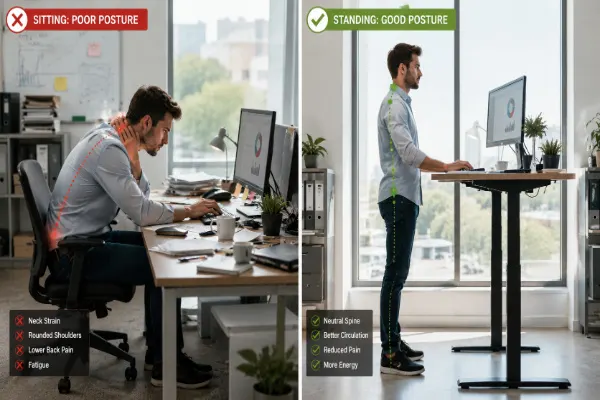
The most reliable studies do not support an “all standing” lifestyle. Instead, they support movement and flexibility.
A 2021 review published in Applied Ergonomics examined standing desks and musculoskeletal health outcomes. Researchers found moderate evidence that sit stand workstations reduce discomfort in the lower back. However, they also noted that prolonged standing may increase leg discomfort.
This matters because many people misunderstand ergonomic advice. Buying an expensive standing desk does not magically erase years of poor posture joint health habits.
You still need:
- Correct monitor height
- Proper keyboard placement
- Supportive footwear
- Regular movement breaks
- Healthy posture habits
Standing desks work best as tools, not cures.
Research from Cornell University also suggests that alternating between sitting and standing every 30 to 60 minutes may improve comfort and productivity better than static positioning.
That finding aligns with what physical therapists often recommend in real life.
How Poor Posture Affects Joint Health
Posture influences almost every joint in the body.
When your head leans forward while working, your neck supports extra weight. According to the Cleveland Clinic, every inch of forward head posture increases strain on cervical spine muscles.
Poor posture joint health problems often spread through connected muscle groups. A slouched upper back changes shoulder mechanics. Tight hips alter knee alignment. Weak core muscles force the lower back to compensate.
This chain reaction explains why desk workers sometimes experience pain in multiple areas at once.
Bad posture may contribute to:
- Spinal compression
- Shoulder impingement
- Hip tightness
- Knee stress
- Wrist inflammation
Ergonomic joint health depends on alignment and movement. Your joints perform best when muscles share the workload evenly.
Think of posture like stacking blocks. When alignment shifts, pressure spreads unevenly through the structure.
Poor desk posture can also trigger muscle tension and stiffness in the upper spine. Many office workers experience discomfort similar to Upper Back Pain Between Shoulder Blades: Causes, Symptoms & Quick Relief after long hours at a desk.
Standing Desk Back Pain: Common Mistakes People Make
Many users expect instant relief after switching to standing desks. Unfortunately, poor setup habits can create new pain instead.
One major mistake involves standing too long during the first week. Your muscles need time to adapt. Standing all day immediately often overwhelms the feet, calves, and lower back.
Another common issue involves incorrect screen height.
Your monitor should sit at eye level. If it sits too low, your neck bends forward constantly. That posture increases upper back strain and shoulder tension.
Keyboard placement matters too. Wrists should remain neutral while typing. Elbows should stay close to a 90 degree angle.
Footwear also plays a surprisingly large role. Standing barefoot on hard flooring for hours may worsen joint stress. Supportive shoes or anti fatigue mats can reduce pressure on knees and ankles.
Finally, many people forget to move.
A standing desk should encourage movement, not create statue mode.
The Best Sitting Position for Ergonomic Joint Health
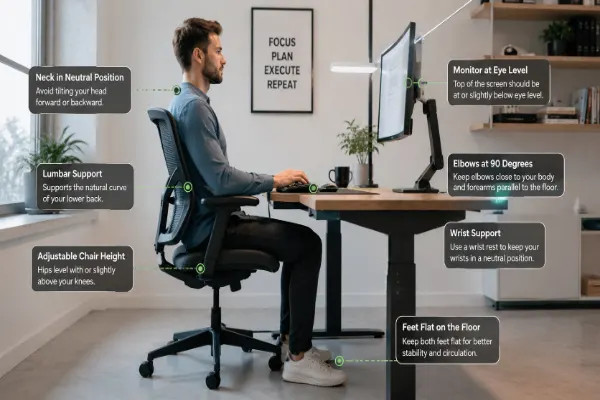
Good sitting posture does not mean sitting rigidly like a robot during a corporate training video.
Instead, your body should feel supported and relaxed.
Experts from the Occupational Safety and Health Administration recommend:
- Feet flat on the floor
- Knees near hip level
- Lower back supported
- Shoulders relaxed
- Monitor at eye height
- Wrists straight while typing
Small adjustments often make a huge difference.
For example, raising a monitor by a few inches can reduce neck tension significantly. Adding lumbar support may relieve lower back stress during long work sessions.
Ergonomic joint health improves when your workstation supports natural alignment rather than forcing awkward positions.
Can Standing Burn More Calories Than Sitting?
Yes, but not dramatically.
Standing burns slightly more calories than sitting because muscles remain more active. Research from the European Journal of Preventive Cardiology found that standing may burn roughly 6 to 10 additional calories per hour compared to sitting.
That means standing alone will not replace exercise or magically transform fitness levels.
However, standing may improve energy levels and reduce sedentary time, which benefits overall health.
The real advantage comes from movement throughout the day. Walking during breaks, stretching regularly, and changing positions matter far more than simply standing still.
Desk Setup Joint Pain: How to Build a Better Workspace
A proper desk setup joint pain solution does not require turning your office into a futuristic tech lab.
Simple ergonomic adjustments often provide meaningful relief.
Start with your chair. Your lower back should feel supported. Your thighs should remain parallel to the floor.
Next, position your monitor directly in front of you. Avoid twisting your neck repeatedly.
Lighting also matters. Poor lighting encourages people to lean toward screens, increasing neck strain.
Keyboard and mouse placement should allow relaxed shoulders and neutral wrists.
If you use a standing desk, keep elbows slightly bent and shoulders loose while typing.
The American Physical Therapy Association recommends regular movement breaks every 30 minutes. Even short walks or stretches help reduce stiffness.
Your workspace should support natural posture instead of forcing compensation patterns.
Is Standing Better for Lower Back Pain?
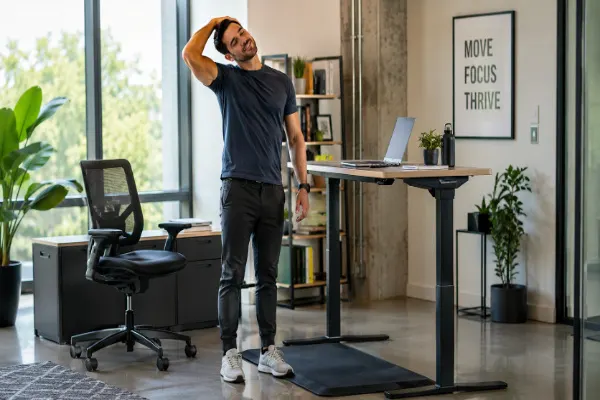
Research suggests that alternating between standing and sitting may help lower back pain more effectively than prolonged sitting alone.
A study published in Human Factors found that workers using sit stand desks reported lower discomfort levels after several weeks.
However, the relationship between standing and pain remains individual.
Some people experience quick relief from standing. Others notice increased fatigue if they stand too long.
Body weight, fitness levels, footwear, muscle strength, and previous injuries all influence outcomes.
The goal should not be endless standing.
The goal should be balanced movement.
How Often Should You Alternate Between Sitting and Standing?
Most ergonomic experts recommend changing positions every 30 to 60 minutes.
This schedule prevents stiffness while reducing fatigue.
You do not need military level precision. Your body already provides warning signals.
If your lower back feels tight, stand up. If your feet feel tired, sit down. If your shoulders tense up, stretch briefly.
Movement resets muscle tension and improves circulation.
A simple routine might include:
- Sit for 30 minutes
- Stand for 20 minutes
- Walk for 5 minutes
- Stretch briefly
That approach supports posture joint health without overwhelming the body.
The Mental Benefits of Reducing Sedentary Time
Interestingly, standing desks may help more than physical comfort.
Some research suggests that reducing sedentary behavior improves focus, mood, and energy levels. Workers who move regularly often report feeling more alert during the afternoon slump.
That makes sense biologically. Movement increases blood flow and muscle activity.
Of course, standing during endless Zoom meetings does not automatically transform anyone into a productivity superhero. Coffee still deserves some credit.
Still, regular movement appears beneficial for both physical and mental well being.
Who Should Be Careful With Standing Desks?
Standing desks may not suit everyone equally.
People with certain conditions should speak with healthcare professionals before making major workstation changes.
For example:
- Severe arthritis
- Varicose veins
- Chronic foot pain
- Circulation disorders
- Balance issues
Long standing periods may aggravate symptoms for some individuals.
Pregnant workers may also need customized ergonomic adjustments depending on comfort levels.
The best workstation setup depends on personal needs, medical history, and daily work habits.
Frequently asked Questions
Is a standing desk better than sitting for joint pain?
A standing desk may help reduce stiffness and discomfort caused by prolonged sitting, especially in the lower back and shoulders. However, research on standing desk vs sitting joint pain shows that alternating between sitting and standing works better than staying in one position all day.
Can standing desks help with back pain?
Yes, many people experience less lower back discomfort after switching to a sit stand workstation. A proper standing desk back pain setup can improve posture, reduce pressure on the spine, and encourage more movement during work hours.
How long should you stand at a standing desk each day?
Most ergonomic experts recommend standing for about 15 to 30 minutes every hour instead of standing continuously. Changing positions regularly supports ergonomic joint health and helps prevent fatigue, foot pain, and lower back strain.
What is the best desk setup to prevent joint pain?
A healthy desk setup joint pain solution includes an adjustable chair, monitor at eye level, proper keyboard placement, and regular movement breaks. Good posture and ergonomic support reduce stress on the neck, shoulders, wrists, hips, and knees.
Does posture affect joint health while working at a desk?
Yes, poor posture can increase pressure on muscles and joints over time. Maintaining good posture joint health habits while sitting or standing helps reduce strain on the spine, shoulders, hips, and knees during long workdays.
Final Verdict on Standing Desk vs Sitting Joint Pain
Research does not support sitting all day. It also does not support standing all day.
The strongest evidence favors movement, flexibility, and ergonomic balance.
A standing desk can reduce discomfort when used properly. It may improve standing desk back pain symptoms, support posture joint health, and decrease sedentary behavior. However, it works best when paired with good ergonomic habits and regular movement.
The smartest approach looks simple:
Sit sometimes. Stand sometimes. Move often.
Your joints were built for motion, not marathon desk sessions.
Even the fanciest ergonomic setup cannot fully protect a body that never moves.
So if your back cracks louder than bubble wrap every time you stand up, your body probably wants less stiffness and more movement.
Thankfully, science agrees.
Sources
- Mayo Clinic – What are the risks of sitting too much?
- Harvard Health Publishing – The truth behind standing desks
- CDC – Sit Stand Workstations and Workplace Health
- Occupational Safety and Health Administration – Computer Workstations eTool
- Cleveland Clinic – Forward Head Posture Effects
- Cornell University Ergonomics Web – Sit and Stand Recommendations
- European Journal of Preventive Cardiology – Standing vs Sitting Calorie Research
- American Physical Therapy Association – Workplace Ergonomics Tips
Author Bio
Jennifer Collins is a wellness researcher and natural health writer focused on adults over 40. With 3+ years of experience in digital health content, Jennifer specializes in making science-backed nutrition and lifestyle strategies easy to follow and apply.
Health Disclaimer
This content is for informational purposes only and is not intended to diagnose, treat, or cure any disease. Always consult your healthcare provider before making changes to your diet or health