

Dr. Preet Pal SB, MD
Physician specializing in diabetes, metabolic health, and joint care management. Read More About Dr. Preet Pal’s Medical Credentials & Editorial Integrity Here
Why does knee pain get worse at night after 50?
Nighttime knee pain in adults over 50 is primarily driven by three physiological shifts: lower nighttime cortisol (which allows inflammatory cytokines to surge), sluggish circulation from immobility, and increased friction when cartilage is thin. During the day, movement circulates synovial fluid to cushion the joint—much like engine oil running through a motor. At rest, that fluid settles, leaving raw bone surface or inflamed tissue to ache.
Why Your Knees Throttle Up Pain the Second You Lie Down
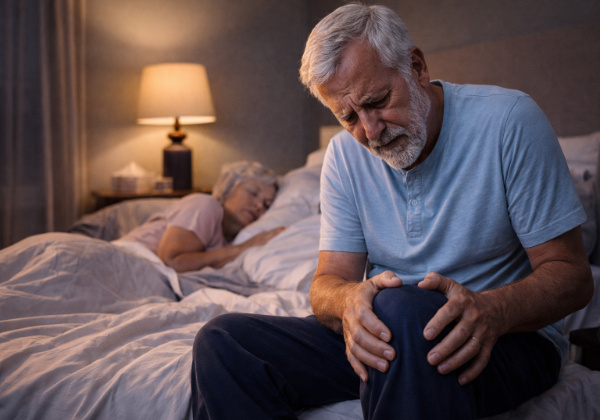
You spend your day running errands, working, or keeping up with family. Your knees feel manageable. But the moment your head hits the pillow and your body goes quiet, a persistent, deep throbbing takes over your joint.
This isn’t in your head. There are distinct biological reasons why joint discomfort surges when you lie down:
- The Cortisol Drop: Your body’s natural anti-inflammatory hormone, cortisol, drops to its lowest levels between 10 PM and 2 AM. Without that natural dampening system, joint inflammation spikes.
- Loss of Fluid Circulation: Cartilage acts like a dense sea sponge. Daytime walking squeezes metabolic waste out and draws fresh, nutrient-dense synovial fluid in. When you stop moving, that sponge stops pumping, causing joint friction to increase.
- Sensory Amplification: Without daytime visual and physical distractions, your brain registers pain signals from peripheral nerves far more intensely.
Primary Root Causes: What’s Happening Inside the Joint?
Think of your knee joint as a precision shock absorber. In your 20s and 30s, you have thick, slick cartilage and an abundance of hyaluronic acid keeping everything gliding silently. After 50, that natural cushioning undergoes predictable wear.
The Age-Related Knee Discomfort Cycle
⬇ Amplified overnight by Fluid Stagnation & Cortisol Drop ⬇
1. Osteoarthritis (Degenerative Wear)
When cartilage thins, bone ends press closer together. During nighttime immobility, low-grade micro-swelling builds inside the joint capsule, creating deep pressure.
2. Anserine Bursitis (Inner Knee Throbbing)
If your pain sits right below the inner joint line and aches sharply when your knees touch in bed, the bursae (fluid-filled sacs that reduce friction between tendons) are likely inflamed.
3. Nocturnal Muscle Tightness & Hamstring Pull
When your hamstrings and calves stay tight from hours of sitting, they pull constantly on the knee cap (patella), creating an unrelenting grinding tension while you sleep.
Diagnosing Nighttime Knee Pain: Quick Symptom Comparison
| Symptom Pattern | Most Likely Cause | Primary Nighttime Trigger | Effective Immediate Relief |
| Deep, dull ache that throbs in quiet | Knee Osteoarthritis | Cortisol drop & fluid stagnation | Moist heat + knee elevation pillow |
| Sharp pain when knees press together | Pes Anserine Bursitis | Pressure between inner knees | Contour memory foam pillow between legs |
| Morning stiffness lasting under 30 mins | Age-related friction / mild wear | Stiffened synovial fluid | Warm morning shower + gentle movement |
| Sharp pain accompanied by warmth/swelling | Acute Flare / Tendonitis | Daytime overuse / micro-tears | Cold therapy wrap before bed |
Dr. Preet Pal’s Clinical Perspective
“In my clinical evaluation of adults over 50, nighttime knee complaints rarely stem from a single ‘bad movement’ during the day. Instead, they are the accumulation of daytime micro-friction coupled with overnight fluid stagnation.
When patients tell me their pain wakes them up at 3 AM, my first question isn’t just about their x-rays—it’s about their evening preparation routine. Simple bio-mechanical adjustments, like using targeted oral nutrients that suppress nighttime inflammatory enzymes, combined with physical joint un-weighting, resolve up to 70% of non-surgical nighttime complaints.”
4 Immediate Bedtime Adjustments for Better Rest Tonight
1.Position a Pillow for Joint Neutrality: 1-2 minutes.
If you sleep on your side, place a firm contour pillow between your knees to keep your hips, knees, and ankles aligned. If you sleep on your back, place a pillow under your knees to take direct mechanical tension off your lower back and hamstrings.
2.Apply Moist Heat 20 Minutes Before Bed: 20 minutes.
Use a warm gel pack or take a hot shower before getting into bed. Heat dilates local blood vessels, flushing out accumulated metabolic waste and relaxing tight tendons surrounding the kneecap.
3.Execute 3 Minutes of Gentle Ankle Pumps: 3 minutes.
While lying flat in bed, slowly flex and extend your ankles up and down 20 times. This engages the calf muscle pump, which draws pooled blood and fluid out of the lower legs back toward the heart before you fall asleep.
4.Topical & Targeted Support: 2 minutes.
If the joint feels tender to the touch, apply a targeted knee pain relief cream to soothe localized nerve pathways before lying down.
Addressing the Root Cause: Daytime Habits for Nighttime Comfort
What you do during daylight hours dictates how your joints behave at dusk:
- Prevent Morning Lockup: If you wake up with locked joints, review these targeted strategies for handling knee stiffness in the morning.
- Strengthen the Shock Absorbers: Strong quadriceps act like suspension cables. Implementing gentle, low-impact exercises for knee pain over 40 builds surrounding muscle tone to keep cartilage from taking direct impacts.
Targeted Nutritional Support for Nighttime Joint Comfort
While physical alignment and stretches help mechanically, addressing the biological inflammatory cascade requires internal support.
For adults 40+ experiencing persistent evening throbbing, Flexafen offers a clinically aligned approach to nighttime joint wellness.
How Flexafen Targets Night Pain
- ⚡ ApresFlex® Boswellia: Inhibits 5-LOX enzymes to curb nighttime inflammation surge
- 🛡️ Collavant n2 Collagen: Calms immune response to protect cartilage from wear
- 💧 Hyaluronic Acid + MSM: Restores synovial fluid viscosity for smooth overnight joint glide
Why Flexafen Fits Nighttime Recovery:
- Inhibits Nighttime Inflammatory Cascades: Features ApresFlex® Boswellia Serrata, a patented compound shown in clinical trials to inhibit 5-LOX inflammatory enzymes faster than standard extracts.
- Calms Cartilage Breakdown: Contains Collavant n2 (undenatured Type II collagen), which works via oral tolerization to signal the body to stop attacking its own joint tissue.
- Protects Without Stomach Upset: Unlike heavy NSAID regimens that can irritate the stomach lining during sleep, Flexafen delivers its natural anti-inflammatory matrix in one easy-to-swallow daily capsule.
Dr. Preet Pal’s Clinical Note on Flexafen:
“What makes Flexafen uniquely effective for nighttime throbbing is its inclusion of ApresFlex® alongside MSM and Hyaluronic Acid. By addressing both the enzymatic drivers of inflammation and the physical viscosity of joint fluid, it helps keep the joint quiet during hours of immobility.”
👉 Learn More About How Flexafen Supports Nighttime Joint Mobility Here
Red Flag Warning Signs: When to See a Doctor
While most nighttime knee discomfort responds well to conservative lifestyle care, seek prompt medical evaluation if you experience:
- Inability to bear weight when getting out of bed
- Visible joint redness, hot skin, or fever (possible signs of infection or acute gout)
- Sudden, significant joint swelling (“water on the knee”)
- Knee catching or locking completely in one position
Verified Medical Sources
- National Institute on Aging (NIH): Osteoarthritis in Older Adults and Joint Changes. Direct Access: nia.nih.gov/health/osteoarthritis
- Arthritis Foundation: Managing Nighttime Joint Pain and Sleep Hygiene. Direct Access: arthritis.org/health-wellness/healthy-living/managing-pain/fatigue-sleep/sleep-strategies
- Mayo Clinic: Knee Pain: Symptoms, Causes, and Diagnosis. Direct Access: mayoclinic.org/diseases-conditions/knee-pain/symptoms-causes/syc-20350849
Frequently Asked Questions
Why do knees hurt more at night?
When you stop moving, circulation slows and muscles relax. This can make existing inflammation or stiffness more noticeable.
Is nighttime knee pain a sign of arthritis?
It can be, but not always. Many people experience nighttime discomfort without significant joint disease.
Should I use heat or ice?
Heat is often more soothing for nighttime stiffness. Ice may help if swelling is present after activity.
Does walking help or hurt?
Gentle walking usually helps by keeping joints mobile and muscles strong.
Can dehydration cause knee pain?
It can contribute to stiffness. Staying hydrated supports joint function.
What’s the best sleep position for knee comfort?
Back sleeping with a pillow under the knees or side sleeping with a pillow between them often helps.
A Little Extra Support
If you’d like more gentle strategies for joint comfort, there’s a helpful free guide called “Stop the Creak: 6 Natural Joint Pain Solutions Doctors Don’t Tell You About.” It shares simple habits many adults over 40 find useful for supporting knees and other joints. No pressure—just an optional resource if you want to explore more.
About the Author
Jennifer Collins is a wellness researcher and natural health writer focused on adults over 40. With 3+ years of experience in digital health content, Jennifer specializes in making science-backed nutrition and lifestyle strategies easy to follow and apply.
Medical & Educational Disclaimer
This article is for educational purposes only and is not medical advice. Always consult a qualified healthcare professional regarding any questions about joint pain, symptoms, or treatment options.