
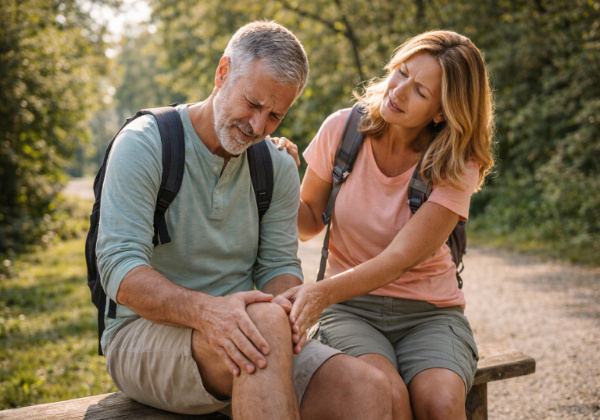
You lace up your shoes, head out for a long walk, and feel proud of yourself for staying active. But later—maybe that evening or the next morning—your knees, hips, or ankles start to ache. If you’re over 40, this pattern may feel all too familiar.
Joint pain after walking long distances can catch even healthy, active adults off guard. You want to keep moving, but you also don’t want to pay for it with stiffness or soreness later. It can feel discouraging, especially when walking used to feel effortless.
The good news? This type of discomfort is common, and in many cases, it’s manageable with a few smart adjustments. Your joints don’t necessarily need less movement—they often need the right kind of movement and support. Let’s talk about what’s happening and what you can do to feel better.
Table of Contents
What Joint Pain After Walking Long Distances Means
When we talk about joint pain after walking long distances, we’re usually referring to soreness, stiffness, or swelling that shows up during or after extended periods on your feet. For some people, it’s a dull ache in the knees. For others, it’s hip tightness, ankle discomfort, or even foot pain.
This doesn’t automatically mean something is “wrong” with your joints. Walking is a healthy, low-impact activity, but long distances can place repeated stress on joints—especially if your body isn’t used to that level of activity.
Think of your joints like the hinges on a well-used door. They work best when they’re regularly maintained and not suddenly overworked. If the hinges haven’t been oiled in a while, they may creak after a lot of use. Your joints behave in a similar way.
Why It Happens After 40
Natural Changes in Joint Structure
After 40, your body starts to change in subtle ways. Cartilage—the cushion inside your joints—can gradually thin. Muscles may lose some strength or flexibility. Recovery time often becomes a little longer than it was in your 20s or 30s.
None of this means you should stop walking. It simply means your joints may need more preparation, recovery, and support.
Reduced Shock Absorption
Over time, joints and surrounding tissues may not absorb impact as efficiently. Even though walking is low impact, long distances add up. Thousands of steps create repetitive pressure, especially on knees, hips, and feet.
Muscle Imbalances
Weak or tight muscles can shift stress onto joints. For example, tight hip flexors or weak glutes can place extra strain on the knees. That strain may not show up during the walk—but it often appears afterward.
Common Symptoms and Patterns
People often notice similar patterns when dealing with joint discomfort after long walks:
- Stiffness that appears later in the day
- Achy knees or hips after sitting down
- Soreness the morning after a long walk
- Swelling around knees or ankles
- Relief after gentle movement or stretching
You may also notice that your joints feel better once you start moving again the next day. Many readers find that joints feel better after moving once stiffness loosens up. This is a common pattern and can be reassuring.
Lifestyle and Daily Habit Factors
Footwear Matters More Than You Think
Shoes that worked well years ago may not offer enough support now. Worn-out cushioning or poor arch support can increase joint stress over long distances.
Supportive walking shoes with good shock absorption can make a surprising difference. Some people benefit from rotating between two pairs of shoes to reduce repetitive pressure.
Sudden Distance Increases
If you go from short walks to several miles at once, your joints may protest. Gradual increases give tissues time to adapt.
A helpful rule: increase distance by no more than 10% each week.
Hard Surfaces
Concrete sidewalks and asphalt roads create more impact than softer trails or tracks. Alternating surfaces when possible can reduce stress on joints.
Gentle Movement and Wellness Support
Warm Up Before You Walk
It’s tempting to head straight out the door, but a short warm-up helps joints prepare for activity.
Try:
- 5 minutes of easy walking
- Gentle leg swings
- Light calf and hamstring stretches
This increases circulation and helps joints move more smoothly.
Cool Down After Long Walks
Cooling down helps prevent stiffness later. Slow your pace for the last few minutes, then stretch lightly.
Focus on:
- Calves
- Hamstrings
- Hips
- Lower back
Add Strength Training
Strong muscles act like shock absorbers for your joints. Even two short sessions per week can help.
Helpful areas to strengthen:
- Glutes
- Quadriceps
- Core
- Calves
You don’t need heavy weights. Bodyweight exercises like squats and step-ups can be effective.
Use Recovery Tools
Some people find relief with:
- Warm baths
- Gentle foam rolling
- Light stretching the next day
- Staying hydrated
Recovery is just as important as movement.
Nutrition and Hydration Basics
Stay Hydrated
Dehydration can affect joint comfort more than many people realize. Joint tissues rely on fluid to stay lubricated. Even mild dehydration can increase stiffness.
Aim for consistent hydration throughout the day, especially before and after long walks.
Supportive Nutrients
A balanced diet supports joint health overall. Consider including:
- Omega-3 fatty acids (fish, walnuts)
- Colorful fruits and vegetables
- Lean protein for muscle support
- Whole grains
These foods help maintain tissues and support recovery.
When to Seek Professional Advice
Occasional soreness after a long walk is common. But certain signs are worth checking out:
- Persistent swelling
- Sharp or worsening pain
- Pain that affects daily activities
- Joint instability
- Discomfort that doesn’t improve with rest
A healthcare professional or physical therapist can evaluate movement patterns and recommend personalized strategies.
Practical Tips You Can Apply Today
If walking long distances leaves your joints sore, try these small adjustments:
- Break long walks into shorter sessions
- Add a warm-up and cool-down
- Rotate shoes regularly
- Walk on softer surfaces when possible
- Include strength exercises twice weekly
- Stretch gently after activity
- Increase distance gradually
- Stay hydrated
Small changes can lead to noticeable improvements over time.
Common Myths and Mistakes
Myth: Pain Means You Should Stop Walking
In many cases, reducing distance temporarily and building back gradually works better than stopping completely. Movement helps joints stay mobile.
Myth: Only High-Impact Exercise Causes Joint Pain
Even low-impact activities can cause discomfort if done for long periods without preparation or recovery.
Mistake: Ignoring Early Signs
Mild stiffness or soreness is your body’s way of asking for adjustments. Listening early can prevent bigger issues later.
Frequently Asked Questions
Why do my joints hurt more after long walks than during them?
During movement, joints are lubricated and warm. Afterward, tissues cool down and inflammation can settle in, making soreness more noticeable.
Is it normal for knees to ache after walking several miles?
Yes, especially after 40. Long distances can stress knee joints if muscles are tight or weak.
Should I keep walking if my joints feel sore the next day?
Gentle movement is often helpful. Light walking or stretching can reduce stiffness. If pain is sharp or persistent, take a break and consider professional guidance.
Can better shoes really help?
Absolutely. Proper cushioning and support reduce impact and improve alignment, which can ease joint stress.
Does walking strengthen joints?
Walking supports joint health when done in balanced amounts. Pairing it with strength training improves long-term comfort.
How long should I rest after a long walk?
Most people benefit from active recovery—light movement the next day rather than complete rest.
A Gentle Resource for Extra Support
If you’re looking for more natural ways to support your joints, you might find this helpful:
“Stop the Creak: 6 Natural Joint Pain Solutions Doctors Don’t Tell You About.”
It’s a free guide that shares simple, research-based strategies many adults over 40 find useful. No pressure—just extra support if you want it.
About the Author
Jennifer Collins
Health Research Editor, JointReliefJournal
Jennifer Collins is a health research editor who focuses on joint wellness, mobility, and healthy aging. She reviews current research and translates complex health topics into practical, easy-to-understand guidance. Her goal is to provide transparent, educational content that helps readers make informed choices about their daily habits and long-term well-being.
Medical & Educational Disclaimer
This article is for educational purposes only and is not intended as medical advice. Always consult a qualified healthcare professional regarding any concerns about joint pain, mobility, or exercise routines.