
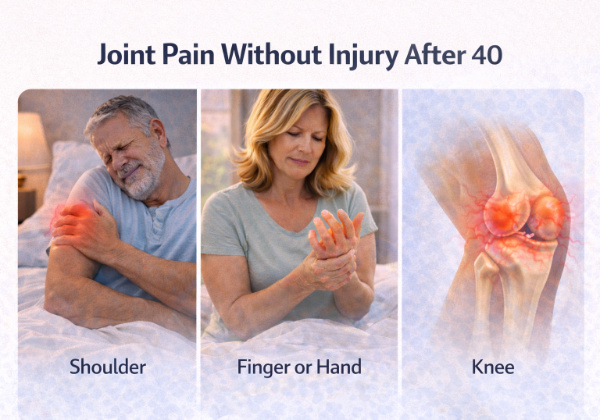
You wake up one morning and your knees feel stiff. Your fingers ache while holding your coffee mug. Maybe your shoulders complain when you reach for a seatbelt. The confusing part? You didn’t fall, twist anything, or overdo it at the gym.
Joint pain without injury after 40 can feel like it came out of nowhere. And for many adults in midlife, it does. One day you move freely. The next, your joints seem to have their own opinions.
If this sounds familiar, you’re not alone. Many adults over 40 notice subtle changes—morning stiffness, creaky knees, tight hips—that show up without a clear cause. It can feel unsettling, even frustrating. But here’s the reassuring truth: most of the time, this kind of joint discomfort has understandable reasons and practical, gentle ways to support it.
In this guide, we’ll walk through what’s happening inside your joints, why these changes often appear after 40, and how to care for your body in a steady, realistic way—no miracle cures, no hype. Just helpful support you can use right now.
Table of Contents
What Is Joint Pain Without Injury After 40?
Joint pain without injury after 40 refers to discomfort, stiffness, or soreness that develops without a specific accident or strain. It’s not caused by a fall, sports injury, or sudden overexertion. Instead, it often builds gradually.
You might notice:
- Aching knees when standing up
- Stiff fingers in the morning
- Tight hips after sitting
- Shoulder discomfort when reaching overhead
- Joints that feel better after moving
This type of discomfort is usually tied to natural changes in the body over time rather than a single event. Think of it like a car that’s been running smoothly for decades. Over time, it still works—but it might need more maintenance and gentle care.
Why It Happens After 40
Natural Wear and Tear
By midlife, joints have done a lot of work. Cartilage—the cushioning between bones—can gradually thin. Muscles may lose strength if daily movement has decreased. Connective tissues become less flexible.
None of this means your body is “breaking down.” It simply means your joints are adapting to years of use.
Changes in Activity Patterns
Many adults become less active in their 30s and 40s due to work, family, or long hours sitting. Less movement can lead to:
- Stiffer joints
- Weaker support muscles
- Reduced circulation
Ironically, joints often feel worse when they move less.
Hormonal Shifts
Hormonal changes in midlife—especially around menopause—can affect joint comfort, inflammation levels, and muscle support. Men can experience similar shifts in muscle mass and recovery.
Sleep and Stress
Poor sleep and chronic stress can increase inflammation and muscle tension. Over time, that tension may show up as joint discomfort.
Common Symptoms and Patterns
People experiencing joint pain without injury after 40 often describe similar patterns:
- Morning stiffness that improves after moving
- Achiness after long periods of sitting
- Joints that feel better with gentle activity
- Mild swelling or tightness
- Occasional clicking or popping
The key detail: symptoms tend to be mild to moderate and fluctuate. Some days feel better than others. Movement often helps more than rest.
Lifestyle and Daily Habit Factors
Small daily habits can have a bigger impact on joint comfort than most people realize.
Sitting for Long Periods
Modern life involves a lot of sitting—cars, desks, couches. Long stretches without movement can make joints feel stiff and compressed.
Repetitive Movements
Typing, texting, lifting, or standing in one position for hours can strain certain joints over time.
Footwear Choices
Shoes without proper support can affect knees, hips, and even the lower back.
Weight Changes
Even modest weight gain can increase pressure on joints like knees and hips. That extra load adds up over time.
Gentle Movement and Wellness Support
Movement is one of the most effective ways to support joints after 40—but the key word is gentle.
Daily Walking
A simple walk improves circulation, strengthens muscles, and lubricates joints. Even 10–15 minutes can help.
Stretching and Mobility
Focus on slow, controlled movements. Think of your joints like hinges that need regular oiling. Gentle stretching helps maintain range of motion.
Strength Training
Light resistance exercises support muscles that stabilize joints. Strong muscles take pressure off joints.
Low-Impact Activities
Try:
- Swimming
- Cycling
- Yoga
- Pilates
These activities keep joints moving without heavy impact.
Nutrition and Hydration Basics
What you eat and drink affects how your joints feel.
Hydration
Cartilage relies on water. Dehydration can make joints feel stiff and less cushioned. Aim to drink water consistently throughout the day.
Balanced Nutrition
Supportive foods include:
- Leafy greens
- Fatty fish
- Nuts and seeds
- Colorful fruits
- Whole grains
These provide nutrients that support muscle and joint health.
Protein Intake
Adequate protein helps maintain muscle mass, which supports joints and stability.
When to Seek Professional Advice
While joint pain without injury after 40 is often manageable, certain signs deserve professional attention:
- Persistent swelling
- Severe or worsening pain
- Limited range of motion
- Joint warmth or redness
- Pain that disrupts sleep regularly
A healthcare provider can help rule out conditions and guide next steps.
Practical Tips You Can Try Today
Small adjustments can make a noticeable difference.
- Stand and stretch every 30–60 minutes
- Take short walks during the day
- Use supportive shoes
- Try gentle morning mobility exercises
- Stay hydrated
- Keep a consistent sleep routine
- Use warm showers or heating pads for stiffness
Consistency matters more than intensity.
Common Myths and Mistakes
Myth: Pain Means You Should Stop Moving
In many cases, gentle movement actually helps joints feel better.
Myth: Only Athletes Get Joint Issues
Joint discomfort without injury is common in everyday adults.
Mistake: Ignoring Early Stiffness
Small changes now can prevent bigger discomfort later.
Mistake: Overdoing Exercise
Jumping into intense workouts can aggravate joints. Gradual progress works best.
Frequently Asked Questions
Why do my joints hurt even though I didn’t injure myself?
Natural wear, reduced activity, muscle imbalances, and age-related changes can all contribute. It’s very common after 40.
Is joint pain without injury a sign of arthritis?
Not always. Occasional stiffness and mild discomfort can happen without arthritis. Persistent symptoms should be evaluated.
Why do my joints feel stiff in the morning?
During sleep, joints stay still for hours. Movement helps circulate fluid and loosen tissues.
Can hydration really help joints?
Yes. Proper hydration supports cartilage and overall joint function.
Should I exercise if my joints feel sore?
Gentle movement often helps. Avoid high-impact activities if pain is sharp or worsening.
Are supplements necessary?
Some people choose them, but basics like movement, hydration, and balanced nutrition matter most.
A Helpful Resource for Extra Support
If you’re looking for additional ideas, you might find this guide useful:
“Stop the Creak: 6 Natural Joint Pain Solutions Doctors Don’t Tell You About.”
It offers practical, everyday strategies for supporting joint comfort in midlife. Think of it as an optional companion to what you’ve learned here—simple ideas you can explore at your own pace.
You can also explore related topics like wrist joint pain over 50 for more targeted support
About the Author
Jennifer Collins
Health Research Editor, JointReliefJournal
Jennifer Collins is a health research editor who focuses on translating complex wellness topics into clear, practical guidance for everyday readers. Her work centers on joint health, mobility, and healthy aging. She prioritizes evidence-based information and transparent, supportive education so readers can make informed decisions about their well-being.
Medical & Educational Disclaimer
This article is for educational purposes only and is not medical advice. It does not replace consultation with a qualified healthcare professional. If you have persistent or worsening joint pain, consult a licensed medical provider for personalized guidance.