
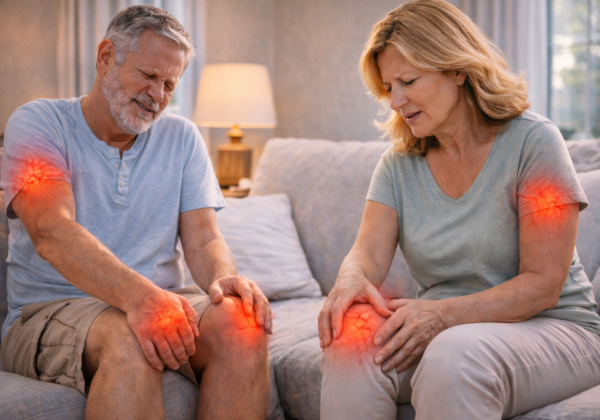
You stand up after watching TV, finishing a long drive, or working at your desk — and suddenly your knees feel rusty, your hips resist movement, or your back takes a few seconds to “wake up.”
If you’re experiencing stiff joints after sitting too long, you’re far from alone. Many adults notice this change sometime in their 40s or 50s. Movements that once felt effortless now require a moment of adjustment. It can be frustrating, confusing, and sometimes even a little worrying.
The good news? In most cases, this stiffness is not a sign that something is seriously wrong. Instead, it’s your body responding to normal age-related changes combined with modern lifestyle habits.
In this guide, you’ll learn why stiffness happens, what your joints are trying to tell you, and practical, natural ways to help your body feel looser, more mobile, and more comfortable — starting today.
Table of Contents
What Does “Stiff Joints After Sitting Too Long” Really Mean?
When people describe stiff joints, they often mean:
- Difficulty moving immediately after standing
- Tightness or resistance in knees, hips, shoulders, or fingers
- A brief aching or pulling sensation
- Needing a few steps before movement feels normal
Unlike injury-related pain, stiffness typically improves once you start moving.
A Helpful Analogy
Think of your joints like door hinges. When used regularly, they move smoothly. Leave them unused for hours, and they temporarily resist motion. A little movement redistributes lubrication — and things loosen again.
Your joints work in a surprisingly similar way.
Why Stiff Joints After Sitting Too Long Happens More After 40
Aging itself isn’t the problem — but several subtle biological changes begin to overlap after midlife.
1. Joint Lubrication Slows Down
Joints contain synovial fluid, a natural lubricant that keeps movement smooth. Movement circulates this fluid. Sitting still reduces circulation, allowing stiffness to build.
After 40, the body produces and distributes this lubrication less efficiently.
2. Muscle Elasticity Gradually Changes
Muscles and connective tissues naturally lose some flexibility with age. When you sit for long periods:
- Hip flexors tighten
- Hamstrings shorten temporarily
- Supporting muscles “switch off”
Standing suddenly asks stiff tissues to work immediately.
3. Reduced Circulation During Prolonged Sitting
Blood flow decreases when muscles remain inactive. Less oxygen and nutrient delivery can make joints feel heavy or tight.
4. Low-Level Inflammation
Many adults develop mild systemic inflammation related to stress, sleep quality, diet, or inactivity. This can amplify stiffness sensations without causing injury.
(If you’ve also noticed unexplained discomfort, you may find this helpful: joint pain without injury after 40.)
Common Symptoms and Patterns
Most people notice predictable patterns with stiffness.
Typical Signs
- Stiffness lasting a few seconds to several minutes
- Improvement after walking or stretching
- Morning tightness or stiffness after driving
- Knees or hips feeling “locked” briefly
- Back stiffness after desk work
Joints Most Commonly Affected
- Knees
- Hips
- Lower back
- Shoulders
- Fingers
A key clue: movement usually helps rather than worsens symptoms.
Lifestyle and Daily Habit Factors That Make It Worse
Modern life unintentionally encourages joint stiffness.
Prolonged Sitting
Americans now sit an average of 7–10 hours daily — at desks, in cars, and on couches.
Your joints were designed for frequent movement, not long stillness.
Poor Sitting Posture
Slouching shifts load onto joints instead of muscles, increasing stiffness afterward.
Dehydration
Cartilage contains significant water content. Even mild dehydration can reduce cushioning efficiency.
Stress and Tension
Chronic stress causes subtle muscle tightening, especially around the neck, shoulders, and hips.
Lack of Strength Training
Weak supporting muscles force joints to absorb more strain during transitions like standing up.
Gentle Movement and Wellness Support
The goal isn’t intense exercise — it’s consistent, joint-friendly movement.
The “Motion Before Emotion” Rule
Move gently before judging how your body feels.
Try:
- Walking for 1–2 minutes after standing
- Gentle joint circles
- Slow stretching
Micro-Movement Breaks
Set a reminder every 30–45 minutes to:
- Stand up
- Roll shoulders
- Walk briefly
- Stretch calves or hips
Even 60 seconds helps.
Low-Impact Activities That Help
- Walking
- Swimming
- Cycling
- Yoga or mobility routines
- Tai chi
These improve lubrication and flexibility without stressing joints.
Nutrition and Hydration Basics for Joint Comfort
Food doesn’t act like medicine, but daily choices influence how joints feel over time.
Hydration First
Aim for consistent water intake throughout the day. Joint cartilage relies on fluid balance.
Anti-Inflammatory Foods
Focus on:
- Fatty fish (salmon, sardines)
- Olive oil
- Nuts and seeds
- Berries
- Leafy greens
Protein Matters After 40
Adequate protein supports muscle maintenance, which stabilizes joints.
Nutrients That Support Joint Function
- Omega-3 fatty acids
- Vitamin D
- Magnesium
- Collagen-supporting nutrients (vitamin C)
Small daily habits often matter more than supplements alone.
When to Seek Professional Advice
Occasional stiffness is common, but certain signs deserve evaluation.
See a healthcare professional if you notice:
- Persistent swelling
- Warm or red joints
- Stiffness lasting longer than 30–60 minutes
- Severe pain
- Sudden mobility loss
- Symptoms affecting sleep or daily function
Early guidance can prevent minor issues from becoming long-term problems.
Practical Tips You Can Apply Today
Here are simple strategies many readers find helpful immediately:
✅ Stand up during TV commercials
✅ Keep water within arm’s reach
✅ Do ankle pumps while sitting
✅ Adjust chair height so knees sit level with hips
✅ Take short walks after meals
✅ Stretch hips before standing from long sitting
✅ Use supportive footwear at home
Consistency beats intensity.
Common Myths and Mistakes
Myth 1: “Stiffness means joints are wearing out.”
Not necessarily. Many cases relate more to inactivity than damage.
Myth 2: “I should rest more.”
Too much rest often increases stiffness. Gentle movement usually helps.
Myth 3: “Exercise must be intense to work.”
Joint health responds best to regular, moderate activity.
Myth 4: “This is just aging — nothing helps.”
Lifestyle adjustments can significantly improve mobility at any age.
Frequently Asked Questions
Why do my joints loosen up after I start moving?
Movement circulates synovial fluid and increases blood flow, improving flexibility and reducing stiffness sensations.
Is stiffness after sitting a sign of arthritis?
Not always. Occasional stiffness is common with aging and inactivity. Persistent swelling or pain should be evaluated.
How long should stiffness last?
Typically a few seconds to several minutes. Longer stiffness may warrant medical advice.
Does drinking more water really help joints?
Yes. Hydration supports cartilage cushioning and overall joint function.
Are morning stretches necessary?
They can help, but short movement breaks throughout the day often provide greater benefits.
What’s the best exercise for stiff joints?
Low-impact activities like walking, swimming, or gentle mobility exercises are excellent starting points.
A Gentle Next Step (Optional Support)
If you’d like deeper guidance, many readers find it helpful to learn simple strategies doctors often overlook in everyday conversations.
You can explore the free guide:
“Stop the Creak: 6 Natural Joint Pain Solutions Doctors Don’t Tell You About.”
It’s designed as an educational resource — not a quick fix — and offers practical ideas you can explore at your own pace if you’re looking for additional support.
About the Author
Jennifer Collins
Health Research Editor, JointReliefJournal
Jennifer Collins is a health research editor specializing in mobility, aging wellness, and joint health education. She reviews clinical research and translates complex health topics into clear, practical guidance for adults over 40. Her work focuses on evidence-informed lifestyle strategies that support long-term comfort and mobility without hype or unrealistic promises.
Medical & Educational Disclaimer
This article is for educational purposes only and is not intended as medical advice, diagnosis, or treatment. Always consult a qualified healthcare professional regarding any medical concerns or before making changes to your health routine.