
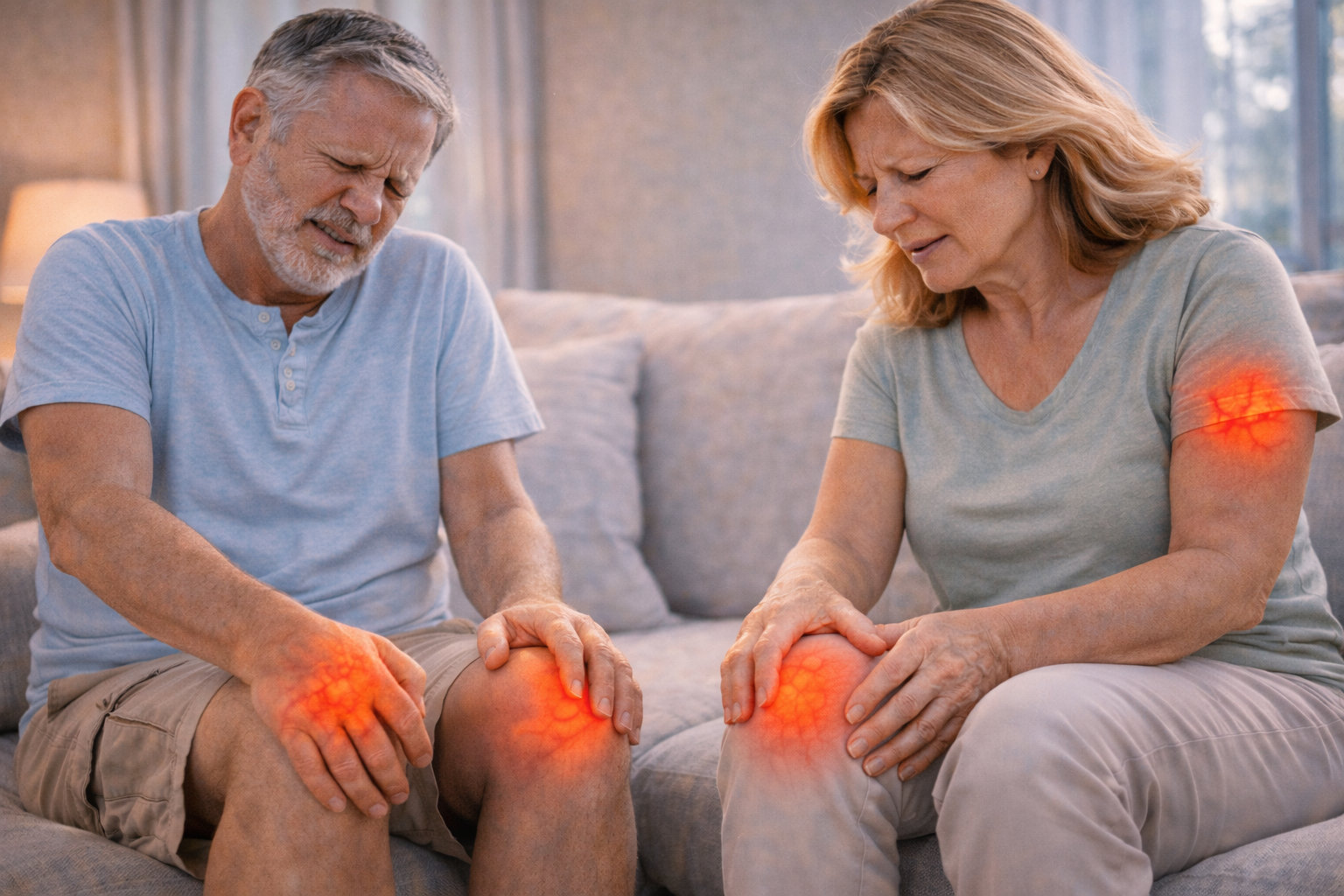
You sit through a movie, finish a long drive, or stand up after working at your desk — and suddenly your knees feel tight, slow, or awkward to move. Maybe you pause for a second before walking because your joints need time to “wake up.”
If your knees stiff after sitting, you’re far from alone — especially after age 40.
Many adults notice this change gradually. What once felt effortless now comes with stiffness, hesitation, or a dull ache during those first few steps. It can be frustrating, even a little worrying. You may wonder: Is this normal aging? Am I damaging my knees? Can anything actually help?
Here’s the reassuring truth: in most cases, knee stiffness after sitting is common, understandable, and manageable with the right habits and awareness.
In this guide, we’ll explore why it happens, what your body may be telling you, and gentle, realistic ways to support your knees naturally — so getting up feels smoother and more comfortable again.
Table of Contents
What Does “Knees Stiff After Sitting” Actually Mean?
When people describe stiff knees after sitting, they’re usually talking about:
- Tightness or resistance when standing up
- Difficulty straightening the leg fully
- A brief ache or pressure in the joint
- Feeling “rusty” for the first few steps
- Improvement after moving around
This experience is often called “start-up stiffness.” The joint feels restricted after being still but loosens once movement begins.
Unlike sudden injury pain, stiffness tends to:
- Improve within minutes
- Respond well to gentle motion
- Return after long periods of inactivity
Your knees aren’t failing — they’re reacting to inactivity and natural joint changes that become more noticeable with age.
Why Knee Stiffness Happens After 40
1. Joint Lubrication Slows Down
Healthy knees rely on synovial fluid — a slippery substance that reduces friction between joint surfaces. Movement circulates this fluid.
After sitting for long periods, lubrication temporarily decreases, making the joint feel stiff until movement restores flow.
Think of it like a door hinge: it works best when used regularly.
2. Cartilage Naturally Changes With Age
Cartilage acts as cushioning inside the knee. Over time:
- It retains slightly less water
- Shock absorption declines
- Movement becomes more important for nourishment
These changes don’t automatically mean arthritis — they’re part of normal aging.
3. Muscles Become Less Supportive
After 40, many adults experience gradual muscle loss, especially in the quadriceps and glutes.
Weaker muscles mean:
- More stress placed on the knee joint
- Reduced stability after sitting
- Slower transition from rest to movement
4. Reduced Circulation During Sitting
Long periods of sitting slow blood flow around the joint. When you stand, tissues need a moment to re-engage, creating temporary stiffness.
Common Symptoms and Patterns
People experiencing stiff knees after sitting often notice predictable patterns:
- Morning stiffness that improves after walking
- Discomfort after car rides or flights
- Tightness during desk work
- Relief once movement starts
- More stiffness in cold environments (see: joints hurt more in cold weather)
Stiffness that improves with activity is usually a sign that joints benefit from movement rather than rest.
Lifestyle and Daily Habit Factors
Many everyday habits quietly influence knee comfort.
Sitting Too Long
Modern life encourages extended sitting — work, commuting, streaming shows. Remaining in one position shortens muscles and limits joint circulation.
Even healthy knees dislike long inactivity.
Posture and Chair Setup
Low chairs or deep couches place knees in prolonged flexion, increasing stiffness when standing.
Helpful adjustments:
- Keep knees level with hips
- Use chairs with firm support
- Avoid sinking couches for long periods
Footwear Choices
Unsupportive shoes can subtly change knee alignment and increase strain.
Shoes with cushioning and stability often reduce daily stress on joints.
Weight Distribution
Even small weight changes affect knee load. Each step places multiple times body weight through the joint.
Balanced movement matters more than perfection.
Gentle Movement and Wellness Support
The goal isn’t intense exercise — it’s consistent, joint-friendly motion.
Micro-Movement Breaks
Try standing every 30–45 minutes.
Simple options:
- Walk around the room
- Stretch calves and thighs
- Bend and straighten knees slowly
These small resets can dramatically reduce stiffness buildup.
Strengthening Key Muscles
Focus on muscles that support knee alignment:
- Quadriceps
- Hamstrings
- Glutes
- Calves
Begin gently:
- Chair squats
- Wall sits (short duration)
- Slow step-ups
Consistency matters more than intensity.
Mobility Before Standing
Before getting up:
- Straighten legs slowly.
- Flex ankles.
- Tighten thigh muscles for 5 seconds.
This “prepares” the joint for movement.
Low-Impact Activities
Ideal options for adults over 40:
- Walking
- Swimming
- Cycling
- Yoga or tai chi
These improve lubrication without excessive strain.
Nutrition and Hydration Basics for Joint Comfort
Food doesn’t fix stiffness instantly — but daily choices influence inflammation and tissue health over time.
Stay Hydrated
Cartilage relies heavily on water content. Mild dehydration can worsen stiffness sensations.
Aim for steady hydration throughout the day rather than large amounts at once.
Anti-Inflammatory Foods
Helpful patterns include:
- Fatty fish (omega-3s)
- Nuts and seeds
- Olive oil
- Leafy greens
- Berries
These support overall joint environment rather than acting as quick fixes.
Protein for Muscle Support
Muscle strength protects joints. Adequate protein intake helps maintain supportive tissue as we age.
When to Seek Professional Advice
Occasional stiffness is common, but certain signs deserve evaluation:
- Persistent swelling
- Sharp or worsening pain
- Knee locking or instability
- Stiffness lasting longer than 30 minutes
- Difficulty bearing weight
A healthcare professional can rule out conditions such as osteoarthritis or inflammatory joint issues.
Early guidance often prevents long-term frustration.
Practical Tips You Can Apply Today
Small changes often bring noticeable relief:
✅ Stand and move every 30–45 minutes
✅ Stretch legs before standing up
✅ Strengthen thigh muscles twice weekly
✅ Choose supportive footwear
✅ Stay hydrated throughout the day
✅ Warm joints before activity in cold weather
✅ Use gentle heat for tight knees
Think of joint care as maintenance, not repair.
Common Myths and Mistakes
Myth 1: “Rest Is Best for Stiff Knees”
Too much rest often increases stiffness. Joints thrive on movement.
Myth 2: “Pain Means Damage”
Mild stiffness doesn’t automatically signal injury or degeneration.
Myth 3: “You Should Avoid Squats After 40”
Properly performed, controlled squats strengthen knee support muscles.
Myth 4: “Aging Means Inevitable Decline”
Many adults improve mobility well into their 50s, 60s, and beyond with consistent habits.
Frequently Asked Questions
Why are my knees stiff after sitting but fine when walking?
Movement restores circulation and joint lubrication, reducing stiffness quickly.
Is knee stiffness a sign of arthritis?
Not always. Occasional stiffness is common. Persistent pain, swelling, or reduced mobility should be evaluated.
How long should stiffness last after standing?
Typically a few steps to a few minutes. Longer stiffness may need medical assessment.
Does walking help stiff knees?
Yes. Gentle walking encourages lubrication and strengthens supportive muscles.
Should I stretch before or after sitting?
Both help. Light stretching before standing often reduces discomfort.
Can dehydration affect joint stiffness?
Yes. Joints rely on fluid balance, and low hydration may increase stiffness sensations.
A Helpful Extra Resource (Optional)
If you’d like deeper guidance, many readers find it helpful to explore simple lifestyle strategies gathered in one place.
You can check out the free guide:
“Stop the Creak: 6 Natural Joint Pain Solutions Doctors Don’t Tell You About.”
It’s designed as an educational companion — not a treatment plan — offering practical ideas you can explore at your own pace.
About the Author
Jennifer Collins
Health Research Editor, JointReliefJournal
Jennifer Collins is a health research editor specializing in mobility, aging, and joint wellness education. She focuses on translating scientific research into clear, practical information adults can realistically apply in everyday life. Her work emphasizes transparency, balanced evidence, and long-term wellness habits rather than quick fixes.
Medical & Educational Disclaimer
This article is for educational purposes only and is not intended as medical advice, diagnosis, or treatment. Always consult a qualified healthcare professional regarding any medical concerns or before making changes to your health routine.