
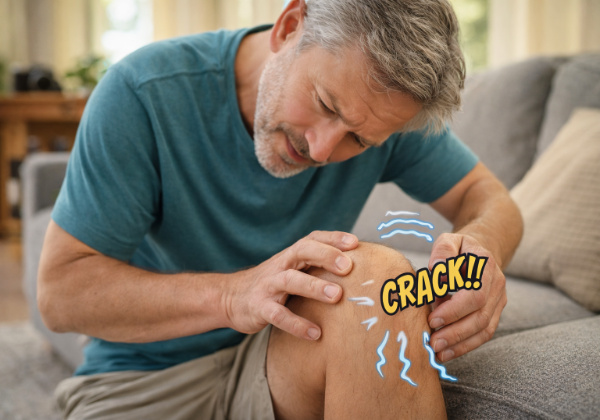
You reach for a coffee mug, stand up from the couch, or stretch your arms overhead—and suddenly your joints make a popping or cracking sound.
Maybe it’s your knees.
Maybe your shoulders.
Maybe your fingers when you open a jar.
If you’re over 40, you may have noticed something surprising: your joints crack more with age than they used to.
At first, it can feel unsettling. Some people worry it means their joints are wearing out or that arthritis is around the corner.
The truth is usually much less alarming.
In many cases, joint cracking is a normal part of aging, especially as joints, muscles, and connective tissues gradually change over time.
Still, those sounds can sometimes signal that your joints need a little more support than they used to.
The good news?
There are simple, natural ways to help your joints stay comfortable, flexible, and strong as the years go by.
Let’s take a closer look at what’s really happening inside your body.
Table of Contents
Why Joints Crack More With Age
Many adults begin noticing that joints crack more with age, especially after their 40s or 50s.
This change is usually linked to a few normal biological shifts.
1. Changes in Joint Fluid
Healthy joints contain synovial fluid, which acts like a lubricant that helps bones glide smoothly.
Over time:
- Fluid levels can slightly decrease
- Small gas bubbles form inside the fluid
- When a joint moves, these bubbles collapse
That collapse creates the familiar popping or cracking sound.
It’s similar to the sound you hear when opening a soda can.
2. Cartilage Gradually Wears Down
Cartilage is the smooth tissue that cushions the ends of bones.
As we age:
- Cartilage may become thinner
- Surfaces become slightly rougher
- Joints may move differently
This can create subtle noises when joints shift or reposition.
3. Tendons and Ligaments Tighten
Tendons and ligaments help stabilize joints.
Over time they may:
- Lose a bit of elasticity
- Become slightly tighter
- Snap lightly over bone structures during movement
This snapping can also cause cracking sounds.
What “Joint Cracking” Actually Means
Joint noises have a medical name: crepitus.
Crepitus refers to sounds like:
- Cracking
- Popping
- Clicking
- Grinding
In many cases, crepitus is harmless, especially when it occurs:
- Without pain
- Without swelling
- During normal movement
Think of it like a door hinge that makes a little noise but still works perfectly.
However, if cracking is paired with discomfort or stiffness, it may signal that your joints need more support.
Common Symptoms and Patterns Adults Notice
People over 40 often describe joint cracking in very similar ways.
You might notice:
Morning Joint Noises
Many adults report that joints crack more after waking up.
This happens because:
- Joints stiffen during sleep
- Fluid circulation slows overnight
- Movement in the morning “wakes up” the joints
Once you start moving around, the sounds often decrease.
Sounds After Sitting for Long Periods
Standing up after sitting at a desk or watching TV may trigger:
- Knee popping
- Hip clicking
- Ankle cracking
This is often simply your joints re-adjusting to movement.
More Sounds During Exercise
Some people notice popping during:
- Squats
- Shoulder rotations
- Stretching
If it’s not painful, this usually isn’t a concern.
Lifestyle and Daily Habit Factors
Certain habits can make joint noises more noticeable.
Long Periods of Inactivity
When joints stay still for hours:
- Lubricating fluid circulates less
- Muscles tighten
- Joints stiffen
Movement restores circulation.
Poor Hydration
Joint tissues depend on proper hydration.
When the body is dehydrated:
- Cartilage may lose elasticity
- Joint lubrication decreases
Many people are surprised to learn that hydration can affect joint comfort.
If you’re curious about this connection, you might also explore topics like:
can dehydration cause joint pain
Posture and Muscle Imbalance
Muscles help stabilize joints.
If certain muscles are weak or tight:
- Joints may shift slightly during movement
- Tendons may move across bones more abruptly
This can produce clicking or snapping sounds.
Gentle Movement and Wellness Support
Movement is one of the most powerful tools for joint health after 40.
But the key is choosing the right kind.
Low-Impact Exercise
These activities help maintain joint mobility:
- Walking
- Swimming
- Cycling
- Light strength training
- Yoga or Pilates
They keep joints moving without excessive stress.
Daily Mobility Work
Simple mobility exercises can reduce stiffness.
Examples include:
- Shoulder circles
- Ankle rotations
- Hip openers
- Gentle spinal twists
Just 5–10 minutes per day can make a difference.
Warm-Up Before Activity
Many joint cracks happen when the body moves suddenly without preparation.
A short warm-up helps:
- Increase blood flow
- Activate muscles
- Improve joint lubrication
Even a quick walk around the house can help.
Nutrition and Hydration Basics
Your joints rely on nutrients just like the rest of your body.
Nutrients That Support Joint Function
Some nutrients commonly linked to joint health include:
- Omega-3 fatty acids
- Vitamin D
- Magnesium
- Collagen-supporting nutrients
- Antioxidants
Foods that support these include:
- Fatty fish
- Leafy greens
- Nuts and seeds
- Berries
- Bone broth
Staying Hydrated
Water supports the body’s natural lubrication systems.
A simple guideline many adults follow is:
Half your body weight in ounces of water per day (as a rough starting point).
Even mild dehydration can affect how tissues function.
When to Seek Professional Advice
Joint cracking alone usually isn’t a concern.
However, it’s worth speaking with a healthcare professional if you experience:
- Persistent joint pain
- Swelling
- Reduced range of motion
- Instability in a joint
- Sudden changes in mobility
These symptoms may indicate conditions like:
- Tendon irritation
- Joint inflammation
- Early osteoarthritis
A professional evaluation can help identify the cause and guide appropriate care.
Practical Tips You Can Try Today
If your joints crack more with age, these simple habits may help support comfort and mobility.
1. Start your day with gentle stretching
Loosen joints before daily activities.
2. Move every 30–60 minutes
Avoid long periods of sitting.
3. Stay hydrated throughout the day
4. Strengthen surrounding muscles
Strong muscles stabilize joints.
5. Focus on good posture
6. Warm up before workouts
Small adjustments often lead to noticeable improvements.
Common Myths and Mistakes
Myth: Cracking Your Knuckles Causes Arthritis
Research has not shown a clear connection between knuckle cracking and arthritis.
While excessive cracking may irritate joints temporarily, it usually doesn’t cause long-term damage.
Myth: Joint Noise Always Means Damage
Many perfectly healthy joints make noise.
Pain—not sound—is the more important signal.
Mistake: Avoiding Movement
Some people stop exercising when joints start cracking.
In reality, movement helps joints stay healthy.
Frequently Asked Questions
Is it normal that my joints crack more with age?
Yes. As joints change with age, sounds like popping or cracking often become more noticeable.
Why do my knees crack when I stand up?
Knee cracking often occurs when gas bubbles shift in joint fluid or when tendons move over bone structures.
Should I worry about joint popping during exercise?
If the popping isn’t painful and doesn’t cause swelling, it’s usually harmless.
Can dehydration affect joint sounds?
Hydration plays a role in joint lubrication, so insufficient water intake may contribute to stiffness or discomfort.
Do supplements stop joint cracking?
Supplements may support joint health, but they typically do not eliminate joint sounds completely.
When should joint cracking be checked by a doctor?
If cracking is paired with pain, swelling, or limited movement, it’s best to consult a healthcare professional.
A Helpful Resource for Joint Support
Many adults discover that small daily habits can make a big difference in how their joints feel.
If you’re interested in learning more about natural approaches to joint comfort, you may find this guide helpful:
“Stop the Creak: 6 Natural Joint Pain Solutions Doctors Don’t Tell You About.”
It explores simple lifestyle strategies many people use to support joint flexibility and long-term mobility.
Consider it an optional resource if you’d like to go deeper.
About the Author
Jennifer Collins
Health Research Editor, JointReliefJournal
Jennifer Collins is a health research editor who specializes in translating complex medical and wellness research into clear, practical information for everyday readers.
Her work focuses on joint health, mobility, and healthy aging. Jennifer collaborates with medical literature, wellness experts, and clinical studies to help readers better understand how the body changes over time.
Her goal is simple: provide balanced, research-informed guidance that empowers people to take care of their health with confidence.
Medical & Educational Disclaimer
This article is for educational and informational purposes only and is not intended as medical advice.
Health conditions and symptoms can vary widely from person to person. Always consult a qualified healthcare professional before making decisions related to medical care, treatment, or lifestyle changes affecting your health.
Do you like this personality?