

Dr. Preet Pal SB, MD
Physician specializing in diabetes, metabolic health, and joint care management. Read More About Dr. Preet Pal’s Medical Credentials & Editorial Integrity Here
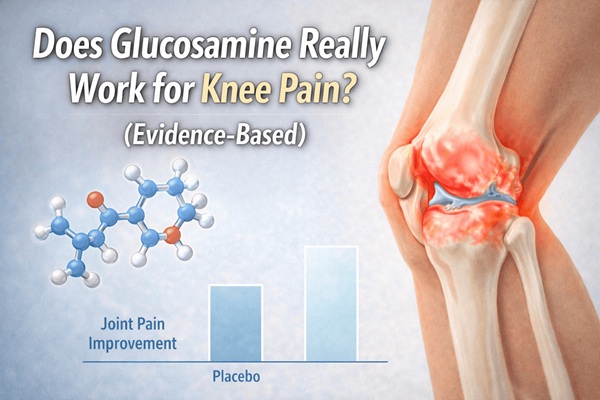
If you find yourself wincing every time you take the stairs or bend down to tie your shoes, you are not alone. Millions of adults suffering from joint stiffness turn to dietary supplements for relief, leaving them with one critical question: does glucosamine work for knee pain?
The short answer is nuanced: glucosamine is not an immediate painkiller, but clinical trial data reveals that specific crystalline forms can modestly reduce pain and slow joint space loss over 4 to 12 weeks. However, its real-world efficacy depends heavily on the chemical form you take, the severity of your joint wear, and whether your knee joint still retains adequate lubrication.
Determine Your Primary Joint Issue
Efficacy varies by underlying cause
Glucosamine works specifically on cartilage matrix preservation and structural wear. If your pain stems from acute ligament tears or structural misalignments rather than cartilage wear, supplements will offer minimal benefit.
Select Crystalline Glucosamine Sulfate
Avoid Glucosamine HCl when possible
Large European clinical trials demonstrate that prescription-grade crystalline glucosamine sulfate (1,500 mg daily) yields statistically significant pain reduction, whereas standard glucosamine hydrochloride (HCl) consistently underperforms in trials.
Commit to a 8 to 12-Week Trial
Cartilage repair is a slow metabolic process
Unlike nonsteroidal anti-inflammatory drugs (NSAIDs) that mask pain in hours, glucosamine builds up in tissue over weeks. Evaluate your mobility and morning stiffness only after 60 to 90 days of consistent daily use.
Assess Synovial Fluid Levels
Supplements require joint fluid to reach cartilage
Glucosamine acts as a cellular building block, but without thick, healthy synovial fluid to bathe the joint, these nutrients cannot penetrate damaged cartilage effectively.
How Glucosamine Functions in the Knee Joint
To evaluate glucosamine for knee pain, it helps to understand the physical mechanics of the knee joint.
Think of the hyaline cartilage in your knee as the high-grade rubber tread on a car tire. In a young, healthy joint, this rubber is thick, resilient, and slick. Every step you take transfers physical weight onto this cushion.
As time passes—or following hormonal shifts like joint pain after menopause—that tire tread begins to thin out. Friction increases, bone rubs against bone, and local inflammation flares up.
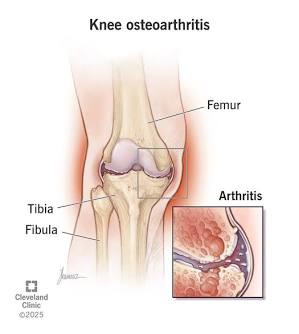
Glucosamine is an amino sugar that serves as a primary biological precursor for glycosaminoglycans and proteoglycans—the essential structural building blocks of cartilage matrix. When ingested:
- Cartilage Support: It supplies the raw material chondrocytes (cartilage cells) need to synthesize new extracellular matrix.
- Anti-Inflammatory Signaling: It inhibits nuclear factor-kappa B (NF-κB), a key inflammatory pathway responsible for cartilage breakdown.
- Enzyme Suppression: It slows down matrix metalloproteinases (MMPs), the catabolic enzymes that actively digest joint tissues.
However, taking glucosamine when cartilage is entirely worn down to bare bone is like spraying paint onto a rusted, missing car fender—it cannot rebuild tissue that no longer exists.
What the Clinical Research Says About Glucosamine for Knee Pain
Scientific research on glucosamine presents mixed findings due to variances in supplement formulations across different trials.
The GAIT Study vs. European Trials
The landmark 2006 Glucosamine/Chondroitin Arthritis Intervention Trial (GAIT), funded by the NIH, evaluated 1,583 patients with knee osteoarthritis. Overall, glucosamine hydrochloride alone did not show a statistically significant reduction in pain compared to placebo. However, a sub-group analysis revealed that patients with moderate-to-severe knee pain experienced substantial relief when combining glucosamine with chondroitin sulfate.
Conversely, major European trials published in Arch Intern Med using crystalline glucosamine sulfate (1,500 mg taken once daily) demonstrated a significant 20% to 25% reduction in pain scores, along with a measurable prevention of joint space narrowing over three years.
| Feature / Metric | Crystalline Glucosamine Sulfate | Glucosamine Hydrochloride (HCl) |
| Clinical Trial Backing | Strong (GUIDA & ROTTA trials) | Weak / Inconclusive (GAIT Trial) |
| Bioavailability Profile | High steady-state plasma levels | Lower sustained tissue uptake |
| Sulfate Ion Presence | Required for glycosaminoglycan synthesis | Lacks necessary sulfate donor group |
| Primary Indication | Mild-to-moderate knee osteoarthritis | Generic dietary joint maintenance |
| Recommended Daily Dose | 1,500 mg once daily | 1,500 mg divided throughout day |
Comparing Knee Pain Relief Strategies
Supplements are only one piece of the puzzle. Managing chronic knee stiffness usually requires comparing various interventions to find the right balance between rapid relief and long-term joint preservation.
If you are weighing physical support against chemical supplementation, reviewing a detailed breakdown like our knee brace vs supplement for knee pain comparison can help clarify which tool serves your current stage of discomfort best.
| Strategy | Speed of Onset | Duration of Benefit | Primary Mechanism | Best Suited For |
| Glucosamine Sulfate | 4 to 8 Weeks | Long-term structural | Stimulates cartilage matrix & reduces MMPs | Mild-to-moderate cartilage thinning |
| Topical NSAIDs (Voltarol) | 30 to 60 Mins | Short-term (4-6 hrs) | Blocks COX-2 localized inflammatory enzymes | Flare-ups & acute superficial pain |
| Unloader Knee Brace | Instantaneous | Immediate while wearing | Mechanically shifts load off damaged compartment | Moderate-to-severe focal osteoarthritis |
| Hyaluronic Acid Injections | 1 to 2 Weeks | 6 to 12 Months | Restores synovial fluid viscoelasticity | Moderate joint dryness & friction |
Dr. Preet Pal’s Clinical Perspective
“In my clinical practice, patients often ask why glucosamine works wonderfully for their neighbor but does nothing for them. The answer almost always comes down to synovial fluid quality.
Glucosamine provides the structural bricks for repair, but synovial fluid acts as the mortar and hydraulic transport system. If your knee joint lacks high-quality, hydrated synovial fluid (often caused by aging or diminished hyaluronan production), those structural nutrients simply cannot travel effectively into the avascular cartilage matrix. Addressing joint lubrication alongside cartilage building blocks yields far superior clinical outcomes.”
Safety, Side Effects, and Drug Interactions
Glucosamine is generally well-tolerated by most adults, but specific medical histories require caution:
- Shellfish Allergies: Most commercial glucosamine is extracted from the chitinous exoskeletons of shrimp, crab, and lobster. Individuals with severe shellfish allergies should select vegan glucosamine derived from Aspergillus niger fermentation.
- Blood Sugar Regulation: Because glucosamine is an amino sugar, early animal studies raised concerns about insulin resistance. While human trials show minimal impact on HbA1c, patients with type 2 diabetes should monitor fasting blood glucose during the first month.
- Warfarin Interaction: Glucosamine can enhance the anticoagulant effects of Warfarin (Coumadin), increasing the risk of bruising or bleeding.
Knowing when to see a doctor for joint pain is critical; if you experience sudden joint swelling, redness, severe nocturnal pain, or an inability to bear weight, consult a physician immediately rather than relying on over-the-counter supplements.
The Missing Link in Joint Care: Synovial Fluid Restoration
While glucosamine targets cartilage matrix preservation, modern joint research highlights an equally critical component: hyaluronan production and synovial fluid thickness.
Inside your knee capsule, synovial fluid acts as both a shock absorber and a lubricant. Over time, synovial fluid thins out—losing its thick, egg-white consistency and transforming into a watery liquid. When this happens:
- Cartilage faces direct mechanical friction during movement.
- Nutrients like glucosamine struggle to reach cartilage cells.
- Inflammatory cytokines accumulate inside the joint capsule.
This is why pairing cartilage support with ingredients that rehydrate and thicken the synovial fluid offers a comprehensive solution.
A Science-Backed Formulation: Joint Genesis
If standard glucosamine has failed to produce results for you, consider a formula that addresses both synovial fluid degradation and cartilage wear. Joint Genesis by BioDynamix approaches joint health through this dual-action perspective.
- Rehydrating the Synovial Matrix: Joint Genesis incorporates Mobilee®, an advanced, clinically studied form of hyaluronic acid matrix that is up to 10 times more effective than standard HA at boosting hyaluronan synthesis inside the joint.
- Quenching Inflammation: It combines Mobilee® with French Maritime Pine Bark Extract, a potent antioxidant that neutralizes destructive inflammatory cytokines and helps flush out joint stiffness.
- Enhanced Nutrient Delivery: By restoring the viscous, jelly-like cushion of the synovial fluid, Joint Genesis creates the ideal environment for raw joint nutrients to penetrate deep into the cartilage tissue.
For individuals suffering from persistent morning stiffness or grinding knee joints, addressing synovial fluid density alongside cartilage support offers an evidence-based pathway to regaining fluid mobility.
Verified Medical Sources
- National Institutes of Health (NIH – GAIT Trial): Clearing the Confusion on Glucosamine and Chondroitin
- Mayo Clinic Research Directory: Knee Osteoarthritis Treatments & Supplement Protocols
- National Institute of Arthritis and Musculoskeletal and Skin Diseases (NIAMS): Osteoarthritis Health Overview
- Arthritis Foundation: Glucosamine Sulfate Supplement Guide for Patients
Author Bio
Jennifer Collins is a wellness researcher and natural health writer focused on adults over 40. With 3+ years of experience in digital health content, Jennifer specializes in making science-backed nutrition and lifestyle strategies easy to follow and apply.
Health Disclaimer
This content is for informational purposes only and is not intended to diagnose, treat, or cure any disease. Always consult your healthcare provider before making changes to your diet or health routine. This article may include affiliate links, which come at no extra cost to you.