
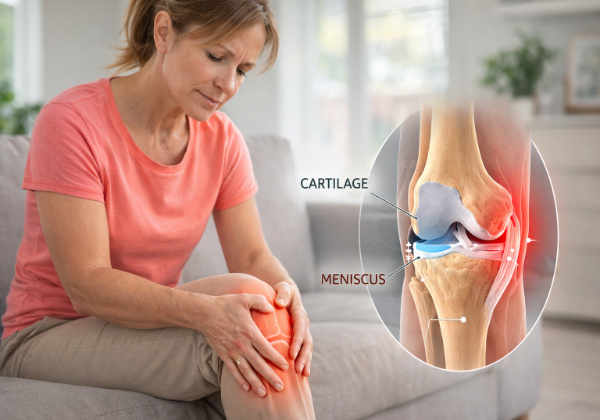
You wake up, take a few steps, and suddenly feel a dull ache inside your knee. No fall. No workout injury. No dramatic sports moment. Just pain.
If this sounds familiar, you are not alone. Many adults begin noticing inner knee pain after 40 with no injury, and it can feel confusing. After all, pain without an obvious cause often raises concern.
The good news? In many cases, the explanation is less alarming than it seems. Aging joints, lifestyle changes, and mild wear inside the knee often explain the discomfort.
This article explains why inner knee pain can appear after 40 without an injury, what conditions may cause it, and when you should consider seeing a doctor.
Table of Contents
Why Knee Pain Becomes More Common After 40
The knee is one of the hardest-working joints in the body. It supports body weight, absorbs shock, and helps you walk, climb stairs, and squat.
After age 40, natural biological changes start affecting the joint.
Several factors increase the chance of knee pain:
- Gradual cartilage wear
- Reduced joint lubrication
- Muscle loss around the knee
- Years of repetitive movement
- Slight changes in joint alignment
Think of the knee like a car that has driven many miles. It still runs well, but some parts start showing normal wear.
Research from the National Institute on Aging notes that joints naturally change with age as cartilage becomes thinner and less flexible. These changes can lead to mild pain even without a specific injury.
So if you notice inner knee pain after 40 with no injury, the cause often relates to gradual joint changes rather than sudden damage.
Understanding Where Inner Knee Pain Occurs
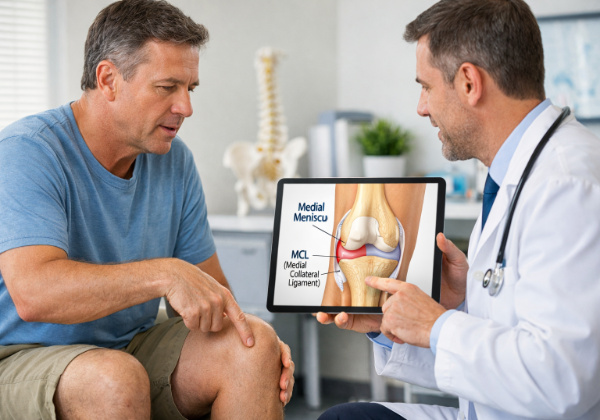
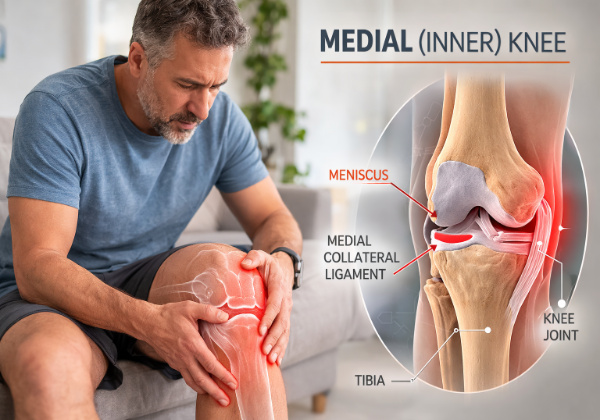
The inner side of the knee is medically called the medial knee.
This area includes several important structures:
- Medial meniscus (shock-absorbing cartilage)
- Medial collateral ligament (MCL)
- Joint cartilage
- Tendons and bursae
- Supporting muscles
Because this region carries a large portion of body weight during walking, it often becomes the first area where discomfort develops.
Pain here may feel like:
- A dull ache when walking
- Tenderness when pressing the inner knee
- Stiffness in the morning
- Pain climbing stairs
- Mild swelling
Understanding the possible causes helps you decide the next step.
Common Causes of Inner Knee Pain After 40 Without Injury
Several conditions can create inner knee pain after 40 with no injury. Most develop gradually rather than suddenly.
Let’s look at the most common ones.
1. Early Osteoarthritis
Osteoarthritis is the most common cause of knee pain in adults over 40.
This condition develops when the cartilage inside the joint slowly wears down.
Cartilage normally acts like a cushion between bones. When it becomes thinner, bones move less smoothly. This change can lead to stiffness and pain.
Typical signs include:
- Morning stiffness lasting less than 30 minutes
- Pain after long periods of standing
- Crunching or grinding sensations
- Reduced knee flexibility
Many people assume osteoarthritis always causes severe pain. In reality, early stages often produce mild inner knee discomfort without obvious injury.
The American Academy of Orthopaedic Surgeons (AAOS) reports that knee osteoarthritis frequently begins in the medial compartment, which explains why pain often appears on the inner side first.
2. Degenerative Meniscus Changes
The meniscus is a small piece of cartilage that works like a shock absorber inside the knee.
You have two menisci in each knee. The medial meniscus sits on the inner side.
In younger people, meniscus tears usually occur during sports injuries. But after 40, the cartilage becomes less flexible. Small degenerative changes can appear without a clear injury.
Doctors call this a degenerative meniscus tear.
Symptoms often include:
- Inner knee pain when twisting or turning
- Mild swelling
- A catching or locking feeling
- Pain while squatting
A study published in the New England Journal of Medicine found that many middle-aged adults show meniscus degeneration on MRI scans even without a known injury.
That means your knee might feel sore simply because the cartilage has aged.
3. Pes Anserine Bursitis
Here’s a medical name that sounds like it belongs in a biology quiz: pes anserine bursitis.
A bursa is a small fluid-filled sac that reduces friction between tissues.
The pes anserine bursa sits on the inner lower knee, where several tendons attach to the shinbone.
When this bursa becomes irritated, it can cause:
- Pain about 2–3 inches below the inner knee joint
- Tenderness when pressing the area
- Pain climbing stairs
- Discomfort after exercise
Doctors often see this condition in adults over 40, especially those who:
- Walk frequently
- Have tight hamstrings
- Carry extra body weight
The condition usually improves with rest, stretching, and strengthening exercises.
4. Muscle Imbalances and Weakness
Muscles help stabilize the knee. When they weaken, the joint absorbs more stress.
After 40, people naturally lose muscle mass, a process called sarcopenia.
Weakness in the following muscles can increase pressure on the inner knee:
- Quadriceps
- Hamstrings
- Glute muscles
When these muscles fail to support the joint properly, the knee compensates. Over time, the inner joint area may become irritated.
That is why doctors often recommend strength training as one of the best ways to prevent knee pain.
5. Overuse From Daily Activities
You do not need an intense workout to stress your knees.
Daily activities can also trigger discomfort.
Examples include:
- Long hours standing at work
- Walking on hard surfaces
- Frequent stair climbing
- Sudden increases in physical activity
These small stresses add up over time.
Imagine bending a paper clip repeatedly. Eventually it weakens, even though no single bend caused the damage.
Your knee works in a similar way.
Some adults also report painless popping sounds from the knee joint. While these sounds can feel alarming, they are often harmless. Our article Knee Popping No Pain After 40: Normal Aging or Warning Sign? explains why knees sometimes make noise without causing pain.
When Inner Knee Pain Might Signal a Bigger Issue
Most cases of inner knee pain after 40 with no injury improve with conservative care.
However, certain symptoms require medical evaluation.
See a doctor if you experience:
- Severe swelling
- Knee instability or giving out
- Inability to fully bend or straighten the knee
- Pain lasting more than several weeks
- Fever with joint pain
These symptoms may indicate more serious conditions such as ligament damage, inflammatory arthritis, or infection.
Fortunately, these situations remain less common.
How Doctors Diagnose Inner Knee Pain
Doctors usually diagnose knee pain using a combination of:
Medical history
They ask about symptoms, activity levels, and when pain started.
Physical examination
The doctor checks:
- Knee range of motion
- Joint tenderness
- Stability
- Swelling
Imaging tests (if needed)
Sometimes imaging helps confirm the diagnosis:
- X-rays detect osteoarthritis
- MRI scans show cartilage or meniscus damage
However, doctors do not always require imaging. Many knee conditions can be diagnosed through examination alone.
Simple Ways to Protect Your Knees After 40
While aging joints cannot be reversed, many strategies help reduce discomfort and protect knee health.
Strengthen Supporting Muscles
Strong muscles stabilize the knee joint.
Helpful exercises include:
- Squats
- Step-ups
- Leg raises
- Glute bridges
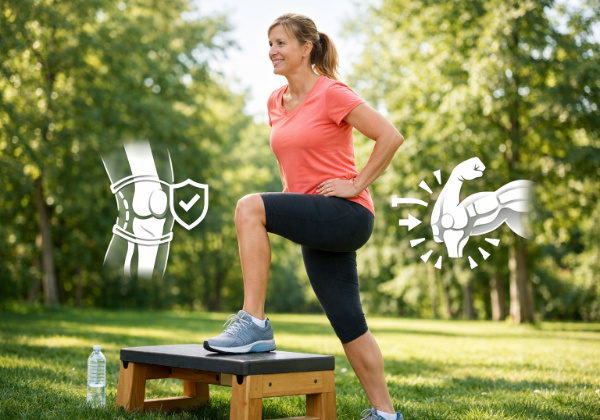
Strength training two to three times per week can significantly improve joint support.
Maintain a Healthy Weight
Body weight places direct stress on the knees.
Research from Harvard Health Publishing shows that every pound of body weight creates about four pounds of pressure on the knee joint during walking.
Even small weight loss can reduce knee strain.
Stay Active, But Avoid Overdoing It
Movement helps keep joints lubricated.
Low-impact activities work best, such as:
- Walking
- Cycling
- Swimming
- Yoga
These exercises strengthen muscles while reducing joint stress.
Improve Flexibility
Tight muscles increase knee pressure.
Regular stretching of the hamstrings, calves, and quadriceps can improve movement and reduce discomfort.
Wear Supportive Shoes
Shoes with poor cushioning or worn-out soles can shift pressure toward the inner knee.
Choose footwear that provides good arch support and shock absorption.
Your knees will appreciate it.
Frequently Asked Questions
What causes inner knee pain after 40 with no injury?
Inner knee pain after 40 with no injury is often caused by normal joint changes that occur with age. Common reasons include early knee osteoarthritis, degenerative meniscus changes, bursitis, or muscle weakness around the knee. Years of walking, standing, and daily movement can gradually wear down cartilage, which may lead to discomfort even without a specific injury.
Is inner knee pain after 40 with no injury normal?
Yes, inner knee pain after 40 with no injury is fairly common. As people age, the knee joint experiences natural wear and tear. Cartilage may become thinner and muscles supporting the knee may weaken. These changes can lead to mild pain or stiffness, especially during activities like climbing stairs, walking long distances, or standing for extended periods.
How can I relieve inner knee pain after 40 with no injury?
Several lifestyle changes can help reduce inner knee pain after 40 with no injury. Strengthening exercises for the quadriceps and hamstrings can improve knee stability. Maintaining a healthy weight reduces pressure on the joint, while low-impact activities like walking, cycling, or swimming keep the knee mobile without excessive strain. Stretching and supportive footwear can also help relieve discomfort.
When should I see a doctor for inner knee pain after 40 with no injury?
You should see a doctor if inner knee pain after 40 with no injury lasts longer than a few weeks, becomes severe, or interferes with daily activities. Medical evaluation is also important if the knee shows swelling, instability, locking, or difficulty bending and straightening. A healthcare professional can determine whether conditions such as osteoarthritis or meniscus damage are involved
Can exercise help inner knee pain after 40 with no injury?
Yes, the right type of exercise can help improve inner knee pain after 40 with no injury. Strength training builds muscles that support the knee joint, while low-impact activities help maintain joint flexibility and circulation. Exercises like leg raises, step-ups, cycling, and yoga are commonly recommended to support knee health and reduce long-term discomfort.
The Bottom Line
Experiencing inner knee pain after 40 with no injury can feel worrying at first. But in many cases, the cause relates to normal joint changes that occur with age.
Common explanations include early osteoarthritis, degenerative meniscus changes, bursitis, muscle weakness, or simple overuse.
The encouraging news is that many people manage knee discomfort successfully with lifestyle adjustments such as strengthening exercises, maintaining a healthy weight, and staying active.
If pain becomes severe, persistent, or limits daily activities, a medical evaluation can help identify the exact cause and guide treatment.
Your knees may not be brand new after 40—but with the right care, they can keep supporting you for many years ahead.
Sources
- National Institute on Aging – Joint Health and Aging
- American Academy of Orthopaedic Surgeons – Knee Osteoarthritis
- Harvard Health Publishing – Knee Pain and Joint Stress
- Englund M, et al. “Meniscal Tear in Knees Without Surgery.” New England Journal of Medicine
- Cleveland Clinic – Pes Anserine Bursitis
Author Bio
Jennifer Collins is a wellness researcher and natural health writer focused on adults over 40. With 3+ years of experience in digital health content, Jennifer specializes in making science-backed nutrition and lifestyle strategies easy to follow and apply.
Health Disclaimer
This content is for informational purposes only and is not intended to diagnose, treat, or cure any disease. Always consult your healthcare provider before making changes to your diet or health routine. This article may include affiliate links, which come at no extra cost to you.