

Dr. Preet Pal SB, MD
Physician specializing in diabetes, metabolic health, and joint care management. Read More About Dr. Preet Pal’s Medical Credentials & Editorial Integrity Here
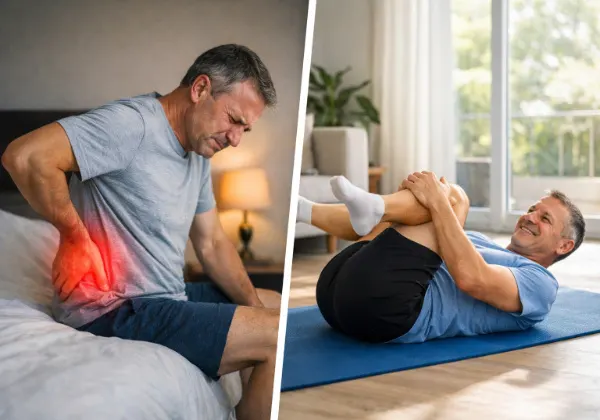
Sharp, aching pain right at the base of your spine can make sitting, walking, or even sleeping feel miserable. When the sacrum and ilium misalign, targeted SI joint pain exercises restore stability, relieve deep nerve irritation, and rebuild strength across your pelvic floor and glutes.
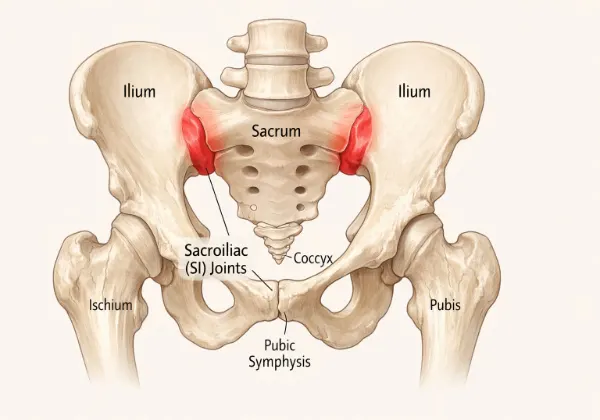
Think of your sacroiliac (SI) joints as the heavy-duty shock absorbers of your car. Located right where your lower spine meets your pelvis, these rigid joints absorb the impact between your upper body and legs. When the surrounding ligaments stretch out or stiffen up, your shock absorbers lose alignment, causing friction, inflammation, and localized stiffness.
Table of Contents
Quick Guide: Core Exercises for SI Joint Pain Relief
Targeted exercises for si joint pain relief focus on stabilization rather than aggressive flexibility
Quick Routine: Core Exercises for SI Joint Pain Relief
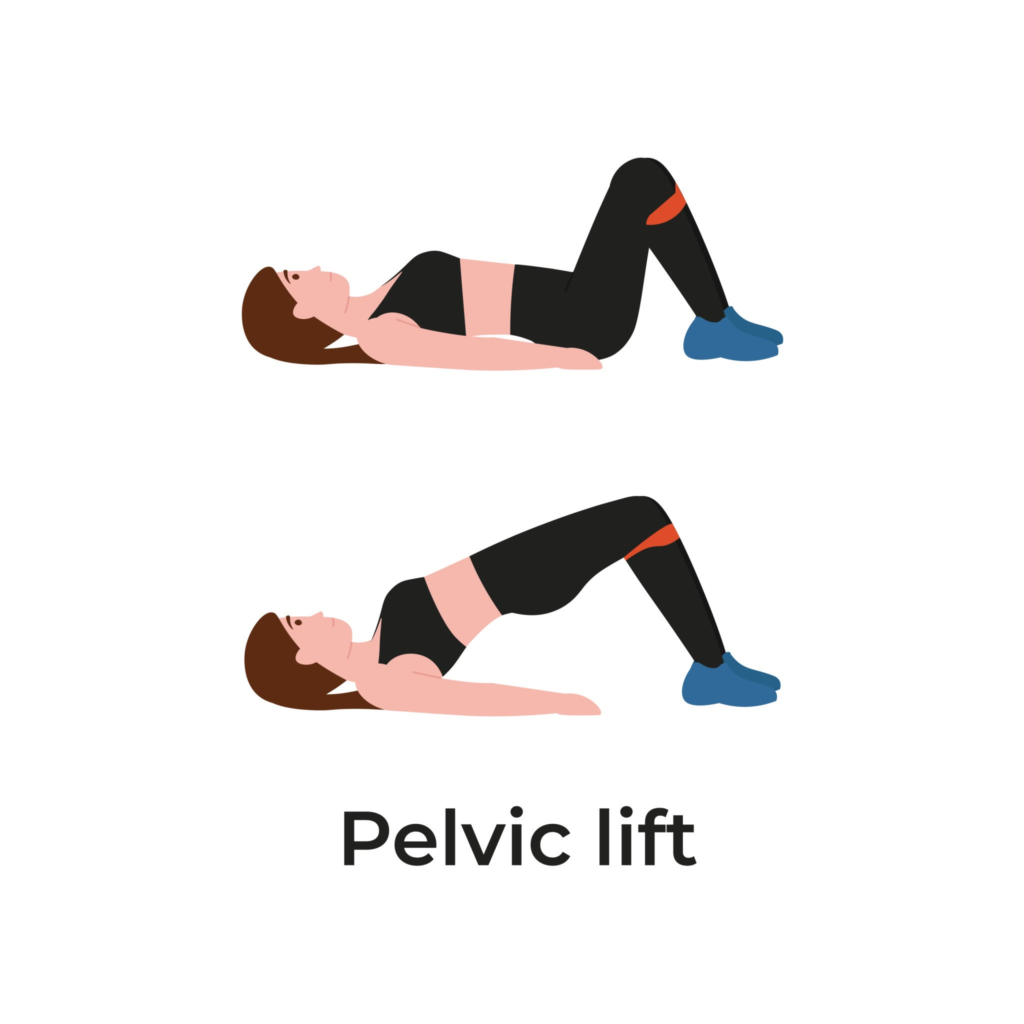
Isometric Pelvic Tilt
Resets pelvic alignment & activates deep transverse abdominisLie on your back with knees bent. Tighten your core, tilt your pelvis upward, and flatten your lower back against the floor. Hold for 5 seconds and repeat 10–12 times.
Glute Bridge with Pillow Squeeze
Stabilizes the SI joint capsule via hip adductor engagementPlace a firm pillow between your knees. Squeeze the pillow, press through your heels, and lift your hips until your thighs line up with your torso. Lower with control (10 reps).
Side-Lying Clamshell
Strengthens gluteus medius to eliminate pelvic asymmetryLie on your side with knees bent at 90 degrees. Keep your feet stacked together and slowly lift your top knee while keeping your pelvis locked in place. Perform 12 reps per side.
Quadruped Bird-Dog
Rebuilds cross-body spinal stabilization without shearing forceStart on hands and knees. Extend your right arm forward and left leg backward until parallel to the floor. Hold for 3 seconds, return to center, and alternate sides (10 reps per side).
What Causes SI Joint Dysfunction and Pain?
Your SI joints move only 2 to 4 millimeters in any direction. When micro-hypermobility (too much loose movement) or hypomobility (stiffness) occurs, the surrounding nerve endings fire off pain signals down your buttock, groin, and upper thigh.
Common drivers include muscular imbalances, pregnancy-related ligament laxity, or compensation patterns after an injury. Knowing when to see doctor for joint pain is critical if your discomfort is accompanied by numbness, tingling, or severe leg weakness.
8 Proven Exercises for SI Joint Pain Relief
To fix a unstable SI joint, you must train the surrounding muscle groups—glutes, hamstrings, and deep abdominals—to act as an internal brace.
1. Pelvic Tilt
Pelvic tilts compress the sacroiliac joint gently into its anatomical socket, reducing micro-slippage.
- Execution: Lie flat on your back, knees bent, feet flat on the floor. Exhale while pulling your belly button toward your spine, pressing your lower back flush to the mat. Hold for 5 seconds.
- Frequency: 2 sets of 10–12 repetitions daily.
2. Glute Bridge
Weak gluteal muscles leave the pelvis vulnerable to twisting forces. Bridges load the posterior chain evenly.
- Execution: Drive through your heels to raise your hips. Keep a straight line from knees to shoulders without arching your lower spine.
- Frequency: 3 sets of 10 repetitions.
3. Clamshells
The gluteus medius prevents your pelvis from dropping when walking. Clamshells build localized endurance in this lateral stabilizer.
- Execution: Stack your hips while lying on your side. Lift the top knee while keeping heels pressed together. Do not allow your lower back to rotate open.
- Frequency: 2 sets of 15 reps on each side.
4. Bird-Dog
This movement reinforces the diagonal sling system of muscles that connects your opposite latissimus dorsi to your gluteus maximus.
- Execution: From all fours, reach one hand forward and the opposite leg backward. Focus on keeping your pelvis completely parallel to the mat.
- Frequency: 10 slow reps per side.
5. Double Knee-to-Chest Stretch

This gentle stretch decompresses inflamed sacral nerves and releases tight lumbar erectors.
- Execution: Pull both knees up toward your chest, gripping behind your thighs. Pull gently until you feel a light release in your lower back.
- Frequency: Hold for 30 seconds; repeat 3 times.
6. Hip Adductor Pillow Squeeze
Isometric inner thigh contractions pull the front pelvic pubic symphysis together, which creates reciprocal stabilization across the back SI joints.
- Execution: Place a foam roller or pillow between your knees while lying down. Squeeze with 50% effort for 5 to 10 seconds.
- Frequency: 10 repetitions.
7. Gentle Child’s Pose
Child’s pose stretches tight hip rotators that pull the ilium bone out of alignment.
- Execution: Kneel, separate your knees wide, bring big toes together, and shift your hips back onto your heels while extending your arms forward.
- Frequency: Hold for 45–60 seconds, taking deep diaphragmatic breaths.
8. Standing Hamstring Stretch
Tight hamstrings exert a downward pull on the ischial tuberosity (sit bones), tilting the pelvis backward and straining the SI joint.
Frequency: Hold 30 seconds per leg; repeat twice.
Execution: Prop one heel up on a low stool. Maintain a flat back and hinge slightly forward from the hip joint until a mild stretch is felt in the back of your leg.
Tip: Avoid arching your lower back.
SI Joint Pain vs. Lumbar Sciatica: Comparison Guide
Because symptoms overlap significantly, mistaking SI joint dysfunction for a herniated lumbar disc is common. Reviewing targeted sacroiliac joint dysfunction exercises ensures you choose moves designed for pelvic alignment rather than lumbar flexion.
| Symptom / Feature | Sacroiliac (SI) Joint Dysfunction | Lumbar Disc Herniation / Sciatica |
|---|---|---|
| Primary Pain Location | One side of lower back, buttock, or upper thigh | Lower back radiating past the knee down to the foot |
| Pain Character | Dull ache, localized throbbing, sharp upon standing | Burning, electric shock, sharp shooting sensation |
| Aggravating Movements | Single-leg weight bearing, turning in bed, stair climbing | Forward bending, coughing, prolonged sitting |
| Relieving Positions | Lying down with knees bent, pelvic compression belts | Standing, walking, lumbar extension (cobra pose) |
| Neurological Symptoms | Rare (usually confined above knee) | Common (numbness, tingling, loss of reflexes in foot) |
Dr. Preet Pal’s Clinical Perspective
“In clinical practice, I often see patients spend months doing aggressive spinal stretches for suspected disc issues, only to worsen their pain. The SI joint requires stability over mobility. If your pain worsens when standing up from a chair or rolling over in bed, focus on low-impact isometric strengthening rather than deep lumbar flexions. Restoring functional control to the deep pelvic floor and glutes is usually the turning point for recovery.”
What Movements and Habits Should You Avoid?
When working through an SI joint flare-up, avoid movements that create asymmetrical shearing forces on your pelvis:
- Single-Leg Loading: Avoid lunges, running on uneven terrain, or standing with your weight shifted onto one hip.
- Deep Lumbar Twisting: High-velocity spinal twists can disrupt healing ligament fibers.
- Aggressive Hamstring Pulls: Deep forward folds without a neutral spine pull your sacrum out of alignment.
- High-Impact Cardio: Jumping rope, plyometrics, or heavy squatting under a barbell add unnecessary compression.
If your systemic joint pain spreads beyond your lower back into smaller joints like your knees or ankles, evaluate potential inflammatory triggers, such as those seen in reactive arthritis symptoms joints.
Cellular Joint Health: Rebuilding Synovial Fluid
While stabilization exercises correct mechanical movement, internal joint health relies heavily on your body’s ability to lubricate cartilage surfaces. Inside your SI joint capsule, synovial fluid acts as a dynamic hydraulic cushion. As we age, declining hyaluronan molecules reduce fluid viscosity, increasing friction across cartilage plates.
Scientific Spotlight: Supporting Joint Integrity with Joint Genesis
To target the biological root of persistent joint friction, modern integrative protocols often pair physical therapy with Targeted Synovial Fluid Restoratives.
- Nutritional Mechanism: Supplements like Joint Genesis utilize patented ingredients (such as Mobilee®) designed to boost hyaluronan concentration in synovial fluid by up to 10-fold.
- Cartilage Nourishment: Enhanced fluid viscosity delivers vital nutrients directly to avascular cartilage tissue, reducing micro-friction during pelvic movement.
- Clinical Integration: When combined with daily stability exercises, restoring synovial fluid volume helps dampen chronic inflammatory cascades, making movement smoother and less painful.
What to Avoid With SI Joint Pain
Some movements can increase irritation and delay recovery.
Avoid:
- Heavy lifting with poor form
- High-impact activities like jumping
- Deep twisting movements
- Sudden or jerky stretches
If an exercise causes sharp or worsening pain, stop immediately.
How Often Should You Do SI Joint Pain Exercises?
Consistency matters more than intensity.
Recommended routine:
- 10–20 minutes per day
- Focus on slow, controlled movements
- Combine stretching and strengthening exercises
You don’t need a gym. A simple daily routine at home works well.

When Should You See a Doctor?
Exercises help many people, but they don’t replace medical care in every case.
Consult a healthcare professional if:
- Pain lasts more than a few weeks
- Pain travels down your leg
- You experience numbness or weakness
- Daily activities become difficult
A physical therapist can create a personalized plan for your condition.
Long-Term Tips for SI Joint Health
Managing SI joint pain requires more than exercise alone.
Focus on these habits:
- Maintain good posture while sitting and standing
- Avoid sitting for long periods without breaks
- Stay physically active with low-impact movement
- Strengthen your core and hip muscles regularly
Small daily improvements often lead to lasting results.
Frequently Asked Questions
What are the best SI joint pain exercises for quick relief?
The best SI joint pain exercises for quick relief include pelvic tilts, knee-to-chest stretches, bridges, and clamshells. These movements help stabilize the pelvis, reduce pressure on the SI joint, and improve flexibility. Start slowly and focus on controlled movements rather than intensity.
How often should I do SI joint pain exercises?
You can perform SI joint pain exercises daily for the best results. A routine of 10–20 minutes per day is usually enough to improve stability and reduce discomfort. Consistency matters more than doing too many exercises at once.
Can SI joint pain exercises make the pain worse?
SI joint pain exercises should not cause sharp or worsening pain. If you feel discomfort beyond mild stretching, stop immediately. Avoid high-impact or twisting movements, as they can irritate the SI joint instead of helping it heal.
How long does it take for SI joint pain exercises to work?
Most people notice improvement within 2 to 4 weeks of doing SI joint pain exercises regularly. Results depend on consistency, proper form, and the underlying cause of the pain. Long-term relief often requires ongoing strengthening and posture correction.
Are SI joint pain exercises safe for seniors?
Yes, most SI joint pain exercises are safe for seniors when done gently and with proper form. Low-impact movements like pelvic tilts, bridges, and seated stretches can help improve mobility and reduce stiffness without putting extra stress on the joints.
Final Thoughts
SI joint pain can feel frustrating, especially when it starts affecting simple things like sitting, walking, or getting out of bed. The good news is that you don’t need complicated routines to see results. Consistency with the right SI joint pain exercises can gradually improve stability, reduce discomfort, and help you regain confidence in your movement.
Focus on slow, controlled exercises instead of rushing through reps. Quality always beats quantity. Even 10–15 minutes a day can make a noticeable difference over time. Pair these exercises with better posture, regular movement breaks, and proper body mechanics throughout your day.
It’s also important to stay realistic. Recovery doesn’t happen overnight, but small daily efforts add up faster than you think. If you ever feel sharp or worsening pain, pause and reassess your technique or seek professional guidance.
If your symptoms continue or you’re trying to avoid more invasive treatments, it may help to explore broader options. This guide on Hip Replacement Alternatives Natural: 9 Proven Options explains practical, non-surgical ways to manage joint pain safely and effectively.
At the end of the day, your goal isn’t just pain relief—it’s better movement, stronger support, and long-term joint health. Stay consistent, listen to your body, and keep moving forward.
Verified Medical Sources
- Mayo Clinic – Sacroiliac Joint Dysfunction Evaluation & Care
- National Institute of Arthritis and Musculoskeletal and Skin Diseases (NIAMS) – Back Pain Overview & Exercise Protocols
- Arthritis Foundation – Managing Pelvic & Hip Joint Osteoarthritis
- Centers for Disease Control and Prevention (CDC) – Physical Activity Guidelines for Chronic Joint Conditions
Author Bio
Jennifer Collins is a wellness researcher and natural health writer focused on adults over 40. With 3+ years of experience in digital health content, Jennifer specializes in making science-backed nutrition and lifestyle strategies easy to follow and apply.
Health Disclaimer
This content is for informational purposes only and is not intended to diagnose, treat, or cure any disease. Always consult your healthcare provider before making changes to your diet or health routine. This article may include affiliate links, which come at no extra cost to you.