
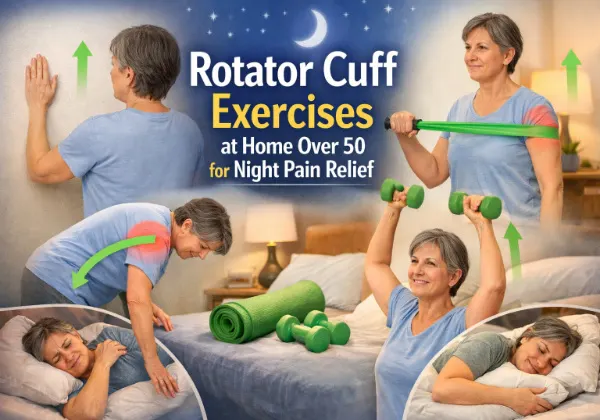
Shoulder pain at night can feel relentless. You finally lie down, ready to rest, and your shoulder decides it’s time to complain. If you are over 50, this problem becomes even more common. Aging changes your joints, muscles, and recovery speed. The good news is simple. The right rotator cuff exercises at home over 50 can reduce pain, improve mobility, and help you sleep better again.
This guide walks you through safe, effective, and research-backed exercises you can do at home. No fancy equipment. No complicated routines. Just clear steps that actually work.
Table of Contents
Why Shoulder Pain Gets Worse at Night After 50
Let’s start with the “why,” because understanding your body helps you fix it faster.
As you age, your rotator cuff tendons lose elasticity. Blood flow also decreases slightly. This makes healing slower. At night, when you lie still, fluid can build up around irritated tissues. That increases pressure and pain.
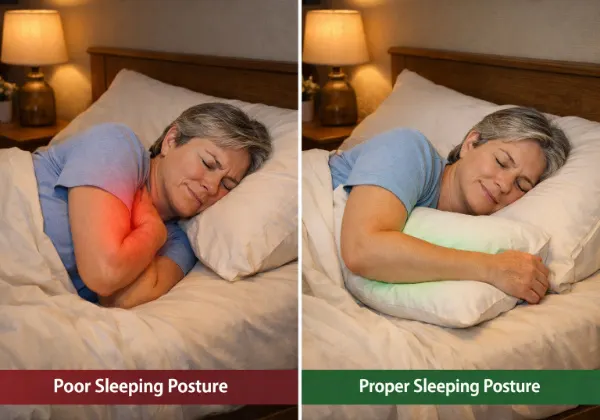
Also, your sleeping position matters more than you think. If you lie on the painful shoulder, you compress already sensitive tissues. Even lying on your back without support can strain the joint.
The result? That dull ache turns into sharp discomfort right when you want to sleep.

What Is the Rotator Cuff and Why It Matters
Your rotator cuff is a group of four muscles and tendons. They stabilize your shoulder joint and allow smooth movement.
These muscles help you lift your arm, rotate it, and reach overhead. When they weaken or become inflamed, even simple tasks like combing your hair or reaching a shelf can hurt.
That’s why focusing on rotator cuff exercises at home over 50 is not optional. It is essential.
Benefits of Doing Rotator Cuff Exercises at Home Over 50
Consistency beats intensity here. You do not need heavy weights or gym sessions.
When done correctly, these exercises can:
- Reduce nighttime shoulder pain
- Improve joint stability
- Increase range of motion
- Prevent further injury
- Help you sleep without discomfort
And yes, they can make everyday tasks easier again. That includes lifting groceries or reaching for your favorite mug.
Before You Start: Safety Rules That Matter
Let’s keep things smart and safe.
First, warm up for 5 minutes. A simple arm swing or light walk works well. Cold muscles resist movement.
Second, avoid sharp pain. Mild discomfort is okay. Sharp or stabbing pain is not.
Third, move slowly. Fast movements often lead to injury, especially after 50.
Finally, breathe normally. Holding your breath increases tension.
10 Safe Rotator Cuff Exercises at Home (Over 50 Edition)
1. Pendulum Stretch
This is your starting point. It relaxes the shoulder and reduces stiffness.
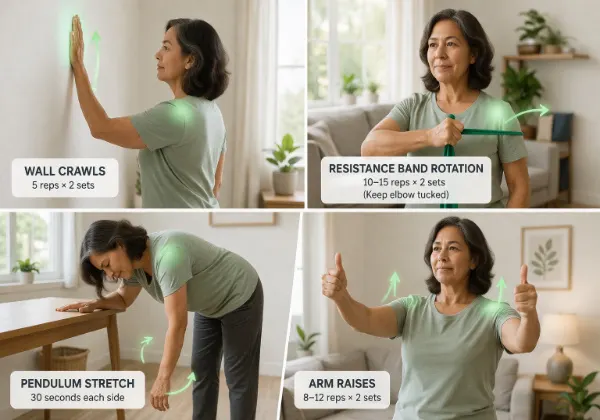
Stand and lean forward slightly. Let your arm hang down. Gently swing it in small circles. Keep the movement controlled.
Do this for 30 seconds in each direction.
2. Wall Crawls (Forward)
Face a wall. Place your fingers on it. Slowly walk your fingers upward.
Go as high as you can without pain. Hold for a few seconds, then walk back down.
This improves flexibility and control.
3. Wall Crawls (Side)
Stand sideways to a wall. Use the same finger walking technique.
This targets a different angle of shoulder movement. That matters for full recovery.
4. Shoulder Blade Squeeze
Sit or stand straight. Pull your shoulder blades together.
Hold for 5 seconds. Relax.
This strengthens the muscles that support your shoulder. Many people ignore this, but it plays a big role in reducing pain.
5. External Rotation with Resistance Band
Hold a light resistance band. Keep your elbow close to your body.
Rotate your forearm outward slowly. Return to the start.
This exercise strengthens key rotator cuff muscles.
6. Internal Rotation with Resistance Band
This is the opposite movement.
Pull the band inward toward your body. Keep your elbow tucked in.
Together, internal and external rotations build balanced strength.
7. Arm Raises (Front)
Lift your arm forward slowly to shoulder height. Lower it back down.
Use no weight or very light weight. Control matters more than load.
8. Arm Raises (Side)
Lift your arm sideways. Stop at shoulder height.
Keep your thumb slightly pointing upward. This reduces strain.
9. Towel Stretch
Hold a towel behind your back with both hands.
Use your top hand to gently pull upward. This stretches the shoulder.
It may feel tight at first. That is normal.
10. Isometric Shoulder Hold
Stand near a wall. Press your hand gently against it without moving your arm.
Hold for 5 to 10 seconds.
This builds strength without joint movement. It is perfect if you feel pain during motion.
How Often Should You Do These Exercises?
Consistency wins here.
Do these rotator cuff exercises at home over 50 at least 4 to 5 times per week. Each session can take 15 to 20 minutes.
You do not need to rush. Your goal is steady progress, not instant results.
Most people notice improvement within 3 to 6 weeks.
Common Mistakes That Slow Your Recovery
Let’s avoid the usual traps.
Many people push too hard. That backfires. Overtraining increases inflammation.
Others skip warm-ups. That increases injury risk.
Some people also ignore posture. Slouching puts extra strain on your shoulder.
And here’s a classic mistake. People stop once the pain improves. Consistency matters even after relief.
Best Sleeping Tips to Reduce Shoulder Pain at Night
Exercise helps, but your sleep habits matter just as much.
If you sleep on your side, avoid the painful shoulder. Place a pillow in front of you and rest your arm on it.
If you sleep on your back, use a small pillow under your arm. This keeps your shoulder in a neutral position.
Also, choose a supportive mattress and pillow. Too soft or too firm can worsen pain.
If changing your sleep position doesn’t fully solve the issue, you can explore more proven solutions in Shoulder Pain at Night Can’t Sleep? Proven Causes & Fixes After 40.
When Should You See a Doctor?
Exercise works for most people. But not always.
You should consult a doctor if:
- Pain lasts more than a few weeks
- You cannot lift your arm
- Pain worsens over time
- You feel weakness or numbness
These signs may indicate a more serious issue like a tear.
The Science Behind Rotator Cuff Exercises
Research supports targeted shoulder exercises for pain relief and function.
Studies show that strengthening and mobility exercises improve outcomes in people with rotator cuff problems. Especially in older adults, structured home exercise programs can reduce pain and improve daily function.
That means your effort here is not guesswork. It is backed by real evidence.
Frequently Asked Questions
What are the best rotator cuff exercises at home over 50?
The best rotator cuff exercises at home over 50 include pendulum swings, wall crawls, shoulder blade squeezes, and resistance band rotations. These exercises improve strength and flexibility without putting too much stress on aging joints. Start with slow movements and focus on proper form to avoid injury.
Can rotator cuff exercises at home over 50 reduce shoulder pain at night?
Yes, rotator cuff exercises at home over 50 can help reduce shoulder pain at night. These exercises improve blood flow, strengthen shoulder muscles, and reduce inflammation. With consistent practice, many people notice better sleep and less discomfort within a few weeks.
How often should I do rotator cuff exercises at home over 50?
You should perform rotator cuff exercises at home over 50 about 4 to 5 times per week. Each session can last 15 to 20 minutes. Consistency is key, as regular exercise helps restore shoulder stability and prevents stiffness.
Are rotator cuff exercises at home over 50 safe for beginners?
Yes, most rotator cuff exercises at home over 50 are safe for beginners when done correctly. Start with low-intensity movements like pendulum stretches and avoid heavy weights. If you feel sharp pain, stop immediately and consult a healthcare professional.
How long does it take for rotator cuff exercises at home over 50 to work?
Rotator cuff exercises at home over 50 usually start showing results within 3 to 6 weeks. Pain reduction and improved mobility depend on consistency and proper technique. Staying patient and following a routine is essential for long-term relief.
Final Thoughts
Shoulder pain at night can feel frustrating, especially after 50. But it does not have to control your life.
With the right rotator cuff exercises at home over 50, you can reduce pain, improve strength, and sleep better again.
Stay consistent. Move carefully. Listen to your body.
And remember, small daily efforts often lead to the biggest results.
Sources
- American Academy of Orthopaedic Surgeons
- Mayo Clinic – Rotator Cuff Injury
- National Institute on Aging – Exercise and Physical Activity
- Cleveland Clinic – Shoulder Pain Causes and Treatment