

If you’ve noticed a strange sound in your shoulder lately, you’re not alone. Many people over 40 experience shoulder clicking when rotating arm, and it can feel confusing or even alarming at first.
The good news is simple. In most cases, shoulder clicking is not dangerous. But it can signal early joint changes that deserve attention. Ignoring it completely is not a smart move either.
Let’s break this down in a clear, honest, and practical way so you understand what your body is trying to tell you.
Table of Contents
What Does Shoulder Clicking When Rotating Arm Mean?
That clicking, popping, or snapping sound has a medical name. Doctors call it crepitus. It happens when structures inside your shoulder move unevenly.
Your shoulder is one of the most mobile joints in your body. It relies on muscles, tendons, ligaments, and cartilage working together smoothly. When even one part gets irritated or worn down, you may notice shoulder clicking when rotating arm.
Sometimes, it feels harmless. Other times, it comes with stiffness or pain.
Here’s a quick reality check. A silent shoulder is ideal. A noisy shoulder is a signal, not always a problem, but definitely a message.

Why Shoulder Clicking Gets Common After 40
Aging plays a big role. Your body does not suddenly break down at 40, but gradual changes begin to show.
Cartilage becomes thinner over time. Tendons lose flexibility. Muscles weaken if you stay inactive. All these factors increase the chances of shoulder clicking when rotating arm.
Let’s keep it real. You may not notice these changes in your 20s or 30s. But after 40, your shoulder demands better care.
Research from organizations like the American Academy of Orthopaedic Surgeons confirms that joint wear increases with age, especially in highly mobile joints like the shoulder.
Common Causes of Shoulder Clicking When Rotating Arm
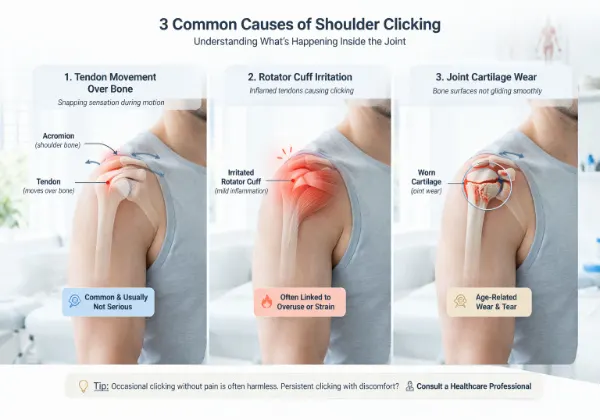
1. Tendon Movement Over Bone
This is one of the most common causes. Your tendons glide over bones during movement. If they become tight or inflamed, they may snap slightly.
That snapping creates the clicking sound you hear.
It usually feels painless. But repeated irritation can lead to inflammation later.
2. Rotator Cuff Changes
Your rotator cuff includes four muscles that stabilize your shoulder. Over time, these tendons may weaken or develop small tears.
This often leads to shoulder clicking when rotating arm, especially when lifting or reaching overhead.
You might also notice mild pain or weakness. If yes, do not ignore it.
3. Shoulder Impingement
Shoulder impingement happens when soft tissues get compressed between bones.
This condition often develops gradually. It can cause both clicking and discomfort.
You may feel the sound when raising your arm or rotating it outward.
4. Labral Issues
The labrum is a ring of cartilage that stabilizes your shoulder socket.
Small tears in the labrum can create a catching or clicking sensation.
This type of shoulder clicking when rotating arm may feel deeper inside the joint.
5. Arthritis
Yes, arthritis can be part of the story.
As cartilage wears down, bones may rub against each other. This creates grinding or clicking sounds.
According to the Centers for Disease Control and Prevention, osteoarthritis becomes more common with age and often affects joints like the shoulder.
6. Gas Bubbles in the Joint
This one sounds strange but stay with me.
Sometimes, small gas bubbles form in joint fluid and collapse during movement. This can create a popping sound.
This type of shoulder clicking when rotating arm is harmless and temporary.
When Should You Worry?
Not all clicking needs treatment. But you should pay attention to warning signs.
If your shoulder clicking comes with any of these, take it seriously:
- Persistent pain
- Weakness in the arm
- Limited range of motion
- Swelling or stiffness
- A feeling that the joint is unstable
Pain changes the situation. Clicking without pain often stays harmless. Clicking with pain needs evaluation.
Simple Self-Check at Home
You do not need fancy equipment to observe your shoulder.
Try this simple test.
Stand straight and slowly rotate your arm in circles. Notice the sound and sensation.
Ask yourself:
- Does it click every time?
- Does it hurt?
- Does it feel stuck or smooth?
If the answer includes pain or stiffness, your body is asking for attention.
How to Reduce Shoulder Clicking Naturally

Let’s talk solutions. You can improve shoulder clicking when rotating arm with simple daily habits.
Improve Shoulder Mobility
Gentle stretching helps your tendons move smoothly again.
Try slow arm circles and shoulder rolls. Keep movements controlled.
Do not rush. Your shoulder prefers patience.
Strengthen the Rotator Cuff
Weak muscles increase joint instability.
Focus on light resistance exercises. Use resistance bands instead of heavy weights.
Strong muscles help reduce clicking over time.
Fix Your Posture
Poor posture is a silent troublemaker.
If you sit hunched over your phone or laptop, your shoulder alignment suffers.
Sit upright. Keep your shoulders relaxed and back.
Good posture reduces unnecessary strain.
Stay Active but Smart
Movement is medicine. But overdoing it creates problems.
Avoid sudden heavy lifting or repetitive overhead movements.
Balance activity with recovery.
Apply Ice or Heat When Needed
If inflammation is present, ice can reduce it.
Heat works better for stiffness.
Use each wisely based on how your shoulder feels.
Exercises That Help Shoulder Clicking
You do not need a gym membership for this.
Start with simple exercises that improve joint control.
Pendulum Exercise
Lean forward and let your arm hang. Gently swing it in small circles.
This relaxes the joint.
Wall Slides
Stand against a wall and slowly raise your arms upward.
Keep your movement smooth and controlled.
External Rotation with Band
Use a resistance band and rotate your arm outward.
This strengthens the rotator cuff.
Consistency matters more than intensity.
What to Avoid
Let’s be honest. Many people make things worse without realizing it.
Avoid these habits:
- Ignoring pain signals
- Lifting heavy weights without proper form
- Sleeping on the painful shoulder
- Sudden jerky movements
Your shoulder is not fragile, but it does not like abuse either.
Can Shoulder Clicking Go Away?
Yes, in many cases it can.
If the cause is minor, like tendon tightness or posture issues, improvement happens within weeks.
But if the issue involves structural damage like a tear or arthritis, the clicking may not disappear completely.
The goal then shifts. You focus on reducing pain and improving function.
When to See a Doctor
If your shoulder clicking when rotating arm does not improve after a few weeks, it is time to get professional help.
Doctors may suggest:
- Physical therapy
- Imaging tests like MRI
- Targeted exercises
- Anti-inflammatory treatments
Early care prevents bigger problems later.
Before considering advanced treatment, many people benefit from trying Rotator Cuff Exercises at Home Over 50 for Night Pain Relief to manage symptoms naturally.
The Role of Lifestyle After 40
Here’s the part many people overlook.
Your daily habits directly affect your joints.
After 40, recovery slows down. That does not mean you stop moving. It means you move smarter.
Eat a balanced diet. Stay hydrated. Maintain a healthy weight.
Your shoulder is part of a bigger system. Treat your body as a whole.
A Little Humor for Perspective
Let’s be honest for a second.
If your shoulder clicks once in a while, it is not plotting against you.
Your body is not falling apart. It is just asking for better maintenance.
Think of it like a door hinge. If it squeaks, you do not panic. You oil it.
Your shoulder works the same way. Give it care, not fear.
Frequently Asked Questions
Why do I hear shoulder clicking when rotating my arm after 40?
Shoulder clicking when rotating your arm after 40 usually happens due to natural aging changes like tendon tightness, reduced joint lubrication, or mild cartilage wear. In many cases, it is harmless. However, if the clicking comes with pain or stiffness, it may indicate conditions like rotator cuff issues or shoulder impingement.
Is shoulder clicking when rotating arm a serious problem?
Shoulder clicking when rotating arm is not always serious, especially if there is no pain. Many people experience painless clicking due to normal tendon movement. But if you notice pain, weakness, or limited motion along with the clicking, it is important to get it checked to rule out injuries or joint damage.
How can I stop shoulder clicking when rotating my arm naturally?
You can reduce shoulder clicking when rotating your arm by improving shoulder mobility, strengthening the rotator cuff muscles, and correcting posture. Simple exercises like arm circles, resistance band rotations, and wall slides help restore smooth movement and reduce noise over time.
When should I worry about shoulder clicking when rotating arm?
You should worry about shoulder clicking when rotating arm if it is accompanied by pain, swelling, weakness, or a feeling that the joint is unstable. These symptoms may indicate conditions like a rotator cuff tear, labral injury, or arthritis and require medical evaluation.
Can exercise fix shoulder clicking when rotating arm?
Yes, exercise can often improve shoulder clicking when rotating arm, especially if the cause is muscle weakness or poor movement patterns. Targeted strengthening and mobility exercises can stabilize the joint and reduce clicking. However, if the clicking is due to structural damage, exercises should be done under professional guidance.
Final Thoughts
Shoulder clicking when rotating arm is common after 40, and in most cases, it is not dangerous.
But it is a signal worth understanding.
Your shoulder thrives on movement, strength, and good habits. Ignore it, and the problem may grow. Care for it, and you can keep it strong for years.
Listen to your body. It speaks quietly at first. You just need to pay attention.
Sources
- American Academy of Orthopaedic Surgeons
- Centers for Disease Control and Prevention
- Mayo Clinic
- National Institute of Arthritis and Musculoskeletal and Skin Diseases
- Cleveland Clinic
Author Bio
Jennifer Collins is a wellness researcher and natural health writer focused on adults over 40. With 3+ years of experience in digital health content, Jennifer specializes in making science-backed nutrition and lifestyle strategies easy to follow and apply.
Health Disclaimer
This content is for informational purposes only and is not intended to diagnose, treat, or cure any disease. Always consult your healthcare provider before making changes to your diet or health routine. This article may include affiliate links, which come at no extra cost to you.