

Dr. Preet Pal SB, MD
Physician specializing in diabetes, metabolic health, and joint care management. Read More About Dr. Preet Pal’s Medical Credentials & Editorial Integrity Here
Non-surgical trigger finger treatment successfully resolves symptoms in up to 80–85% of mild to moderate cases (Green’s Grades I and II). The core strategy relies on custom nighttime splinting (holding the MCP joint at 0° to $10^\circ$ extension for 6 to 8 weeks) combined with micro-tendon gliding exercises and targeted topical anti-inflammatory therapy. If conservative care fails after 4 to 6 weeks, a single corticosteroid injection into the A1 pulley sheath provides rapid, long-term remission for most patients without invasive surgery.
Understanding the Mechanical Snag: The A1 Pulley “Tunnel”
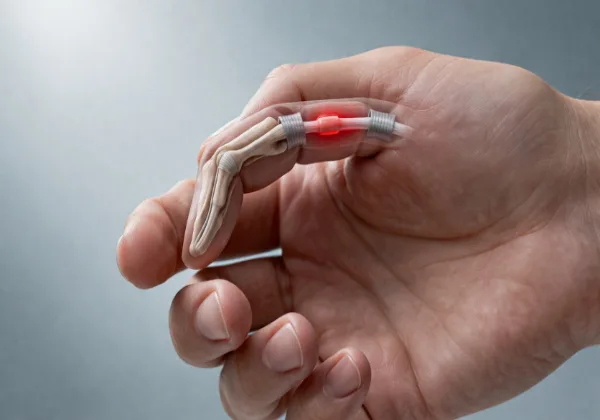
Trigger finger (known medically as stenosing tenosynovitis) is not a problem with your bones or joints—it is a mechanical bottleneck in your flexor tendon system.
Think of your flexor tendon like a braided climbing rope sliding through a series of rigid guide rings called pulleys. The first ring at the base of your finger is the A1 pulley. When repetitive gripping, micro-trauma, or localized swelling creates a knot-like nodule on the tendon, the “rope” gets stuck trying to pass through the “ring.”
When you forcefully straighten your finger, that nodule pops through the tight tunnel, causing a painful snap or locking sensation.
Diagnosing Your Severity: Trigger Finger Clinical Stages
Before selecting a non-surgical treatment plan, identify where your symptoms fall on the clinical severity scale:
| Severity Stage | Clinical Presentation | Primary Non-Surgical Goal | First-Line Treatment |
| Stage 1 (Pre-triggering) | Palm pain at A1 pulley, stiffness without snapping | Stop tendon sheath swelling | Rest, heat/ice, topical NSAIDs |
| Stage 2 (Active Catching) | Finger snaps open/closed, but moves under its own power | Prevent nodule entrapment | Nighttime splinting + tendon glides |
| Stage 3 (Locked – Unlockable) | Finger locks in palm; requires other hand to pull open | Mechanically unlock & reduce nodule | Splinting + Corticosteroid injection |
| Stage 4 (Locked – Fixed) | Finger frozen solid; cannot be straightened even manually | Chronic tissue remodeling | Specialist Hand Therapy / Evaluation |
If you wake up with locked joints and want to rule out broader inflammatory conditions, learn more about waking up with stiff hands and fingers to differentiate mechanical catching from systemic morning geling.
7 Step-by-Step Non-Surgical Treatments for Trigger Finger
1. Biomechanical Rest & Activity Modification
Stopping the friction inside the A1 pulley is the fastest way to let tendon swelling recede. Continuing to forcefully click or pop a locked finger is like rubbing sandpaper against an open blister—it exacerbates inflammation and thickens the nodule.
- Avoid power-gripping tools, heavy steering wheel squeezing, or prolonged gardening.
- Wrap handles of everyday household objects with soft foam tape to enlarge your grip radius.
- Take 5-minute hand breaks every hour during heavy typing or mouse usage.
2. Neutral-Position Night Splinting
When you sleep, your hands naturally curl into tight fists. This holds the swollen tendon nodule jammed inside the tight A1 pulley all night, leading to severe stiffness upon waking.
- Wear a dedicated finger splint that immobilizes the base metacarpophalangeal (MCP) joint at $0^\circ$ (straight).
- Keep the splint on consistently for 6 to 8 weeks during sleep.
- Clinical studies show nighttime splinting alone resolves mild triggering in over 60% of patients.
3. Targeted Micro-Tendon Gliding Exercises
Controlled movement keeps the tendon sheath supple and prevents scar tissue formation. If you experience finger joint pain with no swelling, performing low-impact glides keeps joint capsules flexible without irritating the tendon sheath.
- Hook Position: Keep knuckles flat while bending only the middle and tip joints of your fingers.
- Tabletop Flex: Bend at the main knuckles while keeping all finger joints perfectly straight.
- Straight-to-Fist Glide: Slowly transition from an open palm to a tabletop, then a full fist, and reverse. Repeat 10 times, 3 times daily.
Dr. Preet Pal’s Clinical Perspective
“Patients often assume that a locking finger means they need immediate surgery to cut the A1 pulley. In clinical practice, we reserve surgery as a last resort.
The vast majority of early-to-moderate trigger fingers respond exceptionally well to a strict 6-week combination of neutral night splinting, micro-tendon gliding, and targeted topical anti-inflammatory care. The key is catching it before persistent inflammation leads to permanent tendon sheath thickening.”
4. Guided Hand Therapy & Structural Conditioning
Working with a Certified Hand Therapist (CHT) provides targeted care for stubborn catching. Integrating tailored arthritis in hands exercises helps strengthen the intrinsic lumbrical muscles in your palm, redistributing grip pressure away from the A1 pulley.
5. Contrast Temperature Therapy
Using alternating temperature therapy helps manage pain and fluid dynamics inside the palm:
- Morning Warmth: Soak your palm in warm water ($38^\circ\text{C}$ to $40^\circ\text{C}$) for 10 minutes upon waking to soften tight tendons.
- Post-Activity Cold: Apply a covered ice pack directly over the base of the affected finger for 10 minutes after daily hand use to reduce localized edema.
6. Corticosteroid Injections (The Fast-Acting Gold Standard)
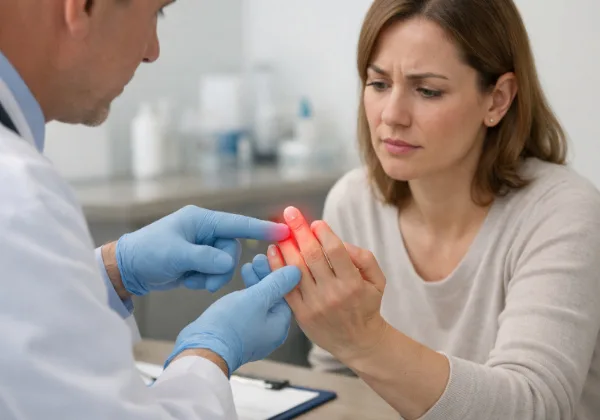
If splinting and exercises do not yield full relief after 4 weeks, a localized corticosteroid injection directly into the flexor tendon sheath is the most effective non-surgical intervention available.
A single injection resolves triggering in 70% to 80% of uncomplicated cases within 7 to 14 days.
7. Fast-Acting Topical Analgesics for Daily Relief
Managing localized pain at the palm level makes daily hand use and splint compliance much easier.
Specialized Support for Finger & Hand Joint Comfort
When dealing with palm tenderness, tendon strain, or morning joint stiffness, relying entirely on oral painkillers can cause unnecessary stomach or liver stress. Using a fast-acting, deep-penetrating topical formula offers targeted relief right at the site of inflammation.
If you are looking for the best topical pain relief cream for arthritis, finger, and hands, specialized formulations like Balmorex deliver quick-absorbing natural botanical extracts and proven soothing agents straight to overworked palm tissues.
- Targeted Comfort: Easily massaged into the A1 pulley zone (base of the finger) and small MCP joints.
- Non-Greasy Formula: Soaks into the skin quickly without leaving a slippery residue on your hands or splints.
- Daily Synergy: Ideal for application before morning tendon gliding exercises or warm-water soaks to soothe tense tissues.
Applying a small amount to the base of your finger twice daily helps ease localized tenderness and keeps your hand comfortable throughout your non-surgical recovery plan.
When Non-Surgical Options Fail: Knowing When Surgery Is Needed
While non-surgical trigger finger treatment is highly effective, surgical release (A1 pulley release) may be necessary if:
- Your finger is fixed in a locked, bent position and cannot be manually opened (Stage 4).
- You have diabetes and haven’t responded to multiple corticosteroid injections (diabetic tissue changes lower injection success rates).
- Severe popping and pain persist after 8 to 12 weeks of consistent splinting and therapy.
Verified Medical Sources
- American Academy of Orthopaedic Surgeons (OrthoInfo): Trigger Finger (Stenosing Tenosynovitis) Diagnosis and Management
- Mayo Clinic: Trigger Finger Care & Corticosteroid Injections
- National Institute of Arthritis and Musculoskeletal and Skin Diseases (NIAMS): Hand and Finger Joint Health
- American Society for Surgery of the Hand (HandCare): Trigger Finger Non-Surgical Treatment Protocols
Frequently Asked Questions
Can trigger finger go away without surgery?
Yes, trigger finger can often improve without surgery, especially in mild to moderate cases. Many people respond well to trigger finger treatment without surgery such as rest, splinting, exercises, and anti-inflammatory methods. Early treatment increases the chances of full recovery without needing surgical intervention.
What is the fastest trigger finger treatment without surgery?
Corticosteroid injections are considered one of the fastest trigger finger treatment without surgery options. They reduce inflammation quickly and can restore smooth finger movement within days or weeks. However, combining injections with rest and splinting often gives the best long-term results.
How long does trigger finger take to heal without surgery?
With proper trigger finger treatment without surgery, mild cases may improve within a few weeks, while moderate cases can take several months. Consistency with treatments like splinting, exercises, and activity changes plays a major role in recovery speed.
What activities should I avoid during trigger finger treatment without surgery?
You should avoid repetitive gripping, forceful hand movements, and prolonged tool use. These actions can worsen inflammation and delay healing. Adjusting daily habits is a key part of effective trigger finger treatment without surgery.
Are exercises effective for trigger finger treatment without surgery?
Yes, gentle finger exercises can improve flexibility and reduce stiffness. When combined with other trigger finger treatment without surgery methods like splinting and rest, exercises help restore normal tendon movement and support long-term recovery.
Author Bio
Jennifer Collins is a wellness researcher and natural health writer focused on adults over 40. With 3+ years of experience in digital health content, Jennifer specializes in making science-backed nutrition and lifestyle strategies easy to follow and apply.
Health Disclaimer
This content is for informational purposes only and is not intended to diagnose, treat, or cure any disease. Always consult your healthcare provider before making changes to your diet or health routine. This article may include affiliate links, which come at no extra cost to you.