
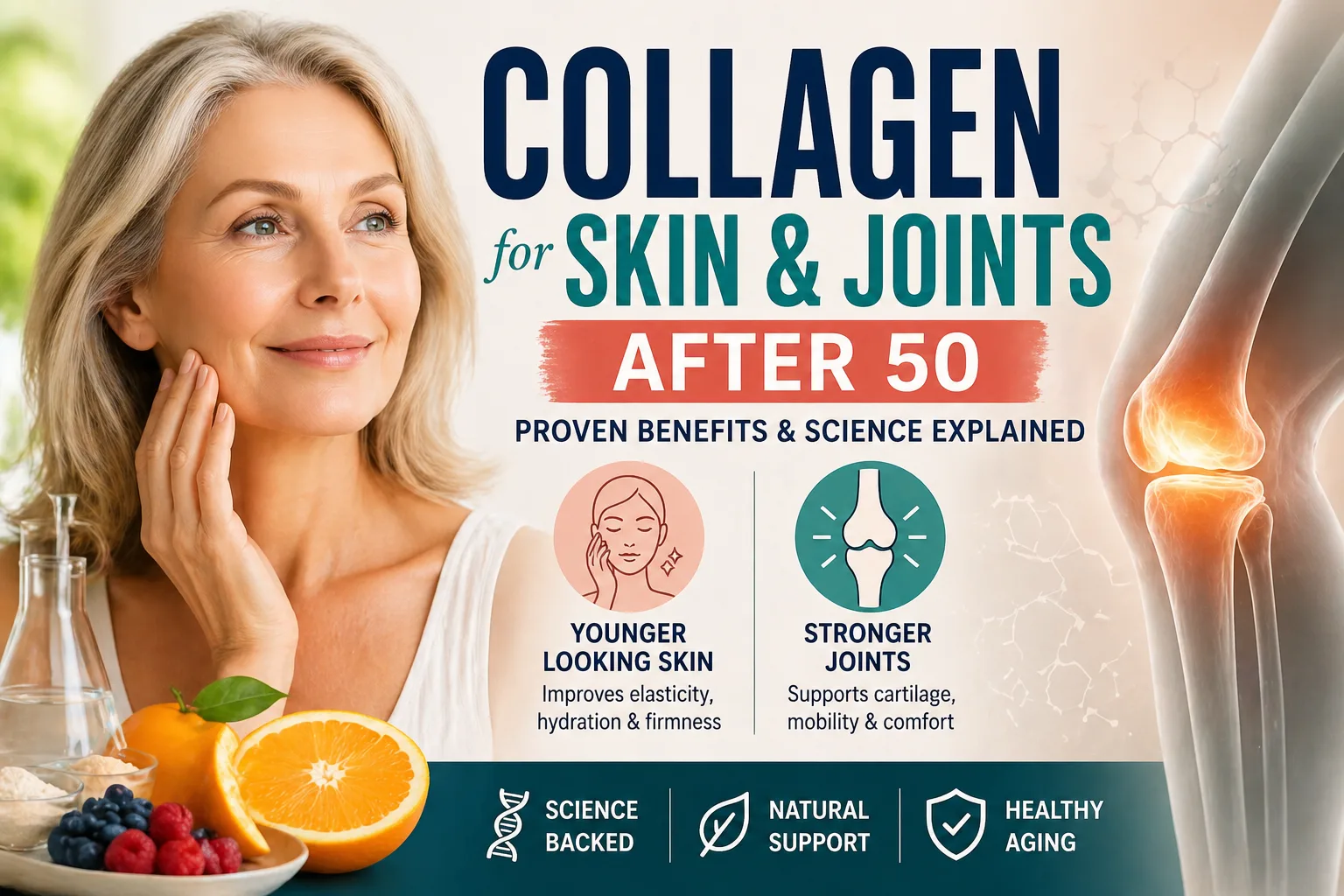
Aging changes your body in ways that feel subtle at first and then suddenly obvious. Your skin may lose its glow. Your joints might feel stiff in the morning. These changes often connect to one key protein your body depends on every day: collagen.
Collagen for skin and joints after 50 has become a popular topic, but not all advice you see online is accurate. Many claims sound appealing but lack evidence. This article focuses on real science, practical strategies, and trusted information so you can understand what actually works.
Let’s break it down in a way that makes sense and helps you take action.
What Is Collagen and Why It Matters
Collagen is the most abundant protein in your body. It forms the structure of your skin, joints, bones, tendons, and ligaments. Think of it as the scaffolding that holds everything together.
Your body produces collagen naturally. It combines amino acids from protein-rich foods with vitamin C, zinc, and copper to build and maintain tissues.
When collagen levels stay healthy, your skin looks firm and smooth. Your joints move easily. Your body recovers better from daily wear and tear.
But this process does not stay the same forever.
Collagen Aging: What Changes Over Time
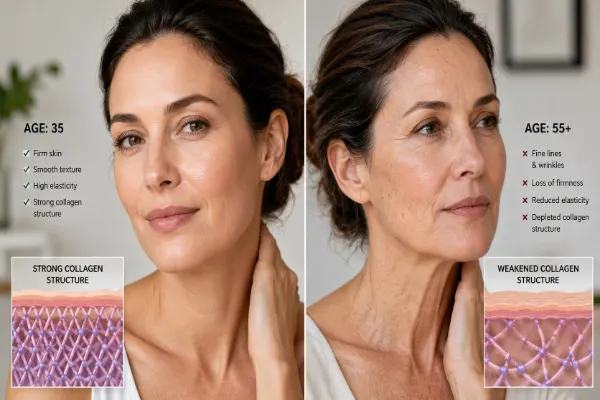
Collagen aging starts earlier than most people think. Research shows that collagen production begins to decline in your mid 20s. After age 50, this decline becomes more noticeable.
Several factors accelerate collagen aging:
Natural aging slows down collagen synthesis
Hormonal changes, especially after menopause, reduce collagen levels
Sun exposure damages collagen fibers
Smoking and poor diet weaken collagen structure
By the time you reach your 50s, your body produces significantly less collagen than before. This decline explains many visible and physical changes you experience.
Your skin may appear thinner and less elastic. Wrinkles become more visible. Joints may feel stiff or uncomfortable after movement.
This is not just cosmetic. It affects your overall mobility and quality of life.
Collagen Loss After 50: What Science Says
Collagen loss after 50 is not a myth. Studies show that women can lose up to 30 percent of their skin collagen in the first five years after menopause. Men also experience gradual collagen decline, though at a slower pace.
This loss affects both skin and joints:
Skin becomes less elastic and more prone to dryness
Fine lines deepen into wrinkles
Cartilage in joints wears down over time
Joint pain and stiffness become more common
The key point here is simple. Collagen loss after 50 is real, measurable, and impactful.
Ignoring it will not stop it.
Understanding it allows you to manage it.
Collagen for Skin and Joints After 50: Why It Matters More Now
At this stage of life, your body struggles to replace collagen at the same rate it breaks down. That imbalance creates visible and physical changes.
Collagen for skin and joints after 50 becomes important for three main reasons.
First, skin health. Collagen supports firmness and hydration. Without enough collagen, skin loses structure.
Second, joint function. Collagen helps maintain cartilage, which cushions your joints. Less collagen can lead to discomfort and reduced mobility.
Third, overall strength. Collagen contributes to bone and muscle support. Lower levels can affect stability and recovery.
This does not mean you need miracle solutions. It means you need consistent and realistic strategies.
Signs Your Body Needs More Collagen

Your body often gives clear signals when collagen levels drop.
You might notice:
Your skin feels thinner or less firm
Wrinkles appear deeper than before
Joints feel stiff in the morning
You hear more clicking or popping sounds in joints
Recovery from exercise takes longer
These signs do not always mean something is wrong. They often reflect natural aging combined with collagen loss.
The good news is that you can support your body in rebuilding collagen naturally.
Collagen Benefits Over 50: What You Can Expect
Collagen benefits over 50 depend on consistency and realistic expectations. It is not a quick fix, but it can support gradual improvement.
Research suggests that maintaining collagen levels may help:
Improve skin elasticity and hydration
Reduce the appearance of wrinkles over time
Support joint comfort and flexibility
Help maintain bone strength
A review published in the Journal of Drugs in Dermatology found that collagen supplementation may improve skin elasticity and hydration after consistent use.
Another study in Nutrients showed that collagen peptides may support joint health, especially in aging adults.
These benefits do not happen overnight. Think of collagen support as a long-term investment, not a quick cosmetic trick.
Rebuild Collagen Naturally: What Actually Works
If you want to rebuild collagen naturally, focus on habits that support your body’s own production. This approach works better than chasing trends.
Eat Enough Protein
Your body needs amino acids to produce collagen. Include foods like eggs, fish, chicken, beans, and dairy.
Without enough protein, your body cannot build collagen effectively.
Get Vitamin C Daily
Vitamin C plays a critical role in collagen synthesis. Fruits like oranges, strawberries, and guava are excellent sources.
No vitamin C means no efficient collagen production.
Protect Your Skin from Sun Damage
UV exposure breaks down collagen faster than aging alone. Use sunscreen regularly and limit direct sun exposure.
This simple habit can slow collagen aging significantly.
Stay Active
Exercise improves circulation and supports tissue repair. It helps your body maintain healthy collagen levels.
Even walking or light strength training can make a difference.
Sleep Well
Your body repairs itself during sleep. Poor sleep disrupts collagen production and recovery.
Aim for consistent and restful sleep.
These steps may sound basic, but they are backed by science. They form the foundation of rebuilding collagen naturally.
Should You Take Collagen Supplements After 50
Collagen supplements have gained popularity, but you should approach them with realistic expectations.
Most supplements contain collagen peptides, which your body breaks down into amino acids. These amino acids may support collagen production, but they do not directly become collagen in your skin or joints.
Some studies suggest benefits, especially for skin hydration and joint comfort. However, results vary between individuals.
If you choose to take supplements, look for products tested for quality and safety. Avoid exaggerated claims that promise instant results.
Supplements should support your lifestyle, not replace healthy habits.
If you are considering supplements, you might want to explore a detailed breakdown in Collagen Refresh Review 2026: Best Collagen Supplement for Joints and Skin? to understand how different formulas compare in real-world use.
Collagen and Hormones: The Hidden Link

Hormonal changes play a major role in collagen loss after 50, especially for women.
Estrogen helps maintain collagen levels. After menopause, estrogen drops significantly, which accelerates collagen breakdown.
This explains why skin changes and joint discomfort often become more noticeable during this stage of life.
Understanding this connection helps you set realistic expectations. It also explains why consistent care matters more than quick solutions.
Common Myths About Collagen After 50
The internet loves bold claims, but not all of them hold up under scrutiny.
One common myth says collagen creams can rebuild collagen deep in your skin. In reality, most topical products cannot penetrate deeply enough to achieve that effect.
Another myth claims that taking collagen alone will reverse aging. Aging involves multiple factors, including genetics, lifestyle, and environment.
Collagen plays a role, but it is not the only piece of the puzzle.
A more realistic approach combines nutrition, lifestyle, and skincare.
How Long Does It Take to See Results
This is where patience matters.
If you support collagen for skin and joints after 50 consistently, you may start noticing subtle changes within 8 to 12 weeks.
Skin may feel slightly more hydrated. Joint stiffness may reduce gradually.
Significant changes take longer. Think months, not days.
Quick results often signal marketing, not science.
Building a Sustainable Routine
Instead of chasing every new product, build a routine you can maintain.
Focus on:
Balanced nutrition
Daily movement
Sun protection
Quality sleep
Add supplements only if needed and after understanding their role.
Consistency beats intensity every time.
The Role of Hydration in Collagen Health
Water does not create collagen, but it supports skin structure and function. Dehydrated skin often looks dull and less elastic.
Staying hydrated helps your skin appear healthier and supports overall tissue function.
This simple habit complements collagen support.
When to Talk to a Professional
If joint pain becomes severe or persistent, consult a healthcare professional. Collagen loss is natural, but not all joint issues relate to aging alone.
Similarly, if you consider supplements, discuss them with a qualified expert, especially if you have existing health conditions.
Personalized advice always works better than general recommendations.
Frequently Asked Questions
What is collagen for skin and joints after 50 and why is it important?
Collagen for skin and joints after 50 refers to supporting your body’s declining collagen levels as you age. After 50, collagen production drops faster, which can lead to wrinkles, joint stiffness, and reduced mobility. Maintaining collagen helps improve skin elasticity, supports joint comfort, and promotes overall structural strength in the body.
Can collagen for skin and joints after 50 really improve wrinkles and joint pain?
Collagen for skin and joints after 50 may help improve skin hydration, elasticity, and reduce the appearance of wrinkles over time. It can also support joint health by helping maintain cartilage. However, results depend on consistency, diet, and lifestyle, not just supplements alone.
How can I rebuild collagen naturally after 50?
To rebuild collagen naturally after 50, focus on eating enough protein, getting daily vitamin C, protecting your skin from sun damage, exercising regularly, and maintaining good sleep. These habits support your body’s natural collagen production and are more effective long term than relying only on supplements.
Are collagen supplements effective for skin and joints after 50?
Collagen supplements may support collagen for skin and joints after 50 by providing amino acids that help your body produce collagen. Some studies show benefits for skin hydration and joint comfort, but they work best when combined with a healthy lifestyle rather than used as a standalone solution.
How long does it take to see results from collagen for skin and joints after 50?
Most people may start noticing small improvements in skin hydration or joint comfort within 8 to 12 weeks of consistent use. Collagen for skin and joints after 50 works gradually, so long-term consistency is key rather than expecting quick or instant results.
Final Thoughts
Collagen for skin and joints after 50 is not about chasing youth. It is about maintaining strength, mobility, and confidence as you age.
Your body changes, but it still responds to care and support.
Collagen aging and collagen loss after 50 are natural processes. You cannot stop them completely, but you can slow them and manage their effects.
Focus on rebuilding collagen naturally through nutrition, lifestyle, and smart choices. Understand collagen benefits over 50 as gradual improvements, not instant transformations.
And remember, if something sounds too good to be true, it usually is.
Aging may be inevitable, but feeling good in your body is still within your control.
Sources
Harvard T.H. Chan School of Public Health
Journal of Drugs in Dermatology
Author Bio
Jennifer Collins is a wellness researcher and natural health writer focused on adults over 40. With 3+ years of experience in digital health content, Jennifer specializes in making science-backed nutrition and lifestyle strategies easy to follow and apply.
Health Disclaimer
This content is for informational purposes only and is not intended to diagnose, treat, or cure any disease. Always consult your healthcare provider before making changes to your diet or health routine. This article may include affiliate links, which come at no extra cost to you.