

Dr. Preet Pal SB, MD
Physician specializing in diabetes, metabolic health, and joint care management. Read More About Dr. Preet Pal’s Medical Credentials & Editorial Integrity Here
Table of Contents
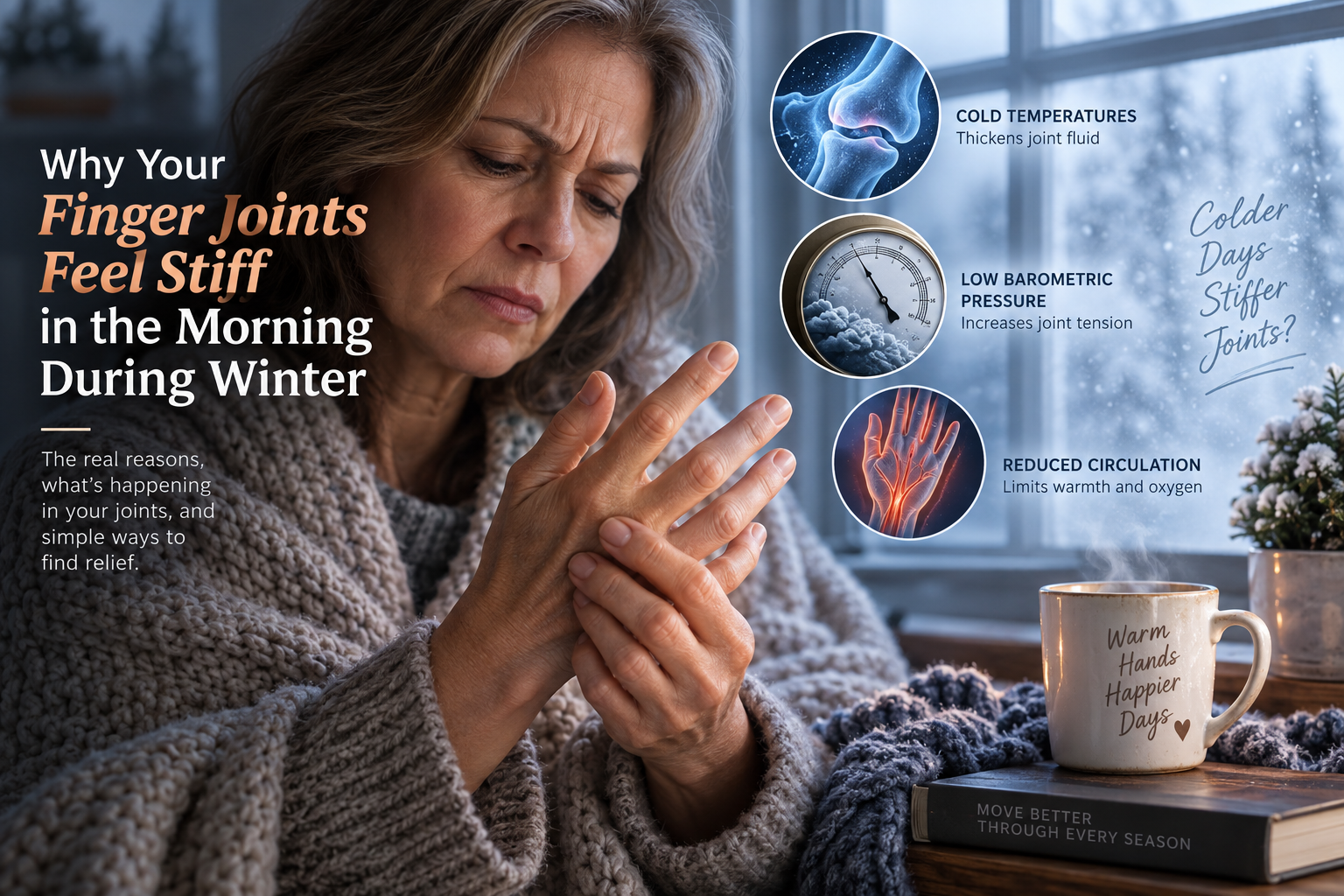
Waking up to stiff finger joints in the morning during winter can turn simple tasks—like holding a warm mug of coffee, buttoning a shirt, or typing a text—into a painful struggle. When cold temperatures settle in, joints feel less like fluid hinges and more like rusted metal gates.
This seasonal stiffness is a widespread winter complaint, but it is rarely a coincidence. Winter air drops barometric pressure, thickens joint fluid, and restricts peripheral circulation, amplifying existing joint inflammation or early-stage cartilage wear.
Key Takeaways: Winter Morning Finger Stiffness
- Thickened Synovial Fluid: Cold temperatures reduce the fluid viscosity in your joints, making movement feel heavy and sluggish upon waking.
- Barometric Pressure Drops: Falling atmospheric pressure allows joint tissues to expand slighty, putting pressure on surrounding nerve endings.
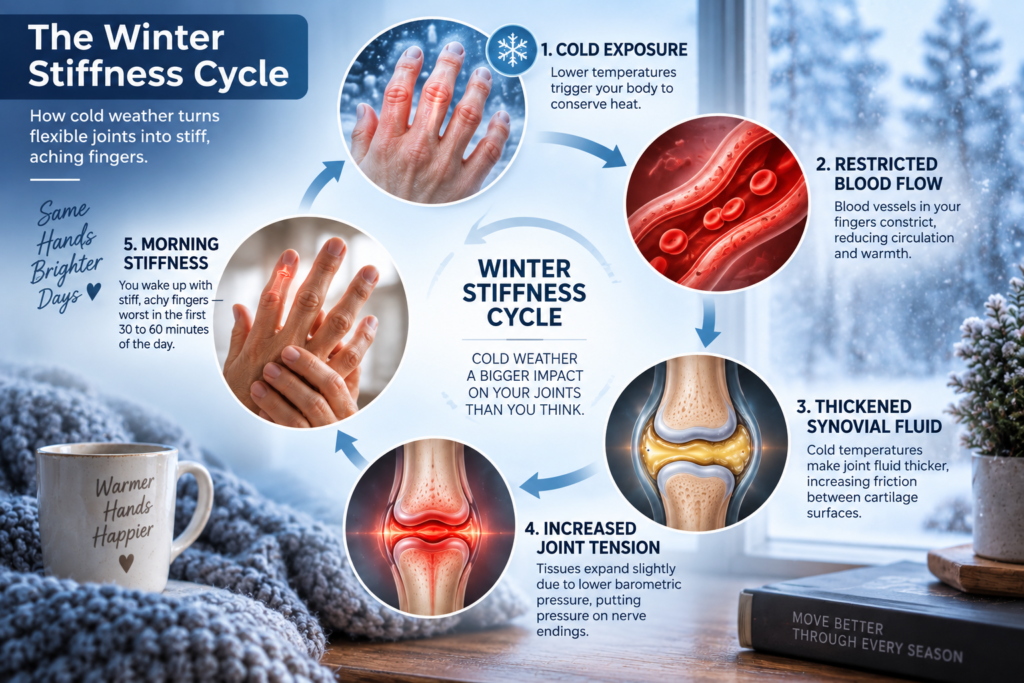
- Morning Peaks: Reduced circulation during sleep combined with overnight immobility leads to maximum joint stiffness during the first 30 to 60 minutes of your day.
- Daily Relief Steps: Consistent thermal therapy, gentle morning range-of-motion routines, and targeted hand circulation techniques restore flexibility.
Why Cold Weather Causes Stiff Finger Joints in the Morning
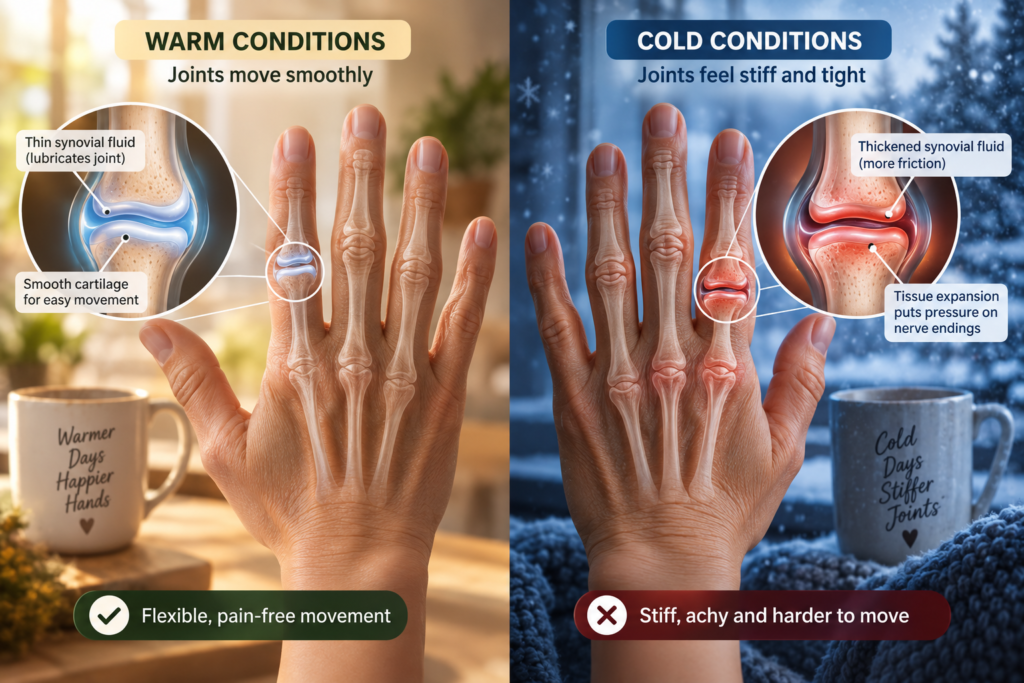
To understand why winter weather affects your hands so acutely, consider how a car engine behaves on a sub-zero morning. When the engine sits cold overnight, motor oil thickens into a slow-moving sludge, forcing the mechanical parts to grind until the engine warms up.
Your hand joints operate on a remarkably similar mechanical principle.
1. Synovial Fluid Viscosity Shifts
Inside every joint capsule, a specialized lubricating substance called synovial fluid reduces friction between cartilage surfaces. In warm weather, this fluid maintains a thin, egg-white consistency. Cold temperatures cause this liquid lubricant to thicken, increasing internal drag within the finger joints before you even attempt to move them.
2. Barometric Pressure and Tissue Expansion
Winter storms and cold fronts bring sharp drops in barometric pressure. As atmospheric pressure decreases, the external force pressing against your body lightens. This slight shift allows the joint capsule, tendons, and surrounding soft tissues to expand. In an already tight space, this micro-expansion irritates sensory nerves, triggering aching and stiffness.
3. Reduced Micro-Circulation Overnight
During sleep, your heart rate slows and peripheral blood flow drops naturally. In winter, colder ambient bedroom air causes the body’s vasomotor reflexes to shunt warm blood toward core organs to conserve heat. The small capillaries supplying your fingers constrict, leaving joint tissues cold, deprived of fresh oxygen, and prone to metabolic waste accumulation overnight.
Causes of Winter Finger Stiffness: Symptom Comparison
Determining what causes your morning hand stiffness helps shape the right home care or clinical approach. While winter cold worsens almost all joint discomfort, the underlying driver dictates how long that stiffness lasts.
| Joint Condition | Morning Stiffness Duration | Key Physical Indicators | Primary Affected Joints |
|---|---|---|---|
| Osteoarthritis (OA) | < 30 minutes | Bony enlargements, dull ache, wear-and-tear stiffness | DIP (top) and PIP (middle) knuckles, thumb base |
| Rheumatoid Arthritis (RA) | > 45 to 60 minutes | Symmetrical swelling, redness, warm-to-touch skin | MCP (knuckle) and PIP joints, wrists |
| Trigger Finger | Brief, variable | Catching, popping sensation, tender nodule at palm base | Individual fingers (often ring finger or thumb) |
| Vasospastic / Circulation Issues | Sudden episodes | Cold sensitivity, fingers changing color (white to blue) | All fingertips and small joints |
If your stiffness occurs without any visible swelling or redness, evaluating specific underlying triggers is essential. Read our full clinical breakdown on finger joint pain no swelling to pinpoint non-inflammatory causes.
Identifying the Cause: Wear-and-Tear vs. Systemic Inflammation
Finger joints rely on smooth cartilage buffers that act like the rubber tread on a tire. Over time, that tread naturally wears down. When bare bone surfaces come closer together, minor inflammation produces mechanical stiffness that peaks when the joint sits still overnight.
- Smooth Cartilage
- Optimal Synovial Fluid
- Intact Bone Capsule
- Worn Cartilage
- High Friction & Crepitus
- Bone Spurs / Friction
When winter cold thickens joint fluid, cartilage with reduced tread faces much higher frictional resistance during your first morning movements.
Dr. Preet Pal’s Clinical Perspective
“In clinical practice, the duration of morning stiffness offers a critical diagnostic clue. Patients with age-related osteoarthritis usually find their hands ‘loosen up’ within 15 to 20 minutes of light morning movement. If a patient tells me their fingers remain locked, swollen, and painfully stiff well past an hour every winter morning, we immediately evaluate for systemic inflammatory conditions like Rheumatoid Arthritis or Psoriatic Arthritis rather than simple weather sensitivity.”
4-Step Morning Routine to Unlock Stiff Fingers
Reversing winter morning stiffness requires a deliberate sequence of heat, movement, and gentle tension release. Never force stiff fingers into a tight fist immediately upon waking, as cold tendons are brittle and more prone to micro-tears.
Apply Direct Moist Thermal Heat
Begin your morning by soaking both hands in a basin of warm water (100°F–104°F) or wrapping them in a heated moist towel. Moist heat penetrates joint capsules faster than dry heat, instantly lowering synovial fluid viscosity and dilating blood vessels to flood fingers with oxygenated blood.
Perform Passive Tendon Glides
While your hands are warm, gently perform non-weighted tendon glides. Start with an open, flat hand. Slowly curl only the fingertips down to meet the upper palm, hold for three seconds, and return to an open hand. Next, make a table-top flat hand bent at the knuckles. This gently stretches finger tendons without applying excessive pressure to inflamed joint surfaces.
Perform Active Range-of-Motion Mobilization
Transition to active range-of-motion movements. Slowly form a soft fist—stopping immediately if you feel sharp pain—and then spread your fingers out as wide as comfortable. Rotate your wrists in slow, smooth clockwise and counter-clockwise circles to stimulate overall hand-arm lymphatic drainage.
Apply Topical Warmth and Compression
Once your joints are mobile, dry your hands thoroughly and apply a hydrating lotion or topical warm balm using gentle, downward stroking motions from fingertips toward your wrist. Slip on a pair of mild compression gloves to retain body heat and maintain micro-circulation while preparing for your day.
For long-term joint health, targeted hand conditioning prevents winter stiffness from compounding over time. Explore our step-by-step guide on arthritis in hands exercises to build hand strength and joint stability.
When Winter Stiffness Indicates Trigger Finger
Sometimes morning hand stiffness manifests as a single finger locking, clicking, or catching when you try to straighten it. This specific symptom often points to stenosing tenosynovitis (commonly known as trigger finger) rather than generalized joint arthritis.
In trigger finger, the flexor tendon running along the palm side of your hand becomes inflamed or develops a small nodule. This nodule struggles to slide smoothly through the protective tendon sheath pulley system, especially after hours of overnight inactivity in a cold room.
Smooth, unimpeded movement through tendon sheath
Nodule catches on sheath edge, locking joint
If your morning stiffness comes with a painful snap when extending your finger, catching early intervention is key. Read about conservative options in our guide on trigger finger treatment without surgery.
Daily Habits to Prevent Winter Hand Stiffness
Managing morning hand stiffness requires consistent nighttime protection and daytime environmental controls:
- Maintain Nighttime Thermal Control: Keep your bedroom ambient temperature above 68°F (20°C). If your room tends to drop in temperature overnight, wear lightweight breathable thermal gloves to bed to trap natural body warmth.
- Optimize Indoor Humidity: Winter heating systems dry out indoor air, aggravating systemic inflammation and tissue dehydration. Aim to maintain indoor relative humidity between 40% and 50% using a cool-mist humidifier in your bedroom.
- Integrate Anti-Inflammatory Nutrition: Increase your daily intake of Omega-3 fatty acids (found in wild salmon, walnuts, and flaxseed oil) and curcumin. These compounds help regulate inflammatory pathways exacerbated by cold-weather changes.
- Stay Hydrated: Dehydration reduces overall fluid volume in joint cartilage, making synovial fluid thicker. Drink at least 8 to 10 glasses of water daily, even when colder weather reduces your natural sense of thirst.
Natural Comfort Solutions: Supporting Daily Mobility
While targeted exercises, lifestyle changes, and thermal therapy form the core of hand maintenance, topical supportive tools can offer convenient relief on particularly cold mornings.
Products like Insta Soothe are designed to provide rapid topical warmth and soothing relief to tired, stiff hand joints. Incorporating a topical comfort tool into your morning or bedtime routine helps soothe micro-tissues surrounding cold knuckles, encouraging easier joint movement during your daily activities.
Clinical Reality Check from Dr. Preet Pal
“It is vital for patients to view topical comfort products as helpful daily management tools for temporary relief and mobility support rather than permanent structural cures. A topical balm or comfort spray helps relax tight periarticular tissues and improve local comfort so you can perform necessary mobility exercises—which remain the true engine of long-term joint function.”
Using a soothing topical relief spray before performing your morning hand exercises can make movement much more comfortable during peak winter weather.
When to Consult a Medical Professional
While mild seasonal hand stiffness is common, certain red-flag symptoms require prompt evaluation by a board-certified rheumatologist or orthopedic hand specialist:
- Morning joint stiffness lasting longer than 60 minutes consistently for more than two weeks.
- Visible joint deformities, firm nodular bumps on the knuckles, or sudden joint displacement.
- Joints that feel noticeably hot to the touch, accompanied by marked redness or skin changes.
- Unexplained fever, fatigue, or unintended weight loss accompanying hand joint pain.
- Inability to flex or extend a finger due to severe pain or physical mechanical obstruction.
Early diagnostic imaging (such as digital X-rays or musculoskeletal ultrasound) combined with targeted blood panels (including Rheumatoid Factor, anti-CCP, and ESR markers) can identify structural or systemic issues early, helping protect hand function for years to come.
Frequently Asked Questions
Why are my finger joints stiffer in the winter morning than in the summer?
Cold temperatures cause synovial fluid—the liquid lubricant inside your joint capsules—to thicken, creating mechanical resistance when you first move your hands. Additionally, winter drops in barometric pressure allow tissues surrounding the joint to expand slightly, which irritates sensory nerve endings and worsens overnight stiffness.
How long should normal morning finger stiffness last?
For age-related wear-and-tear (osteoarthritis), morning stiffness typically lasts less than 30 minutes and resolves quickly as you warm up and move your hands. If your stiffness consistently lasts longer than 45 to 60 minutes, involves severe swelling, or affects both hands symmetrically, it may indicate a systemic inflammatory condition like rheumatoid arthritis.
Can wearing compression gloves overnight prevent winter morning hand pain?
Yes, wearing mild compression thermal gloves to bed can significantly reduce morning stiffness. They work by trapping natural body heat, maintaining peripheral micro-circulation, and preventing overnight swelling in the small joints of your hands.
Is it safe to force my fingers straight if they click or lock in the morning?
No. Forcing a locked or popping finger straight can cause micro-tears in the flexor tendon or further inflame the tendon sheath (a common symptom of trigger finger). Instead, apply warm water or moist heat to the hand first to relax the tissue, then perform soft, passive stretches.
Will cold-weather hand stiffness eventually cause permanent joint damage?
Cold weather itself does not cause joint damage; it simply amplifies existing joint sensitivity and fluid viscosity issues. However, ignoring chronic joint inflammation or forcing stiff, un-warmed joints repeatedly can lead to secondary strain. Following a gentle daily warming and mobilization routine keeps cartilage healthy and flexible.
Verified Medical Sources
- Arthritis Foundation: Understanding Cold Weather and Joint Pain
- Mayo Clinic: Osteoarthritis Symptoms & Causes
- National Institute of Arthritis and Musculoskeletal and Skin Diseases (NIAMS): Hand and Finger Joint Health Guidelines
- Centers for Disease Control and Prevention (CDC): Managing Arthritis Symptoms Daily
Author Bio
Jennifer Collins is a wellness researcher and natural health writer focused on adults over 40. With 3+ years of experience in digital health content, Jennifer specializes in making science-backed nutrition and lifestyle strategies easy to follow and apply.
Health Disclaimer
This content is for informational purposes only and is not intended to diagnose, treat, or cure any disease. Always consult your healthcare provider before making changes to your diet or health