

Hip pain radiates down the leg after 50 can feel confusing, frustrating, and sometimes alarming. One day it starts as a dull ache in the hip, and the next it travels down your thigh or even into your calf. Many people assume it is just aging, but that assumption can delay proper care.
This guide breaks down the real causes, the difference between nerve and joint pain, and when you should take it seriously. You will learn how hip pain and leg pain over 50 develops, what symptoms matter most, and what actions actually help.
Table of Contents
Why hip pain radiates down the leg after 50 is so common
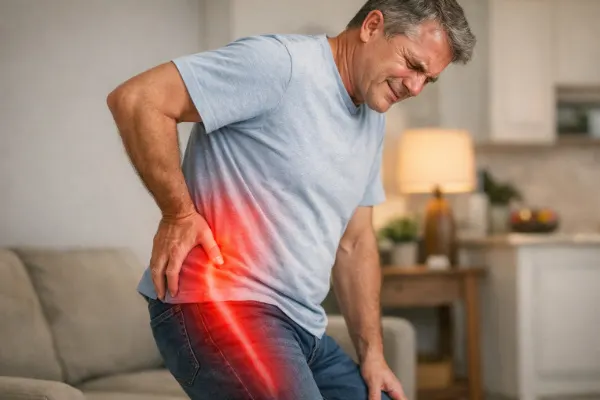
As the body ages, several structural and functional changes occur. Muscles lose strength, joints wear down, and nerves become more sensitive to compression. These changes increase the risk of pain that does not stay in one place.
Hip pain radiates down the leg after 50 often happens because the hip joint, lower spine, and surrounding nerves work closely together. When one structure gets irritated, it can affect nearby pathways, especially nerves that run from the lower back into the legs.
The most common reason for this type of pain involves nerve irritation rather than just a hip joint problem. That is why the pain travels instead of staying localized.
Main causes of hip pain shooting down leg
Sciatica and nerve compression
One of the leading causes of hip pain shooting down leg is related to Sciatica. Sciatica occurs when the sciatic nerve gets compressed or irritated, often in the lower back.
This nerve runs from your spine through your hips and down each leg. When something presses on it, you may feel sharp, burning, or electric-like pain that travels downward.
Common triggers include herniated discs, spinal narrowing, or bone spurs. People over 50 face a higher risk because spinal discs naturally lose hydration and flexibility over time.
Hip osteoarthritis
Hip osteoarthritis develops when the cartilage inside the hip joint wears down. This condition often causes stiffness, reduced mobility, and deep aching pain in the hip.
Unlike nerve pain, osteoarthritis pain usually stays around the joint. However, in some cases, inflammation can irritate nearby tissues and create pain that extends into the thigh.
Hip pain and leg pain over 50 often includes osteoarthritis as a key factor, especially in people with a history of joint stress or limited movement.
Piriformis syndrome
The piriformis muscle sits deep in the buttock and lies close to the sciatic nerve. When this muscle becomes tight or inflamed, it can compress the nerve.
This condition can mimic sciatica and lead to hip pain shooting down leg. Sitting for long periods, poor posture, or muscle imbalance can trigger this issue.
Spinal stenosis
Spinal stenosis refers to narrowing of the spinal canal. This narrowing can place pressure on nerves, especially in the lower back.
People over 50 often develop this condition gradually. The pain may start in the hip or lower back and then travel down the leg. Walking or standing for long periods can worsen symptoms.
Muscle imbalances and weakness
Weak glutes, tight hip flexors, and poor core stability can shift how your body handles movement. Over time, this imbalance places extra stress on joints and nerves.
Hip pain that radiates down the leg after 50 sometimes comes from these functional issues rather than structural damage. The good news is that targeted exercise often improves this type of pain.
Sciatica vs hip pain: how to tell the difference
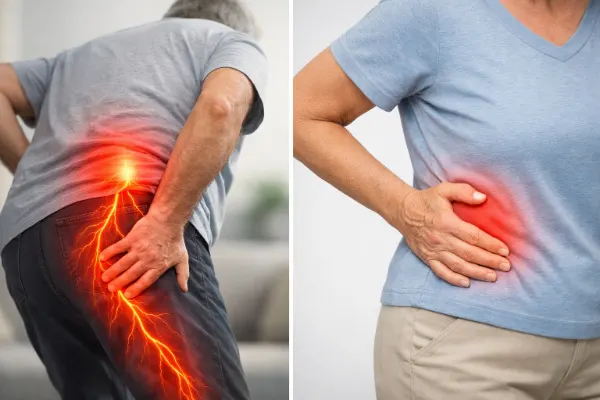
Understanding sciatica vs hip pain helps you choose the right treatment faster. Many people confuse the two because both can involve the same area.
Sciatica pain often feels sharp, burning, or tingling. It travels down the leg and may reach the foot. You might also notice numbness or weakness.
Hip joint pain usually feels deep, stiff, and aching. It stays around the groin or outer hip. Movement like walking, bending, or rotating the hip can trigger it.
If your pain moves below the knee or includes tingling, it likely involves nerve irritation. If it stays localized and worsens with joint movement, the hip joint itself may be the problem.
Symptoms you should not ignore
Hip pain radiates down the leg after 50 can range from mild discomfort to a sign of something serious. Certain symptoms require attention.
Persistent pain that lasts more than a few weeks should not be ignored. Pain that worsens at night or disrupts sleep also deserves evaluation.
Numbness, weakness, or loss of coordination may indicate nerve involvement. If you struggle to lift your foot or feel unstable while walking, seek medical advice.
Sudden severe pain after a fall or injury may point to fractures or structural damage. This situation requires immediate care.
When to worry about hip pain and leg pain over 50
Not every case needs urgent treatment, but some situations do.
You should take hip pain seriously if it limits your daily activities or reduces your mobility. Pain that continues to spread or intensify also signals a deeper issue.
If you notice bladder or bowel changes along with leg pain, seek emergency care. These symptoms may indicate severe nerve compression.
Unexplained weight loss, fever, or inflammation combined with pain can suggest underlying conditions that need proper diagnosis.
Diagnosis: what doctors actually check
Doctors start with a detailed history and physical exam. They assess how your pain behaves, where it travels, and what movements trigger it.
Imaging tests like X-rays or MRI scans help identify structural issues. These tests can reveal joint damage, disc problems, or nerve compression.
In some cases, doctors may recommend nerve tests to evaluate how well signals travel through your nerves.
Accurate diagnosis matters because treatment differs greatly between joint problems and nerve conditions.
Treatment options that actually work

Lifestyle changes and movement
Staying active plays a major role in recovery. Gentle movement improves blood flow, reduces stiffness, and supports healing.
Walking, stretching, and low-impact exercises often help reduce hip pain and leg pain over 50. Avoid long periods of sitting, especially if your pain relates to nerve compression.
Physical therapy
Targeted exercises strengthen weak muscles and improve posture. A trained therapist can guide you through movements that reduce pressure on nerves and joints.
This approach works especially well for muscle imbalance and mild nerve irritation.
If you are exploring natural ways to support recovery, you may also want to check out this guide on 7 Best Hip Pain Supplements (2026) – Natural Relief for Joint Pain, which covers evidence-based options that may help reduce inflammation and improve joint health.
Pain management
Doctors may suggest over-the-counter medications to manage inflammation and discomfort. In some cases, they may recommend stronger options or injections for targeted relief.
Pain relief alone does not fix the root cause, so combine it with movement and strengthening strategies.
Advanced treatments
If conservative methods fail, doctors may explore advanced options. These can include injections, nerve treatments, or surgery in severe cases.
Surgery usually becomes a last option when pain significantly affects quality of life or when nerve damage progresses.
Prevention tips that actually make sense
You cannot stop aging, but you can reduce its impact on your body.
Focus on maintaining muscle strength, especially in your core and hips. Strong muscles support your joints and reduce stress on nerves.
Practice good posture while sitting and standing. Poor posture often contributes to hip pain shooting down leg.
Keep a healthy weight to reduce pressure on your joints. Even small weight changes can make a noticeable difference.
Stay consistent with movement. Regular activity protects both your joints and your nervous system.
Frequently Asked Questions
What causes hip pain radiates down the leg after 50?
Hip pain radiates down the leg after 50 usually happens due to nerve irritation or joint problems. The most common cause is sciatica, where the sciatic nerve gets compressed in the lower back. Other causes include hip osteoarthritis, spinal stenosis, and muscle tightness. Aging increases the risk because joints wear down and discs lose flexibility over time.
How do I know if it is sciatica vs hip pain?
To understand sciatica vs hip pain, pay attention to how the pain feels and where it travels. Sciatica often causes sharp, burning pain that moves from the hip down the leg, sometimes reaching the foot. Hip joint pain usually stays around the hip or groin and feels more like a deep ache. If hip pain radiates down the leg after 50 with tingling or numbness, it likely involves nerve compression.
Is hip pain shooting down leg a serious problem after 50?
Hip pain shooting down leg can be mild or serious depending on the cause. In many cases, it results from nerve irritation or muscle imbalance. However, if hip pain radiates down the leg after 50 and includes weakness, numbness, or difficulty walking, it may signal a more serious issue like severe nerve compression. Persistent or worsening pain should be checked by a doctor.
When should I worry about hip pain and leg pain over 50?
You should worry about hip pain and leg pain over 50 if the pain lasts more than a few weeks, gets worse over time, or affects daily activities. Seek medical help if hip pain radiates down the leg after 50 along with numbness, loss of strength, or balance issues. Sudden severe pain after a fall also needs immediate attention.
What is the best treatment for hip pain radiates down the leg after 50?
The best treatment for hip pain radiates down the leg after 50 depends on the cause. Most people benefit from physical therapy, gentle exercise, and posture correction. Anti-inflammatory medications can help manage pain. If the issue involves nerve compression, targeted treatments like injections or specialized therapy may be needed. Early treatment often leads to better results and faster relief.
Final thoughts
Hip pain that radiates down the leg after 50 does not happen without a reason. In many cases, the issue involves nerve irritation, joint wear, or muscle imbalance.
Understanding the difference between sciatica vs hip pain helps you respond correctly. Ignoring symptoms or guessing the cause can delay recovery.
Most importantly, early action improves outcomes. Simple steps like movement, posture correction, and proper diagnosis can make a significant difference.
If your pain persists, spreads, or affects daily life, do not wait. Addressing hip pain and leg pain over 50 early helps you stay active, mobile, and independent.
Sources
National Institute of Neurological Disorders and Stroke