
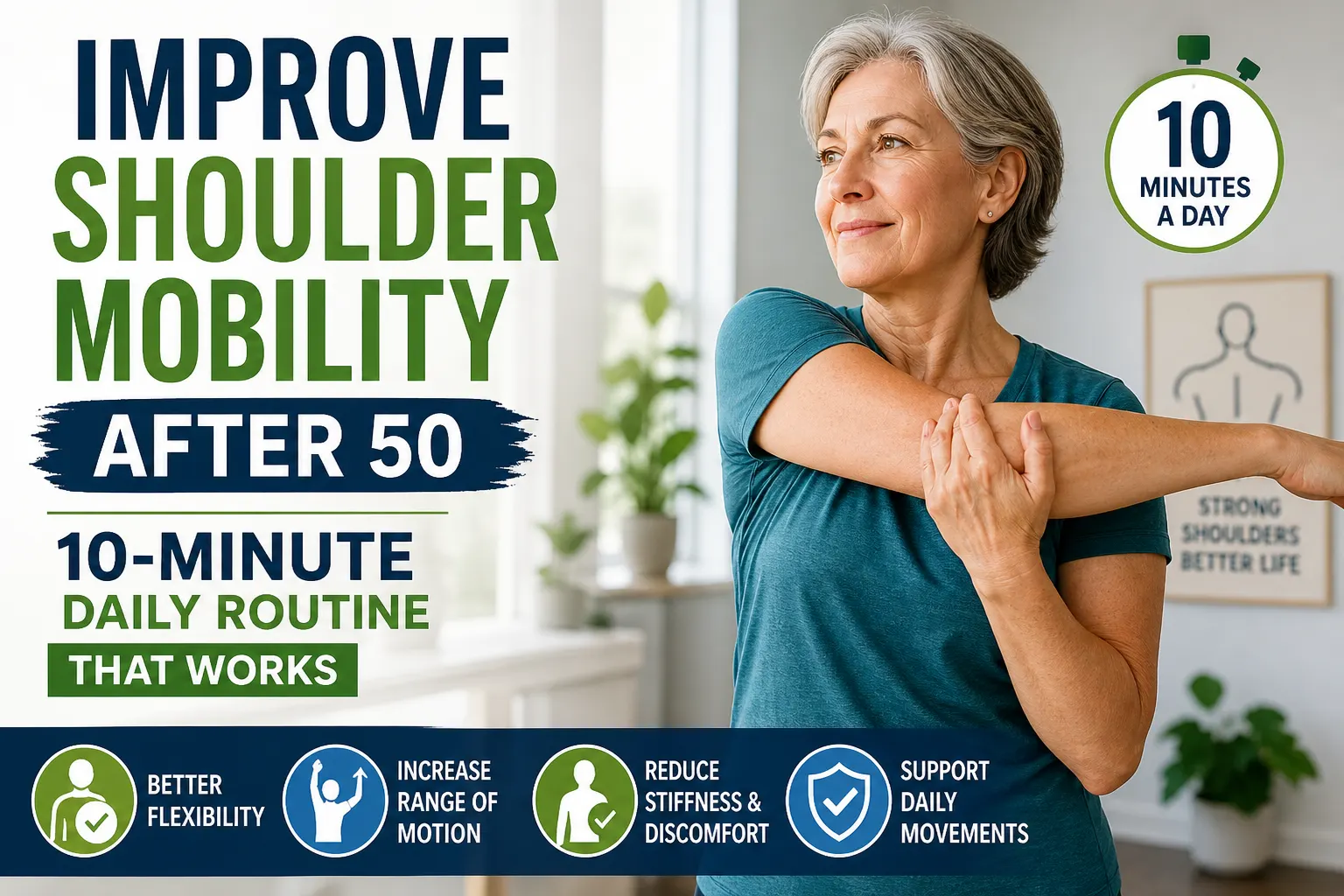
If your shoulders feel stiff when you reach overhead, grab a shelf item, or even put on a shirt, you are not alone. Many adults notice a steady decline in shoulder range of motion after 50. The good news is simple. You can improve shoulder mobility after 50 with a short daily routine that fits into your schedule.
This guide explains why shoulder stiffness happens with age, what actually works according to research, and how to follow a safe 10 minute routine at home. No complicated equipment. No unrealistic promises. Just clear, practical steps that support aging shoulder mobility in a smart way.
Why Shoulder Mobility Declines After 50

Your shoulder joint is one of the most flexible joints in the body. It relies on muscles, tendons, and ligaments working together smoothly. With age, several changes occur.
Collagen becomes less elastic. Muscle mass gradually decreases. Joint lubrication may reduce. Daily habits also play a role. Sitting longer, using phones, and reduced physical activity all contribute to stiffness.
Research published by the American Academy of Orthopaedic Surgeons shows that age related changes in soft tissues can reduce flexibility and increase the risk of shoulder pain and limited motion.
This is why many people over 50 struggle with basic movements like reaching behind their back or lifting arms overhead.
The key point is this. You cannot stop aging, but you can slow down stiffness and even reverse some limitations with consistent movement.
The Truth About Aging Shoulder Mobility
There is a common myth that stiffness is permanent after a certain age. That is not accurate.
Studies show that targeted mobility work improves shoulder range of motion even in older adults. A review in the Journal of Aging Research highlights that regular stretching and mobility exercises can significantly improve joint function and reduce discomfort.
Your body still adapts. It just needs the right input.
Think of your shoulder like a door hinge. If you stop using it, it gets rusty. If you move it daily, it stays smooth.
Benefits When You Improve Shoulder Mobility After 50
When you improve shoulder mobility after 50, the benefits go beyond just flexibility.
You will notice easier daily movements like reaching, dressing, and lifting. Your posture improves, which reduces strain on your neck and upper back. You also lower the risk of injuries such as rotator cuff issues.
Better shoulder flexibility exercises over 50 can even support better sleep. Many people experience less discomfort at night once stiffness reduces.
And yes, you may finally reach that top kitchen shelf without doing a mini acrobatic act.
Common Mistakes That Make Shoulder Stiffness Worse
Before we jump into the routine, it is important to avoid common mistakes.
Many people either do nothing or go too aggressive. Both approaches fail.
If you avoid movement completely, stiffness increases. If you push too hard, you risk irritation or injury.
Another mistake is inconsistency. Doing exercises once a week will not improve aging shoulder mobility.
Finally, poor posture plays a major role. Rounded shoulders and forward head position tighten the front muscles and weaken the back, limiting movement.
Consistency and proper form matter more than intensity.
10 Minute Daily Routine to Improve Shoulder Mobility After 50
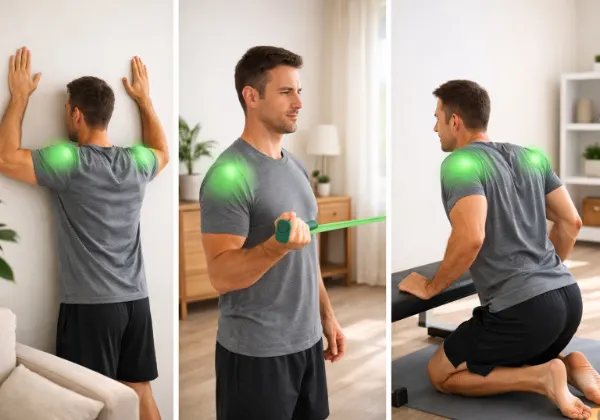
This routine focuses on safe, research supported movements that improve shoulder range of motion and flexibility.
You can do this at home with minimal space. Perform each movement slowly and with control.
1. Shoulder Rolls
Start simple. Stand or sit upright. Roll your shoulders forward in a slow circular motion for 30 seconds. Then reverse the direction.
This improves blood flow and gently wakes up the joint.
2. Wall Walks
Stand facing a wall. Place your fingers on the wall and slowly walk them upward as high as you can without pain. Hold for a few seconds, then walk them back down.
Repeat for one minute.
This exercise directly improves shoulder range of motion and builds confidence in overhead movement.
3. Arm Circles
Extend your arms out to the sides. Make small circles for 30 seconds, then gradually increase the size.
Reverse direction after 30 seconds.
Keep the movement controlled. Do not swing wildly like you are trying to take off.
4. Cross Body Stretch
Bring one arm across your chest. Use your other hand to gently pull it closer.
Hold for 20 to 30 seconds on each side.
This targets the back of the shoulder and improves shoulder flexibility exercises over 50.
5. Doorway Stretch
Stand in a doorway. Place your arms on the frame at shoulder height. Step forward slightly to feel a stretch in your chest.
Hold for 30 seconds.
This helps correct posture and supports aging shoulder mobility by opening tight front muscles.
6. Shoulder Blade Squeeze
Sit or stand tall. Squeeze your shoulder blades together as if you are trying to hold a pencil between them.
Hold for 5 seconds. Repeat 10 times.
This strengthens the muscles that support better movement.
7. Overhead Reach
Raise both arms overhead slowly. Reach upward without arching your lower back.
Lower them back down with control.
Repeat for one minute.
This reinforces functional movement and improves flexibility.
8. Towel Stretch Behind Back
Hold a towel behind your back with both hands. One hand pulls upward while the other gently resists.
Switch sides after 30 seconds.
This improves internal rotation, which is often limited after 50.
How Long Until You See Results
Most people notice small improvements within two to three weeks. Consistency is the key factor.
Scientific evidence suggests that regular stretching programs can improve flexibility within four to six weeks.
You do not need hours of exercise. Just ten focused minutes daily can make a noticeable difference.
Safety Tips You Should Not Ignore

Pain is not a badge of honor here. Mild discomfort is okay, but sharp pain is a warning sign.
Move within a comfortable range. Gradually increase intensity over time.
If you have existing shoulder injuries or conditions like frozen shoulder, consult a healthcare professional before starting.
Also remember to breathe. Holding your breath during stretching is surprisingly common and reduces effectiveness.
Lifestyle Habits That Support Shoulder Health
Exercise alone is not enough. Your daily habits matter.
Stay active throughout the day. Avoid sitting for long hours without movement. Even short breaks help.
Focus on posture. Keep your shoulders relaxed and avoid slouching.
Strength training also plays a role. Building muscle supports joint stability and function.
Nutrition matters too. Adequate protein intake supports muscle maintenance, and hydration helps joint lubrication.
When to Seek Professional Help
If your shoulder pain persists or worsens, do not ignore it.
Limited shoulder range of motion combined with pain could indicate conditions like rotator cuff injury or adhesive capsulitis.
A physical therapist can provide targeted guidance and ensure you perform exercises correctly.
Early intervention often leads to better outcomes.
If your discomfort feels sharp or persistent, you may benefit from targeted rehab strategies like shoulder impingement exercises that focus on reducing pain and restoring movement safely.
Frequently Asked Questions
How can I improve shoulder mobility after 50 at home?
You can improve shoulder mobility after 50 at home by following a simple daily routine that includes stretching and controlled movements. Exercises like wall walks, arm circles, and doorway stretches help increase flexibility and restore shoulder range of motion. Consistency matters more than intensity, so aim for at least 10 minutes every day.
What are the best shoulder flexibility exercises over 50?
The best shoulder flexibility exercises over 50 include cross body stretches, overhead reaches, towel stretches behind the back, and shoulder rolls. These movements target tight muscles, improve joint function, and support aging shoulder mobility without putting too much strain on the joints.
How long does it take to improve shoulder mobility after 50?
Most people start to improve shoulder mobility after 50 within two to four weeks of consistent daily exercise. Research shows that regular stretching and mobility work can improve shoulder range of motion within four to six weeks, depending on your starting condition and consistency.
Why does shoulder range of motion decrease with age?
Shoulder range of motion decreases with age due to reduced muscle mass, less elastic connective tissue, and lower activity levels. Poor posture and repetitive habits also contribute to stiffness. However, regular movement and stretching can reverse many of these effects and improve mobility.
Is it safe to improve shoulder mobility after 50 if I have shoulder pain?
Yes, you can improve shoulder mobility after 50 even with mild discomfort, but you should avoid sharp pain. Gentle exercises can reduce stiffness and improve function, but if pain persists or worsens, it is important to consult a healthcare professional before continuing.
Final Thoughts
Improving shoulder mobility after 50 is not about pushing your limits. It is about consistent, smart movement.
This 10 minute daily routine works because it targets key areas that affect shoulder flexibility and function. It fits into real life and does not require fancy equipment.
Your shoulders are meant to move. Give them that opportunity every day.
And if you miss a day, do not stress. Just get back to it tomorrow. Your future shoulders will thank you.
Sources
American Academy of Orthopaedic Surgeons
Author Bio
Jennifer Collins is a wellness researcher and natural health writer focused on adults over 40. With 3+ years of experience in digital health content, Jennifer specializes in making science-backed nutrition and lifestyle strategies easy to follow and apply.
Health Disclaimer
This content is for informational purposes only and is not intended to diagnose, treat, or cure any disease. Always consult your healthcare provider before making changes to your diet or health