
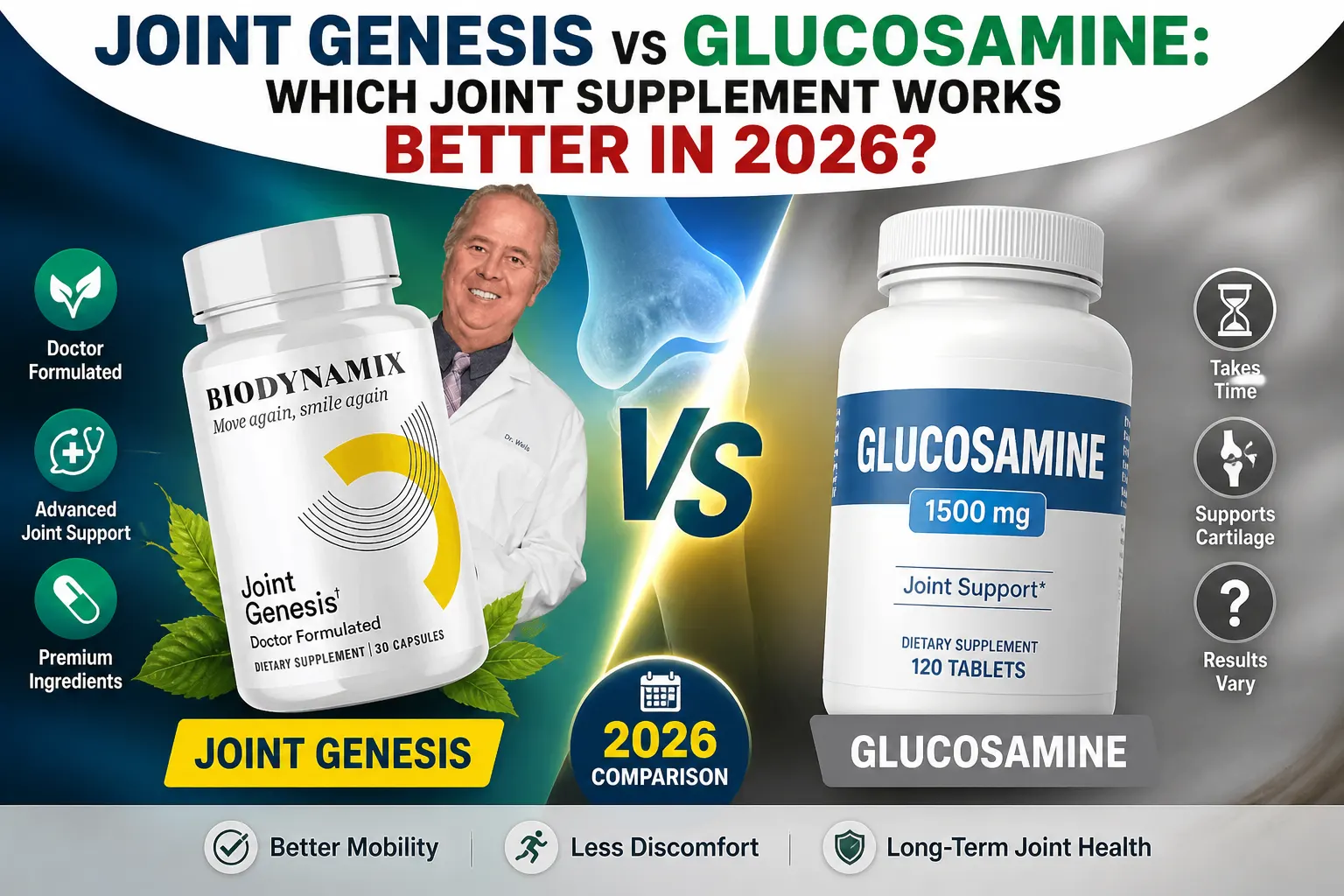
Joint pain has a way of sneaking into daily life. One day you feel fine, and the next day your knees sound like popcorn. If you have been searching for relief, you have likely come across the debate around joint genesis vs glucosamine. This comparison is everywhere right now, and for good reason. People want something that actually works, not just another bottle of hope.
In this guide, we will break down joint genesis vs glucosamine in a clear and honest way. We will look at how each approach works, what science says, and which one may suit your needs better. No fluff, no hype, just practical insight you can use.
Understanding the Basics of Joint Health

Before diving into joint genesis vs glucosamine, it helps to understand how joints function. Your joints rely on cartilage, synovial fluid, and connective tissues to move smoothly. Over time, aging, weight, and repetitive stress can reduce cartilage thickness and fluid quality.
When this happens, friction increases. That leads to stiffness, discomfort, and reduced mobility. Most supplements try to fix this problem in one of two ways. They either support cartilage repair or improve joint lubrication.
This difference sits at the center of the joint genesis vs glucosamine discussion.
What Is Glucosamine and How Does It Work?
Glucosamine has been around for decades. It is one of the most widely used joint supplements in the world. You will often see it paired with chondroitin.
Glucosamine is a natural compound found in cartilage. Supplementing it aims to support cartilage structure and slow breakdown. Many traditional joint supplements rely on this mechanism.
If you want a deeper breakdown of its effectiveness, you can read our detailed guide on Glucosamine and Chondroitin Do They Work in 2026? Real Joint Pain Evidence.
Benefits of Glucosamine
Glucosamine gained popularity because early studies suggested it could reduce symptoms of osteoarthritis, especially in the knee. According to research published by the National Institutes of Health, some users report mild pain relief and improved function.
However, results vary. Some people notice improvement, while others feel no change at all. That inconsistency fuels the ongoing debate about joint genesis vs glucosamine.
Limitations of Glucosamine
Glucosamine does not work quickly. It may take several weeks or even months to show results. In some cases, it does not work at all.
Also, glucosamine mainly focuses on cartilage support. It does not directly improve joint lubrication, which plays a key role in smooth movement.
This limitation has opened the door for newer approaches.
What Is Joint Genesis and Why Is It Different?
Joint Genesis represents a newer direction in joint care. Instead of focusing only on cartilage, it targets synovial fluid health. This fluid acts as a lubricant that allows joints to move smoothly.
The formula behind Joint Genesis includes ingredients designed to support hyaluronic acid production. Hyaluronic acid plays a critical role in maintaining joint lubrication.
This shift in focus changes how we look at joint genesis vs glucosamine.
How Joint Genesis Works
Joint Genesis aims to improve the quality and quantity of synovial fluid. When your joints have enough lubrication, movement becomes smoother and less painful.
Rather than trying to rebuild cartilage alone, this approach supports the environment around the joint. That can lead to faster noticeable improvements for some users.
Key Ingredients in Joint Genesis
The formulation highlighted on the official site includes compounds linked to joint hydration and mobility support. These ingredients often work together to enhance joint comfort and flexibility.
This modern approach stands in contrast to traditional supplements, which rely heavily on a single compound like glucosamine.
Hyaluronic Acid vs Glucosamine: The Core Difference
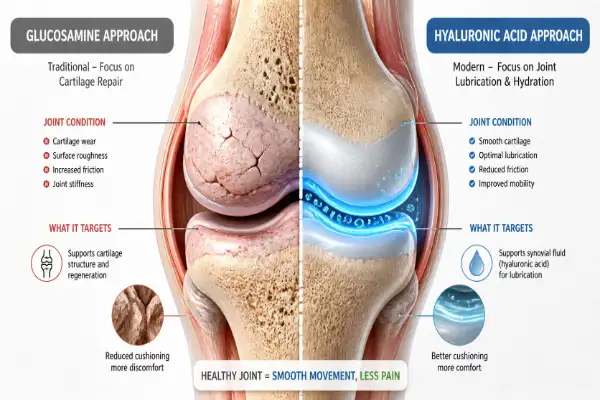
The debate between hyaluronic acid vs glucosamine sits at the heart of modern joint care.
Glucosamine focuses on rebuilding cartilage. Hyaluronic acid focuses on lubrication.
Think of it like this. Glucosamine tries to repair the surface of a worn tire. Hyaluronic acid adds oil to reduce friction. Both approaches have value, but they solve different parts of the problem.
Recent studies, including research published in the journal Osteoarthritis and Cartilage, suggest that hyaluronic acid plays a vital role in joint function. It helps maintain elasticity and reduces friction within the joint.
This explains why many modern supplements now include ingredients that support hyaluronic acid production.
Joint Genesis Comparison with Traditional Supplements
When you compare joint genesis vs glucosamine, the biggest difference lies in strategy.
Traditional supplements focus on structural repair. Modern formulas like Joint Genesis focus on joint environment and lubrication.
Modern vs Traditional Joint Supplements
Modern vs traditional joint supplements differ in more than just ingredients. They reflect a shift in how we understand joint health.
Traditional formulas rely on long term rebuilding. They often take time and may not address immediate discomfort.
Modern formulations aim to deliver faster relief by improving how joints move right now. They target fluid balance, inflammation, and mobility all at once.
This makes the joint genesis comparison especially relevant for people who want quicker results.
What Does Science Say About Both Approaches?
Scientific evidence offers mixed results for glucosamine. A large study funded by the National Institutes of Health, known as the GAIT trial, found that glucosamine provided limited benefit for most participants with knee osteoarthritis.
However, some subgroups reported moderate relief. This suggests glucosamine may help certain individuals but not everyone.
On the other hand, research on hyaluronic acid shows more consistent benefits in improving joint lubrication and reducing pain when used in clinical settings. While many studies focus on injections, oral supplements that support hyaluronic acid production show promising results.
This growing body of evidence supports the shift toward modern joint formulas.
Which One Works Faster?
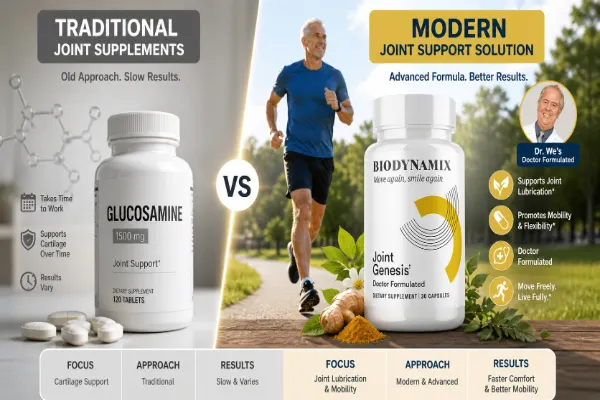
Speed matters when you are dealing with joint pain. Nobody wants to wait months to feel better.
Glucosamine often requires long term use. Some users take it for three to six months before noticing changes.
Joint Genesis, by focusing on lubrication, may provide faster noticeable improvements. Better lubrication can reduce stiffness quickly, which many users appreciate.
That said, results vary based on age, activity level, and overall health.
Safety and Side Effects
Both approaches are generally considered safe for most people.
Glucosamine may cause mild digestive issues in some users. It is often derived from shellfish, so people with allergies should exercise caution.
Joint Genesis uses a combination of ingredients designed to support joint health. As with any supplement, it is wise to check the label and consult a healthcare provider if you have existing conditions.
Cost and Value Comparison
Cost plays a role in any commercial decision.
Glucosamine supplements are widely available and often inexpensive. However, lower cost does not always mean better value, especially if results are inconsistent.
Joint Genesis may come at a higher price point, but it offers a different approach. If it delivers faster or more noticeable results, many users consider that worth the investment.
When comparing joint genesis vs glucosamine, value depends on outcomes, not just price.
Who Should Choose Glucosamine?
Glucosamine may suit individuals who prefer a traditional approach and are willing to wait for gradual results.
It may also appeal to those with mild joint discomfort who want a simple, well known supplement.
However, expectations should remain realistic. Not everyone experiences significant benefits.
Who Should Consider Joint Genesis?
Joint Genesis may be a better option for those seeking a modern solution.
If you experience stiffness, reduced mobility, or discomfort that affects daily activities, improving joint lubrication could make a noticeable difference.
People who have tried glucosamine without success often explore this newer approach.
Frequently Asked Questions
What is the main difference between joint genesis vs glucosamine?
The main difference between joint genesis vs glucosamine is how they support joint health. Glucosamine focuses on rebuilding cartilage over time, while Joint Genesis targets joint lubrication by supporting hyaluronic acid production. This makes Joint Genesis a more modern approach compared to traditional glucosamine supplements.
Which works faster: joint genesis vs glucosamine?
When comparing joint genesis vs glucosamine, Joint Genesis may work faster for some people because it improves joint lubrication, which can reduce stiffness quickly. Glucosamine usually takes several weeks or months since it focuses on long-term cartilage support.
Can I take Joint Genesis and glucosamine together?
Yes, some people combine both when comparing joint genesis vs glucosamine to support both cartilage and joint lubrication. However, it is best to consult a healthcare professional before combining supplements to ensure safety and proper dosage.
Who should choose Joint Genesis over glucosamine?
In the joint genesis vs glucosamine debate, Joint Genesis may be a better choice for people who experience stiffness, reduced mobility, or want faster results. Glucosamine may suit those who prefer a traditional, long-term approach to joint health.
Final Verdict: Joint Genesis vs Glucosamine
The comparison between joint genesis vs glucosamine comes down to how each product approaches joint health.
Glucosamine focuses on rebuilding cartilage over time. It has a long history but delivers mixed results.
Joint Genesis focuses on improving joint lubrication and mobility. This modern approach aligns with current understanding of how joints function.
If you want a traditional option and do not mind waiting, glucosamine may work for you. If you prefer a more targeted and potentially faster acting solution, Joint Genesis offers a compelling alternative.
In the end, the best choice depends on your needs, expectations, and how your body responds.
Sources
National Institutes of Health. Glucosamine and Chondroitin for Osteoarthritis
National Center for Complementary and Integrative Health. Osteoarthritis and Supplements
Osteoarthritis and Cartilage Journal. Role of Hyaluronic Acid in Joint Health
Arthritis Foundation. Hyaluronic Acid for Joint Pain
Joint Genesis Official Information
Author Bio
Jennifer Collins is a wellness researcher and natural health writer focused on adults over 40. With 3+ years of experience in digital health content, Jennifer specializes in making science-backed nutrition and lifestyle strategies easy to follow and apply.
Health Disclaimer
This content is for informational purposes only and is not intended to diagnose, treat, or cure any disease. Always consult your healthcare provider before making changes to your diet or health