

Dr. Preet Pal SB, MD
Physician specializing in diabetes, metabolic health, and joint care management. Read More About Dr. Preet Pal’s Medical Credentials & Editorial Integrity Here
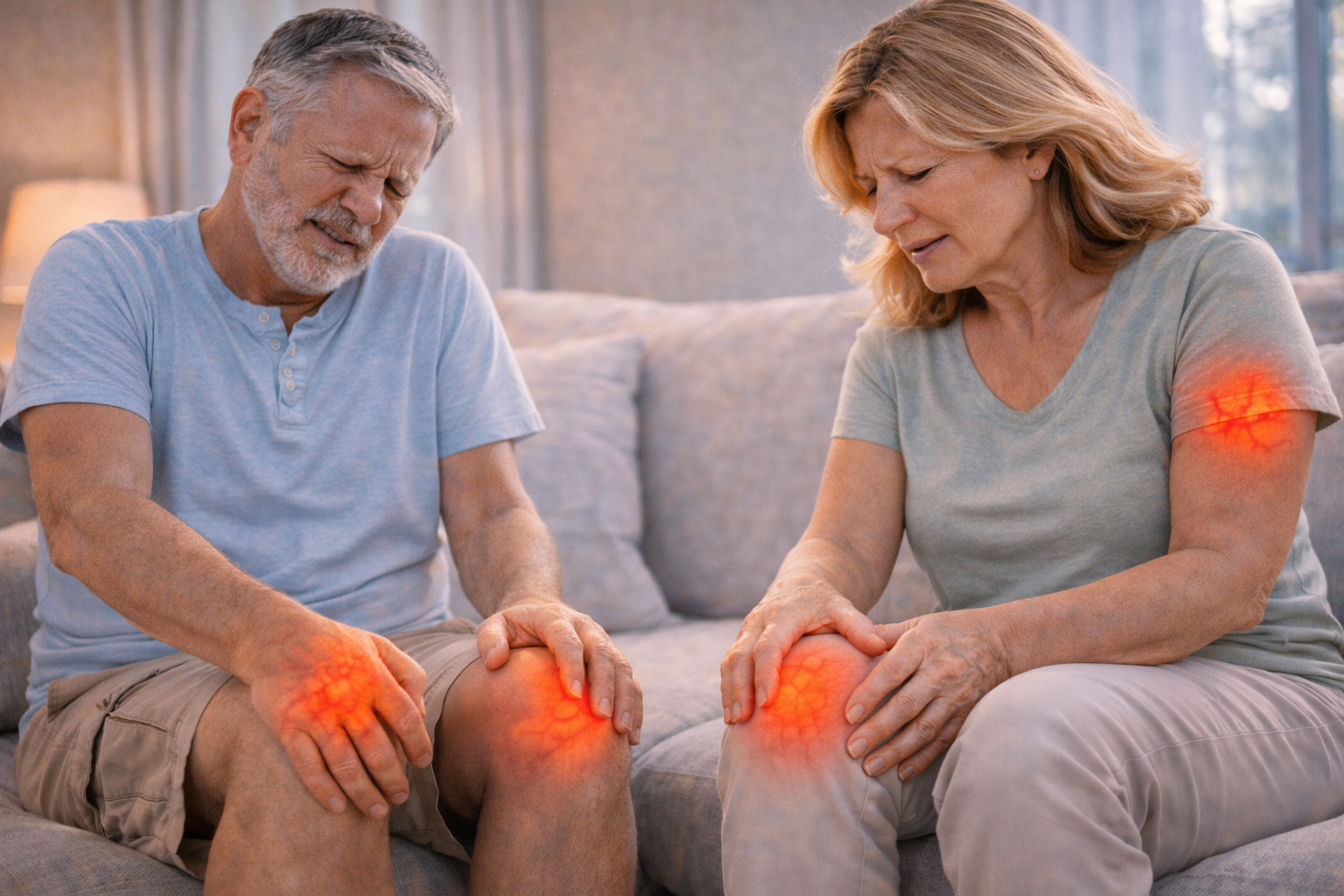
You sit through a feature film, finish a lengthy highway commute, or stand up from your desk after a morning of uninterrupted screen time—and instantly, your knees feel locked, rigid, or heavy. You find yourself pausing for a beat before taking that first step, waiting for your joints to clear the rust. If your knees stiff after sitting, you are navigating a universal human experience that becomes remarkably common as we age.
What once felt effortless now demands a moment of hesitation. It sparks immediate, natural questions: Is this normal tissue aging? Am I wearing down my joint surfaces? Can I actually restore smooth movement?
Here is the straightforward truth: while start-up stiffness is incredibly common, it is also your musculoskeletal system signaling a temporary drop in internal lubrication and circulation. By understanding the underlying biology—and applying targeted lifestyle adjustments—you can protect your knee joints and move through your day with absolute confidence.
Table of Contents
What Does “Knees Stiff After Sitting” Actually Mean?
When people describe stiff knees after sitting, they’re usually talking about:
- Tightness or resistance when standing up
- Difficulty straightening the leg fully
- A brief ache or pressure in the joint
- Feeling “rusty” for the first few steps
- Improvement after moving around
This experience is often called “start-up stiffness.” The joint feels restricted after being still but loosens once movement begins.
Unlike sudden injury pain, stiffness tends to:
- Improve within minutes
- Respond well to gentle motion
- Return after long periods of inactivity
Your knees aren’t failing — they’re reacting to inactivity and natural joint changes that become more noticeable with age.
Why Do I Have Stiff Knees When Sitting for a While at 60?
Reaching your sixties brings magnificent life experience, but it also invites tangible, microscopic shifts in your musculoskeletal architecture. When you experience stiff knees when sitting for a while at 60, your body is reacting to decades of mechanical loading combined with natural physiological changes inside the knee capsule.
Think of your knee joint as a precision mechanical engine, such as the timing belt and ball bearings in an automobile. When the car sits parked in the driveway overnight, the lubricating oil settles into the pan. When you turn the ignition on a cold morning, the engine experiences a brief moment of mechanical resistance until the oil pump circulates fresh fluid across every moving part.
Your knees operate on an identical biological principle. When you sit statically for hours, synovial fluid stops circulating. The cartilage surfaces—which depend entirely on mechanical compression and movement to absorb nutrients—temporarily go without their fluid nourishment. When you suddenly stand up, those dry, contacting surfaces create immediate resistance.
The Biological Cascade of Start-Up Stiffness
To understand why this happens so predictably at age 60, let’s break down the three primary physiological shifts occurring inside the joint:
- Synovial Viscosity Shifts: Synovial fluid is non-Newtonian; it changes thickness depending on movement. At rest, it thickens, increasing friction during the initial transition to motion.
- Water Retention in Cartilage: Articular cartilage acts as a shock-absorbing sponge. Over decades, cartilage matrices naturally lose a fraction of their water-binding capacity, making them less forgiving during periods of prolonged static loading.
- Neuromuscular De-recruitment: Prolonged sitting switches off the quadriceps and gluteal muscles. When you stand, these supporting muscles fail to instantly stabilize the kneecap (patella), forcing the passive ligaments and joint capsule to absorb the initial load.
If your daily routine involves long periods behind the wheel, you may also experience related discomfort explored in our guide on why knees hurt after driving long distances.
| Feature / Metric | Youthful / Active Knee Joint | Age 60+ Joint with Start-Up Stiffness |
|---|---|---|
| Synovial Fluid Turnover | Rapidly thins and circulates within 1–2 steps of movement. | Viscosity remains high during rest; requires 15–30 seconds of motion to normalize. |
| Cartilage Hydration | High proteoglycan content maintains plump, highly elastic cushioning. | Slight reduction in water-binding capacity; minor thinning along high-stress facets. |
| Quadriceps Tone | Instantly engages to track the patella smoothly. | Delayed neuromuscular firing causes transient patellar tracking friction. |
| Circulatory Response | Rapid microvascular blood flow restoration upon standing. | Sluggish capillary refill in periarticular soft tissues after prolonged inactivity. |
Common Symptoms and Patterns

People experiencing stiff knees after sitting often notice predictable patterns:
- Morning stiffness that improves after walking
- Discomfort after car rides or flights
- Tightness during desk work
- Relief once movement starts
- More stiffness in cold environments (see: joints hurt more in cold weather)
Stiffness that improves with activity is usually a sign that joints benefit from movement rather than rest.
Lifestyle and Daily Habit Factors
Many everyday habits quietly influence knee comfort.
Sitting Too Long
Modern life encourages extended sitting — work, commuting, streaming shows. Remaining in one position shortens muscles and limits joint circulation.
Even healthy knees dislike long inactivity.
Posture and Chair Setup
Low chairs or deep couches place knees in prolonged flexion, increasing stiffness when standing.
Helpful adjustments:
- Keep knees level with hips
- Use chairs with firm support
- Avoid sinking couches for long periods
Footwear Choices
Unsupportive shoes can subtly change knee alignment and increase strain.
Shoes with cushioning and stability often reduce daily stress on joints.
Weight Distribution
Even small weight changes affect knee load. Each step places multiple times body weight through the joint.
Balanced movement matters more than perfection.
Gentle Movement and Wellness Support
The goal isn’t intense exercise — it’s consistent, joint-friendly motion.
Micro-Movement Breaks
Try standing every 30–45 minutes.
Simple options:
- Walk around the room
- Stretch calves and thighs
- Bend and straighten knees slowly
These small resets can dramatically reduce stiffness buildup.
Strengthening Key Muscles
Focus on muscles that support knee alignment:
- Quadriceps
- Hamstrings
- Glutes
- Calves
Begin gently:
- Chair squats
- Wall sits (short duration)
- Slow step-ups
Consistency matters more than intensity.
Mobility Before Standing
Before getting up:
- Straighten legs slowly.
- Flex ankles.
- Tighten thigh muscles for 5 seconds.
This “prepares” the joint for movement.
Low-Impact Activities
Ideal options for adults over 40:
- Walking
- Swimming
- Cycling
- Yoga or tai chi
These improve lubrication without excessive strain.
Nutrition and Hydration Basics for Joint Comfort
Food doesn’t fix stiffness instantly — but daily choices influence inflammation and tissue health over time.
Stay Hydrated
Cartilage relies heavily on water content. Mild dehydration can worsen stiffness sensations.
Aim for steady hydration throughout the day rather than large amounts at once.
Anti-Inflammatory Foods
Helpful patterns include:
- Fatty fish (omega-3s)
- Nuts and seeds
- Olive oil
- Leafy greens
- Berries
These support overall joint environment rather than acting as quick fixes.
Protein for Muscle Support
Muscle strength protects joints. Adequate protein intake helps maintain supportive tissue as we age.
When to Seek Professional Advice
Occasional stiffness is common, but certain signs deserve evaluation:
- Persistent swelling
- Sharp or worsening pain
- Knee locking or instability
- Stiffness lasting longer than 30 minutes
- Difficulty bearing weight
A healthcare professional can rule out conditions such as osteoarthritis or inflammatory joint issues.
Early guidance often prevents long-term frustration.
The Hidden Culprits: Posture, Circulation, and Daily Habits
It is easy to blame age alone, but modern lifestyle mechanics play an enormous role in determining how stiff your knees feel after a movie, a flight, or a morning at the computer.
Deep Flexion and Joint Compression
When you sit in a plush, low-slung sofa or cross your legs tightly at your desk, your knees remain in deep flexion (bending) for hours. This constant angle stretches the patellar tendon and compresses the posterior joint structures. When you finally straighten your leg to stand, those compressed tissues protest.
Furthermore, structural integrity relies heavily on balanced lower-body mechanics. For instance, if you carry excess weight, the mechanical burden on your knees multiplies exponentially with every single step you take. To understand how systemic load interacts with joint tissue health, review our deep dive on how weight affects joint pain.
Dr. Preet Pal’s Clinical Perspective
“In my clinical practice, patients often panic when their knees feel glued together after sitting on the couch. They immediately fear bone-on-bone arthritis. But 9 times out of 10, what we are seeing is ‘neuromuscular and fluid dormancy.’ The joint isn’t disintegrating; it’s simply asleep. When we teach patients to perform seated micro-activations—like simple quad sets before standing—we bypass that painful, rusty transition entirely by forcing the synovial pump to turn on before weight is applied.”
Actionable Strategies to Eliminate Post-Sitting Knee Stiffness
You do not have to accept knee stiffness as an inevitable tax on aging. By implementing smart, low-impact habits throughout your day, you can keep your joints supple and responsive.
1. The 45-Minute Movement Rule
Never remain in a seated position for more than 45 minutes without a reset. Set a gentle timer on your phone or smartwatch. When it sounds, stand up, perform five slow air-squeezes of your thigh muscles, and take a quick lap around the room. This keeps synovial fluid active and prevents your joint capsules from tightening.
2. Seated Pre-Activation Exercises
Before you stand up from your office chair or living room couch, spend 10 seconds preparing your knees:
- Sit tall with your feet flat on the floor.
- Straighten your right leg completely, flexing your quad muscle as hard as comfortably possible. Hold for 3 seconds.
- Lower it slowly, then repeat with the left leg.
- Perform 3 repetitions per leg. This signals your nervous system to wake up the stabilizing muscles around the patella.
3. Targeted Low-Impact Movement
Walking, stationary cycling, and water aerobics are the gold standard for aging joints. Cycling, in particular, acts as a mechanical pump, driving nutrient-rich blood and synovial fluid directly through the knee capsule without the jarring impact of running on asphalt.
Supporting Cartilage and Joint Integrity From Within
While physical movement addresses the mechanical side of stiffness, long-term joint health requires foundational nutritional support. Cartilage, ligaments, and synovial membranes require specific building blocks to maintain their structural resilience.
Nutritional Foundations for Joint Comfort
- Omega-3 Fatty Acids: Found abundantly in wild-caught salmon, chia seeds, and walnuts, omega-3s help regulate systemic inflammatory pathways that affect joint tissues.
- Adequate Hydration: Cartilage is roughly 70% to 80% water. Chronic mild dehydration causes joint matrices to become brittle and less shock-absorbent.
- Quality Protein: Consuming adequate lean protein ensures your quadriceps and hamstrings retain the muscle mass necessary to unburden your knee joints.
When structural changes in the knee become more advanced, some individuals experience more severe, constant discomfort. If you are exploring advanced structural considerations and natural management strategies, read our specialized resource on bone-on-bone knee pain and natural options.
Featured Advanced Support: Joint Genesis
When to Consult a Medical Professional
While mild start-up stiffness is a normal part of aging, certain symptoms cross the line from standard wear-and-tear into territory that requires professional orthopedic evaluation:
- Sudden, severe joint swelling or redness.
- Mechanical locking (where the knee physically sticks in place and cannot straighten).
- Sharp, stabbing pain during weight-bearing movement.
- Stiffness that lasts consistently longer than 30 to 45 minutes every morning.
An experienced physician or physical therapist can perform targeted orthopedic tests, order imaging if necessary, and rule out degenerative joint conditions.
Practical Tips You Can Apply Today
Small changes often bring noticeable relief:
✅ Stand and move every 30–45 minutes
✅ Stretch legs before standing up
✅ Strengthen thigh muscles twice weekly
✅ Choose supportive footwear
✅ Stay hydrated throughout the day
✅ Warm joints before activity in cold weather
✅ Use gentle heat for tight knees
Think of joint care as maintenance, not repair.
Common Myths and Mistakes
Myth 1: “Rest Is Best for Stiff Knees”
Too much rest often increases stiffness. Joints thrive on movement.
Myth 2: “Pain Means Damage”
Mild stiffness doesn’t automatically signal injury or degeneration.
Myth 3: “You Should Avoid Squats After 40”

Properly performed, controlled squats strengthen knee support muscles.
Myth 4: “Aging Means Inevitable Decline”
Many adults improve mobility well into their 50s, 60s, and beyond with consistent habits.
Frequently Asked Questions
Why are my knees stiff after sitting but fine when walking?
Movement restores circulation and joint lubrication, reducing stiffness quickly.
Is knee stiffness a sign of arthritis?
Not always. Occasional stiffness is common. Persistent pain, swelling, or reduced mobility should be evaluated.
How long should stiffness last after standing?
Typically a few steps to a few minutes. Longer stiffness may need medical assessment.
Does walking help stiff knees?
Yes. Gentle walking encourages lubrication and strengthens supportive muscles.
Should I stretch before or after sitting?
Both help. Light stretching before standing often reduces discomfort.
Can dehydration affect joint stiffness?
Yes. Joints rely on fluid balance, and low hydration may increase stiffness sensations.
Verified Medical Sources
- Centers for Disease Control and Prevention (CDC): Arthritis Joint Pain and Management Guidelines
- Mayo Clinic: Knee Pain Overview, Causes, and Diagnostic Evaluation
- National Institutes of Health (NIH / NIAMS): Handout on Health: Osteoarthritis and Joint Health Research
- Arthritis Foundation: Understanding Synovial Fluid and Joint Lubrication Mechanics
About the Author
Jennifer Collins
Health Research Editor, JointReliefJournal
Jennifer Collins is a health research editor specializing in mobility, aging, and joint wellness education. She focuses on translating scientific research into clear, practical information adults can realistically apply in everyday life. Her work emphasizes transparency, balanced evidence, and long-term wellness habits rather than quick fixes.
Medical & Educational Disclaimer
This article is for educational purposes only and is not intended as medical advice, diagnosis, or treatment. Always consult a qualified healthcare professional regarding any medical concerns or before making changes to your health routine.