
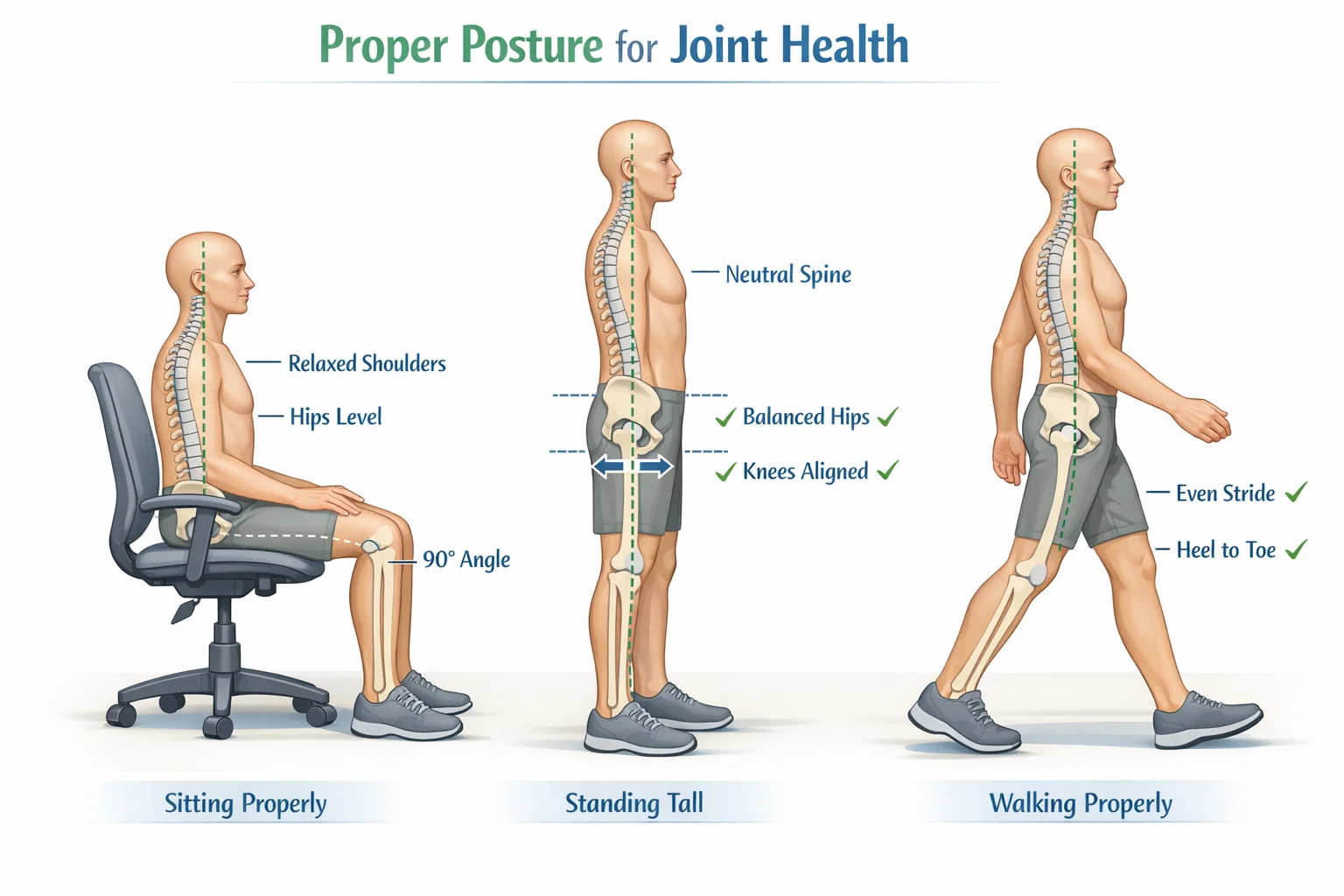
Good posture is more than just standing straight for a photo. It directly affects how your joints, muscles, and spine handle daily pressure. In fact, studies referenced by the World Health Organization highlight that musculoskeletal health conditions are one of the leading causes of disability worldwide, often worsened by poor movement habits. Understanding proper posture for joint health is essential if you want to reduce strain, improve mobility, and support long term wellness through better body alignment and daily posture habits for healthy joints and spine alignment.
Whether you are sitting at a desk, standing in queues, or walking short distances, your body alignment plays a major role in joint protection and overall ergonomic posture awareness. This guide explains practical ways to improve safe sitting posture for joint health, adopt how comfortable standing posture for joints techniques, and refine your safe walking posture for knee and joint health, while also introducing correct posture techniques for joint pain relief at home for everyday comfort.
Why posture matters for joint protection
Your joints are designed to distribute weight evenly across bones and muscles. When posture is misaligned, certain areas carry more load than they should, affecting musculoskeletal health over time. Research from the National Institute of Arthritis and Musculoskeletal and Skin Diseases shows that repetitive strain and poor biomechanics contribute significantly to joint pain in adults. Maintaining proper posture for joint health supports better body mechanics and reduces unnecessary stress on joints, improving occupational health ergonomics in daily life. Good posture also improves circulation and reduces fatigue, supporting physical therapy posture principles often used in rehabilitation. Poor alignment over time can even alter movement patterns and reduce joint mobility, making simple tasks feel more difficult than they should.
The science behind posture and joint alignment
Human movement relies on coordinated systems of bones, ligaments, and muscles working through spinal alignment. When alignment is correct, force distribution remains balanced, improving joint mobility and reducing wear. However, even small postural errors repeated daily can affect body mechanics and lead to discomfort. Slouching increases pressure on spinal discs, while uneven posture disrupts hip alignment and joint balance. Over time, these imbalances affect knee joint pressure and overall movement efficiency. Practicing joint safe body alignment ensures the body maintains safe positioning, supported by strong postural awareness throughout daily activities. This awareness is the foundation of all posture correction habits and long term joint protection strategies.
Correct sitting posture for joints: how to protect your body while seated
Sitting is one of the most common activities in modern life, yet poor habits can affect sitting ergonomics and long term comfort. A correct sitting posture for joints begins with spinal alignment and proper lower back support. Feet should remain flat on the floor and knees at a natural angle. This reduces knee joint pressure and improves circulation. Screen height should align with eye level to maintain ergonomic posture and reduce neck strain. These habits are central to joint supportive posture techniques and can be reinforced through correct posture techniques for joint pain relief at home when working remotely or studying for long hours.
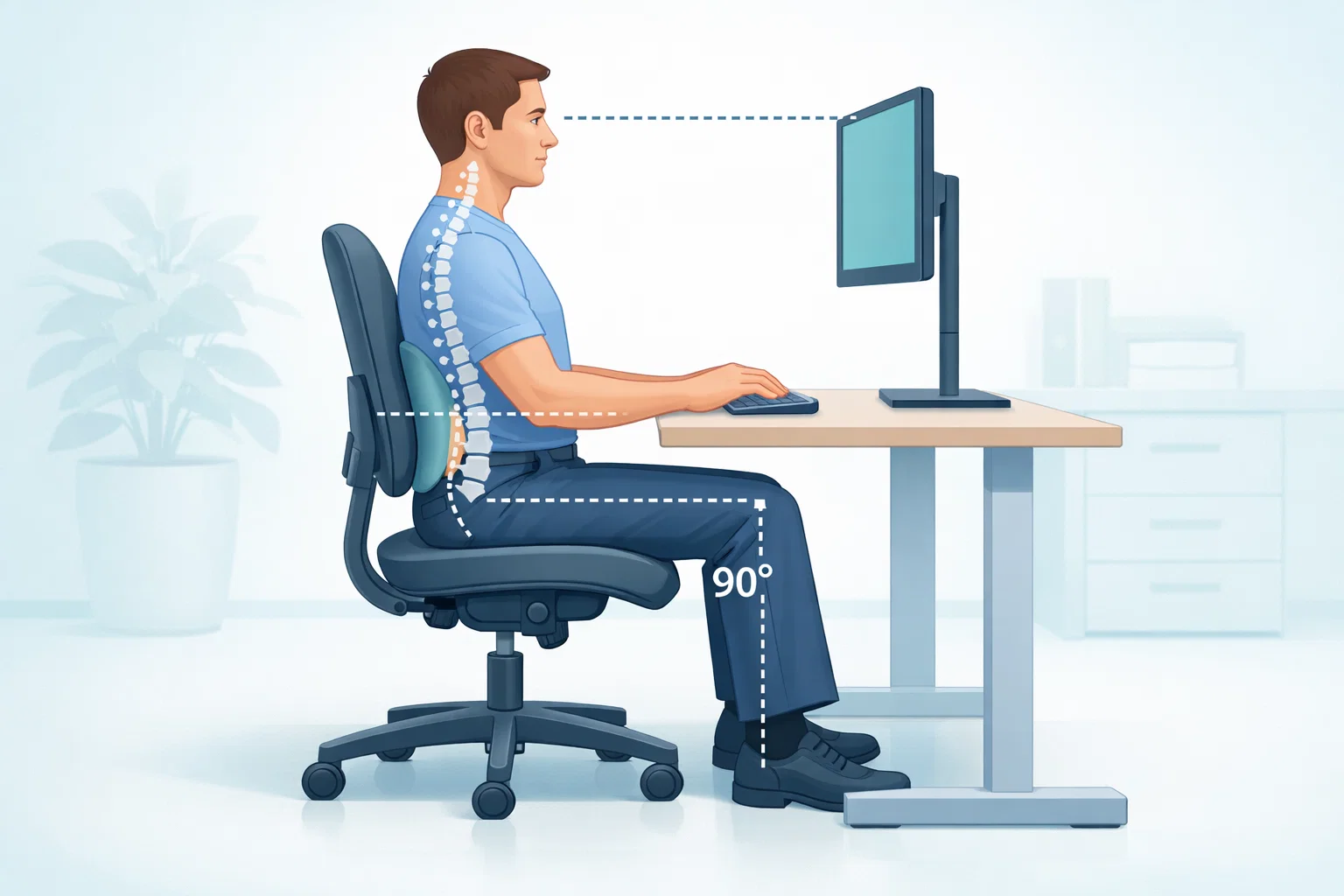
Extended sitting without movement reduces blood flow and increases stiffness in joints. Over time, this affects hip alignment and can contribute to lower back discomfort. Regular posture checks and small adjustments throughout the day help maintain healthy alignment and reduce long term strain on the musculoskeletal system.
How to stand without joint pain: building a stable foundation
Standing may seem simple, but improper alignment can stress joints over time. Learning how to stand without joint pain involves maintaining standing ergonomics by distributing weight evenly across both feet and avoiding locked knees. Proper hip alignment helps reduce strain on lower joints and improves stability. Shoulder and head alignment should remain neutral to support overall body mechanics.
Many people unknowingly shift weight to one leg, increasing pressure on one side of the body. This affects knee joint pressure and can lead to long term imbalance. Engaging core stability lightly while standing improves balance and reduces fatigue. Practicing posture for joint pain prevention while standing helps build endurance and reduces discomfort during long periods of activity such as cooking, commuting, or waiting in queues.
Walking posture to protect joints: moving with efficiency and comfort
Walking is a natural movement, but improper technique affects walking mechanics and joint function. A proper walking posture to protect joints involves smooth steps and controlled motion. Heel to toe movement improves movement efficiency and reduces impact on knees and ankles. Core engagement supports stability and improves rhythm. Arm movement enhances balance and coordination.
Incorrect walking habits, such as dragging feet or overstriding, increase joint stress and reduce efficiency. These patterns can gradually affect musculoskeletal health and lead to fatigue. Practicing alignment for joint health during walking ensures smoother motion and reduces unnecessary strain on lower limbs. Over time, this supports better endurance and comfort in daily life.
Common posture mistakes that harm joints
Many daily habits reduce postural awareness and negatively impact joint health. Slouching while sitting disrupts sitting ergonomics and increases spinal stress. Leaning to one side creates uneven pressure across joints. Stiff walking patterns reduce movement efficiency and strain lower limbs. Ignoring posture correction habits leads to long term discomfort.
Poor posture often develops gradually, making it difficult to notice until pain appears. These patterns affect daily movement patterns and reduce flexibility. Over time, they can limit joint mobility and make simple actions feel restrictive. Awareness is the first step toward improving alignment and restoring balance in everyday movement.
Exercises that support better posture
Strengthening key muscle groups improves posture stability and reduces strain. Core stability plays a major role in maintaining spinal support and balance. Flexibility training improves joint range of motion and reduces stiffness. These practices support physical therapy posture principles commonly used in rehabilitation.
Weak muscles often contribute to poor alignment and increased joint pressure. Strengthening the back, abdomen, and hips improves overall body mechanics and reduces strain on joints. Regular stretching improves flexibility training outcomes and helps maintain mobility. These exercises support ergonomic posture for joint protection by reinforcing correct movement patterns.
Lifestyle habits that improve posture naturally
Daily routines strongly influence posture quality. Maintaining occupational health ergonomics at work helps reduce strain from long sitting hours. Awareness of daily movement patterns prevents stiffness and supports active recovery. Standing and moving regularly improves circulation and reduces joint stress.
Practicing correct posture techniques for joint pain relief at home helps reinforce alignment outside of work environments. Simple habits like adjusting chair height, taking movement breaks, and correcting posture throughout the day can significantly improve long term comfort. These habits strengthen postural awareness and reduce cumulative strain on joints.
Proper posture for joint health in daily life
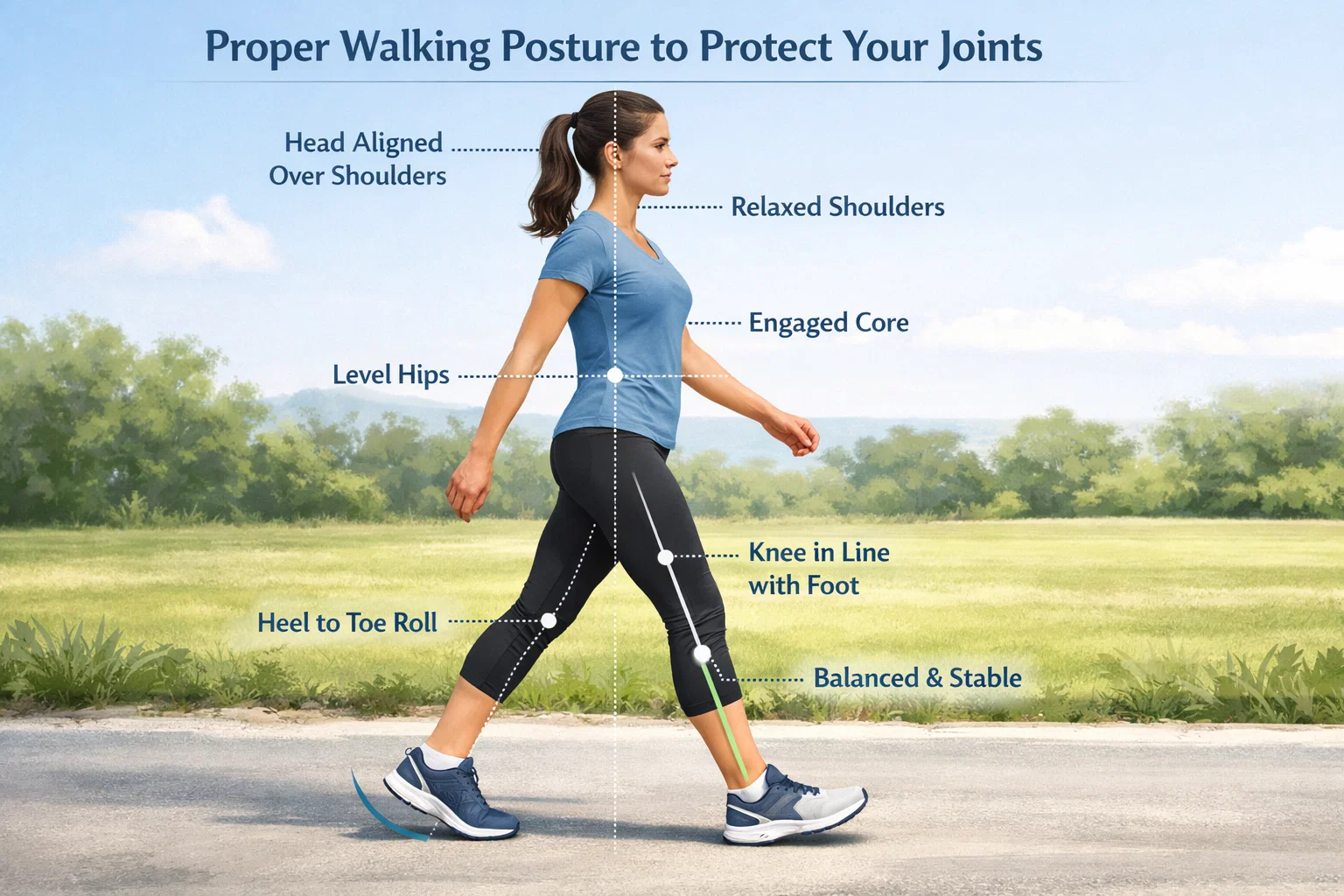
Maintaining daily posture habits for joint wellness requires consistency in sitting, standing, and walking habits. Strong spinal alignment and hip alignment ensure balanced movement. Using ergonomic posture principles during daily tasks reduces strain on joints and muscles.
Also Read: Knee Pain Walking Downstairs After 50: Causes, Relief & Natural Fixes That Work
Over time, consistent awareness improves movement efficiency and reduces fatigue. These habits help the body adapt to healthier positioning naturally. Supporting musculoskeletal health through posture creates long term benefits that extend beyond joint comfort, improving overall physical performance and daily energy levels.
Conclusion
Good posture is one of the simplest yet most effective ways to protect joints throughout life. By applying sitting posture for joint pain prevention, learning standing posture for joint pain relief, and refining walking form for joint pain prevention, individuals can significantly improve mobility and reduce discomfort. Practicing proper posture for joint health daily, along with correct posture techniques for joint pain relief at home, builds long term resilience and supports healthier movement patterns for life. Consistency is what transforms posture from conscious effort into natural body behaviour that protects joints effortlessly over time.
Sources
National Institute of Arthritis and Musculoskeletal and Skin Diseases
World Health Organization
Harvard Health Publishing
Centers for Disease Control and Prevention
FAQs
How can correct sitting posture for joints reduce long term discomfort in office workers?
Maintaining proper sitting posture for joint health helps reduce uneven pressure on the spine and hips by improving sitting ergonomics and spinal alignment. Office workers who maintain proper lower back support experience less fatigue and better circulation. This reduces knee joint pressure and supports long term comfort. Combined with awareness of occupational health ergonomics, it helps prevent chronic stiffness and supports correct posture for joint health during long working hours. Consistent posture correction habits also reduce muscle fatigue and improve daily productivity.
What are the most effective techniques for how to stand without joint pain during daily activities?
Learning how to stand without joint discomfort involves maintaining standing ergonomics with balanced weight distribution and relaxed knees. Proper hip alignment and core stability help reduce stress on lower joints. Avoiding locked knees improves circulation and reduces strain. These techniques support healthy posture for joint support and are widely recommended in physical therapy posture principles for daily standing comfort. Regular posture awareness helps prevent long term imbalance and reduces fatigue during prolonged standing activities.
How does walking posture to protect joints influence long term mobility and comfort?
Practicing walking alignment for joint protection improves walking mechanics by promoting smooth movement efficiency and reducing impact stress on knees and ankles. Proper alignment supports joint mobility and reduces fatigue. Engaging core stability and maintaining natural arm movement enhances balance. These habits contribute to long term musculoskeletal health and improved daily movement patterns. Over time, consistent walking habits improve endurance and reduce stiffness, supporting healthier and more efficient movement.
Why is ideal sitting posture for joint support important for people with sedentary jobs?
Posture for healthy sitting and joints is essential for sedentary workers because prolonged sitting affects sitting ergonomics and spinal alignment. Without proper posture correction habits, pressure builds in the lower back and hips. Maintaining lower back support reduces strain and improves comfort. This supports optimal posture for joint protection and reduces long term risk of stiffness. It also helps maintain hip alignment and prevents uneven pressure on joints caused by prolonged inactivity.
What daily habits support how to stand without knee or joint pain effectively over time?
Developing awareness of postural awareness and daily movement patterns helps maintain pain free standing posture effectively. Regular movement breaks and proper hip alignment reduce joint stress. Strengthening core stability and avoiding static positions improves standing comfort. These habits reinforce ideal posture for joint wellness and support long term joint protection. Over time, these small adjustments become automatic, improving balance and reducing fatigue in daily life.
How can ergonomic walking posture for joints be improved without special equipment?
Improving walking technique for joint comfort requires focusing on walking mechanics such as heel to toe movement and smooth rhythm. Maintaining movement efficiency and natural arm swing reduces joint strain. Awareness of body mechanics improves balance and reduces pressure on knees and hips. These simple adjustments support balanced posture for joint health without needing any equipment. Regular practice helps the body naturally adopt healthier movement patterns.
How does joint friendly posture alignment support overall physical wellness?
Posture for healthy joints improves spinal alignment and reduces stress across muscles and joints. It supports musculoskeletal health and enhances circulation, energy levels, and mobility. Combined with ergonomic posture habits and flexibility training, it helps maintain long term physical wellness. Consistent posture awareness reduces fatigue and supports efficient daily movement patterns. Over time, it contributes to better overall health, improved balance, and reduced risk of chronic joint issues.