

Shoulder pain at night can turn a normal bedtime into a frustrating experience. You lie down, try to relax, and suddenly your shoulder starts throbbing. You switch sides, adjust pillows, and still cannot find comfort. If this sounds familiar, you are not alone.
Many people report that their shoulder hurts when sleeping, even if it feels manageable during the day. Nighttime discomfort often feels sharper, more persistent, and harder to ignore. The good news is that this pattern has clear reasons, and more importantly, there are practical ways to fix it.
This guide explains why shoulder pain at night gets worse, what conditions might cause it, and how you can achieve real nighttime shoulder pain relief without complicated treatments.
Why Shoulder Pain at Night Feels Worse

Your body changes when you lie down. These changes can increase pressure and inflammation in your shoulder, which leads to more noticeable pain.
First, gravity stops helping you. During the day, your arm hangs naturally and reduces pressure on the shoulder joint. When you lie down, especially on your side, your body weight presses directly onto the joint. This pressure can irritate sensitive tissues.
Second, blood flow shifts. When you lie flat, more blood flows to injured or inflamed areas. That sounds helpful, but it can increase swelling and make pain signals stronger.
Third, distractions disappear. During the day, your brain focuses on work, movement, and conversations. At night, everything slows down. Your brain pays more attention to discomfort, which makes the pain feel worse.
These three factors explain why shoulder pain lying down often feels more intense than during daily activity.
Common Causes of Shoulder Pain at Night
Not all shoulder pain has the same cause. Understanding what is behind your discomfort helps you choose the right solution.
Rotator Cuff Injuries
The rotator cuff consists of muscles and tendons that stabilize your shoulder. These tissues can become irritated or torn due to overuse, aging, or injury.
When you lie on your side, pressure increases on the rotator cuff. This often causes sharp or aching pain that wakes you up at night. Many people with rotator cuff issues say their shoulder hurts when sleeping on the affected side.
If you are unsure whether your pain comes from a minor strain or something more serious, read this detailed guide on rotator cuff tear vs strain to understand the key differences without needing an MRI.
Shoulder Bursitis
Bursae are small fluid-filled sacs that reduce friction in joints. When they become inflamed, the condition is called bursitis.
Shoulder bursitis often causes dull pain that worsens with pressure. Lying on the affected shoulder can feel uncomfortable quickly, making sleep difficult.
Frozen Shoulder
Frozen shoulder leads to stiffness and reduced range of motion. It develops gradually and can last for months.
Nighttime pain is a common symptom. Many people feel a deep ache that becomes worse when they stay still for long periods, especially while sleeping.
Tendonitis
Shoulder tendonitis occurs when tendons become inflamed due to repetitive motion or strain. This condition often causes pain during movement and rest.
At night, reduced movement allows stiffness to build up. This can increase discomfort and lead to interrupted sleep.
Poor Sleeping Position
Sometimes the cause is simpler than expected. Sleeping with poor posture can strain your shoulder joint.
If your arm sits under your body or your shoulder rolls forward, it can create unnecessary tension. Over time, this leads to shoulder pain lying down, even if no major injury exists.
How Sleeping Position Affects Shoulder Pain
Your sleeping position plays a major role in how your shoulder feels at night. Small changes can make a big difference.
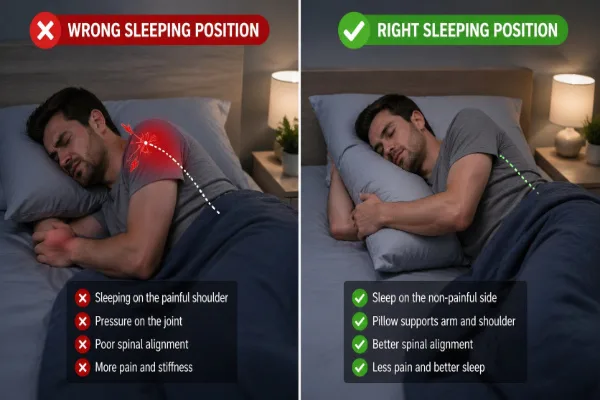
Sleeping on the painful shoulder usually makes things worse. It compresses the joint and increases inflammation. Many people instinctively avoid this position, but they may not adjust properly on the other side.
Sleeping on your back often works best. It distributes your weight evenly and reduces pressure on both shoulders. Placing a pillow under your arm can keep your shoulder in a neutral position.
Side sleeping can still work if done correctly. You should sleep on the opposite side and hug a pillow. This keeps your top shoulder aligned and prevents it from collapsing forward.
Your goal is to keep the shoulder stable and supported. This reduces strain and improves nighttime shoulder pain relief.
6 Effective Ways to Sleep Pain-Free
You do not need complicated tools or expensive treatments to improve your sleep. Simple adjustments can reduce shoulder pain at night and help you wake up feeling better.
1. Adjust Your Sleeping Position
Start with the basics. Avoid lying directly on the painful shoulder. Choose a position that keeps your spine and shoulders aligned.
Back sleeping offers the most support. If you prefer side sleeping, switch to the non-painful side and use a pillow to support your arm.
Consistency matters. Your body needs time to adapt to a new sleeping posture.
2. Use the Right Pillow Setup
Pillows can either help or worsen your condition. A good pillow setup supports your neck and shoulder alignment.
Use a medium-firm pillow for your head. Add a second pillow to support your arm if needed. This reduces strain and prevents awkward angles.
If your shoulder hurts when sleeping, this small change can bring noticeable relief within days.
3. Apply Cold or Heat Therapy

Cold packs help reduce inflammation. Heat therapy relaxes muscles and improves blood flow. Both options can be effective, depending on your condition.
Use a cold pack for recent injuries or swelling. Apply it for 15 to 20 minutes before bed.
Use a heating pad if your pain feels stiff or tight. Heat works well for chronic conditions like frozen shoulder.
4. Stretch Before Bed
Gentle stretching can reduce stiffness and improve flexibility. This helps your shoulder stay relaxed during sleep.
Focus on slow, controlled movements. Avoid aggressive stretches that cause pain.
A simple routine before bed can reduce nighttime discomfort and improve sleep quality.
5. Improve Your Mattress Support
Your mattress plays a bigger role than you might think. A sagging or overly soft mattress can misalign your body and increase pressure on your shoulder.
A medium-firm mattress usually works best for joint support. It keeps your spine aligned and reduces pressure points.
If you experience frequent shoulder pain lying down, your mattress may be part of the problem.
6. Manage Daily Activity and Posture
What you do during the day affects how you feel at night. Poor posture, repetitive strain, and lack of movement can all contribute to shoulder pain.
Keep your shoulders relaxed and avoid slouching. Take breaks if you work at a desk. Strengthening exercises can also improve joint stability over time.
These habits support long-term nighttime shoulder pain relief.
When You Should See a Doctor
Not all shoulder pain can be managed at home. Some symptoms require medical attention.
If your pain lasts more than a few weeks, worsens over time, or limits your movement, you should consult a healthcare professional.
Seek help if you experience severe pain, swelling, or weakness in your arm. These signs may indicate a more serious condition.
Early diagnosis can prevent long-term complications and help you recover faster.
Simple Habits That Support Long-Term Relief
Consistency is key when dealing with shoulder pain at night. Small daily habits can create lasting improvements.
Stay active without overloading your shoulder. Regular movement keeps joints flexible and healthy. Maintain good posture during work and daily tasks. Use proper lifting techniques to avoid strain.
Hydration and balanced nutrition also support joint health. While these factors may seem minor, they contribute to overall recovery and comfort.
Frequently Asked Questions
Why does shoulder pain at night feel worse than during the day?
Shoulder pain at night often feels worse because lying down increases pressure on the joint and reduces movement. This can lead to more inflammation and stiffness, making the pain more noticeable compared to daytime activity.
What is the best sleeping position for shoulder pain at night?
The best position for shoulder pain at night is sleeping on your back or on the opposite side of the painful shoulder. Using a pillow to support your arm can help keep the joint aligned and reduce pressure.
What causes shoulder pain when lying down at night?
Shoulder pain lying down is commonly caused by conditions like rotator cuff injuries, bursitis, tendonitis, or poor sleeping posture. These issues become more noticeable at night due to increased pressure and reduced movement.
How can I get quick nighttime shoulder pain relief at home?
For fast nighttime shoulder pain relief, try adjusting your sleeping position, using supportive pillows, applying cold or heat therapy, and doing gentle stretches before bed. These methods can reduce inflammation and improve comfort.
When should I worry about shoulder pain at night?
You should be concerned about shoulder pain at night if it lasts for several weeks, becomes severe, or limits your movement. In such cases, it is best to consult a doctor to rule out serious conditions and get proper treatment.
Final Thoughts
Shoulder pain at night can disrupt your sleep and affect your daily life. It often feels worse because of pressure, inflammation, and lack of distraction. The good news is that most cases improve with simple changes.
By adjusting your sleeping position, improving support, and addressing daily habits, you can reduce discomfort and sleep more comfortably. If your shoulder hurts when sleeping, do not ignore it. Your body is signaling that something needs attention.
With the right approach, you can achieve real nighttime shoulder pain relief and wake up feeling refreshed instead of frustrated.
Sources
National Institute of Arthritis and Musculoskeletal and Skin Diseases
American Academy of Orthopaedic Surgeons
Author Bio
Jennifer Collins is a wellness researcher and natural health writer focused on adults over 40. With 3+ years of experience in digital health content, Jennifer specializes in making science-backed nutrition and lifestyle strategies easy to follow and apply.
Health Disclaimer
This content is for informational purposes only and is not intended to diagnose, treat, or cure any disease. Always consult your healthcare provider before making changes to your diet or health routine. This article may include affiliate links, which come at no extra cost to you.