

Aging brings wisdom, stories, and unfortunately, a bit of stiffness in the joints. If getting out of bed feels like starting an old engine on a cold morning, you are not alone. Many adults over 60 experience reduced flexibility, joint tightness, and limited mobility. The good news is simple and encouraging. A consistent stretching routine for stiff joints over 60 can improve flexibility, reduce discomfort, and help you move with confidence again.
This guide walks you through a safe, science-backed, and practical daily stretching routine. It keeps things realistic, easy to follow, and effective without requiring fancy equipment or extreme effort.
Why Joint Stiffness Increases After 60

As the body ages, several natural changes affect how joints feel and function. Cartilage, which cushions joints, becomes thinner over time. Muscles lose elasticity, and the production of synovial fluid, which lubricates joints, may decrease. These changes lead to stiffness, especially after long periods of sitting or sleeping.
Research from the National Institute on Aging shows that regular physical activity, including stretching, helps maintain mobility and reduces the risk of joint-related discomfort. Stretching improves blood flow, keeps muscles flexible, and supports joint health.
Many people assume stiffness is something they must accept. That is not true. A structured stretching routine for stiff joints over 60 can make a noticeable difference within weeks.
Benefits of a Daily Stretching Routine for Stiff Joints Over 60
When done consistently, stretching provides both short-term relief and long-term benefits. You may notice improved movement after just one session, but the real results build over time.
Stretching enhances flexibility and allows joints to move through a wider range of motion. It also improves circulation, which helps deliver oxygen and nutrients to muscles and joints. Better circulation often reduces soreness and stiffness.
A regular stretching routine also supports balance and posture. This matters more than most people realize. Good balance reduces the risk of falls, which remains a leading cause of injury among older adults.
There is also a mental benefit. Gentle stretching relaxes the body and reduces stress. Many people find that a morning stretching routine sets a positive tone for the day.
How to Start Safely
Before you begin any stretching routine for stiff joints over 60, focus on safety. You do not need to push your limits. In fact, stretching works best when done gently and consistently.
Start with a short warm-up. A five-minute walk around your home or simple arm movements can prepare your muscles. Warm muscles stretch better and reduce the risk of injury.
Move slowly and breathe normally. Never bounce during a stretch. Hold each position for about 15 to 30 seconds and repeat two to three times.
If you feel sharp pain, stop immediately. Mild tension is normal, but pain is not. Always listen to your body.
If you are recovering from surgery, you should also read our detailed guide on Exercise After Joint Replacement: Safe Recovery Tips That Actually Work After 50 to understand how to move safely without risking injury.
If you have conditions like arthritis or osteoporosis, consult a healthcare provider before starting a new routine. The right adjustments can make stretching both safe and effective.
The Ideal Daily Stretching Routine for Stiff Joints Over 60

This routine targets major joints and muscle groups. It takes about 15 to 20 minutes and works well in the morning or after light activity.
Neck Stretch
Sit or stand comfortably. Slowly tilt your head toward your right shoulder until you feel a gentle stretch on the left side of your neck. Hold for 20 seconds and switch sides.
This stretch relieves tension and improves neck mobility, especially if you spend time reading or using screens.
Shoulder Rolls and Stretch
Lift your shoulders toward your ears, then roll them backward in a smooth motion. Repeat ten times, then switch direction.
Next, bring one arm across your chest and gently press it closer with the opposite hand. Hold for 20 seconds and switch sides.
Shoulder stretches help reduce stiffness caused by inactivity and improve upper body movement.
Arm and Wrist Stretch
Extend one arm forward with your palm facing up. Use your other hand to gently pull your fingers downward. Hold for 15 seconds, then reverse the direction.
This stretch supports wrist flexibility and reduces stiffness, especially helpful for daily tasks like writing or cooking.
Upper Back Stretch
Sit on a chair and clasp your hands in front of you. Extend your arms forward and round your upper back slightly. Hold for 20 seconds.
This movement relieves tension in the upper spine and improves posture.
Hip Flexor Stretch
Stand behind a chair for support. Step one foot back and keep the front knee slightly bent. Push your hips forward gently until you feel a stretch in the front of your hip.
Hold for 20 seconds and switch legs. This stretch helps with walking and reduces lower back strain.
Hamstring Stretch
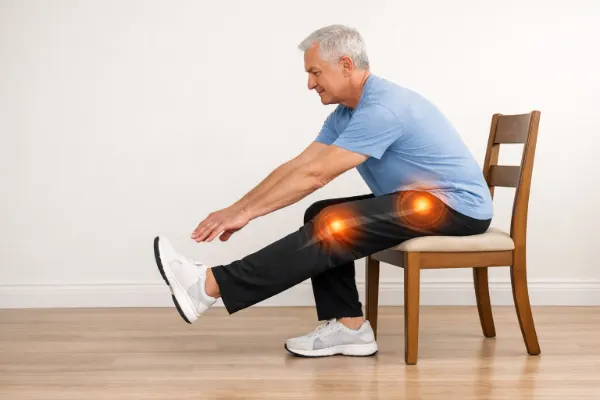
Sit on the edge of a chair and extend one leg forward with your heel on the floor. Keep your back straight and lean forward slightly from your hips.
Hold for 20 seconds and switch legs. This stretch improves flexibility in the back of the thighs and supports better mobility.
Calf Stretch
Stand facing a wall and place your hands on it. Step one foot back and press your heel into the ground while bending the front knee.
Hold for 20 seconds and switch legs. Flexible calves support better balance and walking stability.
Ankle Circles
Lift one foot slightly off the ground and rotate your ankle in a circular motion. Perform ten circles in each direction, then switch feet.
This simple movement improves joint mobility and reduces stiffness in the lower legs.
When to Stretch for Best Results
Consistency matters more than timing, but certain times of day work better for most people.
Morning stretching helps reduce stiffness that builds overnight. It prepares your body for daily activities and improves energy levels.
Evening stretching can help relax muscles and improve sleep quality. It works especially well after a day of physical activity.
Choose a time that fits your routine. The best stretching routine for stiff joints over 60 is the one you can stick to every day.
Common Mistakes to Avoid
Many people start stretching with good intentions but unknowingly make mistakes that limit results.
One common mistake is rushing through stretches. Quick movements do not allow muscles to relax properly. Slow and steady always works better.
Another mistake is holding your breath. Breathing supports muscle relaxation and makes stretching more effective.
Skipping days also reduces progress. Flexibility improves with regular practice, not occasional effort.
Finally, some people try to stretch too far. Overstretching can cause injury. Gentle tension is enough to see results.
The Role of Hydration and Nutrition
Stretching works best when supported by proper hydration and nutrition. Muscles and joints need water to function efficiently. Dehydration can increase stiffness and reduce flexibility.
Aim to drink enough water throughout the day. Even mild dehydration can affect how your body feels.
Nutrition also plays a role. Foods rich in omega-3 fatty acids, vitamins, and antioxidants support joint health. Leafy greens, nuts, fish, and fruits contribute to better mobility over time.
Calcium and vitamin D remain essential for bone health, especially after 60. Strong bones support healthy joints and reduce the risk of injury.
Can Stretching Help with Arthritis?
Many older adults experience arthritis, which often leads to joint stiffness and discomfort. Stretching does not cure arthritis, but it can reduce symptoms and improve quality of life.
According to the Centers for Disease Control and Prevention, regular physical activity, including stretching, helps reduce arthritis pain and improve function.
Gentle stretching keeps joints flexible and reduces stiffness. It also strengthens surrounding muscles, which support joint stability.
Always adapt stretches based on comfort level. Low-impact movements work best for people with arthritis.
How Long Before You See Results
Patience plays a key role in any fitness routine. Some benefits of stretching appear quickly, such as reduced tension and improved mobility after a single session.
Long-term improvements take consistency. Most people notice significant changes within four to six weeks of daily stretching.
The key is to stay consistent without overdoing it. Small daily efforts lead to lasting results.
Making Stretching a Daily Habit
Building a habit can feel challenging at first, but small strategies can make it easier.
Pair your stretching routine with an existing habit. For example, stretch after brushing your teeth in the morning or before watching television in the evening.
Keep your routine simple and realistic. A 15-minute session works better than an ambitious plan that feels overwhelming.
Track your progress. Noticing improvements in flexibility or reduced stiffness can motivate you to continue.
You can also involve a friend or family member. Stretching together adds accountability and makes the routine more enjoyable.
The Science Behind Stretching
Stretching works by improving muscle elasticity and joint range of motion. When you hold a stretch, your muscles gradually relax, allowing them to lengthen safely.
Studies published in journals like the Journal of Aging and Physical Activity highlight that regular stretching improves flexibility and mobility in older adults. These improvements contribute to better balance and reduced fall risk.
Stretching also activates the nervous system in a way that promotes relaxation. This explains why many people feel calmer after a stretching session.
A Realistic Approach That Works
You do not need to become a yoga expert or fitness enthusiast to benefit from stretching. A simple and consistent stretching routine for stiff joints over 60 can transform how your body feels and moves.
The goal is not perfection. The goal is progress. Even on days when you feel less motivated, a short session can still help.
Think of stretching as daily maintenance for your body. Just like brushing your teeth keeps your smile healthy, stretching keeps your joints mobile and comfortable.
Frequently Asked Questions
What is the best stretching routine for stiff joints over 60?
The best stretching routine for stiff joints over 60 focuses on gentle, full-body movements that improve flexibility without strain. It should include neck stretches, shoulder rolls, hip openers, hamstring stretches, and ankle mobility exercises. A simple 15 to 20-minute daily routine works well. Consistency matters more than intensity, so slow and controlled movements give the best results.
How often should seniors follow a stretching routine for stiff joints over 60?
Seniors should follow a stretching routine for stiff joints over 60 every day or at least five days a week. Daily stretching helps maintain joint mobility, reduce stiffness, and improve circulation. Even short sessions of 10 to 15 minutes can make a noticeable difference when done regularly.
Can a stretching routine for stiff joints over 60 reduce joint pain?
Yes, a consistent stretching routine for stiff joints over 60 can help reduce joint pain over time. Stretching improves blood flow, supports muscle flexibility, and reduces tension around joints. While it may not cure conditions like arthritis, it can significantly improve comfort and movement when practiced daily.
When is the best time to do a stretching routine for stiff joints over 60?
The best time to do a stretching routine for stiff joints over 60 is in the morning to reduce stiffness after sleep or in the evening to relax muscles after daily activity. Many people benefit from doing both. The key is choosing a time you can stick to consistently.
Is it safe to start a stretching routine for stiff joints over 60 at home?
Yes, it is safe to start a stretching routine for stiff joints over 60 at home as long as you move gently and avoid pushing into pain. Start with basic stretches, warm up lightly, and hold each stretch for 15 to 30 seconds. If you have medical conditions, it is best to consult a healthcare professional before starting.
Final Thoughts
Joint stiffness does not have to control your daily life. With a practical and consistent stretching routine for stiff joints over 60, you can improve flexibility, reduce discomfort, and enjoy better mobility.
Start small, stay consistent, and listen to your body. Over time, these simple movements can help you move more freely and confidently.
Your body may be older, but it still responds well to care and attention. Stretching offers one of the simplest and most effective ways to support your health after 60.
Sources
Centers for Disease Control and Prevention
Journal of Aging and Physical Activity
Author Bio
Jennifer Collins is a wellness researcher and natural health writer focused on adults over 40. With 3+ years of experience in digital health content, Jennifer specializes in making science-backed nutrition and lifestyle strategies easy to follow and apply.
Health Disclaimer
This content is for informational purposes only and is not intended to diagnose, treat, or cure any disease. Always consult your healthcare provider before making changes to your diet or health routine. This article may include affiliate links, which come at no extra cost to you.