

Aging brings wisdom, stories, and sometimes… creaky knees that sound like popcorn in a microwave. If you’re over 50 and dealing with stiff joints, you’re not alone. Joint pain affects millions of adults, especially as cartilage naturally wears down and inflammation increases with age. The good news is simple. You don’t need extreme workouts or complicated routines to feel better. Yoga offers a gentle, effective way to reduce pain, improve mobility, and bring your body back to life.
In this guide, you’ll learn how yoga for joint pain beginners over 50 works, why it’s safe, and how to start a simple routine that actually helps. No unrealistic promises. No fancy poses that require superhero flexibility. Just real, science-backed guidance you can trust.
Why Joint Pain Increases After 50

Your joints change as you age. Cartilage, which cushions your joints, becomes thinner. Synovial fluid, which lubricates movement, decreases. Muscles lose strength and flexibility. These changes can lead to stiffness, discomfort, and reduced mobility.
Conditions like osteoarthritis often appear after 50. According to the Centers for Disease Control and Prevention, arthritis affects over 32 million adults in the United States. That number grows with age.
Sedentary habits make things worse. Sitting too long tightens muscles and reduces circulation. Lack of movement can actually increase pain rather than reduce it. That’s where yoga for joint pain beginners over 50 becomes a powerful solution.
How Yoga Helps Joint Pain
Yoga does not just stretch your body. It improves strength, balance, and circulation. It also calms your nervous system, which plays a role in how you perceive pain.
Research published in the Journal of Rheumatology shows that yoga can reduce pain and improve physical function in people with arthritis. Another study from Harvard Medical School highlights yoga’s ability to improve flexibility and joint stability.
Here’s what yoga does for your joints:
It increases blood flow, which helps nourish cartilage.
It strengthens surrounding muscles, reducing pressure on joints.
It improves range of motion without strain.
It reduces inflammation through stress control.
If you want a simple and proven approach, check out our detailed guide on Yoga for Joint Pain Beginners Over 50: Easy Routine That Works to get started safely at home.
Yoga works because it combines gentle movement with mindful breathing. That combination makes it ideal for beginners over 50.
Is Yoga Safe for Beginners Over 50
Yes, yoga is safe when done correctly. You don’t need prior experience. You don’t need to be flexible. You only need to listen to your body.
Start slow. Avoid forcing any movement. Use support like chairs, blocks, or cushions if needed. Focus on comfort, not perfection.
Most experts recommend starting with beginner-friendly styles like Hatha yoga or chair yoga. These styles emphasize slow movements and proper alignment.
If you have severe arthritis or chronic conditions, talk to your doctor before starting. This ensures you choose the right routine for your needs.
Best Yoga Styles for Joint Pain Relief
Not all yoga styles suit beginners. Some focus on intense movement or advanced flexibility. For joint pain, gentle styles work best.
Hatha yoga focuses on slow, controlled poses. It allows you to move at your own pace. Yin yoga involves holding poses for longer periods, which helps improve flexibility and joint mobility. Chair yoga provides support, making it perfect for those with limited movement.
These styles make yoga for joint pain beginners over 50 accessible and effective.
Beginner-Friendly Yoga Routine for Joint Pain
Let’s move into a simple routine you can follow at home. This routine takes about 20 to 25 minutes and targets major joints like knees, hips, shoulders, and spine.
Start with deep breathing. Sit comfortably and take slow breaths. Inhale through your nose and exhale slowly. This prepares your body and reduces tension.
Move into neck stretches. Gently tilt your head side to side. Avoid sudden movements. This relieves stiffness in the upper body.
Try shoulder rolls. Lift your shoulders toward your ears and roll them back. This improves circulation and reduces tightness.
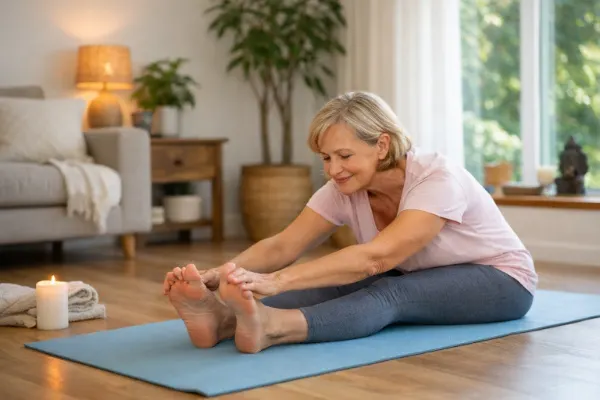
Transition into seated forward bend. Sit with your legs extended and reach toward your feet. Bend only as far as comfortable. This stretches your lower back and hamstrings.
Practice cat-cow pose. Move between arching and rounding your back. This improves spinal flexibility and reduces stiffness.
Use a chair for supported squats. Hold the back of a chair and slowly bend your knees. This strengthens your legs without stressing your joints.
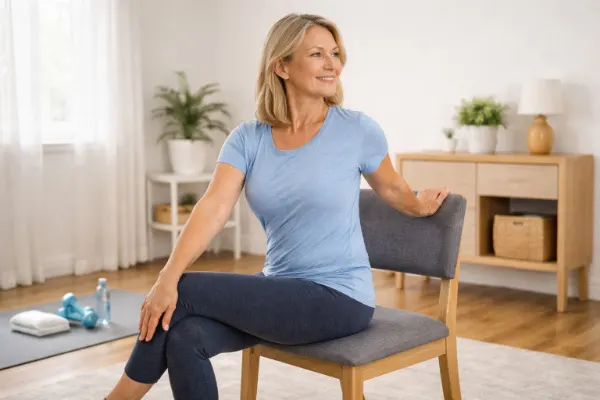
End with gentle twists. Sit upright and rotate your torso slightly to each side. This improves mobility in your spine.
Finish your session with relaxation. Lie down or sit quietly for a few minutes. Let your body absorb the benefits.
This routine supports yoga for joint pain beginners over 50 by keeping movements simple and safe.
Common Mistakes to Avoid
Many beginners try too hard, too fast. That approach often leads to discomfort or injury. Yoga should feel gentle, not painful.
Avoid pushing through pain. Pain is your body’s warning system. Respect it.
Don’t skip warm-ups. Cold muscles increase injury risk. Always start with light movements.
Avoid comparing yourself to others. Your progress is personal. Focus on consistency, not perfection.
How Often Should You Practice
Consistency matters more than intensity. Practicing yoga three to five times per week can bring noticeable improvements.
Even short sessions help. A 15-minute routine can reduce stiffness and improve mobility. Over time, your body adapts and becomes stronger.
Regular practice turns yoga into a habit rather than a task.
Real Benefits You Can Expect
Yoga does not deliver instant miracles. But it delivers real results with consistency.
Within a few weeks, you may notice reduced stiffness in the morning. Movements may feel smoother. Pain levels may decrease gradually.
Over time, yoga can improve balance, reducing the risk of falls. It can also improve posture, which reduces strain on joints.
Many people also experience better sleep and reduced stress. These benefits indirectly support joint health.
Tips to Stay Consistent
Start small. Don’t aim for perfection. Aim for progress.
Create a routine. Practice at the same time each day. This builds a habit.
Use comfortable clothing and a supportive mat. Small details make a big difference.
Celebrate small wins. If your knees hurt less or you move more easily, that’s success.
Remember why you started. You want less pain and more freedom. Keep that goal in mind.
Yoga vs Other Exercises for Joint Pain
Many people wonder how yoga compares to walking, gym workouts, or physiotherapy.
Walking improves cardiovascular health but may not improve flexibility. Strength training builds muscles but can strain joints if done incorrectly.
Yoga combines flexibility, strength, and balance. It offers a low-impact solution that suits beginners over 50.
That’s why yoga for joint pain beginners over 50 stands out as a complete approach.
When to Stop or Modify
Listen to your body at all times. If a pose causes sharp pain, stop immediately.
Modify poses instead of quitting. Use support. Reduce range of motion.
If pain persists, consult a healthcare professional. They can guide you safely.
Yoga should help you feel better, not worse.
The Science Behind Yoga and Joint Health
Scientific research supports yoga’s benefits for joint pain. Studies show that yoga reduces inflammatory markers and improves physical function.
A study published in Annals of Internal Medicine found that yoga improved pain and mobility in people with chronic lower back pain. Another study from the National Institutes of Health highlights yoga’s role in reducing arthritis symptoms.
These findings confirm that yoga for joint pain beginners over 50 is not just a trend. It’s a proven method backed by science.
Frequently Asked Questions
Is yoga safe for joint pain beginners over 50?
Yes, yoga is safe when you choose gentle styles and move at your own pace. Yoga for joint pain beginners over 50 focuses on low-impact poses that reduce stiffness without putting pressure on sensitive joints. Always start slow and consult your doctor if you have severe arthritis or chronic pain.
How often should I do yoga for joint pain beginners over 50?
You can practice yoga for joint pain beginners over 50 about three to five times per week. Even short sessions of 15 to 20 minutes can improve flexibility, reduce stiffness, and support long-term joint health when done consistently.
Which type of yoga is best for joint pain beginners over 50?
Hatha yoga, chair yoga, and gentle Yin yoga work best for yoga for joint pain beginners over 50. These styles focus on slow movements, proper alignment, and support, making them ideal for reducing joint stress and improving mobility.
Can yoga really reduce joint pain after 50?
Yes, regular practice of yoga for joint pain beginners over 50 can reduce pain by improving blood flow, strengthening muscles around joints, and lowering inflammation. Many studies show that yoga helps improve mobility and overall joint function over time.
How long does it take to see results from yoga for joint pain beginners over 50?
Most people notice small improvements within 2 to 4 weeks of consistent practice. With yoga for joint pain beginners over 50, long-term benefits like better flexibility, reduced stiffness, and improved balance become more noticeable after a few months.
Final Thoughts
Joint pain after 50 may feel inevitable, but suffering is not. You have options. You can move better, feel stronger, and reduce discomfort without extreme workouts.
Yoga offers a gentle path toward better joint health. It respects your body while helping it improve.
Start small. Stay consistent. Be patient with yourself.
Your joints may not become brand new, but they can definitely feel a lot less like rusty hinges.
Sources
Centers for Disease Control and Prevention – Arthritis Data and Statistics
Harvard Health Publishing – Yoga Benefits for Arthritis
National Institutes of Health – Yoga for Chronic Pain
Annals of Internal Medicine – Yoga for Chronic Low Back Pain Study
Johns Hopkins Medicine – Arthritis and Exercis
Author Bio
Jennifer Collins is a wellness researcher and natural health writer focused on adults over 40. With 3+ years of experience in digital health content, Jennifer specializes in making science-backed nutrition and lifestyle strategies easy to follow and apply.
Health Disclaimer
This content is for informational purposes only and is not intended to diagnose, treat, or cure any disease. Always consult your healthcare provider before making changes to your diet or health routine. This article may include affiliate links, which come at no extra cost to you.