
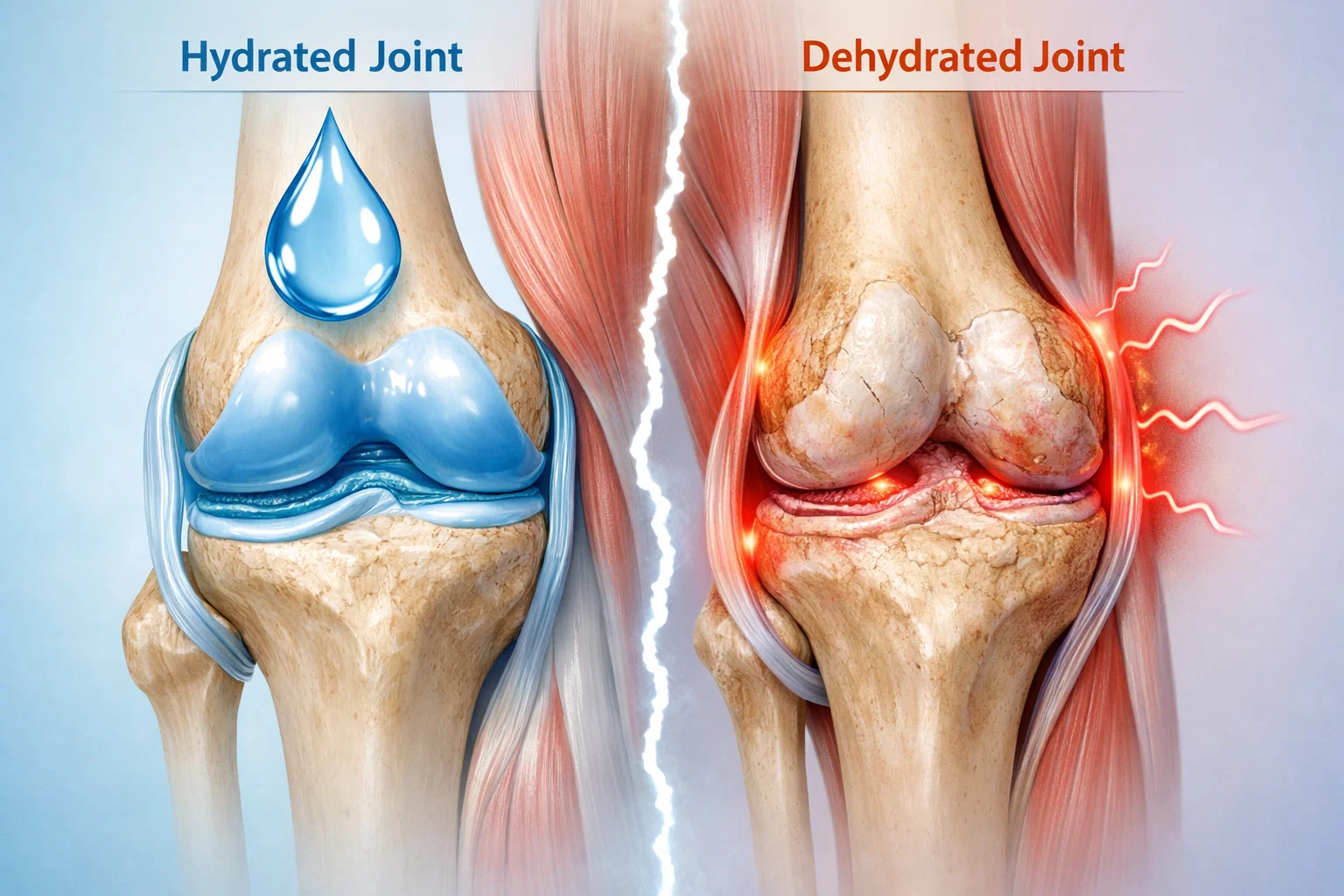
Living with joint discomfort is often linked to age, injury, or conditions like arthritis, but many people overlook a surprisingly simple factor hydration. The question can dehydration cause joint pain is more important than it first appears because water plays a key role in keeping joints flexible, cushioned, and properly lubricated.
When the body lacks sufficient fluids, several physiological changes begin to affect mobility and comfort, especially through joint hydration processes and synovial fluid regulation. This article explores the science behind hydration and joint function using reliable health sources to clarify how fluid balance impacts musculoskeletal health in everyday life.
How hydration supports joint health
Water is essential for the human body, and joints depend on it more than most people realise. Cartilage health depends heavily on water content, and cartilage health is strongly linked with musculoskeletal health overall.
According to the National Institutes of Health, hydration supports synovial fluid production, which acts as a lubricant inside joints and directly influences joint lubrication and joint flexibility. When hydration levels drop, body water levels decrease and the body struggles to maintain proper lubrication, leading to stiffness and discomfort.
This is why symptoms of dehydration related joint pain often appear after physical activity, heat exposure, or insufficient fluid intake, especially when fluid intake does not match loss.
Understanding the role of synovial fluid
Synovial fluid is a thick substance found in joint cavities and plays a major role in joint lubrication and movement efficiency. The Arthritis Foundation explains that synovial fluid depends heavily on proper hydration levels and hydration balance to maintain its consistency and function. When fluid intake drops, synovial fluid becomes less effective, which can reduce joint flexibility and impact tissue elasticity in surrounding structures.
This does not mean dehydration alone causes chronic joint disease, but it can temporarily worsen existing joint pain causes dehydration link patterns in sensitive individuals, especially when muscle function and electrolyte balance are also affected.
Can dehydration cause joint pain in real life scenarios
The question can dehydration cause joint pain often comes up among athletes, office workers, and older adults.
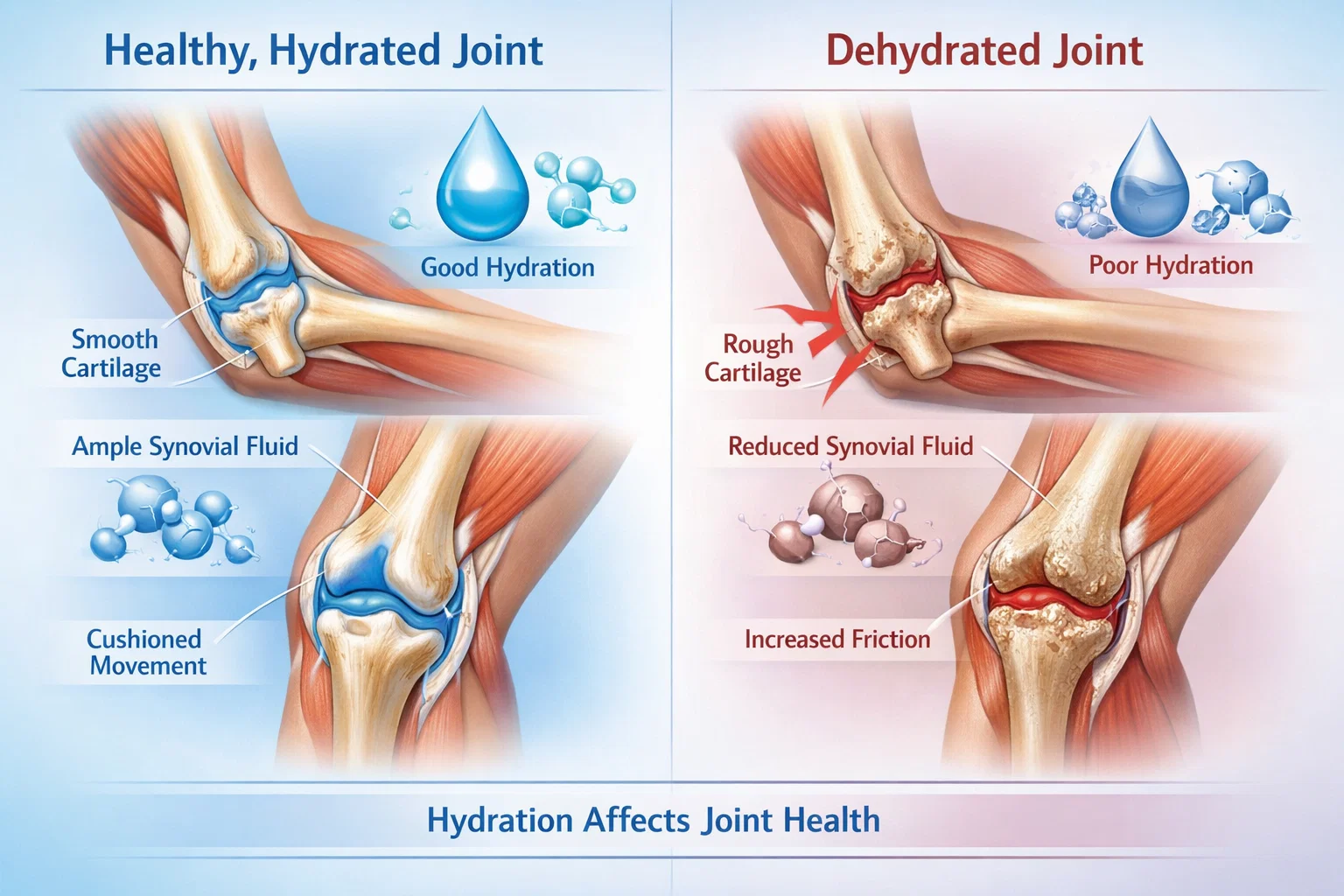
While dehydration is not a direct cause of arthritis or long term joint disease, it can contribute to short term discomfort through dehydration effects on movement efficiency and physical performance.
The World Health Organization highlights that dehydration affects muscle function, electrolyte balance, and overall body water levels, which indirectly influences joint comfort.
People often notice stiffness after long periods without water, especially when joint stiffness patterns become more noticeable during heat or physical exertion.
Does dehydration affect joints during physical activity
Yes, does dehydration affect joints becomes more noticeable during exercise because joints rely on both muscle function and fluid cushioning for mobility support. When the body loses fluids through sweat, electrolyte balance changes and movement efficiency decreases.
This can lead to reduced flexibility and increased strain on joints, especially when joint lubrication is compromised. The concept of does dehydration impact joint health becomes more visible during physical performance demands, where even small drops in hydration balance can impact how smoothly joints move.
Why dehydration joint pain symptoms feel worse in certain conditions
Dehydration joint pain symptoms can vary depending on environment and activity level. Hot weather, intense exercise, or illness can increase fluid loss, making joint stiffness patterns more noticeable.
According to the Mayo Clinic, dehydration affects physical performance, muscle function, and overall movement efficiency, which can amplify discomfort in sensitive joints. When dehydration effects combine with poor hydration balance, inflammation control may also be affected, making joints feel more stiff even without injury or structural damage.
The link between dehydration and inflammation
Hydration plays a role in inflammation control and overall musculoskeletal health. Poor fluid intake can contribute to changes in body water levels and reduce the body’s ability to maintain efficient cellular function.
While joint pain causes dehydration link discussions are still being studied, medical research suggests that proper hydration supports joint hydration and cartilage health by maintaining tissue elasticity and mobility support.
This indirect effect helps explain why discomfort increases when hydration balance is disrupted over time.
Who is most likely to experience joint discomfort from dehydration
Certain groups are more sensitive to hydration changes due to differences in joint hydration and body water levels. Older adults, athletes, and individuals with existing joint conditions often experience stronger dehydration effects because cartilage health naturally declines with age.
Muscle function and electrolyte balance also fluctuate more easily in active individuals, increasing sensitivity to fluid intake variations. These combined factors can influence mobility support and make joints feel less flexible during daily movement.
Can dehydration worsen existing joint conditions
Dehydration does not cause chronic joint diseases, but it can worsen symptoms in people who already have conditions such as osteoarthritis or rheumatoid arthritis. Reduced hydration may decrease joint lubrication and affect tissue elasticity, which can increase stiffness during movement.
This also influences musculoskeletal health by reducing movement efficiency and limiting joint flexibility temporarily. Even though the underlying condition remains unchanged, dehydration effects can make discomfort feel more noticeable during daily activities.
How hydration supports mobility and flexibility
Proper hydration helps maintain muscle function, joint hydration, and tissue elasticity, which all contribute to better mobility support. When the body is well hydrated, synovial fluid remains effective, improving joint lubrication and allowing smoother movement.
This also supports physical performance and reduces strain on joints during everyday activities. Hydration balance ensures that movement efficiency remains stable, making it easier for the body to handle both light and strenuous tasks without unnecessary stiffness.
Does dehydration lead to joint pain during sleep or rest
Some people notice stiffness after waking up or resting for long periods, and this can be influenced by hydration balance. During sleep, body water levels naturally decrease through respiration and sweating, which may affect joint flexibility and joint hydration by morning.
If fluid intake is already low, dehydration effects can make joints feel stiffer and reduce movement efficiency after rest. While posture and circulation also play roles, hydration remains an important contributing factor.
Preventing dehydration related joint discomfort
Preventing dehydration is one of the simplest ways to support musculoskeletal health and reduce joint stiffness patterns.
Maintaining consistent fluid intake throughout the day helps regulate electrolyte balance and supports joint hydration. Hydration balance also improves cartilage health and muscle function, ensuring better mobility support during daily activities.
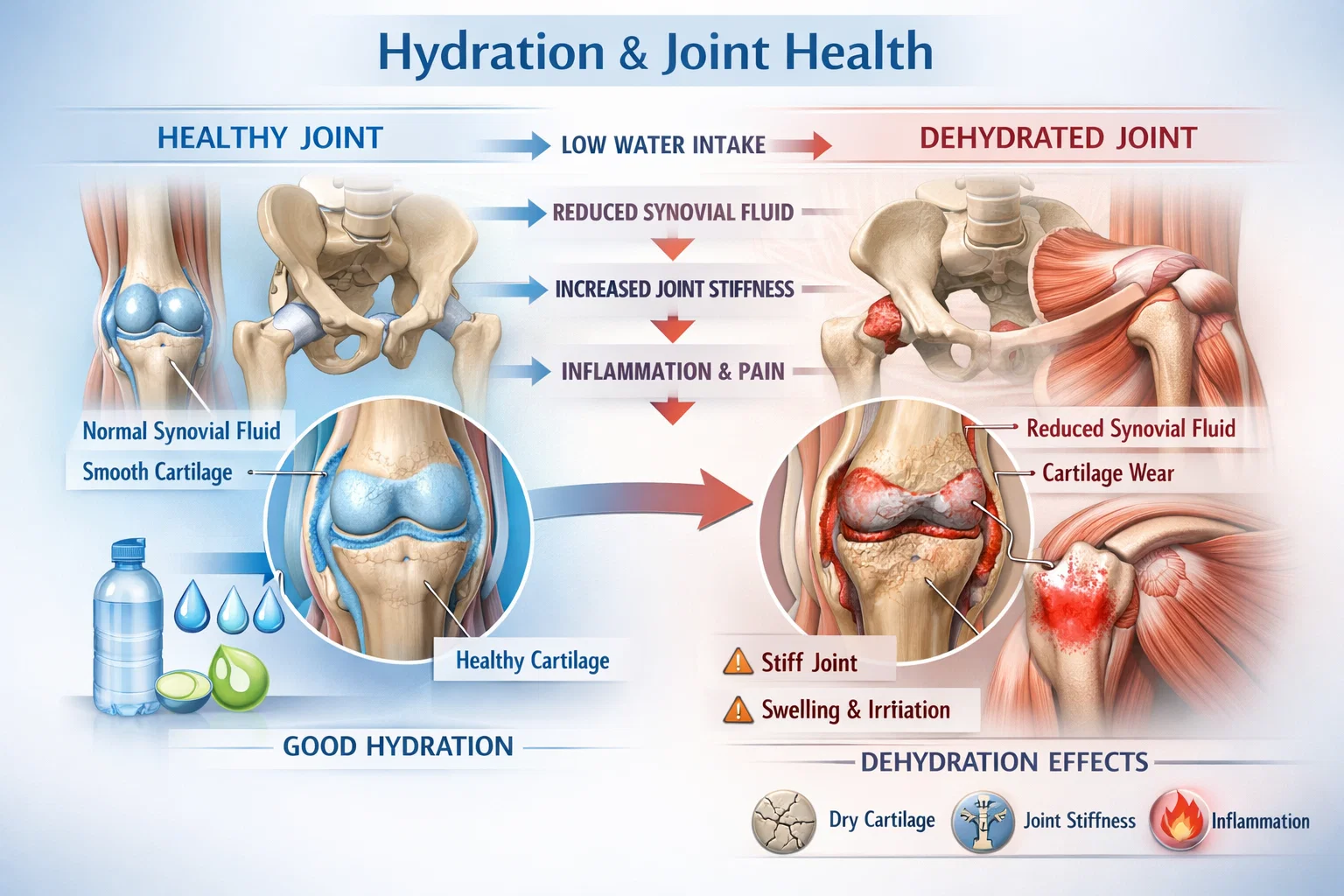
Small habits like regular water intake and mindful hydration during physical activity help reduce dehydration effects and support long term joint flexibility.
Conclusion
The connection between hydration and joint health is often underestimated. While can dehydration cause joint pain does not point to a direct disease mechanism, it clearly highlights how fluid balance influences joint comfort, mobility support, and stiffness through synovial fluid regulation and joint lubrication.
Also Read: Frozen Shoulder Exercises at Home: 10 Gentle Moves to Restore Mobility Fast (2026 Guide)
Maintaining proper hydration supports muscle function, cartilage health, and overall musculoskeletal health. When hydration balance drops, even temporarily, joints can feel less flexible and more strained, especially when movement efficiency and physical performance are affected.
Sources
National Institutes of Health NIH https://www.nih.gov
Arthritis Foundation https://www.arthritis.org
World Health Organization WHO https://www.who.int
Mayo Clinic https://www.mayoclinic.org
FAQs
What are the most common dehydration joint pain symptoms in daily life?
Joint stiffness from dehydration symptoms often include stiffness, mild discomfort during movement, and reduced flexibility in major joints such as knees, shoulders, and hips. These symptoms usually become more noticeable after physical activity, heat exposure, or long periods without water intake. Many people also report a feeling of tightness in muscles surrounding the joints, which can make movement feel slightly restricted. While these symptoms are usually temporary, they indicate that the body’s hydration balance and joint hydration levels are not optimal and need correction through regular fluid intake and proper electrolyte balance throughout the day.
Does dehydration affect joints during long working hours?
Yes, does water deficiency affect joint function becomes especially relevant during long working hours when people forget to maintain proper fluid intake. Sitting for extended periods already reduces movement efficiency and mobility support, and dehydration effects can intensify stiffness when standing up or moving after inactivity. Reduced hydration balance may also impact muscle function and joint lubrication, making joints feel less flexible. This is often mistaken for general fatigue, but it is strongly connected to body water levels and how well synovial fluid maintains joint flexibility during long sedentary routines.
Can not drinking enough water cause joint pain in older adults more easily?
Older adults are more likely to experience discomfort related to dehydration, which can trigger joint pain because body water levels naturally decrease with age. This affects cartilage health, tissue elasticity, and overall musculoskeletal health, making joints more sensitive to hydration changes. When hydration balance drops, joint hydration becomes less efficient, and synovial fluid may not support movement as effectively. As a result, joint stiffness patterns become more noticeable, especially in weight bearing joints. Maintaining consistent fluid intake is essential for mobility support and reducing unnecessary stiffness in older individuals.
What is the joint pain causes dehydration link during physical activity?
The joint pain causes dehydration link during exercise is mainly related to fluid loss, electrolyte balance disruption, and reduced physical performance. When the body loses water through sweating, muscle function and movement efficiency decline, placing more stress on joints. This reduces joint lubrication and may temporarily affect joint flexibility during activity. Although dehydration does not directly damage joints, dehydration effects can increase mechanical strain, making movement feel less smooth and more tiring during intense physical activity or endurance exercise.
How does hydration support joint flexibility and movement?
Hydration supports joint flexibility by maintaining synovial fluid levels, which ensures proper joint lubrication and smooth movement efficiency. It also supports muscle function and tissue elasticity, reducing strain on joints during daily activities. When hydration balance is stable, mobility support improves and the body can handle physical performance demands more effectively. Without proper hydration, joints may feel tighter and less responsive, especially after rest or exertion. This makes consistent fluid intake essential for maintaining overall musculoskeletal health and comfortable movement.
Can dehydration worsen arthritis related discomfort?
Dehydration does not cause arthritis, but it can worsen symptoms by reducing joint hydration and affecting cartilage health. When hydration balance drops, joint lubrication becomes less effective, which can increase stiffness during movement. This does not change the underlying condition but can make discomfort feel more noticeable. Reduced tissue elasticity and lower body water levels may also contribute to reduced mobility support, especially in weight bearing joints like knees and hips during daily activities or physical exertion.
What are the best ways to prevent dehydration related joint stiffness?
Preventing dehydration related joint stiffness involves maintaining steady fluid intake throughout the day to support hydration balance and joint hydration. Including hydrating foods and maintaining electrolyte balance can improve muscle function and physical performance. Consistent hydration supports synovial fluid, joint lubrication, and cartilage health, all of which contribute to smoother movement efficiency. Over time, these habits help reduce dehydration effects and improve joint flexibility, making daily movement more comfortable and reducing stiffness patterns associated with low water intake.
Author Bio
Jennifer Collins is a wellness researcher and natural health writer focused on adults over 40. With 3+ years of experience in digital health content, Jennifer specializes in making science-backed nutrition and lifestyle strategies easy to follow and apply.
Health Disclaimer
This content is for informational purposes only and is not intended to diagnose, treat, or cure any disease. Always consult your healthcare provider before making changes to your diet or health routine. This article may include affiliate links, which come at no extra cost to you.