

Aging brings wisdom, patience, and sometimes… knees that complain louder than your alarm clock. The good news is that you can take control. Knee health does not depend on luck. It depends on movement, strength, and consistency. The right knee strengthening exercises for seniors can reduce pain, improve balance, and help you stay independent longer.
This guide gives you clear, science-backed strategies to protect your knees at home. You will learn how to move safely, build strength, and avoid common mistakes that make knee pain worse.
If you are also exploring supplements for joint support, you can check this detailed guide on Flexafen Review 2026: Real Results or Hype? Honest Joint Pain Relief Analysis to see whether it actually delivers results.
Table of Contents
Why Knee Strength Matters After 60
Your knees take a daily beating. Every step, every climb, every squat puts pressure on the joint. Over time, muscles around the knee weaken. Cartilage may wear down. This leads to stiffness, discomfort, and reduced mobility.
Strong muscles act like shock absorbers. They support the joint and reduce strain. Research from trusted institutions shows that strengthening exercises improve function and reduce pain in older adults, especially those with osteoarthritis.
If you want to strengthen knees over 60, you must focus on consistency over intensity. Small, regular movements create long-term results.
Common Causes of Weak Knees in Seniors
Before jumping into exercises, it helps to understand what causes the problem. Weak knees rarely come from one issue alone.
Muscle loss plays a big role. After age 50, muscle mass declines naturally unless you actively train it. This affects the quadriceps, hamstrings, and calves, which support your knees.
Joint wear and tear also matters. Conditions like osteoarthritis can cause pain and limit movement. Lack of activity worsens the situation, even though rest might feel tempting.
Poor balance and posture add another layer. When your body alignment shifts, your knees compensate. This creates extra stress on the joint.
The solution is not to stop moving. The solution is to move smarter.
How to Start Knee Strengthening Exercises Safely
You do not need a gym membership or expensive equipment. You need a safe space, a chair, and a bit of patience.
Start slow. If you feel sharp pain, stop immediately. Mild discomfort is normal, but pain is not your coach.
Warm up before you begin. Gentle walking or marching in place for five minutes increases blood flow and prepares your joints.
Focus on controlled movements. Fast, jerky motions can strain your knees. Move slowly and with purpose.
Consistency matters more than intensity. Doing these exercises three to four times per week delivers better results than doing too much in one day.
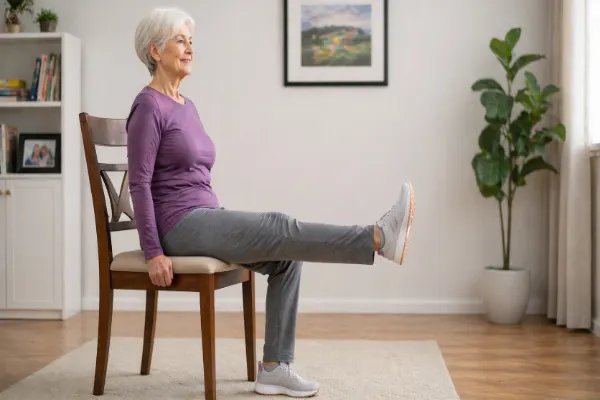
Seated Leg Raises for Gentle Strength
This exercise works well for beginners. It strengthens the quadriceps without putting pressure on the knee joint.
Sit upright in a chair. Keep your feet flat on the floor. Slowly extend one leg until it is straight. Hold for a few seconds, then lower it back down.
Repeat this movement ten to fifteen times on each leg. You will feel the muscles working without stressing your joints.
This is one of the safest senior knee exercises to start with, especially if you experience stiffness or mild pain.
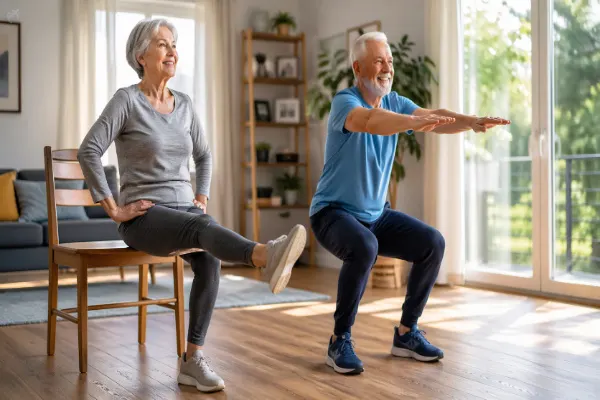
Sit to Stand for Functional Strength
This exercise mimics everyday movement. It helps you get up from chairs with ease.
Sit on a sturdy chair. Keep your feet shoulder-width apart. Lean slightly forward and push through your heels to stand up. Then slowly sit back down.
Avoid using your hands if possible. If needed, use them for support at first.
This simple movement builds strength in your thighs and improves balance. It also supports knee stability exercises elderly individuals need for daily independence.
Heel Raises for Lower Leg Support
Your calves play a crucial role in knee support. Strong calves help stabilize your lower body.
Stand behind a chair and hold it for balance. Slowly raise your heels off the ground so you stand on your toes. Hold for a few seconds, then lower your heels.
Repeat ten to fifteen times. This exercise strengthens your calves and improves circulation.
It may look easy, but your knees will thank you later.
Hamstring Curls for Balanced Strength
Strong hamstrings balance the front and back of your legs. This reduces stress on your knees.
Stand behind a chair for support. Slowly bend one knee and bring your heel toward your buttocks. Hold briefly, then lower your leg.
Repeat on both sides. Aim for ten repetitions per leg.
Adding this to your routine helps you strengthen knees over 60 while improving flexibility.
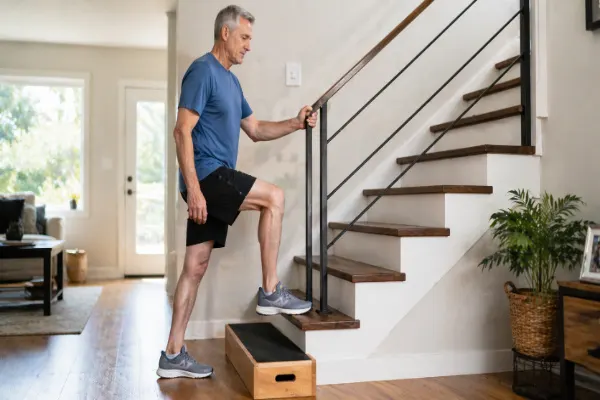
Step-Ups for Real-World Strength
This exercise prepares you for stairs and uneven surfaces.
Use a low step or sturdy platform. Step up with one foot, then bring the other foot up. Step down carefully.
Start with a low height and increase gradually as your strength improves.
Step-ups are excellent knee strengthening exercises for seniors because they mimic daily movements and build confidence.
Straight Leg Raises for Stability
Lie on your back with one leg bent and the other straight. Lift the straight leg slowly to the height of the bent knee. Hold for a few seconds, then lower it.
This exercise strengthens your quadriceps without bending the knee, which makes it ideal for people with joint pain.
It is a core part of many senior knee exercises recommended by physical therapists.
Wall Sits for Endurance
If your knees can tolerate it, wall sits build endurance.
Stand with your back against a wall. Slide down until your knees bend slightly. Hold the position for ten to twenty seconds, then slide back up.
Do not go too low. Keep the movement comfortable.
Wall sits help improve muscle endurance and support knee stability exercises elderly individuals need for long-term strength.
Stretching to Protect Your Knees
Strength alone is not enough. Flexibility plays a key role in joint health.
Tight muscles pull on your knees and increase discomfort. Gentle stretching improves range of motion and reduces stiffness.
Focus on your quadriceps, hamstrings, and calves. Hold each stretch for fifteen to thirty seconds without bouncing.
Stretching after your workout works best because your muscles are warm.
How Often Should Seniors Exercise Their Knees?
Consistency beats intensity every time.
Aim for three to four sessions per week. Each session can last fifteen to thirty minutes.
Listen to your body. Rest when needed, but avoid long periods of inactivity.
If you stay consistent, you will notice improvements in strength, balance, and mobility within a few weeks.
Mistakes to Avoid While Exercising
Many people unknowingly make mistakes that slow progress or cause injury.
Do not rush your movements. Speed reduces control and increases risk.
Avoid skipping warm-ups. Cold muscles are more prone to strain.
Do not ignore pain signals. Sharp or persistent pain needs attention.
Avoid overtraining. Your muscles need time to recover and grow stronger.
Fixing these mistakes helps you get better results from your knee strengthening exercises for seniors.
When to Consult a Doctor
Exercise helps most people, but some situations need medical advice.
If you experience severe pain, swelling, or instability, consult a healthcare professional. If you have a history of knee surgery or chronic conditions, seek guidance before starting a new routine.
A physical therapist can create a personalized plan based on your needs.
Lifestyle Tips to Support Knee Health
Exercise works best when combined with healthy habits.
Maintain a healthy weight. Extra weight increases pressure on your knees.
Wear supportive footwear. Good shoes improve alignment and reduce stress.
Stay active throughout the day. Long periods of sitting weaken your muscles.
Eat a balanced diet. Nutrients like calcium and vitamin D support bone health.
These habits enhance the benefits of senior knee exercises and help you stay active longer.
Frequently Asked Questions
What are the best knee strengthening exercises for seniors at home?
The best knee strengthening exercises for seniors include seated leg raises, sit to stand, heel raises, hamstring curls, and step-ups. These exercises improve muscle strength around the knee, reduce joint stress, and can be done safely at home without equipment. Consistency matters more than intensity for long-term results.
How often should seniors do knee strengthening exercises?
Seniors should perform knee strengthening exercises for seniors about 3 to 4 times per week. Each session can last 15 to 30 minutes. Regular practice helps improve mobility, reduce stiffness, and build muscle strength without overloading the joints.
Can knee strengthening exercises reduce knee pain in seniors?
Yes, knee strengthening exercises for seniors can help reduce knee pain by improving muscle support around the joint. Stronger muscles reduce pressure on the knee and improve stability, which can ease discomfort caused by aging or conditions like osteoarthritis.
Are knee strengthening exercises safe for seniors with arthritis?
Most knee strengthening exercises for seniors are safe for those with arthritis when done correctly. Low-impact movements like straight leg raises and seated exercises are especially helpful. However, seniors should avoid painful movements and consult a doctor if they have severe joint issues.
How long does it take to see results from knee strengthening exercises for seniors?
Most seniors start noticing improvements from knee strengthening exercises for seniors within 3 to 6 weeks. Regular exercise can lead to better strength, improved balance, and reduced knee pain over time, especially when combined with a healthy lifestyle.
Final Thoughts
Your knees do not have to control your life. With the right approach, you can regain strength, reduce discomfort, and move with confidence.
Start small. Stay consistent. Focus on proper form.
Knee strengthening exercises for seniors are not about pushing limits. They are about building resilience. Over time, those small efforts turn into stronger knees and a better quality of life.
And yes, your knees might still complain sometimes. But with these exercises, they will complain a lot less.
Sources
National Institute on Aging – Exercise and Physical Activity Guide
Arthritis Foundation – Knee Exercises for Strength and Flexibility
Mayo Clinic – Strength Training and Aging
Harvard Health Publishing – Strength Training for Older Adults
Author Bio
Jennifer Collins is a wellness researcher and natural health writer focused on adults over 40. With 3+ years of experience in digital health content, Jennifer specializes in making science-backed nutrition and lifestyle strategies easy to follow and apply.
Health Disclaimer
This content is for informational purposes only and is not intended to diagnose, treat, or cure any disease. Always consult your healthcare provider before making changes to your diet or health routine. This article may include affiliate links, which come at no extra cost to you.