

Mobility is something most people take for granted until it becomes difficult. For individuals carrying excess weight, even simple daily actions such as walking, bending, or climbing stairs can feel demanding. These obesity mobility issues are not just about physical discomfort; they affect independence, mental wellbeing, and long-term health outcomes. Many people also experience reduced mobility due to high body weight, which gradually limits their ability to stay active.
Understanding why movement becomes harder, and what can be done to improve it, is essential for anyone facing this challenge or supporting someone who is. This article explores the science behind movement limitations, the role of joints and muscles, and practical, evidence-based ways to regain control of mobility without overwhelming the body.
Understanding how weight affects movement
Body weight directly influences how efficiently the body moves. Every step taken places pressure on joints, especially the knees, hips, and ankles. These weight bearing joints تحمل most of the load, and when body mass increases significantly, the strain multiplies. This explains how weight affects movement at a biomechanical level.
Research from the Centers for Disease Control and Prevention shows that excess body weight increases stress on joints, which can accelerate wear and tear. Muscles must also work harder to support movement, leading to quicker muscle fatigue and reduced stamina.
Additionally, balance and coordination may decline due to changes in body composition. The distribution of fat mass can alter posture and gait, causing posture imbalance and making walking less stable. Over time, this affects movement efficiency, making even routine activities more demanding.
The mechanics behind difficulty walking
One of the most common complaints is walking difficulty due to obesity mobility. Walking is a complex activity involving coordination between muscles, joints, and the nervous system. When excess weight is present, this coordination becomes less efficient and often results in noticeable gait changes.

The National Institutes of Health highlights that individuals with higher body weight often experience shorter stride lengths and slower walking speeds. This is partly due to joint discomfort and partly due to the body trying to conserve energy.
Muscle imbalances also play a role. Weaker core and hip muscles reduce stability, making walking feel unsafe or tiring. This leads to compromised functional movement, where the body adapts inefficient patterns just to avoid discomfort.
Over time, this altered movement pattern can increase the risk of falls and injuries, making mobility even more challenging.
Joint pain and its impact on mobility
Joint discomfort is a major contributor to joint ache and obesity mobility challenges. The knees, in particular, are highly vulnerable because they bear a significant portion of body weight during movement and are exposed to continuous musculoskeletal strain.
According to the World Health Organization, excess weight is one of the leading risk factors for osteoarthritis, a condition that causes joint pain, joint stiffness, and reduced range of motion. Each additional kilogram of body weight adds significant pressure during movement.
Inflammation also plays a role. Fat tissue can release substances that contribute to chronic inflammation, worsening joint discomfort. This creates a feedback loop where pain discourages movement, leading to further weight gain and worsening symptoms.
Obesity mobility issues and long term health risks
Beyond discomfort, obesity mobility issues can have serious long-term consequences. Limited movement often leads to physical activity decline, which increases the risk of chronic conditions such as cardiovascular disease and diabetes.
The Mayo Clinic notes that reduced mobility can also lead to muscle loss over time, which weakens the body further. This contributes to reduced endurance, making it harder to stay active consistently.
Mental health is also affected. Reduced independence and social participation can lead to isolation. Over time, individuals may experience activity limitations that affect both personal and professional life.
The role of muscles, balance, and endurance
Muscle strength and endurance are critical for movement. When body weight increases, muscles must generate more force to perform everyday tasks. This often leads to fatigue and reduced physical capacity.
Balance is another important factor. Changes in body composition can shift the body’s center of gravity, leading to balance issues that increase the likelihood of falls.
Endurance also declines because the body requires more energy to move a larger mass. Activities that were once easy may become exhausting, contributing to reduced activity and worsening mobility.
Practical ways to improve movement safely
Improving mobility does not require extreme measures. Small, consistent changes can lead to meaningful progress over time.
Low-impact activities such as walking, swimming, or cycling help improve strength while reducing strain on joints. These activities support better movement patterns and improve coordination.
Strength training builds muscle to support joints and improves overall stability. Flexibility exercises enhance mobility and reduce stiffness, allowing smoother and safer movements.
Listening to the body is essential. Gradual improvement prevents injury and supports long-term success.
Managing joint pain and obesity mobility effectively
Addressing joint pain and obesity mobility requires a combination of strategies. Weight management is one of the most effective approaches, as even modest weight loss can significantly reduce joint stress.
The Arthritis Foundation reports that losing five to ten percent of body weight can improve joint function. This directly reduces the impact of excess weight on walking ability, making daily movement easier.
Supportive footwear and physical therapy can further enhance movement quality. Pain management techniques such as heat therapy can provide relief and improve comfort during activity.
Breaking the cycle of inactivity
One of the biggest challenges is overcoming inactivity. When movement becomes difficult, people tend to move less, leading to further weight gain and worsening mobility.
Breaking this cycle requires consistent effort. Small daily actions such as standing more often or taking short walks can help rebuild strength and confidence. These changes gradually improve body mechanics and make movement more natural.
Support systems also play an important role. Encouragement and accountability help individuals stay committed to their mobility goals.
How body weight influences movement over time
Understanding how weight changes movement patterns over time highlights the importance of early intervention. As weight increases, the body adapts in ways that reduce efficiency and stability.
Posture changes and joint misalignment develop gradually, affecting long-term mobility. These changes reduce overall movement quality and contribute to limited mobility.
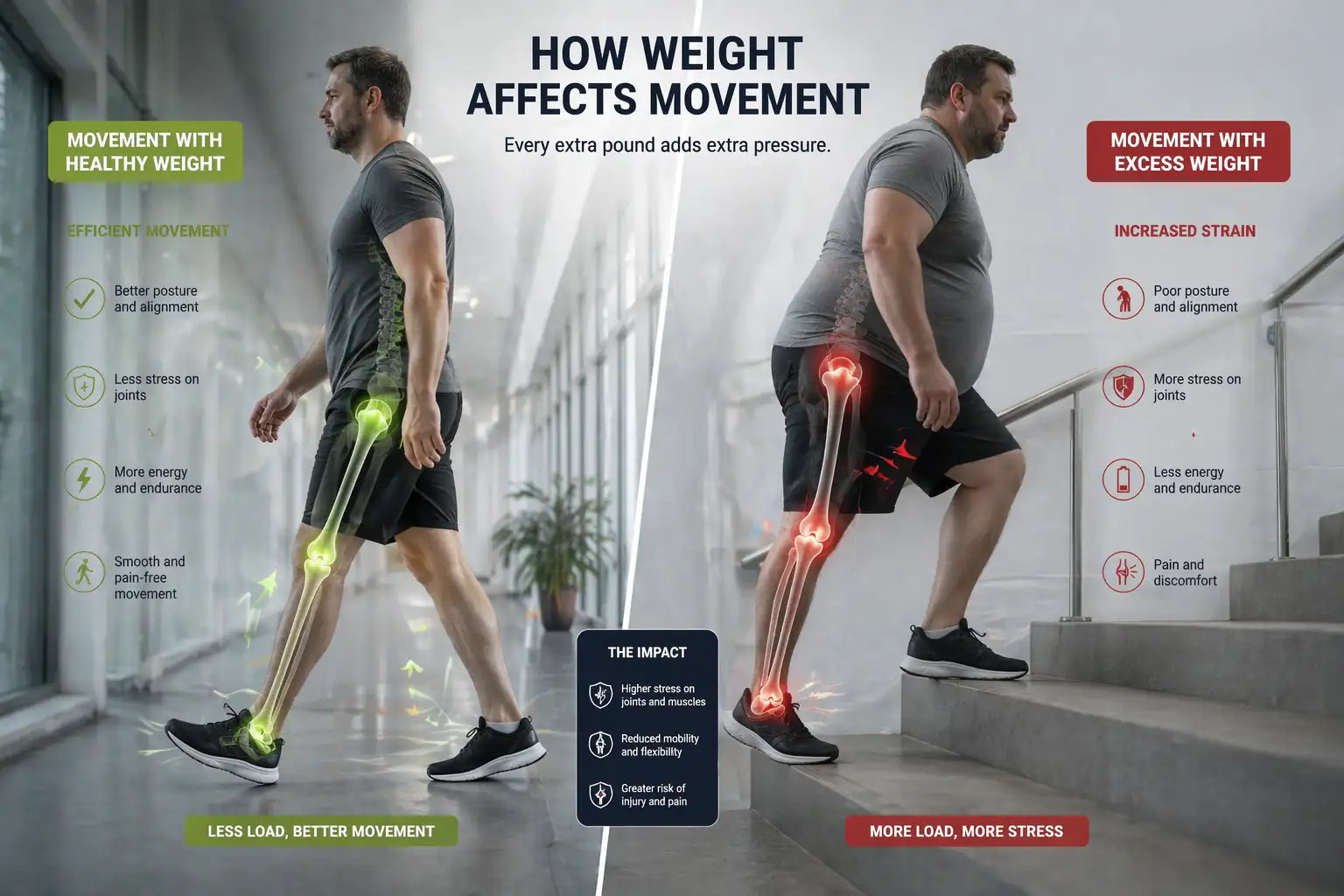
Early action can prevent these adaptations from becoming severe. Even small improvements in activity levels can enhance mobility and overall health.
Addressing difficulty walking due to obesity with confidence
Overcoming difficulty walking due to obesity requires both physical and psychological strategies. Fear of discomfort often prevents individuals from staying active.
Setting realistic goals helps build confidence. Starting with short walks and gradually increasing duration is more effective than pushing too hard.
Assistive tools can improve stability and safety. Tracking progress also helps maintain motivation and consistency.
The importance of lifestyle changes
Long-term improvement requires sustainable lifestyle changes. Diet, physical activity, sleep, and stress management all play a role in mobility.
A balanced diet supports weight management and provides nutrients needed for joint health. Regular activity improves strength and flexibility, enhancing physical independence.
Sleep and stress management are equally important. Together, these factors create a foundation for lasting mobility improvements.
Conclusion
Mobility challenges are complex, but they are not irreversible. By understanding the underlying causes of obesity mobility issues, individuals can take practical steps to improve movement and quality of life.
Also Read: Best Knee Strengthening Exercises for Seniors at Home | Reduce Pain Fast
From addressing joint pain to building strength and endurance, every small effort contributes to progress. With consistency and the right approach, it is possible to regain confidence and move more freely.
Sources
Centers for Disease Control and Prevention
National Institutes of Health
World Health Organization
Mayo Clinic
Arthritis Foundation
FAQs
How does excess body weight impact walking efficiency and endurance?
Excess body weight increases the energy required for movement, which reduces walking efficiency and endurance. The body must work harder to perform basic tasks, leading to quicker fatigue and reduced stamina over time. This often discourages regular activity, which further weakens muscles and worsens mobility. Improving strength and gradually increasing activity levels can help restore endurance and make walking feel less demanding in everyday life.
What are the early signs of joint pain and obesity mobility?
Early signs include mild discomfort in the knees or hips, stiffness after long periods of sitting, and reduced flexibility during daily movements. These symptoms may appear slowly and are often ignored until they worsen. Paying attention to these signals allows individuals to take preventive action early, such as improving strength, adjusting activity levels, and managing weight to avoid long-term joint complications.
Why does movement become more difficult with higher body mass?
Higher body mass increases the load on joints and muscles, making every movement more physically demanding. It also affects balance, coordination, and posture, leading to inefficient movement patterns. Over time, difficulty walking due to obesity mobility can create a cycle where reduced activity leads to further weight gain and worsening mobility. Addressing these challenges early can help prevent long-term complications and improve overall movement quality.
How can low impact exercises improve mobility and reduce strain?
Low impact exercises such as swimming, cycling, or walking on even surfaces reduce pressure on joints while still encouraging movement. These activities help strengthen muscles, improve flexibility, and enhance cardiovascular fitness without causing excessive strain. Over time, they support better mobility and allow individuals to perform daily activities with greater ease and less discomfort.
What role does muscle strength play in improving mobility?
Muscle strength is essential for supporting joints and maintaining stability during movement. Strong muscles help distribute body weight more evenly, reducing stress on specific areas such as the knees or hips. This improves overall movement efficiency and lowers the risk of injury. Strength training also enhances endurance, making it easier to stay active and maintain mobility over time.
How weight affects movement and balance?
Posture determines how weight is distributed across the body during movement. Poor posture can lead to uneven stress on joints and muscles, making movement less efficient and increasing the risk of pain or injury. Improving posture helps align the body correctly, enhances balance, and supports smoother, more controlled movement patterns in everyday activities.
What strategies help maintain consistent physical activity levels?
Maintaining consistent activity requires realistic goal setting, tracking progress, and integrating movement into daily routines. Small changes such as short walks, regular stretching, or standing more frequently can make a significant difference over time. Support from family or structured programs can also improve motivation and accountability, helping individuals stay committed to long-term mobility improvement.
Author Bio
Jennifer Collins is a wellness researcher and natural health writer focused on adults over 40. With 3+ years of experience in digital health content, Jennifer specializes in making science-backed nutrition and lifestyle strategies easy to follow and apply.
Health Disclaimer
This content is for informational purposes only and is not intended to diagnose, treat, or cure any disease. Always consult your healthcare provider before making changes to your diet or health routine. This article may include affiliate links, which come at no extra cost to you.