

Sciatica can turn simple things like sitting, walking, or even sleeping into a daily struggle. That sharp, radiating pain from your lower back down your leg is not just uncomfortable. It can disrupt your entire routine. The good news is that you do not always need medication or expensive therapy to feel better. The right sciatica pain relief exercises at home can ease pressure on the sciatic nerve and bring noticeable relief within minutes.
This guide explains exactly how sciatica works, why movement helps, and which exercises actually deliver results. Every method included here comes from trusted clinical insights and physical therapy practices. No fluff. No unrealistic claims.
If your pain worsens at night, your sleeping surface might be part of the problem. Choosing the right mattress can make a big difference, and this guide on Best Mattress for Back and Joint Pain 2026 | Wake Up Pain-Free Every Morning explains what actually works.
What Causes Sciatica Pain and Why Exercise Helps
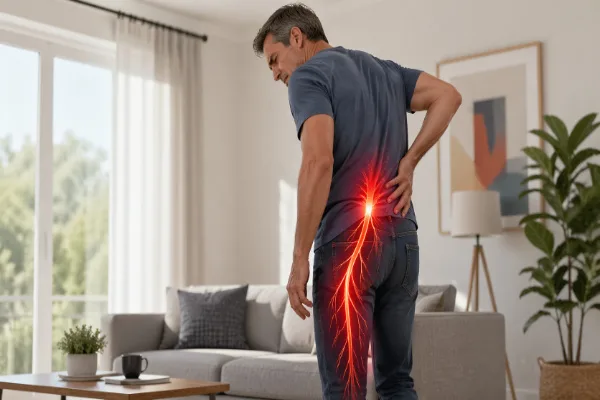
Sciatica happens when the sciatic nerve gets compressed or irritated. This usually comes from a herniated disc, spinal stenosis, or tight muscles like the piriformis pressing on the nerve.
Pain can feel sharp, burning, or like an electric shock. It often travels from your lower back to your hip, then down one leg.
Many people think rest is the best solution. That is not correct. Too much rest can actually worsen symptoms. Controlled movement improves blood flow, reduces inflammation, and helps release nerve pressure. That is where sciatica pain relief exercises at home become powerful.
When you perform targeted movements, you help your spine align better and your muscles relax. This reduces compression on the sciatic nerve and improves mobility.
How to Safely Do Sciatica Pain Relief Exercises at Home
Before jumping into exercises, you need to understand one thing. Technique matters more than intensity. You do not need to push through pain.
Start slow. Focus on controlled breathing. If any movement causes sharp or worsening pain, stop immediately.
Consistency matters more than duration. Even 10 minutes daily can improve sciatica relief significantly over time.
Now let us get into the exercises that actually work.
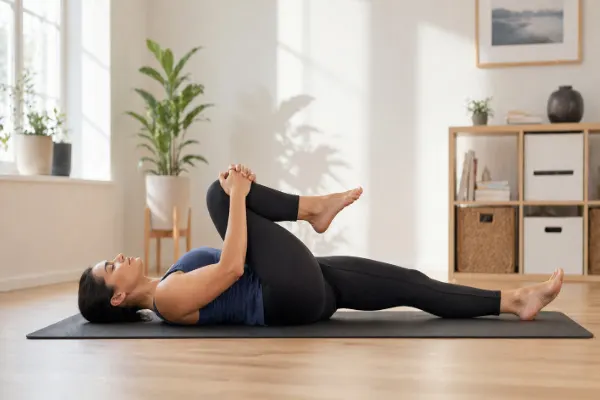
1. Knee to Chest Stretch for Immediate Sciatica Relief
This simple move targets the lower back and helps reduce nerve compression.
Lie on your back with your knees bent and feet flat. Slowly pull one knee toward your chest while keeping the other foot grounded. Hold for 20 to 30 seconds, then switch sides.
This movement gently stretches your lower spine and relieves tension. Many people feel reduced tightness within minutes.
This is one of the most effective sciatica stretches for beginners because it requires no flexibility and minimal effort.
2. Piriformis Stretch to Release Sciatic Nerve Pressure
The piriformis muscle sits deep in your hip and often contributes to sciatica pain.
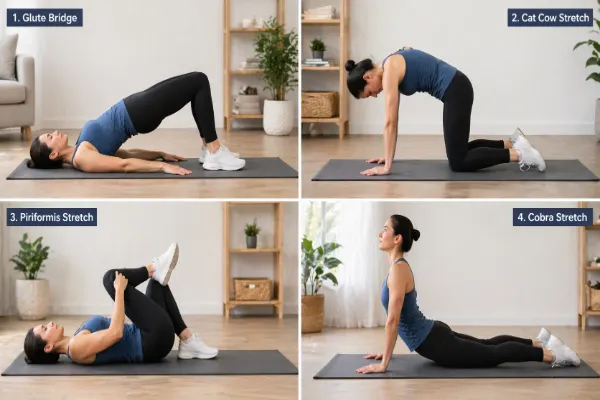
Lie on your back. Cross one ankle over the opposite knee. Then gently pull the bottom thigh toward your chest.
Hold the stretch for 20 to 30 seconds. You should feel a stretch in your hip and glute area.
This is one of the most recommended sciatic nerve exercises by physical therapists because it directly targets a common cause of nerve irritation.
3. Cat Cow Stretch for Spinal Mobility
This movement improves flexibility in your spine and reduces stiffness.
Start on all fours. Inhale as you drop your belly and lift your head. Exhale as you round your back and tuck your chin.
Move slowly between these positions for about 10 repetitions.
This dynamic motion increases circulation and reduces inflammation around the spine. It also supports long term sciatica relief when done consistently.
4. Seated Spinal Twist for Gentle Nerve Release
Sit on a chair with your feet flat on the floor. Place one hand on the opposite knee and gently twist your torso.
Hold for 15 to 20 seconds and repeat on the other side.
This stretch improves spinal alignment and reduces pressure on the lower back. It works well as a quick sciatica pain relief exercise at home when you sit for long hours.
5. Standing Hamstring Stretch to Reduce Leg Pain
Tight hamstrings often worsen sciatica symptoms.
Stand upright and place one foot on a slightly elevated surface. Keep your back straight and lean forward gently.
Hold the stretch for 20 seconds.
This helps reduce tension along the back of your leg, which directly connects to the sciatic nerve pathway.
6. Pelvic Tilt for Core Stability and Sciatica Relief
Lie on your back with knees bent. Tighten your abdominal muscles and press your lower back into the floor.
Hold for 5 seconds, then relax. Repeat 10 to 15 times.
This strengthens your core and supports your spine. Stronger core muscles reduce pressure on the sciatic nerve over time.
Among all home remedies for sciatica, this exercise builds long term protection against recurring pain.
7. Glute Bridge for Lower Back Support
Lie on your back with knees bent and feet hip width apart. Lift your hips slowly while squeezing your glutes.
Hold at the top for a few seconds, then lower down.
This exercise strengthens your glutes and lower back. Strong muscles reduce the load on your spine and help prevent future flare ups.
It also improves posture, which plays a key role in managing sciatica pain.
8. Cobra Stretch for Spinal Extension
Lie on your stomach with your hands under your shoulders. Push your upper body up while keeping your hips on the floor.
Hold for 10 to 20 seconds.
This movement helps reposition disc material and reduce nerve pressure. It is widely used in physical therapy programs for sciatica relief.
How These Sciatica Stretches Work Together
Each exercise targets a different part of your body. Some reduce muscle tightness. Others improve spinal alignment. Together, they create a complete system for sciatica pain relief exercises at home.
You do not need to do all eight at once. Start with three to four movements and build gradually. Consistency will always beat intensity.
Best Time to Do Sciatic Nerve Exercises
Morning sessions help reduce stiffness after sleep. Evening sessions help release tension built throughout the day.
If you sit for long hours, include short stretching breaks every two hours. Even a single stretch can prevent pain from worsening.
Additional Home Remedies for Sciatica That Actually Work
Exercise works best when combined with simple lifestyle adjustments.
Heat therapy can relax tight muscles and improve blood flow. Apply a heating pad for 15 to 20 minutes.
Cold packs help reduce inflammation during acute pain episodes.
Maintain proper posture while sitting. Use a chair that supports your lower back.
Avoid prolonged inactivity. Movement keeps your spine healthy and reduces nerve compression.
These home remedies for sciatica support the effects of exercise and speed up recovery.
Common Mistakes That Make Sciatica Worse
Many people unknowingly delay recovery by making simple mistakes.
They push through pain instead of listening to their body. This often increases inflammation.
They perform exercises too aggressively. Controlled movement works better than force.
They skip consistency. Doing exercises once a week will not help.
They rely only on painkillers instead of addressing the root cause.
Avoid these habits if you want real and lasting sciatica relief.
When to See a Doctor
Most cases improve with proper care and sciatica pain relief exercises at home. However, some symptoms need medical attention.
If you experience severe weakness in your leg, loss of bladder control, or pain that does not improve after several weeks, consult a healthcare professional.
Early diagnosis prevents complications and speeds up recovery.
Frequently Asked Questions
What are the best sciatica pain relief exercises at home?
The best sciatica pain relief exercises at home include knee to chest stretch, piriformis stretch, cat cow stretch, and glute bridges. These movements help reduce pressure on the sciatic nerve, improve flexibility, and ease lower back pain. Consistent daily practice can bring noticeable relief within a few days.
How often should I do sciatica pain relief exercises at home?
You should perform sciatica pain relief exercises at home at least once or twice daily for the best results. Short sessions of 10 to 15 minutes are enough to reduce stiffness and improve mobility. Regular practice helps prevent flare ups and supports long term recovery.
Can sciatica pain relief exercises at home cure sciatica permanently?
Sciatica pain relief exercises at home can significantly reduce pain and improve function, but they may not cure the root cause in every case. These exercises work best for managing symptoms, reducing nerve pressure, and preventing recurrence when done consistently.
Are sciatica pain relief exercises at home safe for beginners?
Yes, most sciatica pain relief exercises at home are safe for beginners when done slowly and with proper form. Start with gentle stretches and avoid pushing through sharp pain. If symptoms worsen, stop immediately and consult a healthcare professional.
How long does it take for sciatica pain relief exercises at home to work?
Many people feel mild relief within minutes of doing sciatica pain relief exercises at home, especially stretches that release nerve pressure. However, lasting improvement usually takes a few days to a few weeks of consistent practice depending on the severity of the condition.
Final Thoughts
Sciatica does not have to control your life. With the right approach, you can manage and even eliminate the pain naturally.
These sciatica pain relief exercises at home offer a practical and effective solution. They require no equipment, no expensive memberships, and no complicated routines.
Stay consistent. Move gently. Listen to your body.
Over time, these small actions create big results.
Sources
National Institute of Neurological Disorders and Stroke
American Academy of Orthopaedic Surgeons
Author Bio
Jennifer Collins is a wellness researcher and natural health writer focused on adults over 40. With 3+ years of experience in digital health content, Jennifer specializes in making science-backed nutrition and lifestyle strategies easy to follow and apply.
Health Disclaimer
This content is for informational purposes only and is not intended to diagnose, treat, or cure any disease. Always consult your healthcare provider before making changes to your diet or health routine. This article may include affiliate links, which come at no extra cost to you.