
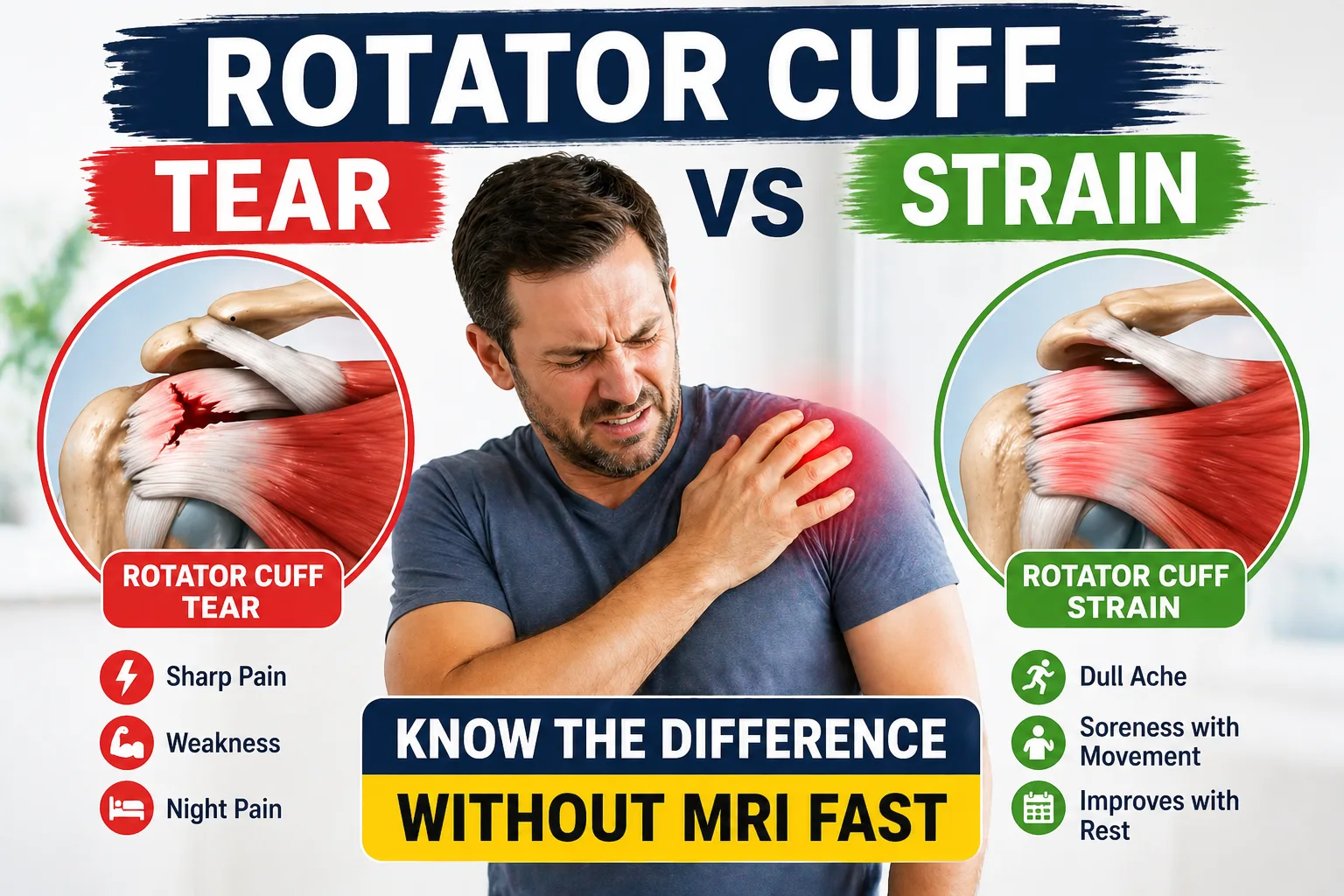
Shoulder pain has a sneaky way of ruining simple things. Reaching for a coffee mug feels like a workout. Sleeping becomes a negotiation with your own body. And somewhere in that discomfort, a question pops up: is this a rotator cuff tear vs strain situation, or just a minor issue that will pass?
You are not alone in asking this. Shoulder injuries rank among the most common musculoskeletal problems, especially in adults over 30 and people who lift, work at desks, or play sports. The rotator cuff plays a huge role in how your shoulder moves and stays stable. When something goes wrong, it shows up fast.
This guide breaks down the real difference between a tear and a strain in plain English. You will learn how to spot rotator cuff injury signs, how to answer the question is my rotator cuff torn, and what rotator cuff strain symptoms actually feel like. No MRI needed to get a strong idea of what is going on.
Table of Contents
What Is the Rotator Cuff and Why It Matters

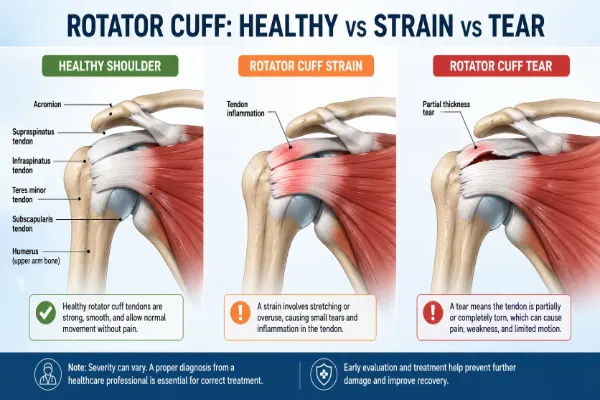
Your rotator cuff includes four muscles and their tendons. These tissues hold your shoulder joint together and help you lift, rotate, and stabilize your arm. Without them, your shoulder would feel loose and weak.
These muscles work together like a team. If one gets injured, the whole system suffers. That is why even a mild strain can feel more intense than expected.
When people search for rotator cuff tear vs strain, they often assume both are the same. They are not. A strain involves overstretching or small fiber damage. A tear means the tendon partially or fully separates from the bone.
Rotator Cuff Tear vs Strain: The Core Difference
Let us get straight to the point. The difference comes down to severity and structure.
A strain happens when you overstretch or overload the muscle or tendon. Think of it like pulling a rubber band too far but not snapping it. You still have function, but it hurts.
A tear means actual structural damage. The tendon may partially tear or fully detach from the bone. This changes how your shoulder works, not just how it feels.
In rotator cuff tear vs strain cases, both cause pain, but the type and behavior of that pain often differ.
Rotator Cuff Injury Signs You Should Not Ignore
Pain alone does not tell the full story. Many people ignore early rotator cuff injury signs until the condition worsens.
Watch for these patterns in your daily life. Pain when lifting your arm above shoulder level often signals a problem. Weakness when holding objects, even light ones, suggests deeper involvement. A clicking or catching sensation during movement can also point to tendon damage.
Night pain stands out as a major clue. If your shoulder hurts more when you lie on it or wakes you up, your rotator cuff likely needs attention.
Stiffness also plays a role. If your shoulder feels tight and refuses to move freely, it may not just be soreness.
These rotator cuff injury signs help you narrow down whether you deal with a strain or something more serious.
If your shoulder pain gets worse at night, you should also read our guide on Shoulder Pain at Night? 6 Proven Ways to Sleep Pain-Free Tonight for practical relief tips that actually work.
Rotator Cuff Strain Symptoms: What It Usually Feels Like
A strain tends to feel more manageable, though still annoying.
Pain often starts after activity. You might notice it after a workout, lifting something heavy, or even a long day at your desk. The pain usually feels dull or achy rather than sharp.
Movement still works, but it feels uncomfortable. You can raise your arm, but you might hesitate or wince slightly. Strength remains mostly intact, though you may feel mild fatigue.
Another key point in rotator cuff strain symptoms is recovery speed. Strains often improve within a few days to a couple of weeks with rest and simple care.
If your pain follows this pattern, you likely deal with a strain rather than a tear.
Is My Rotator Cuff Torn: Clear Warning Signs
This is the question most people worry about. Is my rotator cuff torn or not?
Tears usually create sharper, more intense pain. The pain can appear suddenly after an injury or develop slowly over time. Either way, it tends to feel deeper and more persistent than a strain.
Weakness stands out as a major sign. You may struggle to lift your arm or hold objects that once felt easy. In severe cases, you cannot lift your arm at all without help.
Pain during specific movements gives another clue. Reaching behind your back or lifting your arm sideways often triggers strong discomfort.
A full tear may also cause a noticeable drop in function. Everyday tasks like combing your hair or putting on a shirt become difficult.
If you ask is my rotator cuff torn and recognize these signs, you should take it seriously.
Pain Patterns That Help You Tell the Difference
Pain location and behavior often help you decode rotator cuff tear vs strain.
Strains usually cause generalized pain around the shoulder. The discomfort spreads and feels less precise.
Tears often produce localized pain. You can point to a specific spot where it hurts the most. The pain may radiate down your arm but tends to stay focused near the shoulder joint.
Timing also matters. Strain pain improves with rest. Tear pain often persists and may worsen at night.
These patterns give you practical clues without any imaging.
Range of Motion: A Simple At Home Test

Your range of motion reveals a lot about your shoulder condition.
Try lifting your arm slowly in front of you. If you can complete the movement with only mild discomfort, you likely have a strain.
Now try lifting your arm to the side. If you feel sharp pain or cannot complete the movement, a tear becomes more likely.
Next, try reaching behind your back. Difficulty or sharp pain during this movement often points toward tendon damage.
In rotator cuff tear vs strain scenarios, tears limit motion more significantly. Strains allow movement but with discomfort.
Strength Test You Can Do Without Equipment
Strength loss separates tears from strains in many cases.
Hold your arm out at shoulder height. Ask someone to gently push down while you resist. If your arm drops easily or you cannot hold it up, this suggests a tear.
With a strain, you may feel pain during this test, but you can still resist with some strength.
This simple check helps answer the question is my rotator cuff torn with surprising accuracy.
What Causes Rotator Cuff Strains and Tears
Understanding causes helps you prevent future problems.
Strains often result from overuse. Repetitive motions, poor posture, and sudden increases in activity create stress on the shoulder.
Tears may develop from long term wear or sudden trauma. Lifting something too heavy or falling on your arm can trigger a tear instantly. Age also plays a role, as tendons weaken over time.
People who sit for long hours with poor posture face higher risk. Tight chest muscles and weak back muscles change shoulder mechanics and increase strain.
Athletes who perform overhead movements, like swimmers or tennis players, also face higher risk of both strains and tears.
When You Should See a Doctor
Not every shoulder pain needs medical attention, but some situations do.
If your pain lasts more than two weeks without improvement, you should get it checked. Persistent weakness or inability to lift your arm signals a bigger issue.
Sudden sharp pain after an injury also requires attention. If your shoulder feels unstable or you hear a popping sound, do not ignore it.
Doctors often start with a physical exam. They may suggest imaging like ultrasound or MRI if they suspect a tear.
Treatment Differences Between Strain and Tear
Treatment varies depending on the diagnosis.
Strains respond well to rest, ice, and gentle movement. Physical therapy helps restore strength and flexibility. Most people recover fully without surgery.
Tears require more careful management. Partial tears may improve with therapy and rest. Full tears often need surgical repair, especially in active individuals.
Ignoring a tear can lead to long term weakness and reduced shoulder function.
In rotator cuff tear vs strain cases, early action makes a big difference in recovery.
Recovery Time: What to Expect
Recovery timelines differ clearly between the two conditions.
A strain may heal within one to three weeks. Mild cases improve even faster with proper care.
A tear takes longer. Partial tears may need several weeks to months of therapy. Surgical recovery can take several months, depending on severity and rehab effort.
Patience matters here. Rushing back into activity often leads to re injury.
Simple Tips to Protect Your Shoulder
Prevention always beats treatment.
Focus on posture first. Keep your shoulders back and avoid slouching. Strengthen your upper back and core to support proper alignment.
Warm up before any physical activity. Cold muscles tear more easily.
Avoid sudden increases in intensity. Gradual progression keeps your rotator cuff safe.
Listen to your body. Pain signals a problem, not a challenge to push through.
Frequently Asked Questions
What is the main difference between rotator cuff tear vs strain?
The main difference in rotator cuff tear vs strain is the severity of damage. A strain involves overstretching or minor damage to the muscle or tendon, while a tear means the tendon is partially or completely torn from the bone. Tears usually cause more weakness and limited movement compared to strains.
How can I tell if my rotator cuff is torn or just strained?
To understand rotator cuff tear vs strain, check your symptoms. If you still have strength and can move your arm with mild pain, it is likely a strain. If you feel sharp pain, significant weakness, or cannot lift your arm properly, it may be a tear. Persistent night pain is also more common with tears.
What are the most common rotator cuff strain symptoms?
Common rotator cuff strain symptoms include a dull ache in the shoulder, mild weakness, and discomfort during movement. The pain often appears after activity and improves with rest. Unlike tears, strains usually allow you to maintain most of your shoulder function.
What are early rotator cuff injury signs I should watch for?
Early rotator cuff injury signs include shoulder pain when lifting your arm, weakness while holding objects, stiffness, and discomfort when sleeping on the affected side. These signs help identify rotator cuff tear vs strain before the condition becomes more serious.
Can a rotator cuff tear heal without surgery?
In some rotator cuff tear vs strain cases, partial tears can heal or improve with rest and physical therapy. However, full tears often require surgery, especially if they cause significant weakness or limit daily activities. Early diagnosis improves recovery outcomes.
Final Thoughts on Rotator Cuff Tear vs Strain
Shoulder pain can feel confusing, but your body gives clear signals if you pay attention.
A strain feels uncomfortable but manageable. You keep most of your strength and movement. It improves with rest.
A tear feels sharper, weaker, and more limiting. It disrupts daily tasks and often worsens over time.
If you still wonder is my rotator cuff torn, use the signs and simple tests in this guide. They will not replace a medical diagnosis, but they give you a strong starting point.
Taking early action protects your shoulder and speeds up recovery. Your future self will thank you for not ignoring the warning signs.
Sources
American Academy of Orthopaedic Surgeons
National Institute of Arthritis and Musculoskeletal and Skin Diseases
Author Bio
Jennifer Collins is a wellness researcher and natural health writer focused on adults over 40. With 3+ years of experience in digital health content, Jennifer specializes in making science-backed nutrition and lifestyle strategies easy to follow and apply.
Health Disclaimer
This content is for informational purposes only and is not intended to diagnose, treat, or cure any disease. Always consult your healthcare provider before making changes to your diet or health routine. This article may include affiliate links, which come at no extra cost to you.