
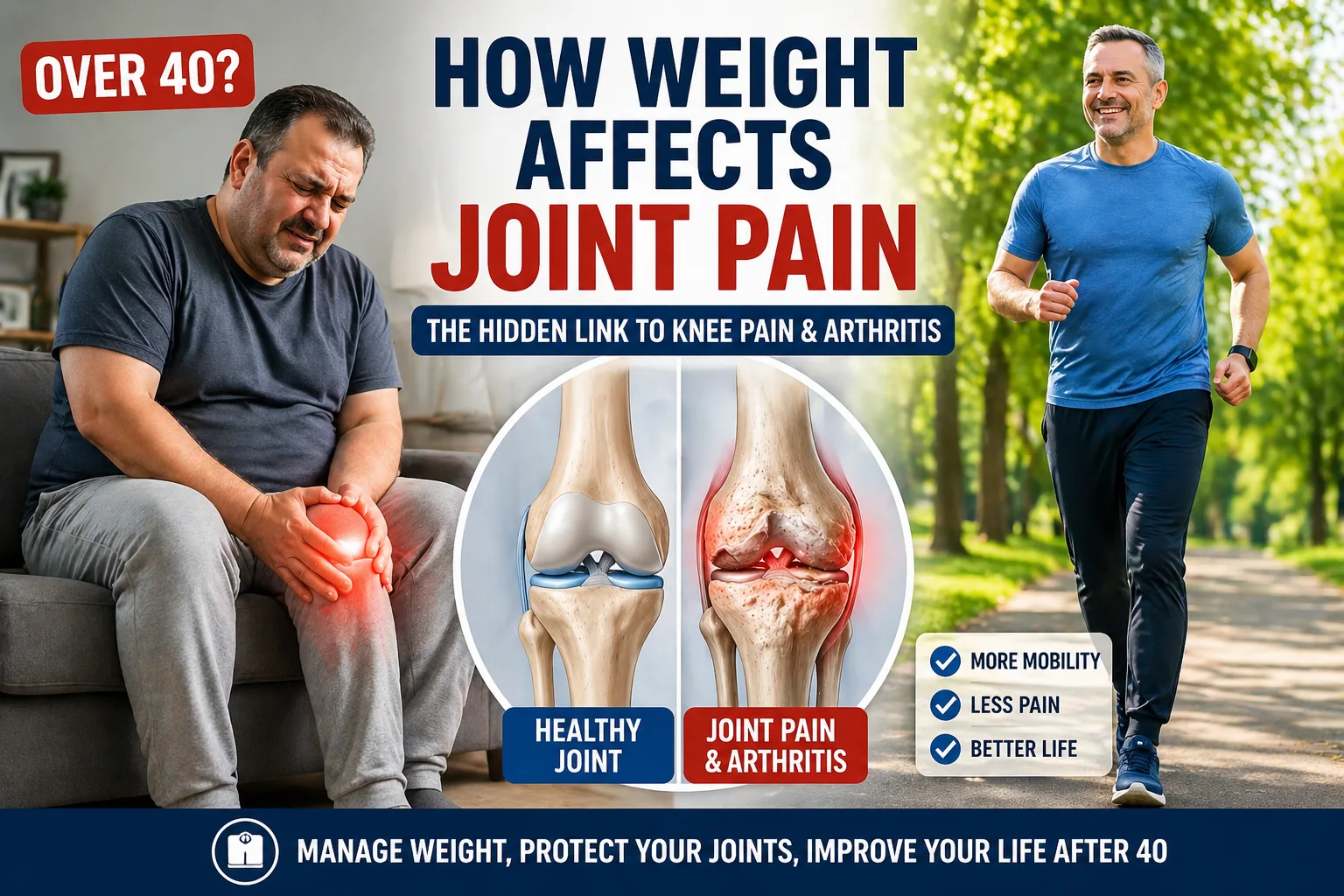
Getting older comes with a few surprises. Some are welcome, like wisdom and patience. Others are not so fun, like waking up with knee pain after doing absolutely nothing. If you are over 40 and dealing with joint discomfort, your weight may play a bigger role than you think.
This article explains how weight affects joint pain in a clear and practical way. You will learn the real science behind weight and knee pain, how obesity joint damage develops, and how losing even a small amount of weight can change how your joints feel.
Let’s get into it.
Why Joint Pain Becomes Common After 40
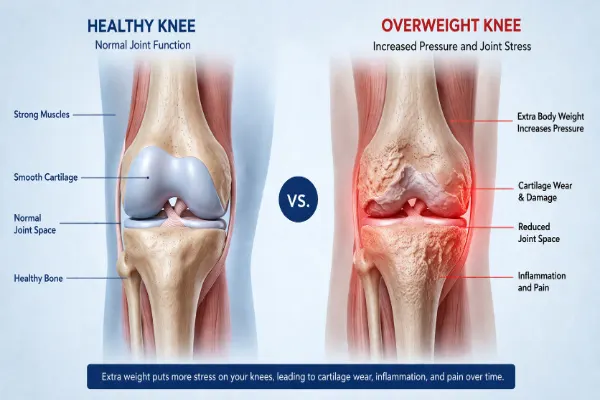
After 40, your body naturally starts to change. Cartilage, the smooth tissue that cushions your joints, begins to wear down. Muscle mass slowly decreases, and metabolism slows. These changes make joints more vulnerable to stress.
Now add extra weight to the mix, and things escalate quickly.
Every step you take puts pressure on your joints. When your body carries extra weight, your joints carry extra work. Over time, this leads to inflammation, stiffness, and pain.
This is where the connection between how weight affects joint pain becomes impossible to ignore.
The Science Behind Weight and Joint Stress
Your joints, especially the knees and hips, act like shock absorbers. They handle your body weight with every movement. But they have limits.
Research shows that for every extra pound of body weight, your knees experience about four pounds of pressure during walking. That means gaining just 10 pounds adds around 40 pounds of force on your knees.
That is not a small increase. That is like carrying a heavy backpack all day without realizing it.
This explains why weight and knee pain often go hand in hand. The more weight your joints carry, the faster they wear down.
How Weight Affects Joint Pain Over Time
The impact of extra weight builds gradually. It does not happen overnight. But once it starts, it tends to accelerate.
First, the extra pressure begins to wear down cartilage. This reduces the cushioning between bones. Then, the joints start to rub against each other more directly. This causes pain and inflammation.
At the same time, fat tissue is not just passive storage. It actively releases chemicals that promote inflammation in the body. These chemicals can worsen joint pain and contribute to conditions like Osteoarthritis.
So when we talk about how weight affects joint pain, we are not only talking about pressure. We are also talking about inflammation.
The Link Between Obesity and Joint Damage
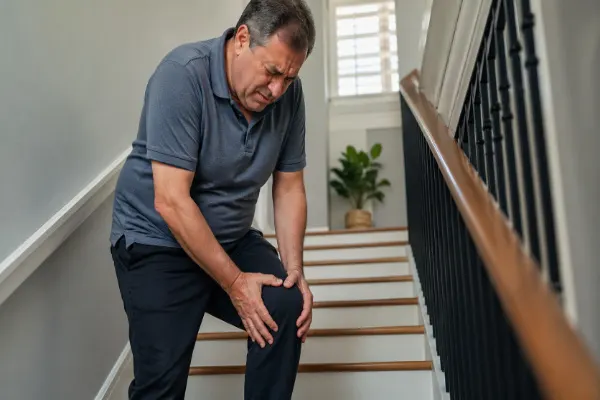
Obesity joint damage is a serious concern, especially after 40. Studies consistently show that people with higher body weight have a higher risk of developing joint problems.
This damage often shows up in weight-bearing joints like the knees, hips, and lower back. These areas take the most stress during daily activities like walking, standing, and climbing stairs.
Over time, the joint structure changes. Cartilage breaks down faster. Bones may develop small growths called bone spurs. Movement becomes more limited, and pain becomes more frequent.
This is why obesity joint damage is not just about discomfort. It can affect your ability to stay active and independent.
Understanding BMI and Arthritis Risk
BMI, or body mass index, is a common way to estimate body fat based on height and weight. While it is not perfect, it helps identify weight ranges that increase health risks.
Research shows a strong link between BMI and arthritis. As BMI increases, so does the risk of developing joint problems.
People with higher BMI levels are more likely to develop knee arthritis earlier in life. They also tend to experience more severe symptoms.
That does not mean BMI tells the whole story. Muscle mass, activity level, and genetics also matter. But when it comes to BMI and arthritis, the trend is clear. Higher weight increases the strain on joints and raises the risk of long-term damage.
Why Weight and Knee Pain Are Closely Connected
The knee is one of the most affected joints when it comes to extra weight. It is a hinge joint that supports most of your body weight during movement.
When you walk, run, or even stand, your knees absorb a large portion of the load. Extra weight multiplies that load.
This is why weight and knee pain often appear together. The knees simply do not get a break.
Even simple activities like climbing stairs or getting up from a chair can become uncomfortable. Over time, this can lead to reduced mobility, which creates a cycle. Less movement leads to more weight gain, which leads to more pain.
Breaking this cycle is key.
How Losing Weight Helps Reduce Joint Pain
Here is the good news. You do not need to lose a massive amount of weight to see benefits.
Studies show that losing just 5 to 10 percent of your body weight can significantly reduce joint pain. That is because even small weight loss reduces the load on your joints.
If you lose 10 pounds, your knees may experience 40 pounds less pressure with each step. That is a big relief for your joints.
This is why the phrase lose weight reduce joint pain is backed by real science. It is not just advice. It is a proven strategy.
For people already dealing with discomfort, choosing a joint-friendly weight loss plan for arthritis can make it easier to stay active and avoid worsening knee pain.
Weight loss also helps reduce inflammation in the body. Less inflammation means less joint stiffness and discomfort.

The Role of Inflammation in Joint Pain
Extra body fat produces inflammatory substances called cytokines. These chemicals can increase pain sensitivity and worsen joint damage.
This means that weight-related joint pain is not only mechanical. It is also biochemical.
Reducing body fat helps lower these inflammatory signals. This can improve joint function and reduce pain over time.
So when you think about how weight affects joint pain, remember that it is both pressure and inflammation working together.
Simple Lifestyle Changes That Protect Your Joints
You do not need extreme measures to protect your joints. Small, consistent changes can make a big difference.
Start with movement. Low-impact activities like walking, swimming, or cycling help strengthen muscles without stressing your joints too much. Strong muscles support your joints and reduce strain.
Focus on balanced nutrition. Eating whole foods, lean protein, healthy fats, and fiber helps manage weight and reduce inflammation.
Sleep also matters. Poor sleep can increase inflammation and make pain feel worse.
Consistency beats perfection every time. Your joints do not need a perfect plan. They need a realistic one.
When to Take Joint Pain Seriously
Not all joint pain is the same. Occasional stiffness after activity is normal. But persistent pain, swelling, or limited movement should not be ignored.
If your joint pain interferes with daily activities or continues for weeks, it is worth getting it checked. Early attention can prevent long-term damage.
This is especially important if you notice symptoms linked to arthritis or obesity joint damage.
The Long-Term Benefits of Managing Your Weight
Maintaining a healthy weight does more than reduce joint pain. It improves overall mobility, balance, and energy levels.
It also lowers the risk of other conditions like heart disease and diabetes. Your joints benefit, but so does your entire body.
Over time, better joint health allows you to stay active. And staying active helps you maintain a healthy weight. It is a positive cycle.
Frequently Asked Questions
How does extra weight affect joint pain after 40?
Extra weight increases pressure on weight-bearing joints like the knees, hips, and lower back. After 40, cartilage naturally wears down, so added weight accelerates this process. This explains how weight affects joint pain by increasing both mechanical stress and inflammation, leading to stiffness and discomfort.
Can losing weight really reduce joint pain?
Yes, research shows that even small weight loss can significantly improve joint health. Losing just 5 to 10 percent of body weight can reduce pressure on joints and lower inflammation. This is a key example of how weight affects joint pain and why weight loss is often recommended as a first step in managing symptoms.
Why is weight and knee pain so closely connected?
The knee joint تحملs several times your body weight during daily movement. When body weight increases, the load on the knees multiplies, which speeds up cartilage breakdown. This strong link explains how weight affects joint pain, especially in the knees, making them more prone to damage and discomfort.
What is the connection between BMI and arthritis?
BMI helps estimate whether your weight falls within a healthy range. Higher BMI levels are linked to a greater risk of developing arthritis, particularly in the knees. This shows how weight affects joint pain over time, as excess body weight increases joint stress and inflammation.
Does obesity cause permanent joint damage?
Obesity can lead to long-term joint damage if not managed. Excess weight increases wear on cartilage and promotes inflammation, which can result in conditions like osteoarthritis. Understanding how weight affects joint pain early can help prevent permanent damage and improve long-term joint health.
Final Thoughts
Joint pain after 40 is common, but it is not something you have to accept as normal. Understanding how weight affects joint pain gives you a powerful tool to improve your health.
The connection between weight and knee pain is real. Obesity joint damage is preventable in many cases. And the relationship between BMI and arthritis shows how important weight management can be.
The best part is that small changes can lead to meaningful results. Even modest weight loss can reduce pain and improve movement.
Your joints work hard for you every day. Taking care of your weight is one of the simplest ways to return the favor.
Sources
Centers for Disease Control and Prevention. Osteoarthritis.
Arthritis Foundation. Weight Loss and Arthritis
Harvard Health Publishing. The impact of weight on knee health
National Institute of Arthritis and Musculoskeletal and Skin Diseases
World Health Organization. Obesity and Overweight
Author Bio
Jennifer Collins is a wellness researcher and natural health writer focused on adults over 40. With 3+ years of experience in digital health content, Jennifer specializes in making science-backed nutrition and lifestyle strategies easy to follow and apply.
Health Disclaimer
This content is for informational purposes only and is not intended to diagnose, treat, or cure any disease. Always consult your healthcare provider before making changes to your diet or health