
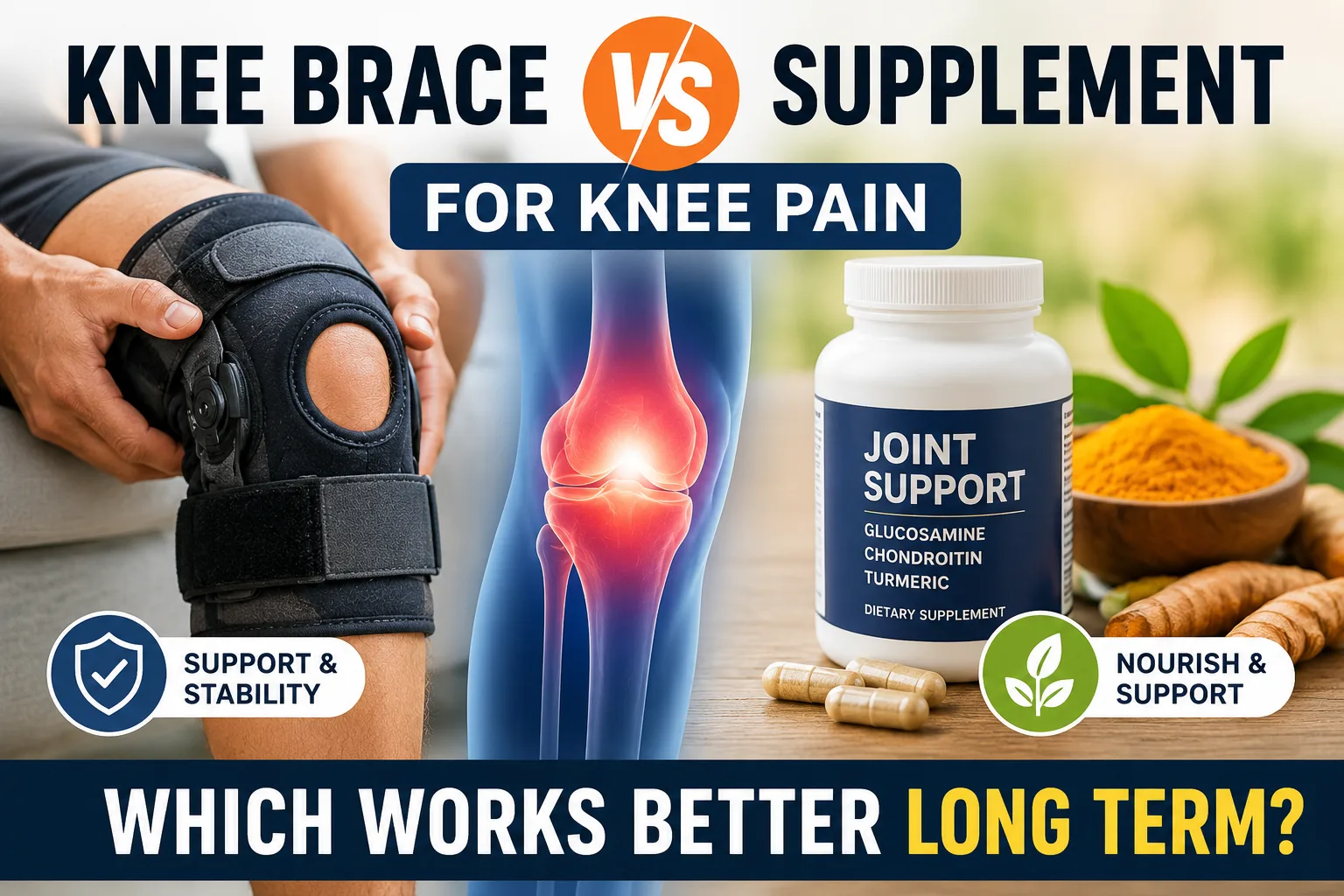
Knee pain can turn simple daily activities into a frustrating challenge. Walking upstairs feels like a workout nobody asked for. Sitting too long makes your knees stiff. Even getting out of bed can sound like a bowl of cereal cracking under pressure.
That is why millions of people search for better knee pain management solutions every year. Some people rely on braces for stability and support. Others choose supplements that claim to improve joint health from the inside out. The big question remains simple: which option actually works better for long term relief?
The answer is not as black and white as most advertisements make it seem.
When comparing knee brace vs supplement for knee pain, you need to understand how each option works, what science says, and which approach fits your condition. Some people benefit more from physical support. Others need nutritional support for their joints. In many cases, combining both creates the best outcome.
This guide breaks down the facts in a practical and realistic way without hype, miracle promises, or fake statistics.
Table of Contents
Understanding Why Knee Pain Happens
Before comparing knee support options, it helps to understand why knee pain develops in the first place.
The knee is one of the hardest working joints in the human body. It absorbs shock every time you walk, run, jump, squat, or awkwardly step on a Lego at 2 a.m. Over time, cartilage wears down, muscles weaken, and inflammation builds up.
Common causes of knee pain include:
- Osteoarthritis
- Ligament injuries
- Tendon inflammation
- Meniscus tears
- Overuse from exercise
- Excess body weight
- Age related joint degeneration
According to the <a href=”https://www.cdc.gov/arthritis/index.htm”>Centers for Disease Control and Prevention (CDC)</a>, arthritis remains one of the leading causes of disability among adults in the United States. Knee osteoarthritis specifically affects mobility and quality of life for millions of people.
That explains why products like braces and supplements have become popular tools for knee pain management.
What Is a Knee Brace?

A knee brace is a wearable support device designed to stabilize the knee joint, reduce strain, and improve movement.
Different types of braces target different problems. Some offer mild compression for everyday support. Others provide rigid stabilization after injury or surgery.
Common types include:
Compression Sleeves
These lightweight sleeves improve circulation and provide mild support. People often use them during exercise or daily movement.
Hinged Braces
These braces include metal supports on the sides for added stability. Doctors often recommend them after ligament injuries.
Unloader Braces
These specialized braces shift pressure away from damaged areas in the knee joint. Many people with knee brace arthritis support needs use this option.
Patellar Stabilizing Braces
These help keep the kneecap aligned properly and reduce pain from tracking issues.
The main benefit of braces is immediate mechanical support. You often feel relief while wearing them because they reduce stress on sensitive structures.
How Effective Are Knee Braces for Long-Term Relief?
Research shows that knee braces can help reduce pain and improve function, especially in people with osteoarthritis.
A study published in the <a href=”https://www.ncbi.nlm.nih.gov/pmc/articles/PMC6829004/”>National Library of Medicine</a> found that unloader braces may improve pain levels and walking ability in patients with knee osteoarthritis.
However, braces do not repair damaged cartilage or reverse joint degeneration.
That distinction matters.
A brace works more like a helpful assistant than a permanent fix. It supports movement, reduces pressure, and helps you stay active. Long term results depend heavily on consistency, physical therapy, exercise habits, and body weight management.
Some users also stop wearing braces because they feel bulky, uncomfortable, or difficult to use during hot weather. Nobody enjoys peeling off a sweaty brace after summer errands.
Still, for many people, knee support options like braces provide meaningful symptom relief without medication.
What Are Knee Pain Supplements?
Supplements aim to support joint health internally rather than externally.
Instead of stabilizing the knee physically, they target inflammation, cartilage health, and joint lubrication.
Popular ingredients in oral supplement knee pain formulas include:
- Glucosamine
- Chondroitin
- Turmeric
- Boswellia
- MSM
- Collagen peptides
- Hyaluronic acid
Products like <a href=”https://cb.flexafen.com/go/lander.php”>Flexafen</a> combine several joint support ingredients into one formula designed to support mobility and reduce discomfort.
Unlike braces, supplements usually take weeks or months before noticeable effects appear.
That delay causes many people to quit too early. Modern attention spans struggle when results do not arrive before the next streaming episode finishes loading.
Do Supplements Actually Work?
The science behind supplements varies depending on the ingredient.
Some ingredients show moderate evidence for pain reduction, while others lack strong long term research.
Glucosamine and Chondroitin
These remain among the most studied joint supplements.
According to the <a href=”https://www.nccih.nih.gov/health/glucosamine-and-chondroitin-for-osteoarthritis”>National Center for Complementary and Integrative Health</a>, research on glucosamine and chondroitin shows mixed results. Some people experience pain relief, while others notice little difference.
Turmeric and Curcumin
Curcumin, the active compound in turmeric, has anti inflammatory properties.
A review published in the <a href=”https://pubmed.ncbi.nlm.nih.gov/27733236/”>Journal of Medicinal Food</a> found that curcumin may help reduce osteoarthritis pain similarly to some nonsteroidal anti inflammatory drugs in certain cases.
Collagen Supplements
Emerging evidence suggests collagen peptides may support joint comfort and cartilage function.
Research from the <a href=”https://pubmed.ncbi.nlm.nih.gov/30368550/”>Current Medical Research and Opinion Journal</a> showed some improvements in joint symptoms among adults taking collagen supplements regularly.
Still, supplements are not miracle cures. Results vary based on age, severity of damage, activity level, and overall health.
Knee Brace vs Supplement for Knee Pain: The Core Differences

The biggest difference between these approaches comes down to immediate support versus internal support.
A knee brace changes how your joint moves right away. A supplement works gradually over time.
Braces Focus on Stability
Braces reduce mechanical stress on the knee. They help you move more comfortably during walking, exercise, or recovery.
People with instability often benefit quickly from braces.
Supplements Focus on Joint Health
Supplements attempt to support cartilage, reduce inflammation, and improve long term joint function internally.
They may help people dealing with chronic inflammation or early degenerative changes.
Braces Deliver Faster Results
Most people feel some level of support immediately after wearing a properly fitted brace.
Supplements Require Patience
Many oral supplement knee pain products need consistent daily use for several weeks before benefits appear.
Braces Do Not Address Internal Joint Changes
A brace cannot rebuild cartilage or reduce systemic inflammation.
Supplements Cannot Stabilize an Unstable Knee
Supplements cannot physically correct alignment or prevent awkward joint movement.
That is why comparing knee brace vs supplement for knee pain should never become an either or argument.
Each serves a different purpose.
Which Option Works Better for Arthritis?
People with osteoarthritis often ask whether braces or supplements provide better long term outcomes.
The answer depends on symptom severity and lifestyle needs.
When Braces May Help More
Braces may work better if you experience:
- Joint instability
- Pain during walking
- Swelling after movement
- Alignment problems
- Weakness after injury
Many doctors recommend knee brace arthritis support for activity based pain.
When Supplements May Help More
Supplements may provide more value if your pain relates to:
- Chronic inflammation
- Mild to moderate stiffness
- Early joint degeneration
- General joint discomfort
- Recovery support
People seeking preventive knee pain management often choose supplements earlier in the process.
Can You Use Both Together?
Yes, and many experts believe combining strategies creates the strongest long term plan.
Think about it logically.
If a brace reduces mechanical stress while supplements support internal joint health, the combination may complement each other well.
For example:
- A brace can help you stay active safely
- Exercise improves muscle support around the knee
- Supplements may help manage inflammation during that process
This combined approach often supports better mobility and consistency.
Consistency matters more than flashy promises.
What About Exercise and Weight Loss?

No brace or supplement can fully replace healthy movement and weight management.
According to the <a href=”https://www.hopkinsarthritis.org/patient-corner/disease-management/role-of-body-weight-in-osteoarthritis/”>Johns Hopkins Arthritis Center</a>, even modest weight loss can significantly reduce stress on knee joints.
Exercise strengthens muscles around the knee, improves balance, and supports joint stability.
Low impact activities work best for many people, including:
- Walking
- Swimming
- Cycling
- Resistance training
- Yoga
- Stretching routines
Ironically, avoiding movement entirely often makes knee pain worse over time.
Your knees were designed to move. They just were not designed for twelve straight hours of sitting followed by a sudden “weekend warrior” basketball game.
Are There Risks or Side Effects?
Risks of Knee Braces
Most braces remain safe when fitted properly, but issues can include:
- Skin irritation
- Discomfort
- Sweating
- Poor circulation if too tight
- Muscle dependency with overuse
Doctors usually recommend using braces strategically rather than relying on them constantly.
Risks of Supplements
Supplements may interact with medications or cause digestive side effects.
For example:
- Turmeric may affect blood thinners
- Glucosamine may interact with diabetes medications
- Some supplements may upset the stomach
Always check with a healthcare professional before starting new supplements, especially if you take prescription medications.
How to Choose the Right Knee Support Option
Choosing between braces and supplements depends on your specific situation.
Choose a Brace If:
- You need immediate support
- Your knee feels unstable
- Walking triggers pain
- You recently had an injury
- Your doctor recommends stabilization
Choose Supplements If:
- Your pain feels chronic and inflammatory
- You want long term joint support
- You have mild to moderate stiffness
- You prefer internal support strategies
- You want to complement exercise and therapy
Consider Both If:
- You have osteoarthritis
- You stay physically active
- You need both support and recovery help
- Your pain affects daily mobility
What Doctors Usually Recommend
Most healthcare providers no longer rely on a single solution for knee pain management.
Instead, modern treatment plans often combine:
- Exercise therapy
- Weight management
- Supportive bracing
- Anti inflammatory nutrition
- Physical therapy
- Pain management strategies
- Joint supplements when appropriate
The goal focuses on improving function and quality of life rather than chasing unrealistic “instant cures.”
That realistic approach usually produces better long term results.
If your knee pain has progressed to severe cartilage wear, this guide on Bone on Bone Knee Pain: Natural Options Before Knee Surgery explains non surgical strategies that may help improve mobility naturally.
Is Flexafen Worth Considering?
Among oral supplement knee pain products, Flexafen has gained attention because it combines several common joint support ingredients into one formula.
Its ingredient profile focuses on inflammation support, mobility, and joint comfort.
Like all supplements, results vary between individuals. Some users report noticeable improvements in flexibility and comfort, while others experience milder effects.
The key thing to understand is this: supplements work best as part of a broader strategy, not as a magic solution.
No responsible article should promise otherwise.’
Frequently Asked Questions
Which is better for long term relief: a knee brace or supplement for knee pain?
When comparing knee brace vs supplement for knee pain, the better option depends on the cause of your discomfort. Knee braces provide immediate support and stability, while supplements may help support joint health and reduce inflammation over time. Many people get the best long term results by combining both with exercise and healthy weight management.
Do knee braces help arthritis pain permanently?
A knee brace arthritis support product can reduce pressure on the joint and improve mobility, but it does not permanently cure arthritis. Braces work best as part of a complete knee pain management plan that includes movement, strengthening exercises, and medical guidance.
How long do oral supplements for knee pain take to work?
Most oral supplement knee pain products take between 4 to 8 weeks before users notice improvements. Results vary based on the ingredients, consistency of use, activity level, and severity of joint damage.
Can you use a knee brace and supplement together for knee pain?
Yes, many experts recommend combining knee support options like braces and supplements. A brace can improve stability during movement, while supplements may support cartilage health and inflammation control from the inside.
What is the best knee pain management strategy for daily joint pain?
The best knee pain management approach usually includes low impact exercise, maintaining a healthy weight, proper knee support options, and consistent joint care. Some people benefit more from a knee brace, while others respond better to supplements depending on their symptoms and lifestyle.
Final Verdict on Knee Brace vs Supplement for Knee Pain
When comparing knee brace vs supplement for knee pain, the best choice depends on your symptoms, goals, and lifestyle.
Braces provide faster external support and stability. Supplements aim to support long term joint health internally. Neither option works perfectly for everyone.
For many people, combining smart knee support options with exercise, healthy weight management, and medical guidance creates the strongest long term strategy.
The real winner is consistency.
A high quality brace that sits forgotten in a closet helps nobody. The same goes for supplements taken randomly for four days before giving up.
Long term knee pain management requires patience, realistic expectations, and a plan built around your actual needs.
Your knees support you every day. Giving them proper care now may help them return the favor for years to come.
Sources
Centers for Disease Control and Prevention – Arthritis Overview
National Library of Medicine – Knee Bracing for Osteoarthritis
Journal of Medicinal Food – Curcumin and Osteoarthritis Research
Current Medical Research and Opinion – Collagen Peptides Study
Johns Hopkins Arthritis Center – Role of Body Weight in Osteoarthritis
Author Bio
Jennifer Collins is a wellness researcher and natural health writer focused on adults over 40. With 3+ years of experience in digital health content, Jennifer specializes in making science-backed nutrition and lifestyle strategies easy to follow and apply.
Health Disclaimer
This content is for informational purposes only and is not intended to diagnose, treat, or cure any disease. Always consult your healthcare provider before making changes to your diet or health