
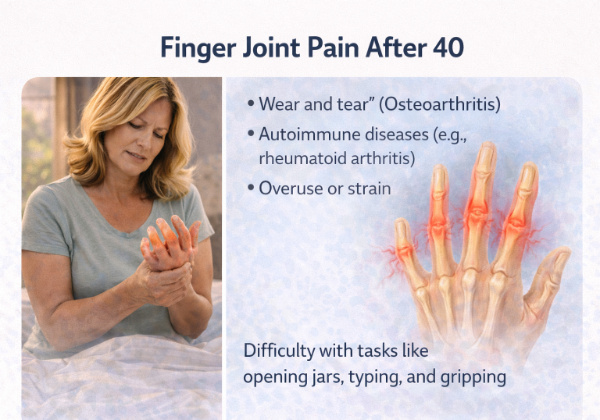
If you’ve noticed your fingers feeling stiff, achy, or less cooperative than they used to, you’re not alone. Finger joint pain after 40 is one of those subtle changes that often sneaks up on people. One day, opening a jar feels easy. A few years later, typing, gripping a coffee mug, or buttoning a shirt can feel surprisingly uncomfortable.
It’s frustrating, especially when your hands are part of everything you do. But here’s the reassuring part: most finger joint discomfort that begins in midlife has understandable causes—and there are practical, gentle ways to support your joints over time. This guide will help you understand what’s happening, why it often shows up after 40, and what you can do to keep your hands moving comfortably for years to come.
Table of Contents
What Is Finger Joint Pain After 40?
Finger joint pain after 40 refers to discomfort, stiffness, or reduced mobility in the small joints of the fingers that tends to become more noticeable in midlife and beyond. It may affect:
- The knuckles (metacarpophalangeal joints)
- The middle joints of the fingers
- The joints closest to the fingertips
- The base of the thumb
Some people experience occasional stiffness. Others notice a daily ache, swelling, or reduced grip strength. For many, the discomfort is mild but persistent—more of an annoyance than a major problem, but still something that affects daily tasks.
The key thing to understand: your hands are complex. They contain dozens of joints, tendons, and ligaments working together. Over time, natural wear, lifestyle habits, and age-related changes can all influence how those joints feel.
Why Finger Joint Pain Happens After 40
Natural joint changes
As we age, cartilage—the smooth tissue that cushions joints—can gradually thin. This doesn’t happen overnight. It’s a slow process that often becomes noticeable in the 40s and 50s.
Less cushioning can mean:
- More friction in joints
- Mild stiffness in the morning
- Occasional swelling after heavy use
These changes are common and often manageable with supportive habits.
Repetitive use over time
Think about how much your hands do in a lifetime: typing, cooking, driving, texting, lifting, carrying, and more. Decades of movement add up. Even healthy joints can start to feel the effects of long-term use.
People who spend years:
- Using computers
- Doing manual work
- Playing instruments
- Engaging in hobbies like knitting or gardening
may notice finger discomfort earlier or more frequently.
Reduced circulation and flexibility
After 40, circulation and tissue elasticity can change slightly. Joints may feel stiffer when:
- You wake up
- The weather is cold
- You’ve been inactive for a while
Movement usually helps. Many people notice their fingers feel better after they start using them.
Hormonal and metabolic factors
Hormonal shifts—especially around midlife—can influence joint comfort and inflammation levels. Hydration, nutrition, and sleep also play a role. Small changes in these areas can affect how joints feel day to day.
Common Symptoms and Patterns
Finger joint discomfort doesn’t always look the same. Some typical patterns include:
- Morning stiffness that improves with movement
- Mild swelling around knuckles
- Aching after long periods of use
- Reduced grip strength
- Clicking or stiffness when bending fingers
- Sensitivity in cold weather
You might also notice that pain comes and goes. Some days are better than others. Activities like gardening, typing, or lifting groceries can temporarily increase discomfort.
If you’re also experiencing discomfort elsewhere, you may find this helpful: shoulder shoulder pain at night without injury.
Lifestyle and Daily Habit Factors
Hand overuse without recovery
Just like larger joints, finger joints need balance. Constant use without breaks can lead to irritation.
Examples include:
- Long typing sessions
- Heavy phone use
- Repetitive gripping tasks
- Crafting or DIY work without breaks
Short rest periods throughout the day can make a difference.
Poor hand ergonomics
Small adjustments can have big effects. Using tools that are too small or gripping too tightly can strain finger joints.
Consider:
- Ergonomic keyboards
- Larger-handled kitchen tools
- Supportive grips for pens and utensils
Stress and tension
Many people hold tension in their hands without realizing it—clenching, gripping, or tightening fingers during stress. Over time, this can contribute to stiffness.
Simple relaxation exercises for the hands can help.
Gentle Movement and Wellness Support
One of the best things for finger joints is gentle, consistent movement.
Daily hand mobility exercises
Try this simple routine:
- Open and close your fists slowly (10 reps)
- Spread fingers wide, then relax (10 reps)
- Touch thumb to each fingertip
- Gently rotate wrists
These movements help circulation and keep joints flexible.
Warmth and comfort
Warm water, heating pads, or warm compresses can help ease stiffness. Many people find relief from soaking hands in warm water for a few minutes.
Strength and support
Light resistance exercises using therapy putty or a soft ball can help maintain strength. Strong muscles around joints provide better support.
Start gently. Consistency matters more than intensity.
Nutrition and Hydration Basics
Your joints are living tissues. They respond to what you eat and drink.
Stay hydrated
Cartilage relies on hydration. Even mild dehydration can contribute to stiffness. Aim to drink water regularly throughout the day.
Balanced nutrition
Focus on:
- Colorful fruits and vegetables
- Healthy fats (like olive oil and nuts)
- Lean protein
- Whole grains
These foods support overall joint health and reduce inflammation over time.
Limit excess sugar and processed foods
Highly processed foods can contribute to inflammation in some people. You don’t have to eliminate them entirely, but balance is key.
When to Seek Professional Advice
Most mild finger joint discomfort is manageable with lifestyle support. However, consider talking with a healthcare professional if you notice:
- Persistent swelling
- Severe pain
- Sudden joint changes
- Significant loss of function
- Warm, red joints
- Symptoms affecting daily life
A professional can help rule out underlying conditions and provide personalized guidance.
Practical Tips You Can Try Today
Small daily habits can make a noticeable difference over time:
- Start your morning with gentle hand stretches
- Use warm water to ease stiffness
- Take breaks from repetitive tasks
- Switch to ergonomic tools
- Stay hydrated
- Avoid gripping too tightly
- Keep hands warm in cold weather
- Do light strengthening exercises
Think of joint care like brushing your teeth. Consistency matters more than doing everything perfectly.
Common Myths and Mistakes
Myth: “Pain means I should stop using my hands.”
Gentle movement is usually helpful. Complete inactivity can increase stiffness.
Myth: “Joint discomfort is inevitable and untreatable.”
While aging changes joints, supportive habits can make a real difference.
Mistake: Ignoring early signs
Mild stiffness is often easier to manage early. Paying attention now can prevent bigger issues later.
Mistake: Overdoing exercises
Too much too soon can irritate joints. Start slowly and build gradually.
Frequently Asked Questions
Is finger joint pain normal after 40?
Yes, it’s common. Many adults notice mild stiffness or discomfort as joints naturally change with age. Supportive habits can help manage symptoms.
Why do my fingers feel stiff in the morning?
During sleep, joints aren’t moving much. Fluid and circulation patterns change overnight. Gentle morning movement usually helps loosen things up.
Can typing cause finger joint pain?
Long typing sessions without breaks can contribute to stiffness or irritation. Ergonomic tools and regular pauses can help.
Does weather affect finger joints?
Many people report increased stiffness in cold or damp weather. Keeping hands warm often improves comfort.
What helps finger joints feel better quickly?
Warm water, gentle stretching, and light movement are simple ways to ease stiffness in the moment.
When should I worry about finger pain?
If pain is severe, persistent, or affecting daily function, it’s worth speaking with a healthcare professional.
A Helpful Resource for Extra Support
If you’re looking for more natural ways to support joint comfort, you might find this free guide helpful:
“Stop the Creak: 6 Natural Joint Pain Solutions Doctors Don’t Tell You About.”
It’s a simple, educational resource with practical ideas you can explore at your own pace. No pressure—just an option if you’d like more support.
About the Author
Jennifer Collins
Health Research Editor, JointReliefJournal
Jennifer Collins is a research-focused health editor who specializes in joint health and mobility topics for adults over 40. She translates complex research into clear, practical information readers can use in daily life. Her approach is balanced, educational, and grounded in evidence-based wellness strategies.
Medical & Educational Disclaimer
This article is for educational purposes only and is not intended as medical advice. Always consult a qualified healthcare professional for diagnosis or treatment of any health condition. Individual needs and health situations vary.