
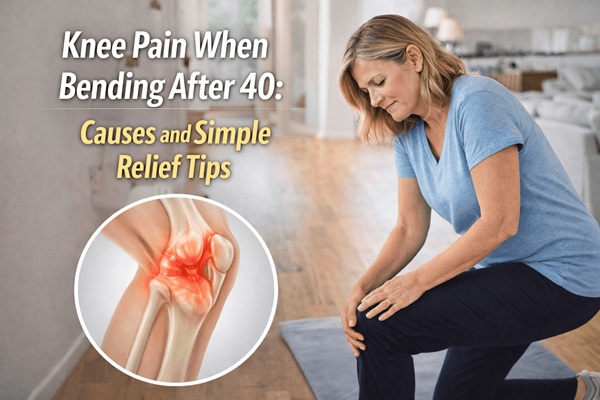
Bending your knee should feel simple. You sit down, stand up, kneel to tie your shoes, or squat to pick something up. Yet many adults notice a frustrating change after the age of forty. The moment they bend their knee, a dull ache or sharp pain appears.
If you are dealing with knee pain when bending after 40, you are not alone. Knee discomfort becomes more common with age because joints experience natural wear over time. According to the American Academy of Orthopaedic Surgeons (AAOS), knee pain ranks among the most frequent joint complaints in adults, especially after middle age.
The good news is that most cases of knee pain when bending after 40 have clear explanations and manageable solutions. In this article, we will explore why bending movements can trigger knee pain, the most common causes behind it, and simple ways to relieve discomfort while protecting your joints.
Why Knee Pain When Bending After 40 Happens
To understand why bending hurts, it helps to know how the knee works.
The knee joint connects the thigh bone, shin bone, and kneecap. Cartilage cushions these bones so they move smoothly. Ligaments and muscles stabilize the joint and allow bending and straightening.
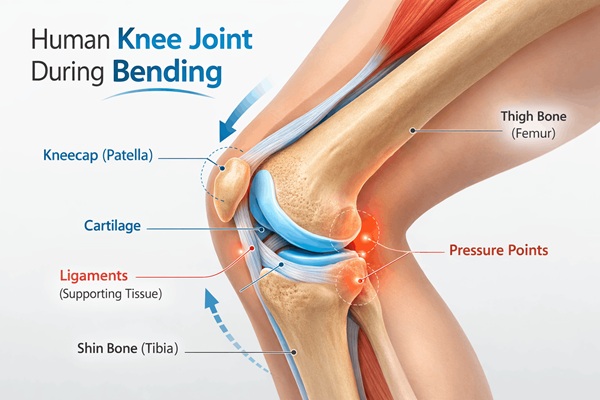
When you bend your knee, several things happen at once. The kneecap glides along a groove in the thigh bone, muscles contract to control movement, and cartilage absorbs pressure.
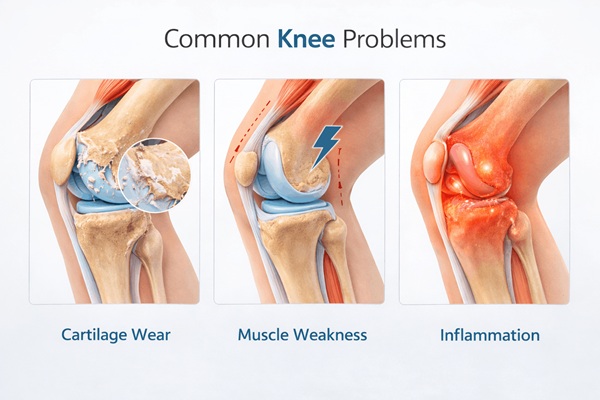
As we age, certain changes occur in these structures. Cartilage may gradually thin. Muscles around the knee may weaken. Flexibility in surrounding tissues can decrease. These factors increase stress inside the joint, especially during bending movements.
The Cleveland Clinic explains that knee pain often develops when cartilage begins to wear down or when muscles surrounding the joint lose strength. These changes may not cause problems during simple walking, but bending places additional pressure on the joint and exposes weaknesses.
In other words, the knee is still doing its job, but it may need a little more support than it did twenty years ago.
Many adults begin experiencing joint discomfort as they age. If you want to understand the broader causes behind this issue, read our complete guide on knee pain after 40.
Common Causes of Knee Pain When Bending After 40
Several conditions can lead to discomfort when bending the knee. Understanding these causes helps you identify what might be happening inside the joint.
1. Early Knee Osteoarthritis
Osteoarthritis is one of the most common causes of knee pain after forty. This condition occurs when cartilage gradually wears down.
The Arthritis Foundation explains that cartilage acts as a protective cushion between bones. As it deteriorates, bones may rub more closely together, leading to pain, stiffness, and swelling.
People with early osteoarthritis often feel pain when bending, squatting, or climbing stairs.
2. Patellofemoral Pain Syndrome
Patellofemoral pain syndrome affects the front of the knee, around the kneecap. It occurs when the kneecap does not move smoothly along its groove during movement.
This condition often causes pain during bending activities such as kneeling, sitting down, or climbing stairs.
The Mayo Clinic notes that weak thigh muscles and muscle imbalances commonly contribute to this condition.
3. Weak Quadriceps Muscles
The quadriceps muscles sit at the front of the thigh and play a key role in knee stability.
If these muscles weaken over time, the knee joint must absorb more stress. This extra strain can cause discomfort when bending or squatting.
Many physical therapists focus on strengthening these muscles because they help control knee movement and reduce joint pressure.
4. Tight Hamstrings and Hip Muscles
Muscle tightness around the hips and thighs can also contribute to knee pain.
Tight hamstrings pull on the knee joint and limit flexibility. This tension increases pressure during bending movements.
Stretching exercises often improve flexibility and reduce strain on the joint.
5. Previous Injuries
Old injuries sometimes resurface years later. Ligament strains, cartilage damage, or meniscus tears may cause lingering instability.
When the knee bends, these weakened structures may trigger discomfort.
Symptoms That Often Accompany Knee Pain
People who experience knee pain when bending after 40 often notice other symptoms as well.
Common signs include:
• Pain around or behind the kneecap
• Knee stiffness after sitting
• A grinding or clicking sensation
• Mild swelling around the joint
• Weakness when squatting or kneeling
These symptoms usually develop gradually rather than suddenly. If stiffness appears when you wake up, our article on morning knee pain after 50 explains why this happens and what may help.
However, severe swelling or inability to bear weight requires medical attention.
Simple Relief Tips for Knee Pain When Bending
The right habits can significantly reduce knee discomfort. Many orthopedic specialists recommend starting with conservative approaches before considering more advanced treatments.
Strengthen the Muscles Around the Knee
Strong muscles stabilize the knee joint and absorb stress during movement.
Exercises that target the quadriceps and hamstrings often improve knee comfort.
Examples include:
• Straight leg raises
• Step ups
• Wall sits
These exercises strengthen muscles that support the knee during bending.
Improve Flexibility
Stretching helps reduce tension around the knee.
Hamstring stretches and calf stretches improve flexibility and reduce strain on the joint.
Stretching regularly also helps prevent stiffness.
Maintain a Healthy Weight
Body weight plays an important role in knee health.
The Arthritis Foundation reports that every pound of body weight adds roughly four pounds of pressure on the knee joint during walking.
Maintaining a healthy weight can significantly reduce stress on the knee.
Apply Ice After Activity
Cold therapy helps reduce inflammation.
If the knee feels sore after bending activities, apply an ice pack for about fifteen minutes.
The Cleveland Clinic recommends ice as a simple way to manage joint swelling.
Wear Supportive Footwear
Shoes with proper cushioning help absorb shock and improve alignment.
Poor footwear can increase stress on the knee joint during everyday movement.
Exercises That May Help Reduce Knee Pain
Movement may seem counterintuitive when your knee hurts, but the right exercises often improve joint health.
Low impact activities such as walking, cycling, and swimming help maintain mobility without placing excessive pressure on the knee.
Strengthening exercises also support the joint.
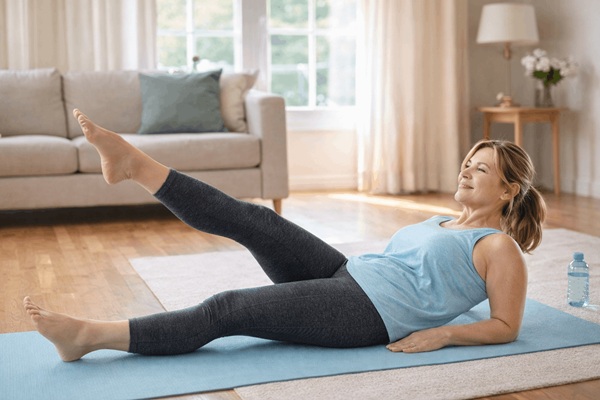
Straight Leg Raises
This exercise strengthens the quadriceps without bending the knee.
Lie on your back with one leg straight. Lift the leg slowly about twelve inches off the floor and hold for a few seconds before lowering it.
Repeat ten to fifteen times.
Wall Sits
Wall sits strengthen both the quadriceps and glutes.
Stand with your back against a wall and slide down slightly until your knees bend gently. Hold the position for several seconds.
This exercise builds muscle endurance that supports the knee joint.
Hamstring Stretch
Sit on the floor with one leg extended. Reach toward your toes while keeping your back straight.
Hold the stretch for twenty seconds and repeat on the other leg.
This stretch improves flexibility and reduces tension around the knee.
Everyday Habits That Protect Your Knees
Healthy habits play a major role in preventing knee pain.
Try these strategies:
Stay active throughout the day. Long periods of sitting can cause stiffness.
Warm up before exercise. Gentle movement prepares the muscles for activity.
Avoid deep squats if they cause pain.
Use proper lifting techniques when bending down.
Small adjustments often produce meaningful improvements.
When to See a Doctor
Most cases of knee pain when bending after 40 improve with exercise and lifestyle adjustments. However, certain symptoms require medical evaluation.
Consult a healthcare professional if you experience:
• Severe swelling
• Knee instability or locking
• Sudden pain after injury
• Pain that lasts several weeks without improvement
The American Academy of Family Physicians recommends medical evaluation when knee pain interferes with daily activities or worsens over time.
The Long Term Outlook for Knee Pain After 40
Many people worry that knee pain inevitably leads to serious joint problems. Fortunately, that is not always the case.
With proper care, many adults maintain healthy knee function for decades.
Strengthening exercises, flexibility training, and healthy lifestyle habits often reduce symptoms significantly.
Consistent movement also helps maintain cartilage health and joint circulation.
Think of knee care like maintaining a car. Regular attention keeps everything running smoothly.
Final Thoughts
Experiencing knee pain when bending after 40 can feel discouraging, especially when everyday movements become uncomfortable. Yet in many cases, the problem has manageable causes and practical solutions.
Understanding how the knee works is the first step. Strengthening muscles, improving flexibility, and adopting supportive habits can significantly reduce strain on the joint.
If symptoms persist or worsen, seeking professional guidance ensures you receive the right treatment.
Your knees have supported you for decades. With proper care and a little patience, they can continue supporting you for many more.
Sources and Medical References
American Academy of Orthopaedic Surgeons
Mayo Clinic Knee Pain Causes
Cleveland Clinic Knee Pain Overview
Arthritis Foundation Joint Health Resources
National Institutes of Health Osteoarthritis Information
About the Author
Jennifer Collins
Health Research Editor, JointReliefJournal
Jennifer Collins focuses on translating complex health research into practical, easy to understand information for adults over 40. Her work centers on joint health, mobility, and long term wellness strategies that help readers make informed decisions about their daily habits.
Disclaimer
This article is intended for educational purposes only and should not replace professional medical advice. Always consult a qualified healthcare provider regarding any concerns about knee pain or other health conditions.