

Dr. Preet Pal SB, MD
Physician specializing in diabetes, metabolic health, and joint care management. Read More About Dr. Preet Pal’s Medical Credentials & Editorial Integrity Here
Experiencing knee pain after 40 is one of the most common early indicators of age-related structural shift in the human musculoskeletal frame. Whether you experience a subtle, dull ache when stepping out of bed or sharp discomfort while climbing stairs, joint changes at this stage of life are exceedingly common across the United States.
Addressing knee pain after 40 requires moving past temporary fixes like ice packs and over-the-counter painkillers. Long-term management requires understanding the biological mechanisms of joint wear, improving muscular support, and preserving the internal environment of your joints.
This guide explains knee pain after 40 in simple, clear language. We will talk about where the pain comes from, what different pain locations can mean, practical steps you can take, and when it is time to stop searching online and talk to an orthopedic specialist.
Key Takeaways: Rapid Recovery Action Plan
Key Takeaways: Rapid Recovery Action Plan
Our knees carry a large portion of our body weight every day. Over time the structures inside the joint naturally change. This does not mean your body is failing. It simply means your joints have been working hard for decades.
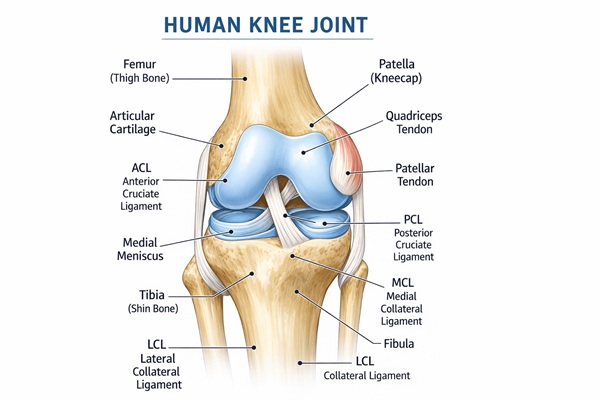
Several factors commonly contribute to knee discomfort after 40.
Cartilage changes
The cartilage inside the knee acts as a cushion between bones. As we age, cartilage can become thinner and less elastic, which may lead to stiffness or soreness.
Muscle imbalance
Many adults gradually lose muscle strength in the thighs and hips. When those muscles weaken, the knee joint takes on more stress.
Inflammation
Small amounts of inflammation can develop in the joint tissues after repetitive movement, long walks, or standing for extended periods.
Previous injuries
Old sports injuries or accidents can sometimes show their effects later in life.
Weight and lifestyle
Carrying extra body weight or sitting for long periods can increase pressure on the knees.
Understanding these factors is important because the solution often involves improving how the joint is supported rather than simply trying to mask the pain.
Many readers also report knee pain when bending after 40, especially while squatting, sitting down, or standing up from a chair. This type of discomfort usually appears when the muscles around the knee become weaker or when cartilage inside the joint begins to wear down over time.
Why Is Right Knee Mein 40 Age Discomfort So Common?
A frequent observation in clinical settings is localized asymmetrical joint wear, particularly when patients report issues like right knee mein 40 age discomfort. Why does one knee suddenly start aching while the other remains completely pain-free?
Joint wear is rarely perfectly symmetrical. Your body operates as an interconnected kinetic chain. Decades of subtle movement habits, such as favoring your dominant leg while standing, carrying bags on one side, or compensating for an old ankle sprain, create uneven weight distribution. Over time, the dominant joint absorbs millions of extra pounds of cumulative force.
When you examine the biomechanics, this unilateral wear pattern makes sense. If you are noticing persistent unilateral joint strain, exploring arthritis in one knee only causes can offer valuable insight into why single-joint degeneration happens and how to prevent compensation injuries in your healthy leg.
The Biological Reality: What Happens Inside the 40+ Joint?
To visualize joint degradation, picture a high-performance car tire. When the tire is brand new, the thick rubber tread effortlessly absorbs road impact, ensuring a smooth ride.
In your knee, articular cartilage acts as that smooth, durable rubber tread, while synovial fluid serves as high-grade engine oil.
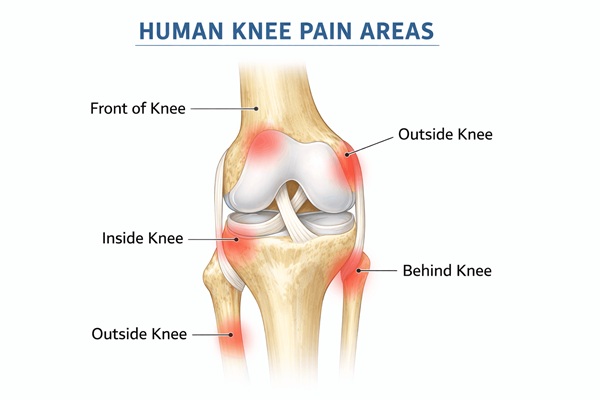
Pain levels can vary widely. Some people experience mild stiffness in the morning while others notice more persistent inflammation after activity. Severe swelling, instability, or sharp pain should always be evaluated by a professional.
Some adults also experience morning knee pain after 50, where the knee feels stiff or sore when getting out of bed. This often happens because joints remain inactive during sleep and fluid circulation slows overnight, which can temporarily increase stiffness.
After age 40, two biological shifts take place:
- Hyaluronan Decline: Your synovium produces fewer hyaluronan molecules, causing synovial fluid to thin out. Instead of acting like protective gel, it becomes thin and watery.
- Cartilage Fraying: Without thick lubrication, the cartilage tread begins to fray under normal daily pressure.
This combination leads to micro-friction, localized warmth, tissue swelling, and stiffness—especially after prolonged sitting or sleeping.
Diagnostic Guide: Decoding Your Knee Pain Symptoms
Not all knee discomfort originates from the same tissue structure. Pinpointing where and when you experience symptoms helps identify whether the issue stems from cartilage breakdown, tendon inflammation, or ligament strain.
| Pain Location / Symptom | Primary Suspect Tissue | Typical Trigger Activities | Recommended Initial Approach |
|---|---|---|---|
| Front of Knee (Anterior) | Patellofemoral joint, Quadriceps tendon | Squatting, climbing stairs, standing from deep chairs | Quadriceps strengthening, hip flexor release |
| Inside of Knee (Medial) | Medial Meniscus, Medial Compartment Cartilage | Long walks, side-to-side movements, carrying loads | Offloading braces, foot arch support analysis |
| Outside of Knee (Lateral) | Iliotibial (IT) Band, Lateral Meniscus | Running down hills, repeated cycling, side steps | Foam rolling IT band, gluteus medius recruitment |
| Back of Knee (Posterior) | Popliteal muscle strain, Baker’s Cyst | Deep knee bending, fully extending the leg | Gentle calf stretches, joint effusion evaluation |
| Morning Stiffness (<30 min) | Early-stage Osteoarthritis (Fluid loss) | Getting out of bed, initial movement after rest | Gentle warm-up movements before standing |
4 Practical Strategies to Protect and Restore Your Knees
Managing joint health after 40 requires a comprehensive strategy that combines mechanical support, body weight optimization, targeted exercise, and cellular nutritional support.
1. Optimize Body Weight to Reduce Mechanical Load
Every extra pound of body weight places roughly 4 extra pounds of force across your knee joints with every single step. If you carry just 10 additional pounds, your knees experience an extra 40 pounds of force with each stride—compounding to tens of thousands of extra pounds every day.
Understanding how weight affects joint pain reveals how shedding even modest amounts of weight immediately unloads worn cartilage, easing joint inflammation.
2. Implement Targeted Low-Impact Physical Therapy
High-impact running or jump training can irritate worn joint surfaces, but completely avoiding movement speeds up joint decline. Focus on low-impact exercise that strengthens the muscles supporting the knee joint without driving harsh impact through the bones.
To build a safe routine, integrate structured low-impact exercises for bad knees. Good options include:
- Straight-Leg Raises: Isolates and builds the quadriceps without bending or compressing the knee.
- Terminal Knee Extensions (TKEs): Uses resistance bands to strengthen the final degrees of knee extension safely.
- Stationary Cycling: Smooth, continuous pedaling circulates synovial fluid while building cardiovascular endurance.
3. Avoid Common Biomechanical Traps
To keep your recovery on track, avoid these common habits that aggravate 40+ joints:
- Deep Unassisted Squats: Places maximum load on worn patellofemoral cartilage. Use a chair for support until quadriceps strength improves.
- Extended Inactivity: Sitting for hours thins the joint fluid, making the joint feel stiff and locked when you stand up.
- Overreliance on NSAIDs: Painkillers can temporarily mask pain signals without addressing structural degeneration or supporting cartilage health.
Nutritional Restoration: The Role of Synovial Fluid
Beyond physical exercise and biomechanical adjustments, real long-term joint health depends on protecting the fluid environment inside the joint capsule itself.
As we age, the body’s natural production of hyaluronan drops off rapidly. This drop weakens the joint matrix, leaving delicate cartilage surfaces unprotected during daily movements.
Targeted Nutritional Support: Joint Genesis
To help slow down age-related joint changes, specialized nutritional approaches focus on replenishing the joint’s natural fluid environment rather than simply masking discomfort.
One formula targeting this mechanism is Joint Genesis.
Joint Genesis includes Mobilee®, a patented ingredient shown in clinical settings to increase hyaluronan concentration in synovial fluid up to 10-fold. By restoring thick, protective joint lubrication, it reduces internal friction and helps cushion cartilage against daily wear and tear.
The formula also incorporates Satsumaimo-derived phytochemicals, antioxidant compounds known to help protect hyaluronan molecules from breakdown caused by everyday oxidative stress. Together, these ingredients target the root biological causes of joint stiffness and discomfort after 40.
When to See an Orthopedic Specialist
While most age-related knee issues improve with lifestyle adjustments, targeted exercise, and proper nutrition, certain symptoms require prompt medical evaluation.
Consult an orthopedic doctor right away if you notice any of these warning signs:
- Inability to Bear Weight: You cannot take three steps without the knee giving way or causing severe pain.
- Rapid-Onset Swelling: Visible, tight swelling that develops within 2 to 3 hours after an activity or injury.
- Mechanical Catching or Locking: The knee joint physically catches, clicks sharply, or locks in a bent position.
- Redness and Heat: Warmth and noticeable redness around the joint capsule, especially accompanied by a fever.
- Nighttime Pain: Severe pain that wakes you up and doesn’t ease up regardless of position.
Recovery Timelines and Possible Complications
Recovery timelines vary widely depending on the source of the pain.
Mild inflammation may improve within a few weeks with rest and strengthening exercises.
Muscle imbalance related knee pain often improves over several months with guided physical therapy.
More advanced joint degeneration may require longer treatment plans involving rehabilitation, medication management, or other interventions recommended by healthcare professionals.
Ignoring persistent symptoms may lead to worsening stiffness, decreased mobility, and greater joint stress over time.
Submit Your Story
Many readers find comfort in hearing how others have navigated similar challenges.
If you have experienced knee pain after 40 and found strategies that helped you regain comfort or mobility, we invite you to share your story. Your experience may help others understand that recovery and improvement are possible.
You can submit your experience through our contact page so we can learn from real journeys and build a supportive community around joint health.
Insights From Reader Experiences
From feedback shared by readers of joint health articles, several common patterns appear.
Many people notice knee stiffness in the morning that improves after gentle movement. Others report discomfort after long periods of sitting at work. A significant number say strengthening their thigh muscles helped reduce daily knee strain.
These insights highlight that small lifestyle adjustments can often make a meaningful difference.
Frequently Asked Questions
Is knee pain after 40 normal?
Yes, knee pain after 40 is common because the knee joint experiences gradual wear over time. Cartilage may become thinner, muscles around the knee can weaken, and past injuries may start causing discomfort. According to the American Academy of Orthopaedic Surgeons, age-related joint changes and reduced muscle strength often contribute to knee pain in adults over 40. Regular exercise, maintaining a healthy weight, and strengthening the surrounding muscles can help reduce symptoms.
What is the most common cause of knee pain after 40?
One of the most common causes of knee pain after 40 is early osteoarthritis, a condition where cartilage in the knee gradually wears down. Other causes include weak quadriceps muscles, previous injuries, inflammation, or overuse of the joint. The Mayo Clinic explains that knee pain can also occur when the kneecap does not move smoothly over the thigh bone during movement.
Can exercise help knee pain after 40?
Yes, the right exercises can significantly improve knee pain after 40. Strengthening the quadriceps, hamstrings, and hip muscles helps stabilize the knee joint and reduce pressure on cartilage. Low-impact exercises such as walking, cycling, straight leg raises, and step-ups are commonly recommended by physical therapists to improve mobility and reduce knee discomfort.
Why does knee pain after 40 feel worse when going down stairs?
Knee pain after 40 often feels worse when going down stairs because the knee must absorb more body weight while controlling movement. During stair descent, the quadriceps muscles contract to stabilize the knee and prevent the body from falling forward. This movement increases pressure on the kneecap and joint surface, which may cause pain if the cartilage or surrounding tissues are irritated.
When should I see a doctor for knee pain after 40?
You should see a doctor for knee pain after 40 if the pain lasts several weeks, becomes severe, or causes swelling, instability, or difficulty bearing weight. Medical evaluation is also recommended if the knee locks, gives way, or if the pain occurs after an injury. An orthopedic specialist can examine the joint and recommend appropriate treatment options.
How This Article Was Created
This article was developed using research from established orthopedic and musculoskeletal health resources. Information was reviewed from reputable organizations such as the American Academy of Orthopaedic Surgeons, physical therapy guidelines, and widely recognized medical literature on joint health and aging.
Expert insights from orthopedic specialists and physical therapists were considered when explaining common causes and recommended care approaches. The goal is to provide clear, responsible educational information that helps readers understand their options while encouraging professional medical guidance when necessary.
Verified Medical Sources
Arthritis Foundation: Understanding Cartilage Wear and Synovial Health
National Institute of Arthritis and Musculoskeletal and Skin Diseases (NIAMS): Osteoarthritis Overview & Management
Centers for Disease Control and Prevention (CDC): Joint Health, Physical Activity, and Arthritis Risk Factors
Mayo Clinic Medical Reference: Knee Pain: Causes, Diagnostics, and Conservative Treatments
About the Author
Jennifer Collins
Health Research Editor, JointReliefJournal
Jennifer Collins focuses on translating complex health research into practical, easy to understand information for adults over 40. Her work centers on joint health, mobility, and long term wellness strategies that help readers make informed decisions about their daily habits.
Disclaimer
This article is intended for educational purposes only and should not replace professional medical advice. Always consult a qualified healthcare provider regarding any concerns about knee pain or other health conditions.