
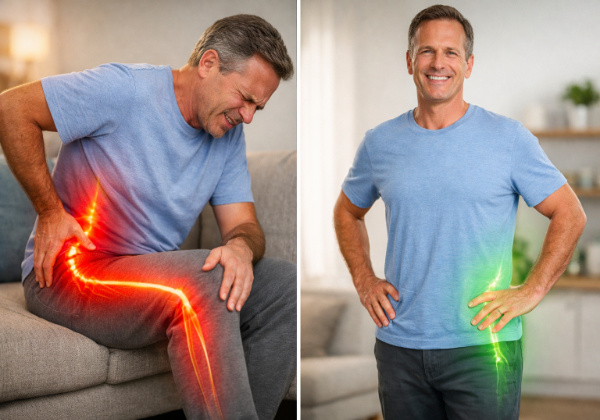
Hip pain can be annoying. But when it starts radiating down your leg to your knee, it can feel confusing—and sometimes scary. If you’re over 40, this type of pain becomes more common due to natural wear and tear, posture habits, and nerve-related issues.
Let’s break it down in a clear, practical way so you understand what’s happening in your body—and what you can actually do about it.
Table of Contents
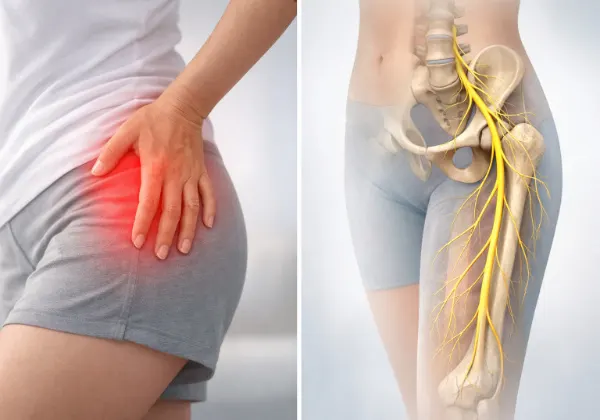
What Does “Hip Pain Radiating Down Leg to Knee” Really Mean?
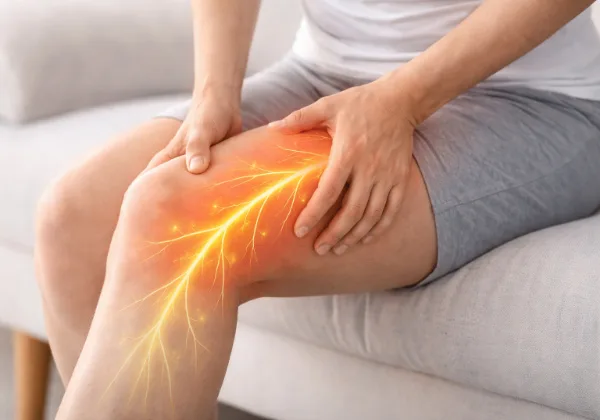
When pain travels from your hip down toward your knee, it usually doesn’t stay in one place. Instead, it follows a path along nerves, muscles, or joints.
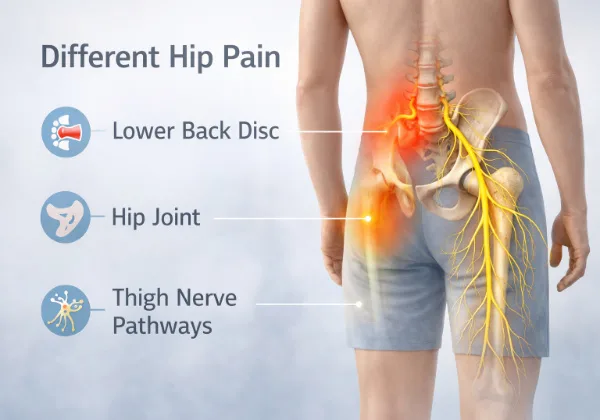
Doctors often call this referred pain or radiating pain. It means the source of the problem may not be where you feel it most.
For example:
- The pain may start in your hip joint
- But you feel it in your thigh or knee
- Or even along the side or back of your leg
This happens because nerves connect these areas.
Why This Happens More After 40
Once you cross 40, your body changes—no surprise there. But a few specific things increase your chances of experiencing hip pain radiating down leg to knee:
1. Natural Joint Wear and Tear
Cartilage begins to thin with age. This can lead to osteoarthritis, especially in the hip.
2. Muscle Imbalances
Sitting more (hello desk jobs) weakens your glutes and tightens hip flexors. This creates stress on the hip joint.
3. Reduced Flexibility
Tight muscles can compress nerves, especially around the hips and lower back.
4. Spine Changes
Discs in your lower back may bulge or degenerate, affecting nearby nerves.
Common Causes You Should Know
Understanding the root cause is key. Here are the most common conditions linked to hip pain radiating down leg to knee:
1. Sciatica (Most Common Cause)
Sciatica occurs when the sciatic nerve gets compressed or irritated.
Signs:
- Sharp or burning pain from hip to leg
- Tingling or numbness
- Pain worse when sitting
The sciatic nerve runs from your lower back through your hip and down your leg—so it explains the radiating pattern perfectly.
2. Hip Osteoarthritis
This condition develops when cartilage in your hip joint wears down.
Signs:
- Deep aching pain in the hip or groin
- Pain that spreads to thigh or knee
- Stiffness, especially in the morning
Many people mistake knee pain for a knee issue, but the hip is often the real culprit.
3. Piriformis Syndrome
The piriformis muscle sits deep in your hip. If it tightens, it can press on the sciatic nerve.
Signs:
- Pain in the buttock area
- Pain traveling down the leg
- Discomfort after sitting for long periods
4. Bursitis
Bursae are fluid-filled sacs that reduce friction in joints. When they get inflamed, pain follows.
Signs:
- Outer hip pain
- Pain that worsens when lying on one side
- Pain spreading toward the thigh
5. Herniated Disc
A slipped or bulging disc in your lower spine can press on nerves.
Signs:
- Radiating pain from back to hip and leg
- Weakness in leg muscles
- Pain increases with movement
Tight hip muscles from prolonged sitting can make conditions like this worse—here’s a simple routine to Stop Hip Flexor Pain From Sitting All Day: Proven 10-Min Fix and relieve pressure on the sciatic nerve.
Symptoms You Shouldn’t Ignore
Not all hip pain is equal. Some signs need attention:
- Persistent pain lasting more than a few weeks
- Numbness or tingling in the leg
- Weakness or difficulty walking
- Pain that worsens at night
If you notice these, don’t ignore them. Your body is asking for help.
How Doctors Diagnose the Problem
A proper diagnosis matters. Doctors usually combine:
Physical Exam
They check your range of motion, strength, and pain triggers.
Imaging Tests
- X-rays for joint issues
- MRI for nerves and soft tissues
Medical History
Your daily habits, activity level, and past injuries play a big role.
Simple At-Home Relief Strategies
Before you panic (or Google yourself into a spiral), try these proven methods:
1. Move More, Sit Less
Sitting too long worsens most hip-related pain.
Try standing or walking every 30–45 minutes.
2. Gentle Stretching
Focus on:
- Hip flexors
- Hamstrings
- Glutes
Consistency matters more than intensity.
3. Strengthen Key Muscles
Strong muscles support your joints.
Best exercises:
- Glute bridges
- Clamshells
- Bodyweight squats
4. Use Heat or Ice
- Ice helps reduce inflammation
- Heat relaxes tight muscles
Use based on what feels better for you.
5. Improve Posture
Bad posture puts stress on your hips and spine.
Quick fix:
- Keep feet flat
- Sit upright
- Avoid slouching
When You Should See a Doctor
Let’s keep it real—some cases need professional care.
See a doctor if:
- Pain lasts more than 2–4 weeks
- You feel numbness or weakness
- Pain affects your daily life
Early treatment prevents bigger problems later.
Medical Treatment Options
If home remedies don’t help, doctors may recommend:
Physical Therapy
Customized exercises improve strength and mobility.
Medications
Anti-inflammatory drugs reduce pain and swelling.
Injections
Corticosteroid injections help reduce severe inflammation.
Surgery (Rare Cases)
Only considered if other treatments fail.
Prevention Tips That Actually Work
You don’t need extreme routines. Small habits make a big difference.
Stay Active
Regular movement keeps joints healthy.
Maintain a Healthy Weight
Extra weight puts stress on hips and knees.
Stretch Daily
Even 5–10 minutes helps.
Strength Train Weekly
Focus on hips, core, and legs.
The Hidden Link Between Hip and Knee Pain
Here’s something most people don’t realize:
Your hip and knee work as a team.
When your hip doesn’t function properly:
- Your knee compensates
- Extra stress builds up
- Pain shows up in both areas
That’s why treating only the knee often doesn’t solve the problem.
A Quick Reality Check (With a Little Humor)
If your daily routine looks like:
- Sitting for hours
- Minimal movement
- Occasional “I’ll stretch tomorrow”
Then your hips are probably not happy.
The good news?
Your body responds quickly to small changes. Even a 10-minute routine can make a noticeable difference.
Frequently Asked Questions
What causes hip pain radiating down leg to knee after 40?
Hip pain radiating down leg to knee after 40 is often caused by nerve compression, joint wear, or muscle imbalance. Common conditions include sciatica, hip osteoarthritis, and herniated discs. As you age, reduced flexibility and prolonged sitting can also increase pressure on the hip and surrounding nerves.
Is hip pain radiating down leg to knee a sign of sciatica?
Yes, in many cases, hip pain radiating down leg to knee is linked to sciatica. This happens when the sciatic nerve gets irritated or compressed, causing sharp, burning, or tingling pain that travels from the hip down the leg. However, other conditions like bursitis or arthritis can also cause similar symptoms.
When should I worry about hip pain radiating down leg to knee after 40?
You should take hip pain radiating down leg to knee seriously if it lasts more than a few weeks, worsens over time, or includes numbness, weakness, or difficulty walking. These symptoms may indicate nerve involvement or joint damage and require medical evaluation.
How can I relieve hip pain radiating down leg to knee at home?
You can relieve hip pain radiating down leg to knee with simple steps like stretching tight hip muscles, strengthening your glutes, improving posture, and avoiding long periods of sitting. Applying heat or ice can also help reduce pain and inflammation.
Can hip problems cause knee pain without knee injury?
Yes, hip issues can cause knee pain even without a knee injury. The hip and knee are closely connected through muscles and nerves. When the hip joint is weak or inflamed, pain can travel down to the knee, which often leads to misdiagnosis if the hip is not properly assessed.
Final Thoughts
Hip pain radiating down leg to knee is common after 40—but it’s not something you should ignore or just “live with.”
In many cases, the cause is manageable:
- Sciatica
- Muscle tightness
- Joint wear and tear
With the right mix of movement, strength, and awareness, you can reduce pain and improve your quality of life.
Start small. Stay consistent. And listen to your body—it’s smarter than you think.
Sources
- National Institute of Arthritis and Musculoskeletal and Skin Diseases (NIAMS)
- Mayo Clinic – Sciatica
- American Academy of Orthopaedic Surgeons (AAOS)
- Cleveland Clinic – Hip Pain
- Harvard Health Publishing
Author Bio
Jennifer Collins is a wellness researcher and natural health writer focused on adults over 40. With 3+ years of experience in digital health content, Jennifer specializes in making science-backed nutrition and lifestyle strategies easy to follow and apply.
Health Disclaimer
This content is for informational purposes only and is not intended to diagnose, treat, or cure any disease. Always consult your healthcare provider before making changes to your diet or health routine. This article may include affiliate links, which come at no extra cost to you.