

Dr. Preet Pal SB, MD
Physician specializing in diabetes, metabolic health, and joint care management. Read More About Dr. Preet Pal’s Medical Credentials & Editorial Integrity Here
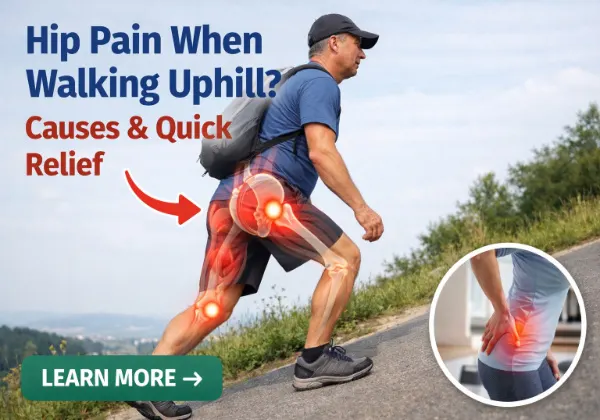
Experiencing sharp or dull hip pain when walking uphill is a clear signal that your hip joint, surrounding tendons, or lubricating fluid are under excessive biomechanical strain. Walking on an incline forces your hip into deeper flexion while demanding double the muscular output from your glutes, hip flexors, and hamstring complex. Understanding why incline movement triggers this discomfort allows you to take targeted action before minor tissue irritation turns into chronic joint wear.
Quick Action Guide: Managing Hip Pain When Walking Uphill
- Identify the Exact Pain Location: Deep groin pain points to hip osteoarthritis or labral tears. Outer hip pain indicates gluteal tendinopathy or bursitis. Posterior pain usually stems from lumbar spine nerve irritation.
- Modify Incline Biomechanics Immediately: Shorten your stride length on inclines, lean slightly forward from the ankles (not the waist), and avoid pushing through sharp joint pain.
- Restore Synovial Fluid Cushioning and Muscle Balance: Rehydrate joint fluid with targeted nutrients like hyaluronic acid, strengthen gluteal stabilizers, and perform low-impact hip mobility drills daily.
Why Incline Walking Triggers Severe Hip Discomfort
Walking on flat ground distributes your body weight evenly across the hip’s ball-and-socket structure. However, stepping onto an incline fundamentally alters joint mechanics.
Think of your hip joint like a heavy door hinge. On a flat floor, the hinge swings smoothly with minimal resistance. When you walk uphill, it is like trying to force that same door open against a heavy hydraulic spring. Your hip must bend deeper into flexion while pushing your entire body weight upward against gravity.
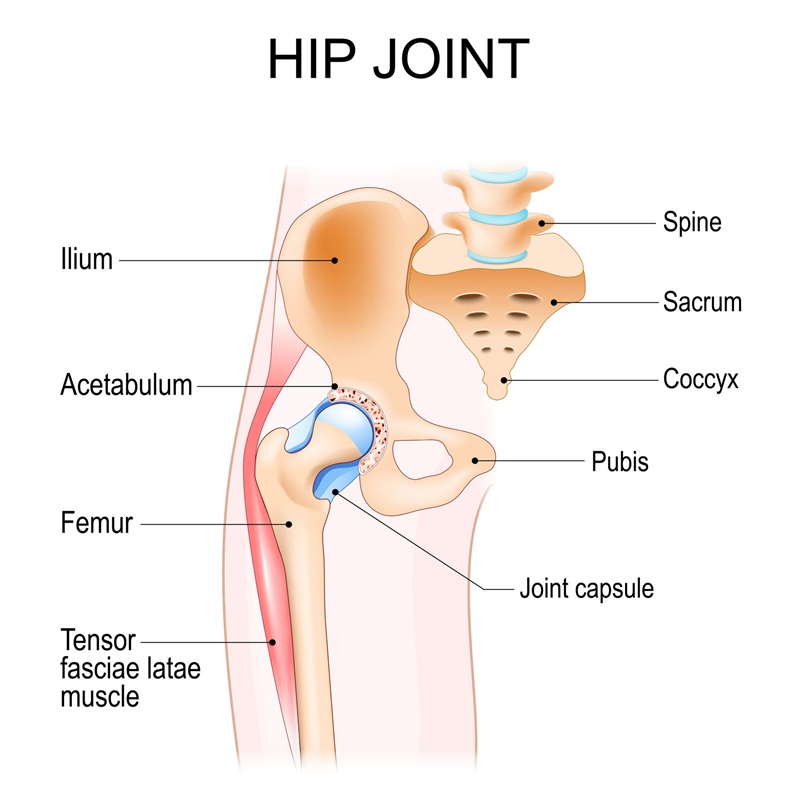
This added leverage dramatically increases intra-articular pressure within the acetabulum (hip socket). If your cartilage is thinned or your synovial fluid has lost its thick, shock-absorbing viscosity, this added load drives bone closer to bone, triggering instant pain signals.
Primary Anatomical Causes of Pain When Walking Uphill
Not all hip discomfort is created equal. The precise location of your symptoms during an incline walk reveals which anatomical structure is under stress.
1. Hip Osteoarthritis (Cartilage Breakdown)
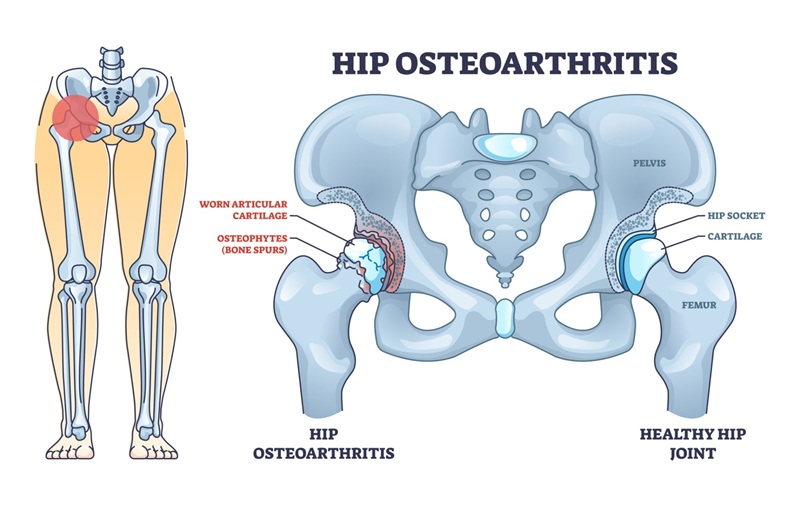
Hip osteoarthritis is the leading cause of deep groin or anterior hip stiffness. As protective articular cartilage wears down, the joint space narrows. Walking uphill forces the femoral head against vulnerable, unbuffered socket bone.
When deep intra-articular inflammation develops, pain often radiates beyond the joint capsule. It is common to experience symptoms where hip pain radiates down the leg after 50, often mistaking primary hip joint degeneration for simple sciatica or muscle fatigue.
2. Gluteal Tendinopathy and Trochanteric Bursitis
Located on the outer point of your hip, the trochanteric bursa acts as a fluid-filled cushion between bone and tendon. When gluteus medius tendons become overloaded from uphill climbing, they press tightly against the bursa, causing burning outer hip pain.
3. Hip Flexor Strain (Iliopsoas Tightness)
Your iliopsoas muscle works overtime during incline walking to lift your leg forward. If this tendon is short or chronically inflamed, every uphill step pulls forcefully on its attachment site at the front of the pelvis.
4. Acetabular Labral Tears
The labrum is a ring of cartilage that seals the hip socket like a rubber gasket. Incline flexion can pinch a torn labrum, resulting in sharp, catching groin pain during steps.
Differentiating Causes: Symptom Comparison Matrix
Evaluating how and where your symptoms present helps narrow down the underlying root cause.
| Condition | Pain Location | Primary Trigger | Key Physical Sign |
| Hip Osteoarthritis | Deep groin, inner thigh | Incline walking, sitting low | Stiffness lasting under 30 mins in the morning |
| Gluteal Tendinopathy | Lateral (outer) hip | Climbing stairs, sleeping on side | Tenderness directly over the bony outer hip point |
| Iliopsoas Bursitis | Upper anterior thigh | Lifting knee high, steep inclines | Pain during initial leg push-off phase |
| Lumbar Radiculopathy | Upper buttock, back of hip | Incline posture, forward bending | Numbness, tingling, or shooting pain down the back of the leg |
Dr. Preet Pal’s Clinical Perspective
“In clinical orthopedic practice, patients frequently confuse deep hip joint degeneration with simple muscle strains. If your pain centers squarely in the fold of your groin—what we call the ‘C-sign’—incline walking is compressing a joint that has lost its protective synovial fluid cushion. Addressing the fluid quality inside the socket is just as critical as strengthening the surrounding muscles.”
Diagnostic Evaluation: Finding the Root Cause
If incline walking consistently triggers hip distress, a structured clinical examination identifies the exact mechanism:
- Physical Range of Motion Testing: An orthopedic provider evaluates internal and external rotation (the FABER and FDIR tests) to reproduce intra-articular symptoms.
- Diagnostic Weight-Bearing X-rays: Plain radiographs reveal joint space narrowing, bone spur formation (osteophytes), and subchondral sclerosis.
- High-Resolution MRI or Arthrogram: Essential for visualizing soft-tissue structures like the acetabular labrum, gluteal tendons, and deep bursae.
If you find yourself constantly struggling with groin pain hip arthritis, getting a clear imaging assessment prevents unnecessary delays in restoring your mobility.
Immediate Relief and Corrective Biomechanics
You do not need to abandon walking entirely to protect your hips. Implementing immediate tactical adjustments keeps you active while reducing joint strain.
Adjust Your Incline Posture
- Shorten Your Stride: Taking smaller steps reduces the required hip flexion angle, keeping the femoral head safely centered within the socket.
- Hinge at the Ankles: Avoid bending forward at the waist. Bending at the waist pinches the anterior hip capsule. Keep your chest tall and lean forward slightly from your ankles.
- Engage Core Stabilizers: Lightly brace your lower abdominal muscles to keep your pelvis level, preventing lateral hip dropping on incline steps.
Active Rest and Mobility Routines
Incorporate gentle, non-weight-bearing mobility exercises into your morning routine. Practicing the best hip stretches for seniors helps lengthen tight hip flexors and improves capsule space without adding compressive gravitational load.
Clinical Spotlight: Restoring Synovial Cushioning for Incline Comfort
While physical therapy and stride modifications correct external movement patterns, internal joint lubrication dictates how comfortably bone glides against cartilage under heavy incline loads.
Joint Genesis: Science-Backed Synovial Fluid Restoration
For adults over 40 experiencing incline hip stiffness, Joint Genesis provides a targeted nutritional protocol focused on rehydrating degrading joint fluid.
As we age, the concentration of hyaluronan—the dense molecule responsible for making synovial fluid thick and gelatinous—declines rapidly. Without adequate hyaluronan, joint fluid thins out like water, leaving cartilage vulnerable to severe friction during steep walks.
- Rehydrates Thinned Synovial Fluid: Powered by Mobilee®, a clinically researched rooster comb extract rich in natural hyaluronic acid, it re-establishes thick, shock-absorbing fluid volume within the hip capsule.
- Combats Cartilage Breakdown: Integrates Pycnogenol®, a French maritime pine bark extract that neutralizes joint-degrading inflammatory free radicals.
- Inhibits Inflammatory Cascades: Features Boswellia Serrata and Ginger Root to downregulate COX-2 and 5-LOX enzymes, easing active joint soreness.
- Maximizes Systemic Bioavailability: Uses BioPerine® to ensure key botanical compounds are efficiently absorbed into the bloodstream and delivered directly to hip joint tissues.
By replenishing lost synovial fluid viscosity, Joint Genesis helps cushion the femur head against the acetabulum, making incline walking, stair climbing, and daily movement smooth and comfortable again.
Frequently Asked Questions
Why do I feel hip pain when walking uphill but not on flat ground?
Hip pain when walking uphill usually happens because your muscles and joints handle more load on an incline. Your glutes, hip flexors, and joints work harder, which can expose weakness, tightness, or poor walking mechanics that don’t show up on flat surfaces.
Is hip pain when walking uphill a sign of a serious problem?
Not always, but persistent hip pain when walking uphill can indicate conditions like hip bursitis, muscle imbalance, or early arthritis. If the pain lasts more than a few weeks or gets worse, it’s best to consult a medical professional for proper evaluation.
How can I stop hip pain when walking uphill quickly?
To reduce hip pain when walking uphill, focus on improving your walking posture, taking shorter steps, and strengthening your glutes. Stretching tight hip flexors and wearing supportive shoes can also provide quick relief and prevent further strain.
Which muscles cause hip pain when walking uphill?
Hip pain when walking uphill often comes from weak glutes, tight hip flexors, or an overworked iliotibial (IT) band. When these muscles don’t function properly, your hip joint takes extra stress, leading to discomfort or pain.
Should I keep walking if I have hip pain when walking uphill?
If the pain is mild, you can continue walking with reduced intensity and better form. However, if hip pain when walking uphill becomes sharp, persistent, or worsens over time, you should stop and allow your body to recover before resuming activity.
Verified Medical Sources
- American Academy of Orthopaedic Surgeons (AAOS): Osteoarthritis of the Hip Diagnosis and Management
- Centers for Disease Control and Prevention (CDC): Arthritis Basics and Joint Health Strategies
- Mayo Clinic Health Information: Hip Pain Causes, Diagnostics, and Treatment Options
- National Institute of Arthritis and Musculoskeletal and Skin Diseases (NIAMS): Questions and Answers About Hip Replacement and Joint Health
Author Bio
Jennifer Collins is a wellness researcher and natural health writer focused on adults over 40. With 3+ years of experience in digital health content, Jennifer specializes in making science-backed nutrition and lifestyle strategies easy to follow and apply.
Health Disclaimer
This content is for informational purposes only and is not intended to diagnose, treat, or cure any disease. Always consult your healthcare provider before making changes to your diet or health routine. This article may include affiliate links, which come at no extra cost to you.