


Dr. Preet Pal SB, MD
Physician specializing in diabetes, metabolic health, and joint care management. Read More About Dr. Preet Pal’s Medical Credentials & Editorial Integrity Here
Table of Contents
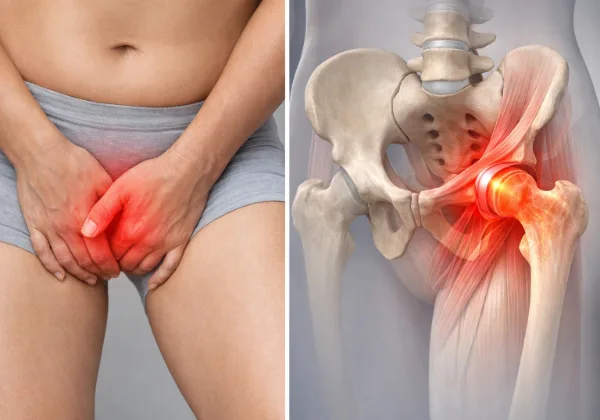
When persistent aching settles deep in the front of your fold, your first instinct is likely to suspect a pulled adductor muscle or sports hernia. However, medical literature confirms that true intra-articular hip issues rarely register on the outer buttock or side of the hip. Instead, groin pain hip arthritis is the primary classic presentation of hip joint cartilage degradation.
Because the ball-and-socket mechanism sits deep within the pelvis, structural wear and friction directly trigger pain receptors that radiate straight into the anterior crease of the leg. Identifying this underlying cause early allows for conservative management before mobility becomes severely restricted.
Recognize the Primary Symptom
Deep, interior aching localized in the anterior fold where the leg meets the pelvis indicates groin pain hip arthritis rather than a superficial groin muscle strain.
Observe Mechanical Triggers
Notice whether the pain intensifies during weight-bearing shifts, internal rotation of the femur, or after prolonged periods of sitting (the “gel phenomenon”).
Execute Non-Surgical Management
To learn how to stop groin pain from hip arthritis, combine low-impact mobility exercises, targeted cartilage-supporting topical interventions, and daily activity modifications.
Anatomy of the Anterior Crease: Why Hip Arthritis Strikes the Groin
To understand why a deteriorating hip joint manifests as front-of-hip discomfort, consider the mechanical anatomy of the coxofemoral (ball-and-socket) joint. The head of the femur fits tightly inside the acetabulum—a deep socket located near the front of the pelvic girdle.
When smooth hyaline cartilage begins to erode, bone-on-bone friction occurs directly behind the anterior joint capsule. Think of this cartilage like the tread on a high-mileage car tire. When the tread wears down to the rubber base, every bump on the road creates jarring friction. Similarly, as the natural cushioning inside the socket thins out, normal weight-bearing movements grind against sensitive nerve endings, sending intense alarm signals directly forward into the groin region.
In many individuals, structural wear does not stay isolated. Inflammatory signals from an arthritic hip can radiate, leading to complex symptoms like hip pain and lower back pain occurring simultaneously as the pelvis tilts to compensate for altered walking patterns.
Muscle Strain vs. Groin Pain Hip Arthritis: Key Clinical Differences
Misdiagnosing joint wear as a simple muscle tear is one of the most common delays in clinical orthopedics. While a groin strain typically follows a sudden athletic strain or awkward step, osteoarthritis develops gradually over months or years.
| Symptom / Feature | Muscle Strain (Adductor/Flexor) | Groin Pain Hip Arthritis (Osteoarthritis) |
|---|---|---|
| Pain Onset | Sudden, acute, tied to specific trauma | Gradual, chronic, progressive over time |
| Pain Depth | Superficial, easily localized by touch | Deep inside the crease; hard to pinpoint |
| Morning Stiffness | Minimal; worsens mainly during active movement | Severe; typically lasts 30–45 minutes upon waking |
| Internal Rotation | Generally painless unless stretched | Painful and severely restricted |
| Radiating Pattern | Remains localized to inner thigh muscle | Radiates to front thigh, knee, or deep pelvic region |
Dr. Preet Pal’s Clinical Perspective
“In my clinical practice, patients frequently arrive after spending months aggressively stretching their adductor muscles with zero relief. The moment we perform an internal rotation stress test on the hip and reproduce that exact, deep anterior ache, the lightbulb goes off. Understanding that groin discomfort is fundamentally a socket issue—not a muscle issue—is the single most crucial pivot point for effective treatment.”
When joint wear progresses without early intervention, pain often spreads down the anterior nerve pathways. It is not uncommon for adults over 50 to notice that their hip pain radiates down the leg after 50, mimicking nerve compression or sciatalgia.
How to Stop Groin Pain From Hip Arthritis: Proven Non-Surgical Strategies
Learning how to stop groin pain from hip arthritis requires an integrated approach focusing on joint decompression, inflammation control, and mechanical realignment.
1. Targeted Low-Impact Physical Therapy
Rest is critical during acute flare-ups, but complete immobility starves the joint cartilage of vital synovial fluid. Low-impact physical therapy strengthens surrounding stabilizer muscles (gluteus medius, iliopsoas, and deep rotators) to absorb shock before it hits the joint capsule.
- Glute Bridges: Lie flat on your back with knees bent, squeezing your glutes to lift the pelvis without arching the lower back.
- Seated Figure-4 Stretch: Cross the affected ankle over the opposite knee while seated upright, gently pressing down on the inner thigh to open the capsule.
- Low-Resistance Cycling: Utilizing smooth pedaling mechanics like cycling for knee and hip pain promotes synovial fluid circulation without imposing heavy vertical impact forces.
2. Daily Activity and Ergonomic Adjustments
- Modify Seating Heights: Avoid deep, low sofas that force hips past a 90-degree angle. Elevated seating reduces pinch stress on the anterior acetabulum.
- Optimize Gait Mechanics: Use cushioned, supportive footwear to dampen heel-strike forces before they travel up the kinetic chain.
3. Targeted Topical Interventions
For rapid, localized relief without the systemic side effects of oral NSAIDs, topical analgesics provide targeted comfort directly over the superficial nerve pathways of the groin.
An exceptional non-prescription option for joint management is Balmorex Pro. Formulated as a fast-absorbing, deep-penetrating cream, it targets acute stiffness and localized soreness around arthritic joints.
Why Dr. Pal Recommends a Targeted Topical Approach: Topical agents containing natural anti-inflammatory compounds and analgesics bypass the gastrointestinal system entirely. When applied over the anterior hip capsule, active botanicals help soothe irritated periarticular tissue and reduce local muscle guarding, enabling smoother joint articulation during physical therapy.
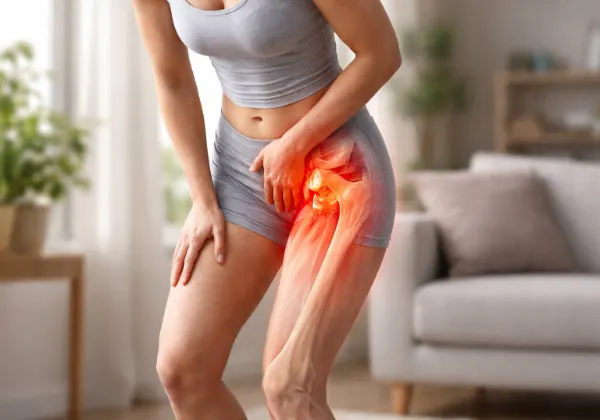
Common Causes of Hip Arthritis
Understanding the cause helps you manage the condition better.
The most common factors include:
- Age-related wear and tear
- Previous hip injuries
- Obesity (extra load on joints)
- Genetic predisposition
- Structural issues in the hip joint
You don’t need all of these. Even one risk factor can lead to arthritis over time.
When Should You Take Groin Pain Seriously?
Not every ache needs a doctor visit. But some signs should not be ignored.
Pay attention if:
- Pain lasts more than 2–3 weeks
- It worsens instead of improving
- You feel stiffness daily
- Walking becomes uncomfortable
- Pain affects sleep
These are strong indicators that the issue may not be muscular.
Frequently Asked Questions
Can hip arthritis cause groin pain?
Yes, hip arthritis is one of the most common causes of groin pain. In many cases, groin pain hip arthritis is the first noticeable symptom because the hip joint sits close to the groin area. As cartilage wears down, pain signals often travel to the groin instead of the outer hip.
How do I know if my groin pain is from hip arthritis or a muscle strain?
Groin pain from a muscle strain usually feels sharp and improves with rest. In contrast, groin pain hip arthritis tends to feel deep, stiff, and worse with movement like walking or standing. It may also come with reduced hip mobility and morning stiffness.
Where is groin pain located in hip arthritis?
In groin pain hip arthritis, the discomfort is typically felt deep in the inner groin area, near where the thigh meets the pelvis. The pain may also spread to the front of the thigh, buttocks, or even the knee, making it harder to identify the exact source.
What are the early signs of groin pain hip arthritis?
Early signs of groin pain hip arthritis include mild groin discomfort after activity, stiffness in the hip joint, reduced range of motion, and pain when getting up from sitting. These symptoms often start gradually and worsen over time if ignored.
Can groin pain from hip arthritis be treated without surgery?
Yes, many cases of groin pain hip arthritis can be managed without surgery. Treatment often includes low-impact exercise, weight management, physical therapy, and anti-inflammatory medications. Surgery is usually considered only when symptoms become severe and limit daily activities.
Final Thoughts
Groin pain isn’t always what it seems. When it becomes persistent, deep, and movement-related, the hip joint often plays a role.
The connection between groin pain hip arthritis is not rare—it’s just under-recognized.
The good news? Early awareness leads to better outcomes.
Listen to your body. Act early. And don’t settle for guesswork when your joints are asking for attention.
Verified Medical Sources
American Academy of Orthopaedic Surgeons (AAOS): Osteoarthritis of the Hip Clinical Guidelines
National Institute of Arthritis and Musculoskeletal and Skin Diseases (NIAMS): Hip Replacement and Arthritis Overview
Mayo Clinic: Hip Osteoarthritis Diagnostics and Treatment
Arthritis Foundation: Managing Anterior Hip and Groin Joint Pain
Author Bio
Jennifer Collins is a wellness researcher and natural health writer focused on adults over 40. With 3+ years of experience in digital health content, Jennifer specializes in making science-backed nutrition and lifestyle strategies easy to follow and apply.
Health Disclaimer
This content is for informational purposes only and is not intended to diagnose, treat, or cure any disease. Always consult your healthcare provider before making changes to your diet or health routine. This article may include affiliate links, which come at no extra cost to you.