
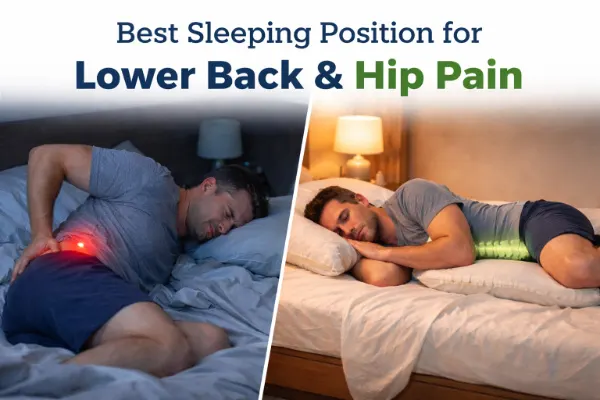
Lower back and hip pain can turn a good night’s sleep into a frustrating experience. You toss, you turn, and somehow wake up feeling worse than before. If that sounds familiar, you are not alone. Millions of people struggle to find the best sleeping position for lower back and hip pain, and the wrong posture at night often makes things worse.
The good news is simple. Small changes in how you sleep can reduce pressure on your spine and hips, improve alignment, and help your body recover overnight. This guide breaks everything down in a clear, practical, and evidence-based way so you can finally sleep better and wake up pain-free.
Table of Contents
Why Sleeping Position Matters for Back and Hip Pain
Your spine has a natural curve, and your hips support much of your body weight. When you sleep in a poor position, you place uneven pressure on these areas.
Research published by the National Institutes of Health (NIH) shows that spinal alignment plays a key role in reducing musculoskeletal pain. When your spine stays neutral, your muscles relax instead of compensating all night.
A bad sleeping posture can:
- Strain lower back muscles
- Compress hip joints
- Increase inflammation
- Reduce blood circulation
On the other hand, the best sleeping position for lower back and hip pain keeps your body aligned and supported.
The Best Sleeping Position for Lower Back and Hip Pain
Let’s get straight to the point. The most recommended sleeping positions are:
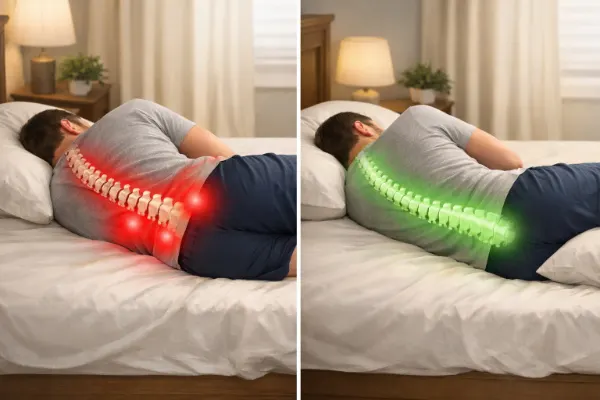
1. Side Sleeping with a Pillow Between Your Knees
This position works for most people with both lower back and hip pain.
When you lie on your side, your spine stays more neutral compared to other positions. Adding a pillow between your knees keeps your hips aligned and prevents your top leg from pulling your spine out of position.
Why it works:
- Reduces pressure on the lower back
- Keeps hips level
- Prevents spinal twisting
How to do it correctly:
Lie on your side, slightly bend your knees, and place a firm pillow between them. Keep your ears, shoulders, and hips in a straight line.
This is widely considered the best sleeping position for lower back and hip pain, especially for people with sciatica or hip bursitis.
2. Fetal Position for Herniated Discs
If you deal with a herniated disc, the fetal position may help.
Curling your body slightly opens up the space between your vertebrae. That reduces pressure on nerves and eases pain.
Tips:
- Do not curl too tightly
- Keep your spine relaxed
- Use a supportive pillow for your neck
This variation still counts as one of the best sleeping positions for lower back and hip pain when nerve compression is involved.
3. Back Sleeping with a Pillow Under Your Knees
Sleeping on your back spreads your weight evenly across your body. It reduces pressure points and supports spinal alignment.
Adding a pillow under your knees helps maintain the natural curve of your lower back.
Benefits:
- Keeps spine neutral
- Reduces lower back tension
- Minimizes hip pressure
How to set it up:
Lie flat on your back, place a pillow under your knees, and use a medium-firm pillow under your head.
For many people, this is the second-best option after side sleeping when searching for the best sleeping position for lower back and hip pain.
4. Reclined Sleeping Position
If you have severe hip pain, a slightly reclined position can help.
You can achieve this with an adjustable bed or a wedge pillow. This position reduces pressure on the spine and hips by distributing body weight more evenly.
It works especially well for:
- Degenerative disc disease
- Hip arthritis
- Post-surgery recovery
Sleeping Positions You Should Avoid
Not all positions support your body. Some actually worsen pain.
1. Sleeping on Your Stomach
This is the worst position for lower back and hip pain.
It forces your spine into an unnatural curve and strains your neck. It also compresses your hips into the mattress.
Studies from Harvard Health Publishing highlight that stomach sleeping increases spinal stress and often leads to chronic discomfort.
If you cannot avoid it, place a thin pillow under your pelvis to reduce strain. Still, switching positions remains the better option.
2. Twisted Sleeping Positions
Sleeping with your body twisted or one leg pulled far forward can misalign your spine.
This position increases pressure on your hips and lower back. Over time, it can worsen pain and stiffness.
How Your Mattress Affects Pain
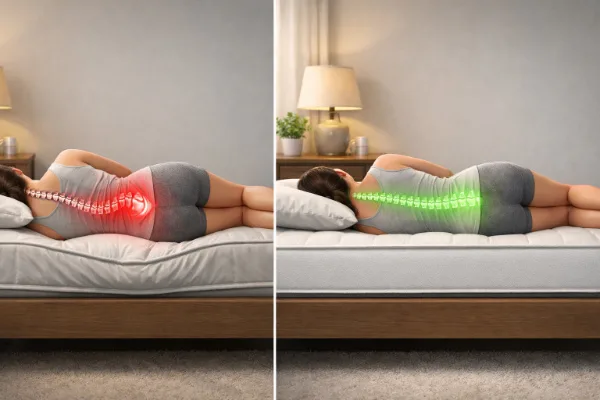
Even the best sleeping position for lower back and hip pain will not help if your mattress does not support your body.
According to research published in the Journal of Chiropractic Medicine, medium-firm mattresses improve sleep quality and reduce back pain.
What to look for:
- Medium-firm support
- Even weight distribution
- Pressure relief for hips and shoulders
A mattress that is too soft allows your body to sink. A mattress that is too firm creates pressure points.
Choosing the Right Pillow
Your pillow matters more than you think.
A poor pillow can misalign your neck and spine, even if you use the best sleeping position for lower back and hip pain.
Side sleepers:
Use a thick pillow that fills the space between your head and shoulder.
Back sleepers:
Choose a medium-loft pillow that supports the natural curve of your neck.
Extra tip:
Knee pillows or body pillows can improve alignment and reduce hip strain.
Tips to Improve Sleep with Lower Back and Hip Pain
Finding the best sleeping position for lower back and hip pain is just one part of the solution. These simple habits can make a big difference.
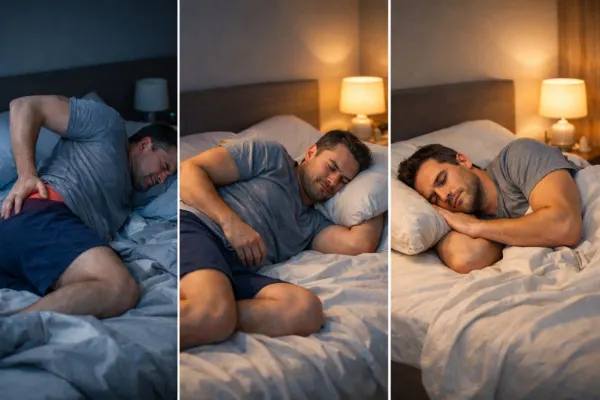
Keep Your Spine Neutral
Always aim for a straight line from your head to your hips. Avoid bending or twisting.
Stretch Before Bed
Gentle stretches relax your muscles and reduce stiffness.
Stay Active During the Day
Regular movement strengthens muscles that support your spine and hips.
Maintain a Healthy Weight
Excess weight increases pressure on your joints, especially the hips and lower back.
Common Causes of Lower Back and Hip Pain
Understanding the root cause helps you choose the right sleeping position.
1. Sciatica
Sciatica causes sharp pain that travels from your lower back down your leg. Side sleeping with a pillow between your knees often helps.
2. Arthritis
Hip arthritis leads to joint stiffness and inflammation. Back sleeping with knee support works well here.
3. Muscle Strain
Poor posture, lifting heavy objects, or sitting too long can strain muscles. Proper sleeping alignment speeds up recovery.
4. Herniated Disc
This condition benefits from the fetal position because it reduces nerve pressure.
If your pain feels deeper or becomes more frequent with age, it may be linked to spinal conditions like degenerative disc issues. In that case, this detailed guide on Degenerative Disc Disease Joint Pain After 50: Full Guide can help you understand the root cause.
When to See a Doctor
Sometimes, changing your sleeping position is not enough.
You should consult a healthcare professional if:
- Pain lasts more than a few weeks
- Pain worsens at night
- You experience numbness or tingling
- Movement becomes difficult
A doctor can identify the exact cause and recommend treatment.
How Long Does It Take to See Results?
You may notice improvements within a few nights after switching to the best sleeping position for lower back and hip pain.
However, long-term relief usually takes a few weeks. Your body needs time to adjust to better alignment.
Consistency matters. Stick with the right posture every night.
Frequently Asked Questions
What is the best sleeping position for lower back and hip pain?
The best sleeping position for lower back and hip pain is sleeping on your side with a pillow between your knees. This position keeps your spine aligned and reduces pressure on your hips. Back sleeping with a pillow under your knees also works well for many people.
Is sleeping on your back good for lower back and hip pain?
Yes, sleeping on your back can be a good option if done correctly. To make it the best sleeping position for lower back and hip pain, place a pillow under your knees. This helps maintain the natural curve of your spine and reduces stress on your lower back.
Why does my lower back and hip pain get worse at night?
Lower back and hip pain often feels worse at night because your body stays in one position for long periods. Poor sleeping posture and lack of support can increase pressure on joints and muscles. Choosing the best sleeping position for lower back and hip pain can help reduce this discomfort.
Is it bad to sleep on your stomach if you have lower back and hip pain?
Yes, stomach sleeping is not recommended. It can strain your spine and put extra pressure on your hips. If you want to find the best sleeping position for lower back and hip pain, you should avoid sleeping on your stomach and switch to side or back sleeping.
How can I improve my sleep quality with lower back and hip pain?
To improve sleep quality, use a supportive mattress, choose the best sleeping position for lower back and hip pain, and keep your spine aligned. Adding pillows for support and doing light stretching before bed can also help reduce pain and improve comfort.
Final Thoughts
Finding the best sleeping position for lower back and hip pain can transform your sleep quality and overall health.
Side sleeping with a pillow between your knees stands out as the most effective option for most people. Back sleeping with knee support comes close behind. Avoid stomach sleeping whenever possible.
Small adjustments create big results. Combine the right sleeping position with a supportive mattress, proper pillow, and healthy habits. Your body will thank you every morning.
Sources
- National Institutes of Health (NIH)
- Harvard Health Publishing
- Journal of Chiropractic Medicine
- Sleep Foundation
- Cleveland Clinic
Author Bio
Jennifer Collins is a wellness researcher and natural health writer focused on adults over 40. With 3+ years of experience in digital health content, Jennifer specializes in making science-backed nutrition and lifestyle strategies easy to follow and apply.
Health Disclaimer
This content is for informational purposes only and is not intended to diagnose, treat, or cure any disease. Always consult your healthcare provider before making changes to your diet or health routine. This article may include affiliate links, which come at no extra cost to you.