
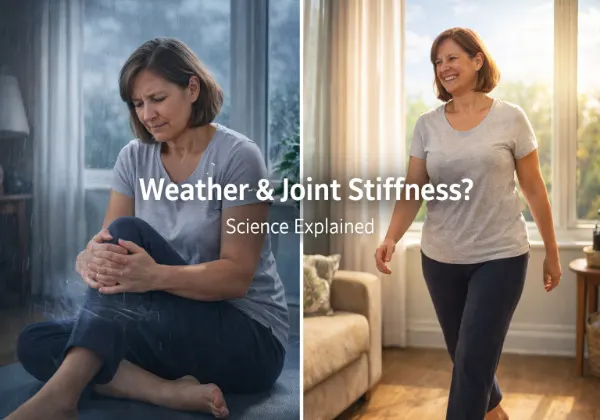
Does Weather Affect Joint Stiffness? If you’ve ever said, “I can feel the rain coming in my knees,” you’re not alone. Many people strongly believe that weather affects joint stiffness. But is this just a myth passed down through generations, or is there real science behind it?
In this article, we’ll break down the truth using research-backed evidence. We’ll explain how weather affects your joints, why some people feel it more than others, and what you can actually do about it.
Table of Contents
Why This Topic Matters More Than Ever
Joint stiffness is not just a minor inconvenience. It affects mobility, sleep quality, and overall well-being. Millions of adults, especially those over 40, deal with joint discomfort daily.
At the same time, weather patterns are becoming more unpredictable. This has made people ask more often: does weather affect joint stiffness in a real, measurable way?
Understanding the connection can help you manage pain better instead of guessing what’s going on.

What Science Says About Weather and Joint Stiffness
Let’s get straight to the point. Research shows that weather can affect joint stiffness, but not in the same way for everyone.
Several studies have explored this link:
- A study published in the British Medical Journal (BMJ) found a small but noticeable association between humidity and joint pain in people with osteoarthritis.
- Research from Harvard Medical School suggests that changes in barometric pressure may influence how joints feel.
- The American College of Rheumatology states that many patients report weather-related symptoms, even though the exact mechanism is still being studied.
So yes, weather does affect joint stiffness, but the effect varies from person to person.
The Real Science: How Weather Affects Joint Stiffness
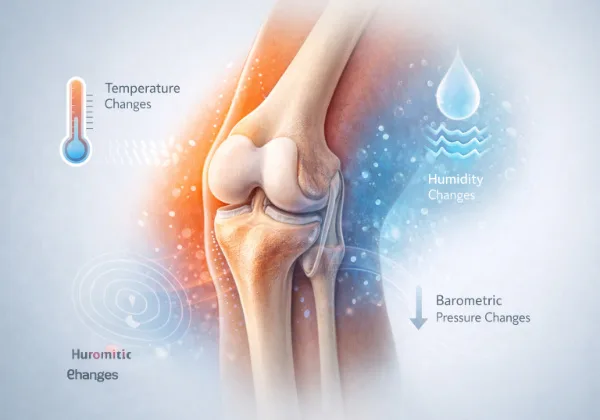
1. Barometric Pressure Changes
Barometric pressure refers to the weight of the air around you. When the pressure drops, like before a storm, your body can react.
Lower pressure may allow tissues around joints to expand slightly. This can increase pressure inside the joint and lead to stiffness or discomfort.
Think of it like this: your joints are in a sealed environment. When outside pressure drops, things inside may shift just enough to cause irritation.
This is one of the most widely accepted explanations for why weather affects joint stiffness.
2. Temperature Drops
Cold weather often gets the blame for stiff joints, and for good reason.
When temperatures fall:
- Muscles tighten
- Blood circulation may slow slightly
- Joint fluid becomes thicker
These changes can make movement feel harder and joints feel stiffer.
However, cold weather alone does not cause joint damage. It simply makes existing conditions more noticeable.
3. Humidity Levels
Humidity plays a subtle but important role.
High humidity can increase inflammation in some people, especially those with arthritis. It can also make tissues feel heavier or more sensitive.
The BMJ study mentioned earlier found that higher humidity combined with low pressure had the strongest link to joint discomfort.
4. Lack of Physical Activity
Weather doesn’t just affect your body directly. It also changes your behavior.
On cold or rainy days, people tend to:
- Move less
- Stay indoors
- Skip exercise
Less movement leads to more stiffness. Joints need regular motion to stay lubricated and flexible.
So sometimes, it’s not just the weather itself, but how you respond to it.
If you notice stiffness after long periods of sitting, especially as you age, this detailed guide on Joint Stiffness After Sitting Too Long Over 50: Proven Fast Relief Guide explains simple ways to get quick relief.
Who Feels It the Most?
Not everyone notices that weather affects joint stiffness. But certain groups report stronger effects.
People with Osteoarthritis
Osteoarthritis causes cartilage breakdown in joints. This makes joints more sensitive to pressure and temperature changes.
People with Rheumatoid Arthritis
This autoimmune condition involves inflammation. Weather shifts may trigger flare-ups in some individuals.
Older Adults
As we age, joint tissues lose elasticity. This can make joints more reactive to environmental changes.
Injury History
If you’ve had past injuries, those joints may respond more strongly to weather changes.
Common Myths About Weather and Joint Pain

Let’s clear up some confusion.
Myth 1: Cold Weather Damages Your Joints
Cold weather does not damage joints. It may increase stiffness, but it does not cause structural harm.
Myth 2: Everyone Feels Weather Changes the Same Way
Not true. Some people feel strong effects, while others feel nothing at all.
Myth 3: Rain Directly Causes Pain
Rain itself is not the cause. The drop in pressure before rain is the likely trigger.
What You Can Do to Reduce Joint Stiffness
If you feel that weather affects joint stiffness, you’re not stuck with it. You can take simple steps to stay comfortable.
Stay Physically Active
Movement keeps joints lubricated. Even light activity like walking or stretching can help.
Try to stay consistent, even when the weather is not ideal.
Keep Warm
Warmth helps relax muscles and improve blood flow.
- Wear layered clothing
- Use heating pads
- Take warm showers
Maintain a Healthy Weight
Extra weight puts more stress on joints, especially knees and hips.
Even small weight loss can reduce stiffness significantly.

Improve Indoor Environment
Use a humidifier or heater to create a comfortable indoor climate during extreme weather.
Focus on Joint-Friendly Nutrition
Anti-inflammatory foods like:
- Fatty fish
- Nuts
- Leafy greens
These may help reduce overall joint discomfort over time.
When Should You Be Concerned?
If joint stiffness becomes severe or constant, do not assume it’s just the weather.
You should consult a doctor if you notice:
- Swelling that doesn’t go away
- Sharp or worsening pain
- Limited movement
Weather may trigger symptoms, but it should not be the only explanation for ongoing issues.
Frequently Asked Questions
Does weather affect joint stiffnessn in cold conditions?
Yes, cold weather can increase joint stiffness by tightening muscles and thickening joint fluid. Many people notice reduced flexibility during colder temperatures, especially if they already have joint conditions like arthritis.
Why does weather affect joint stiffnessn before it rains?
Before rain, barometric pressure usually drops. This change can cause tissues around joints to expand slightly, leading to increased pressure and discomfort, which explains why some people feel stiffness before a storm.
Does weather affect joint stiffnessn or is it just a myth?
Research shows that weather does affect joint stiffness for some people, especially those with arthritis. While not everyone feels it, studies suggest that humidity, temperature, and pressure changes can influence joint sensitivity.
How does humidity impact does weather affect joint stiffnessn?
High humidity can make joints feel heavier and more inflamed in some individuals. When combined with low pressure, humidity may increase discomfort and stiffness, particularly in people with existing joint issues.
What can I do if does weather affect joint stiffnessn in my daily life?
If weather affects your joint stiffness, you can stay active, keep your body warm, and maintain a healthy weight. Regular movement and simple habits like stretching or using heat therapy can help reduce stiffness.
The Bottom Line
So, does weather affect joint stiffness?
Yes, it can. Scientific evidence shows a real but complex connection between weather changes and joint symptoms.
Barometric pressure, temperature, and humidity all play a role. However, the impact varies widely from person to person.
The key takeaway is simple: weather may influence how your joints feel, but your daily habits play an even bigger role in managing stiffness.
Stay active, stay warm, and pay attention to your body. That’s more reliable than trying to predict pain based on the weather forecast.
Sources
- British Medical Journal (BMJ)
- Harvard Health Publishing
- American College of Rheumatology
- Arthritis Foundation
Author Bio
Jennifer Collins is a wellness researcher and natural health writer focused on adults over 40. With 3+ years of experience in digital health content, Jennifer specializes in making science-backed nutrition and lifestyle strategies easy to follow and apply.
Health Disclaimer
This content is for informational purposes only and is not intended to diagnose, treat, or cure any disease. Always consult your healthcare provider before making changes to your diet or health routine. This article may include affiliate links, which come at no extra cost to you.