
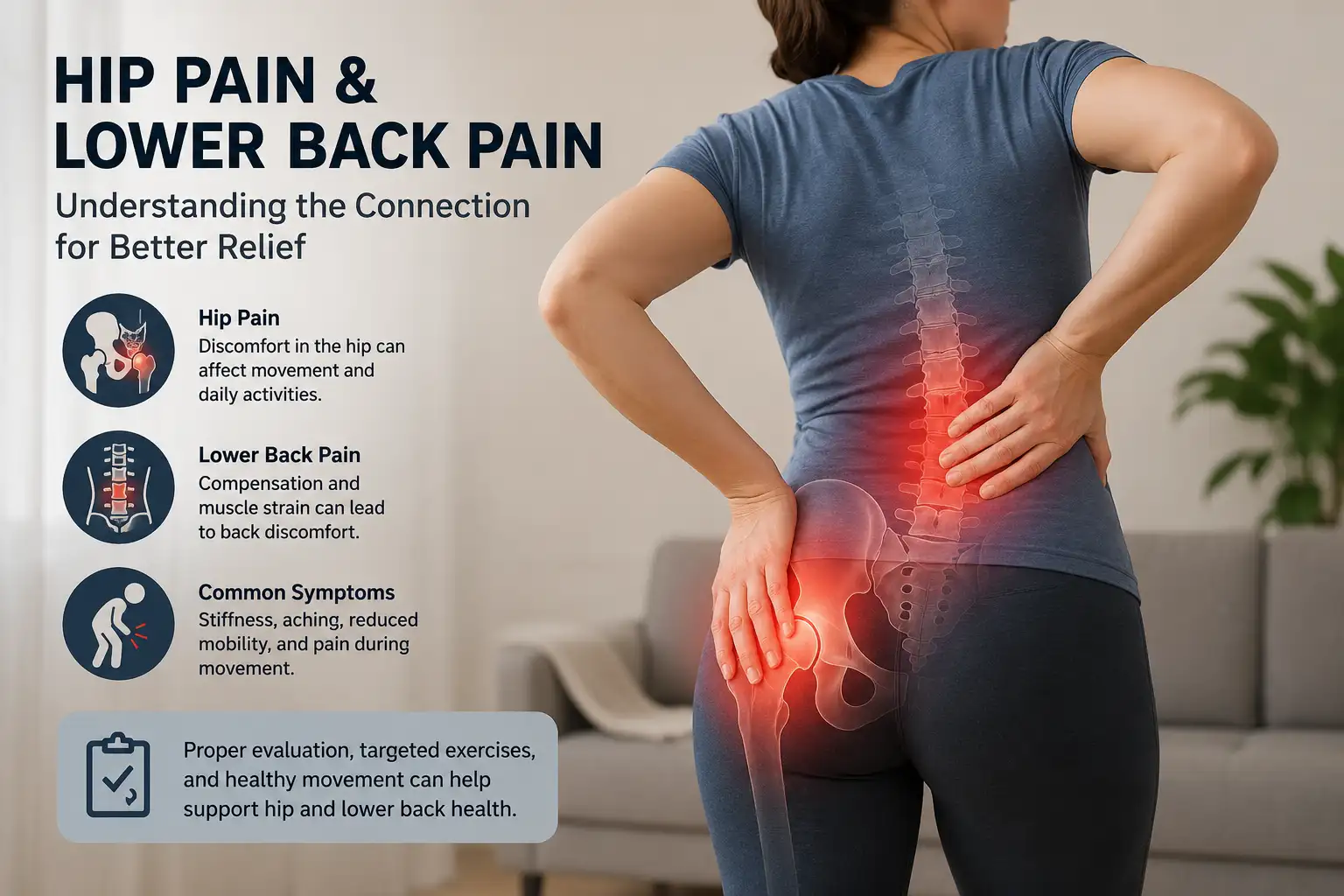
Many people assume that pain starts exactly where they feel it. However, the human body does not always work that way. A person may experience discomfort in the lower back while the real issue originates in the hip joint. Others may feel aching in the hip when the underlying problem involves nearby muscles, nerves, or spinal structures.
This close relationship explains why hip pain and lower back pain frequently occur together. The hip joint and lower spine share muscles, connective tissues, nerves, and movement patterns. When one area struggles, the other often compensates. Over time, this compensation can create strain, stiffness, and discomfort that spreads beyond the original source.
Understanding this connection helps people recognize symptoms earlier, seek appropriate care, and make lifestyle adjustments that support long term mobility. In this article, we will explore why hip discomfort often spreads into the lower back, the biological mechanisms behind this connection, common risk factors, warning signs, and practical approaches to maintaining healthy movement.
Understanding the relationship between the hip and lower back
The hip joint is one of the body’s largest and most important joints. It supports body weight, enables walking, climbing, bending, and helps stabilize movement throughout daily activities.
The lower back, also known as the lumbar spine, consists of vertebrae, discs, ligaments, muscles, and nerves that support posture and movement. The hip and lumbar spine operate as a coordinated system. Every step, twist, and bend requires both regions to function together efficiently.
When hip mobility decreases, the lumbar spine often compensates by moving more than it should. Conversely, reduced spinal mobility can increase demands on the hip joint. Researchers frequently describe this relationship as the hip spine connection.
Because of this interconnected design, discomfort rarely stays isolated. A small issue in one region can gradually influence surrounding structures and create widespread symptoms.
Why pain often spreads beyond the original problem area
Pain signals travel through complex nerve pathways. The brain sometimes struggles to identify the exact source of discomfort because multiple tissues share similar nerve networks.
This phenomenon, known as referred pain, explains why a person may notice hip discomfort extending into the lower back regions even when the primary issue originates inside the hip joint.
The hip capsule, surrounding muscles, ligaments, and nearby nerves communicate continuously with the nervous system. When inflammation or irritation develops, pain signals may be interpreted as coming from neighboring areas.
This process does not mean the pain is imaginary. Instead, it reflects the body’s complex communication system. Referred pain frequently occurs in musculoskeletal conditions involving the hips, pelvis, groin, buttocks, and lumbar spine.
Healthcare professionals often evaluate both areas simultaneously because focusing on only one location can overlook the true cause of symptoms.
The role of movement patterns in pain spread
Movement is rarely isolated to a single joint. Walking alone requires coordination among the feet, ankles, knees, hips, pelvis, and spine.
When the hip loses flexibility or strength, movement patterns begin to change. A person may lean to one side, shorten their stride, or rotate the pelvis differently. These adaptations may seem minor initially, but repeated thousands of times, they can place significant stress on the lower back.
Poor movement mechanics are among the most overlooked causes of hip and lower back pain. Individuals often continue daily activities without noticing these subtle changes until discomfort becomes persistent.
The body naturally seeks the path of least resistance. Unfortunately, compensation patterns often shift stress rather than eliminate it. Over months or years, this extra strain can contribute to stiffness, muscle fatigue, and chronic discomfort.
Common hip conditions that can affect the lower back
Several hip related conditions have the potential to influence spinal function and create symptoms that extend into the lumbar region.
Osteoarthritis
Hip osteoarthritis occurs when cartilage gradually wears down within the joint. As movement becomes restricted, individuals may alter posture and walking patterns.
Reduced joint mobility can increase spinal loading and contribute to hip pain radiating to lower back discomfort. Research from the National Institute of Arthritis and Musculoskeletal and Skin Diseases indicates that osteoarthritis frequently affects mobility and daily function.
Hip impingement
Femoroacetabular impingement occurs when the bones of the hip joint do not move smoothly together. Repeated friction can limit range of motion and contribute to pain during sitting, bending, or athletic activity.
As mobility decreases, the lower back may compensate by increasing motion, potentially creating additional strain.
Labral tears
The hip labrum is a ring of cartilage that helps stabilize the joint. Tears may lead to clicking sensations, instability, and altered movement patterns.
Over time, these changes may increase lumbar stress and contribute to discomfort extending beyond the hip.
Bursitis
Hip bursitis involves inflammation of fluid filled sacs that reduce friction between tissues. Pain often affects walking, stair climbing, and sleeping positions.
When people change movement patterns to avoid discomfort, spinal mechanics may also become affected.
Hip pain and lower back pain: the biomechanical connection
The pelvis as a central link
The pelvis acts as a bridge between the upper and lower body. It connects the spine to the hips and plays a crucial role in weight transfer.
If the pelvis tilts excessively forward or backward, both hip mechanics and spinal alignment can change. These postural alterations often contribute to hip pain and lower back pain occurring simultaneously.
Even small pelvic imbalances may affect walking efficiency, muscle activation, and load distribution across joints.
Core muscles and stability
Core muscles include the abdominal wall, diaphragm, pelvic floor, and deep spinal stabilizers. These muscles help control movement and maintain alignment.
Weakness or poor coordination within the core can increase demands on the hips and lumbar spine. As a result, tissues may become overloaded and painful.
Many rehabilitation programs emphasize core strengthening because improving stability often reduces stress throughout the entire hip spine system.
Muscles that commonly contribute to discomfort
Several major muscle groups connect directly or indirectly to both the hip and lower back.
Hip flexors
Hip flexors help lift the thigh during walking and climbing. Prolonged sitting may shorten these muscles, leading to restricted hip extension.
Tight hip flexors can increase lower back arching and contribute to discomfort.
Gluteal muscles
The gluteal muscles stabilize the pelvis during movement. Weakness in these muscles often forces other structures to compensate.
This compensation pattern is frequently observed among the leading reasons for hip and lower back pain.
Hamstrings
Hamstrings attach to the pelvis and influence pelvic positioning. Tightness may alter movement mechanics and increase spinal stress.
Deep rotator muscles
Small stabilizing muscles around the hip help maintain joint alignment. Dysfunction can affect movement quality and contribute to discomfort that spreads into neighboring regions.
Nerve involvement and referred pain
Nerves travel through the pelvis, hip region, and lower spine in a highly interconnected network.
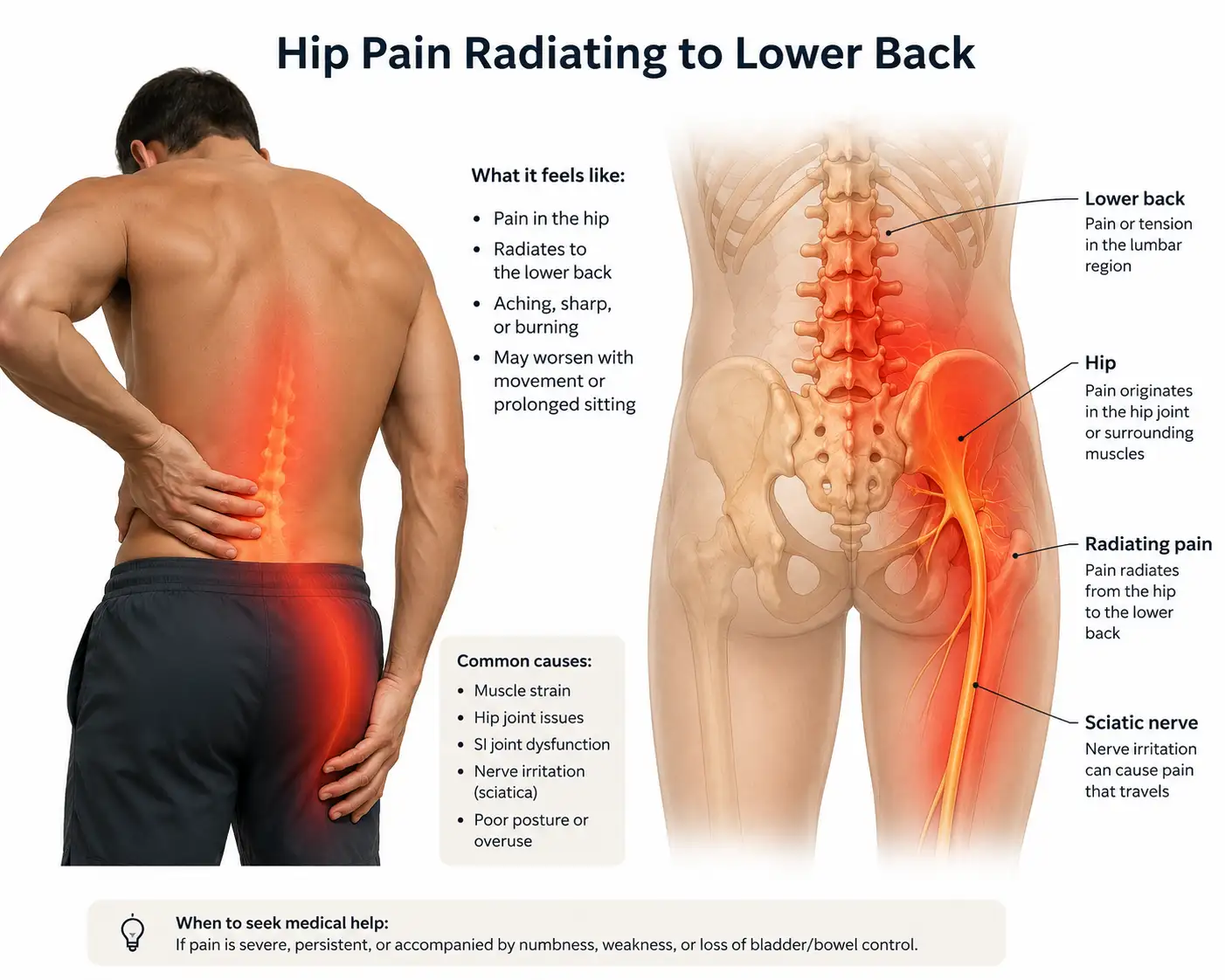
Irritation of certain nerves can create symptoms that seem distant from the actual source. A person experiencing hip ache that reaches the lower back regions may have nerve involvement contributing to symptom distribution.
Sciatic nerve irritation is one example. Although often associated with spinal conditions, surrounding muscles and hip structures can also influence nerve function.
Nerve related symptoms may include:
- Burning sensations
- Tingling
- Numbness
- Sharp shooting pain
- Muscle weakness
Persistent neurological symptoms should always be evaluated by a qualified healthcare professional.
Important hip joint pain symptoms people should not ignore
Recognizing warning signs early may help prevent worsening dysfunction and mobility limitations.
Common hip joint pain symptoms include:
- Groin discomfort during walking
- Stiffness after prolonged sitting
- Pain when climbing stairs
- Reduced range of motion
- Clicking or catching sensations
- Difficulty standing from seated positions
- Pain that spreads into the buttocks
Many people dismiss these symptoms as normal aging. However, persistent changes in movement or comfort deserve attention.
The presence of signs of a hip joint issue does not automatically indicate a serious condition, but ongoing symptoms warrant professional assessment.
Lifestyle factors that increase risk
Several everyday habits may contribute to hip and lower back problems.
Prolonged sitting
Extended sitting can reduce hip mobility and increase stiffness in supporting muscles.
Physical inactivity
Regular movement helps maintain joint nutrition, muscle strength, and flexibility. Sedentary lifestyles may increase vulnerability to discomfort.
Repetitive movements
Jobs or sports involving repeated bending, twisting, or lifting can place stress on both the hips and spine.
Excess body weight
Additional weight increases mechanical loading across joints and may accelerate wear and tear over time.
Poor posture
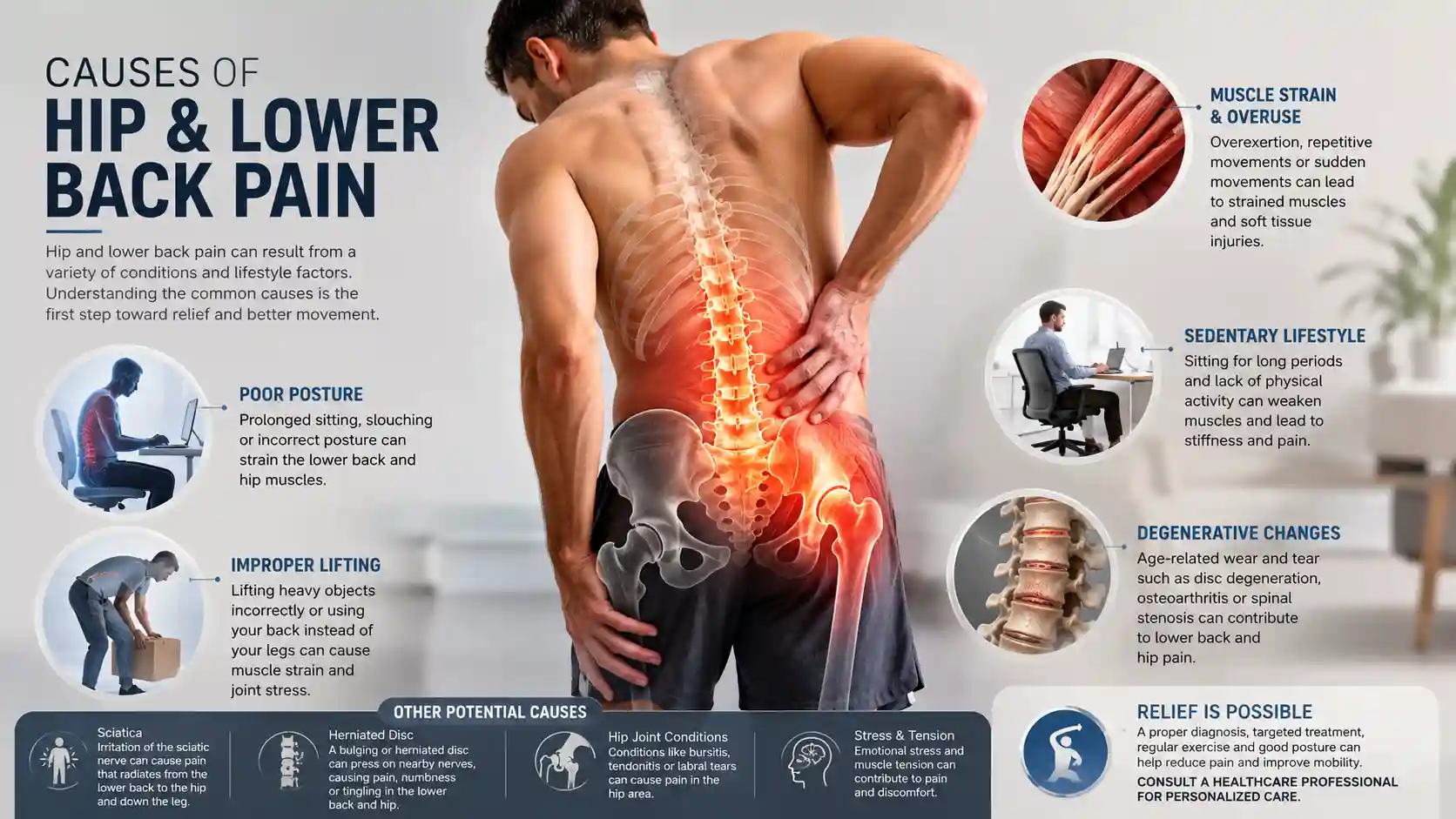
Postural habits influence movement mechanics throughout the kinetic chain. Over time, poor alignment can contribute to the development of causes of hip and lower back pain.
How healthcare professionals identify the source
Diagnosing musculoskeletal pain often requires careful evaluation because symptoms may overlap.
Healthcare professionals typically assess:
- Medical history
- Walking mechanics
- Joint mobility
- Muscle strength
- Neurological function
- Pain patterns
Imaging studies such as X rays or MRI scans may be used when clinically appropriate.
Because common symptoms of hip conditions can mimic spinal disorders and vice versa, a comprehensive examination is essential for accurate diagnosis.
Strategies that may help support hip and back health
Stay physically active
Regular movement helps maintain flexibility, circulation, and muscle strength.
Activities such as walking, swimming, and cycling can support joint function while minimizing excessive impact.
Improve mobility
Gentle stretching programs may help maintain range of motion throughout the hips and surrounding muscles.
Strengthen supporting muscles
Strong gluteal, abdominal, and core muscles help distribute forces more effectively during movement.
Reduce prolonged sitting
Taking brief movement breaks throughout the day can improve mobility and reduce stiffness.
Focus on movement quality
Proper lifting mechanics and balanced exercise routines can help reduce unnecessary stress on joints.
Seek early evaluation
Persistent hip pain indicators or recurring discomfort should not be ignored. Early intervention may improve outcomes and help preserve mobility.
Many people exploring ways to manage ongoing back discomfort also look into educational resources that discuss different approaches to relief and mobility support. If lower back symptoms are affecting your daily activities, you may find it helpful to read our detailed Back Pain Miracle review, which examines a popular back health program and the strategies it promotes for improving movement, flexibility, and overall spinal comfort.
The importance of addressing both regions together
One of the biggest mistakes people make is focusing exclusively on the location where pain is felt.
A person experiencing hip pain radiating to lower back discomfort may spend months treating only the back. Meanwhile, the underlying hip issue continues to influence movement patterns.
Similarly, someone with hip discomfort may overlook spinal contributions that affect recovery.
Modern musculoskeletal care increasingly recognizes the importance of evaluating the entire movement system rather than isolated body parts. Addressing hip strength, spinal mobility, posture, flexibility, and movement habits together often produces better long term results.
Conclusion
The connection between the hip joint and lumbar spine is far stronger than many people realize. Shared muscles, nerves, movement patterns, and biomechanical relationships allow problems in one region to influence the other. This explains why hip pain and lower back pain frequently appear together and why symptoms sometimes spread beyond their original source.
Understanding referred pain, recognizing early warning signs, and identifying potential factors contributing to hip and lower back pain can help individuals make informed decisions about their health. Paying attention to symptoms of hip discomfort, improving movement quality, and maintaining overall mobility may support long-term joint function. Because the body works as an interconnected system, addressing both the hip and lower back together often provides the most effective path toward improved comfort and movement.
Sources
National Institute of Arthritis and Musculoskeletal and Skin Diseases (NIAMS) – Osteoarthritis overview
National Institute of Neurological Disorders and Stroke (NINDS) – Low back pain information
MedlinePlus, U.S. National Library of Medicine – Hip injuries and disorders
National Health Service (NHS) – Hip pain and musculoskeletal conditions
American Academy of Orthopaedic Surgeons (AAOS) – Hip anatomy and common conditions
Frequently asked questions
Can reduced hip mobility affect lumbar spine movement even when there is no obvious injury?
Yes. Limited hip mobility can significantly affect how the lumbar spine functions, even when no injury is present. The hips and lower back work together during everyday movements such as walking, bending, climbing stairs, and reaching for objects. When the hips cannot move through their normal range, the lumbar spine often compensates by moving more than intended. Over time, this extra motion may increase stress on muscles, ligaments, and joints in the lower back. In some cases, these compensation patterns may contribute to hip pain radiating to lower back areas, making it difficult to determine where the problem originally started. As a result, people may experience stiffness, fatigue, reduced movement efficiency, or recurring discomfort despite having no history of a specific injury.
Why do groin pain and buttock pain sometimes appear together?
Groin pain and buttock pain can occur at the same time because both regions are closely connected to the hip joint and the surrounding muscles, tendons, and connective tissues. Many hip conditions can produce discomfort that spreads beyond the joint itself. In fact, some of the common causes of hip and lower back pain can also trigger symptoms in the groin and buttock areas due to shared muscle attachments and nerve pathways. For example, irritation within the hip may affect nearby structures that extend toward the front of the pelvis or the back of the hip. Because symptoms often overlap, it can be difficult to determine the exact source of discomfort without a thorough assessment of hip function, movement patterns, and overall musculoskeletal health.
Can pelvic alignment influence joint stiffness and mobility limitations?
Yes. Pelvic alignment plays an important role in how forces are distributed throughout the hips, spine, and lower body. When the pelvis tilts excessively forward, backward, or to one side, movement mechanics may become less efficient. These changes can increase strain on muscles and joints, potentially leading to joint stiffness over time. Altered alignment may also limit the body’s ability to move smoothly through normal ranges of motion. As a result, some individuals develop mobility limitations that affect walking, exercise, and daily activities. Maintaining balanced posture and healthy movement habits can help support more efficient joint function.
How do muscle imbalances contribute to lower spine discomfort?
Muscle imbalances occur when some muscles become weak while others become overly tight or overactive. This imbalance can change the way the body moves and stabilizes itself during daily activities. For example, weak gluteal muscles may force the lower back muscles to work harder to maintain posture and control movement. Over time, this additional workload can increase mechanical stress on the lower spine and surrounding tissues. Muscle imbalances can also affect pelvic positioning and overall movement quality, creating compensation patterns that contribute to discomfort. Addressing strength and flexibility deficits often helps improve overall function and reduce unnecessary strain.
Why is gait analysis important when evaluating movement dysfunction?
Gait analysis provides valuable information about how the body moves during walking and other weight bearing activities. Even small changes in stride length, foot placement, pelvic motion, or weight distribution can reveal underlying movement dysfunction that may not be obvious during a standard examination. These subtle compensations often develop when a person experiences weakness, stiffness, or limited mobility in a particular area. By observing walking patterns, healthcare professionals can identify abnormal mechanics that place stress on the hips, knees, or lower back. This information helps guide more targeted interventions aimed at improving movement efficiency and overall function.
Can flexibility exercises improve range of motion around the hip region?
Flexibility exercises can play an important role in maintaining or improving range of motion around the hip region when performed consistently and appropriately. Tight muscles and connective tissues may restrict joint movement and alter normal movement patterns. Stretching and mobility exercises help encourage tissues to move through their intended length and function. Improved flexibility may support smoother walking, bending, and other daily activities while reducing the need for compensatory movements in nearby joints. In some cases, limited flexibility can be one of the early hip joint pain symptoms, particularly when it is accompanied by stiffness, discomfort, or difficulty performing routine movements. Although flexibility alone may not resolve every issue, it is often an important component of a balanced approach that includes strength training and movement practice.
Why do postural changes sometimes develop gradually?
Postural changes often develop slowly because the body constantly adapts to discomfort, weakness, stiffness, and repetitive movement habits. Small compensations may initially seem insignificant and may not cause noticeable symptoms. However, when these adjustments are repeated day after day, they can gradually influence muscle activation patterns, joint positioning, and overall movement mechanics. Over time, the body may begin to rely on these altered patterns as the new normal. This process can eventually affect balance, mobility, and comfort in multiple regions. Recognizing and addressing movement changes early may help prevent more significant postural adaptations from developing.