
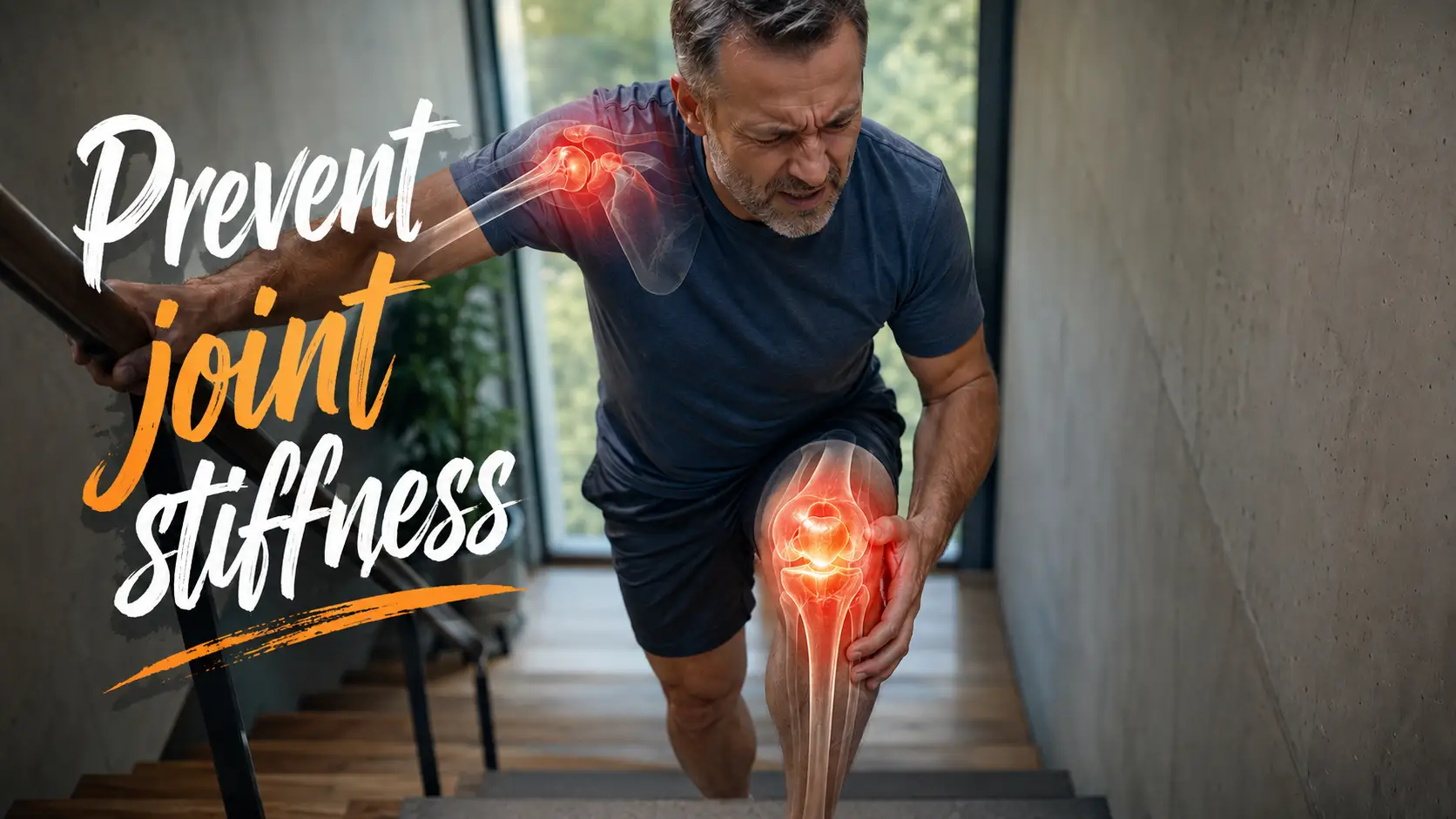
Most people expect some loss of flexibility as they get older. Getting out of bed feels a little slower, bending down takes more effort, and joints may seem less cooperative than they once were. While aging does influence the body, becoming stiff is not something that happens simply because birthdays keep adding up.
Research consistently shows that movement plays a critical role in preserving joint health throughout life. Regular physical activity supports flexibility, muscle strength, circulation, and overall mobility. In contrast, long periods of inactivity can contribute to discomfort and reduced range of motion over time.
Many people experience joint stiffness after sitting for extended periods, working at a desk all day, or spending several days without much physical activity. This temporary feeling often improves once movement resumes. That simple observation highlights an important fact: the body is designed to move.
Understanding why activity matters can help people make better choices for their long term health. Whether you are in your thirties, fifties, or seventies, staying active remains one of the most effective ways to support healthy joints and maintain independence.
Understanding how joints stay healthy
According to National Institute of Arthritis and Musculoskeletal and Skin Diseases, joints are remarkable structures that allow the body to perform everything from walking and climbing stairs to typing and lifting groceries. They are made up of several components that work together to create smooth and controlled movement.
Cartilage covers the ends of bones and acts as a protective cushion. Synovial fluid lubricates the joint and helps reduce friction during movement. Ligaments provide stability, while muscles and tendons support motion and absorb physical forces.
Unlike many tissues in the body, cartilage receives very little direct blood supply. Instead, it relies heavily on movement to receive nutrients. Every time a joint bends, straightens, or rotates, synovial fluid circulates through the area and delivers nourishment to cartilage cells.
This process explains why movement is so important. Joints thrive when they are used regularly. They tend to function less efficiently when movement becomes limited for long periods.
Why inactivity speeds up stiffness
Modern lifestyles encourage people to spend much of the day sitting. Office work, commuting, television, and screen time have dramatically reduced daily movement compared with previous generations.
Although rest is necessary for recovery, excessive inactivity can create conditions that make joints feel less mobile.
When movement decreases, circulation inside and around joints slows. Synovial fluid is not distributed as effectively, and surrounding muscles receive less stimulation. Over time, connective tissues may become less flexible, contributing to a feeling of tightness or restriction.
Muscles also play a major role in joint support. When physical activity declines, muscles gradually lose strength. As a result, joints may experience greater stress during everyday movements such as climbing stairs or standing up from a chair.
Many people notice this effect after long flights or extended periods of sitting. The first few steps often feel awkward or stiff. Once movement resumes, flexibility begins to return. This response demonstrates how closely mobility is connected to regular activity.
The science behind movement and mobility
Scientists have spent decades studying the relationship between exercise and musculoskeletal health. Their findings repeatedly point to the same conclusion: movement supports healthy aging.
Physical activity encourages the circulation of nutrients within joints while also strengthening muscles that stabilize and protect them. Regular movement helps maintain flexibility, supports balance, and improves coordination.
Researchers also note that active individuals tend to preserve physical function longer than those who live largely sedentary lifestyles. Maintaining mobility becomes increasingly important with age because it directly influences independence and quality of life.
Another important benefit involves tissue adaptability. The human body constantly responds to the demands placed upon it. When joints move regularly through their natural range of motion, surrounding tissues adapt to support that movement. When movement becomes limited, tissues may gradually adapt in the opposite direction, resulting in reduced flexibility.
This is one reason mobility exercises are commonly recommended by healthcare professionals and exercise specialists.
How to improve joint mobility through everyday movement
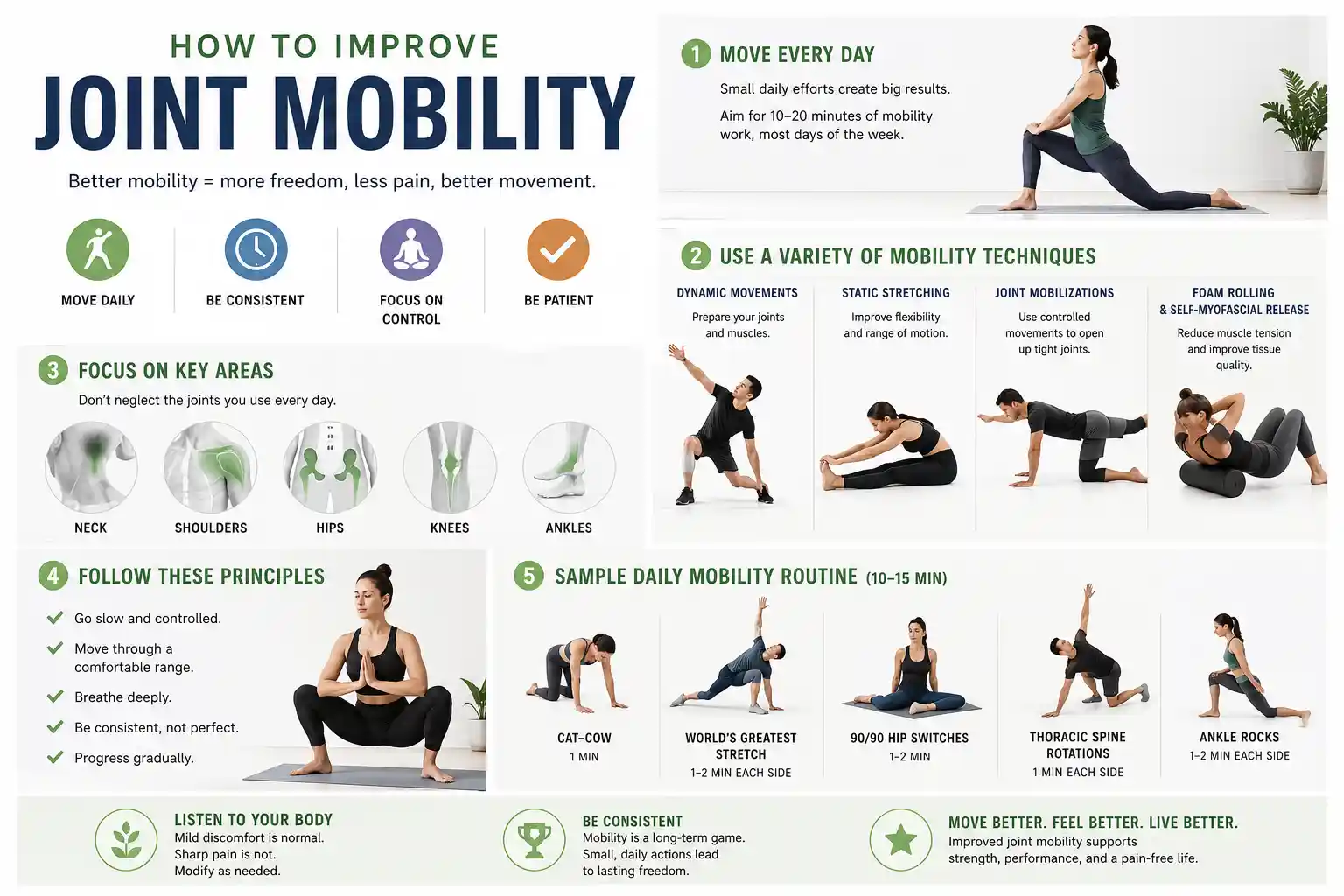
Many people assume they need an intense workout program to maintain flexibility. In reality, one of the most effective answers to how to improve joint mobility is surprisingly simple: move more throughout the day.
According to The American College of Sports Medicine, consistent movement often produces greater long term benefits than occasional bursts of intense exercise. Walking to nearby destinations, taking movement breaks during work, stretching after sitting, and participating in recreational activities all contribute to healthier movement patterns.
The body responds positively to regular use. Even modest activity performed consistently can help maintain flexibility and support healthy joint function.
Walking deserves special attention because it is accessible to most people and requires no specialized equipment. A daily walking habit encourages circulation, activates muscles throughout the lower body, and promotes natural joint movement.
People looking for tips to improve joint flexibility should also pay attention to prolonged sitting. Remaining in the same position for hours can contribute to feelings of tightness and reduced flexibility. Standing periodically and changing positions throughout the day can help counteract these effects.
Another effective strategy involves incorporating mobility focused movements into a daily routine. Gentle joint rotations, controlled stretching, and full range of motion exercises encourage healthy movement patterns and help maintain flexibility.
Why strong muscles protect joints
When people think about joint health, they often focus exclusively on cartilage. However, muscles play an equally important role.
Muscles act as natural shock absorbers. Every step, jump, or change in direction creates forces that travel through the body. Strong muscles help distribute these forces efficiently, reducing unnecessary stress on joints.
This support becomes especially important as people age. Muscle mass naturally declines over time unless it is maintained through regular activity and strength training.
Strong muscles also improve posture and movement mechanics. When muscles function properly, the body moves more efficiently. Better movement patterns help reduce excessive strain on specific joints and support long term mobility.
Research consistently shows that maintaining muscular strength is associated with better physical function, improved balance, and greater independence in older adults.
Exercises for stiff joints that support long term mobility
Not every form of exercise places the same demands on the body. The most effective exercises for stiff joints are usually activities that encourage movement while minimizing excessive impact.
Walking remains one of the most widely recommended options because it combines cardiovascular benefits with joint friendly movement. It promotes circulation, activates muscles, and encourages natural mobility patterns throughout the lower body.
Swimming and water based exercise provide another excellent choice. The buoyancy of water reduces stress on weight bearing joints while allowing individuals to move through a comfortable range of motion.
Cycling can also support mobility by encouraging repetitive movement of the hips, knees, and ankles without significant impact forces.
Yoga and tai chi are frequently recommended because they combine flexibility, balance, strength, and body awareness. These activities encourage controlled movement patterns that support mobility and functional fitness.
Among all exercises to ease stiff joints, the best option is often the one a person can perform consistently. Long term adherence matters more than choosing the perfect exercise program.
The role of circulation in joint health
Healthy circulation affects nearly every system in the body, including those involved in movement and mobility.
Physical activity increases blood flow, helping deliver oxygen and nutrients to muscles and surrounding tissues. Better circulation supports recovery, tissue maintenance, and overall physical function.
When people remain inactive for long periods, circulation naturally slows. This can contribute to feelings of heaviness, tightness, or reduced flexibility.
Regular movement acts like a natural pump that keeps blood flowing efficiently throughout the body. Even simple activities such as walking or light stretching can stimulate circulation and help support healthy movement patterns.
For this reason, experts often recommend breaking up long periods of sitting with short activity breaks. Small amounts of movement performed consistently throughout the day can have meaningful benefits for mobility and overall health.
How physical activity helps reduce joint stiffness naturally

People often search for ways to reduce joint stiffness naturally without relying solely on treatments or interventions. While no single habit can guarantee lifelong flexibility, regular movement remains one of the most evidence supported strategies available.
Physical activity influences several systems that affect mobility. It helps maintain muscle strength, supports healthy circulation, encourages nutrient delivery to cartilage, and keeps connective tissues flexible. These effects work together to support smoother movement and better physical function.
Another advantage of regular activity is that it helps prevent the cycle of inactivity that often develops when movement feels uncomfortable. When people move less, muscles weaken and flexibility declines. As mobility decreases, daily activities can feel more challenging, leading to even less movement. Consistent activity helps interrupt this pattern.
Many individuals discover they can reduce joint tightness naturally by making movement a regular part of their day rather than treating exercise as an occasional event. Short walks, stretching sessions, recreational activities, and strength training all contribute to healthier movement patterns over time.
Research also suggests that physically active adults often report better functional mobility than their sedentary peers. This benefit becomes particularly important as people age and seek to maintain independence in daily life.
Aging does not automatically mean losing mobility
One of the most persistent myths about aging is that declining mobility is unavoidable. Although the body changes with age, many of the factors commonly associated with reduced flexibility are strongly influenced by lifestyle habits.
Studies of active older adults consistently show that many maintain impressive levels of mobility well into later decades of life. Regular movement helps preserve muscle mass, balance, coordination, and flexibility, all of which contribute to functional independence.
Physical activity also supports confidence in movement. Individuals who remain active are often more willing to participate in social activities, recreational pursuits, and everyday tasks that keep them engaged with life.
The goal is not necessarily to move exactly as a person did at twenty years old. Instead, the objective is to maintain the highest possible level of physical function for one’s age and circumstances.
Even moderate activity performed consistently can make a meaningful difference. Small efforts repeated over months and years often produce greater benefits than dramatic but short lived fitness programs.
The connection between body weight and joint function
Maintaining a healthy body weight is another factor that can influence mobility and comfort. Weight bearing joints such as the hips, knees, and ankles experience mechanical forces every time a person stands, walks, or climbs stairs.
Regular physical activity supports energy balance and helps preserve lean muscle mass. These benefits contribute to overall physical function and may help reduce unnecessary stress on joints.
However, the value of exercise extends far beyond weight management. Even when body weight remains relatively stable, activity improves strength, endurance, flexibility, and coordination. These improvements support healthy movement regardless of a person’s size.
Focusing exclusively on weight can sometimes distract from the broader benefits of movement. A physically active lifestyle supports multiple aspects of health simultaneously, making it one of the most effective long term investments a person can make.
In addition to movement-based strategies, some readers also explore broader informational resources that discuss joint health support from different perspectives. For example, certain educational reviews examine how lifestyle choices, nutrition, and supplementation are being studied in relation to mobility and comfort. The joint health and mobility resource presents general information on commonly discussed joint support approaches. While research in this area continues to evolve, such resources are often read alongside established practices like regular exercise, stretching, and maintaining an active routine that supports long-term joint function.
Why consistency matters more than intensity
Many people believe they need intense workouts to experience meaningful benefits. In reality, consistency is often the most important factor.
The body responds to repeated habits. Regular movement creates ongoing opportunities for muscles, joints, and connective tissues to adapt positively. A sustainable routine performed week after week typically provides greater long term benefits than occasional bursts of extreme effort.
This principle helps explain why simple activities such as walking, cycling, swimming, or mobility training can be highly effective when performed consistently.
People who struggle to maintain exercise routines often benefit from focusing on enjoyment rather than intensity. Activities that feel rewarding are more likely to become permanent habits.
Over time, these habits accumulate. The benefits of movement are not limited to individual workouts. They build gradually through months and years of consistent participation.
Common mistakes that can worsen mobility over time
While staying active is important, certain habits can unintentionally contribute to declining mobility.
Some of the most common mistakes include:
• Remaining sedentary for long periods without movement breaks
• Ignoring flexibility and mobility exercises while focusing only on cardiovascular activity
• Performing too much exercise too quickly after long periods of inactivity
• Neglecting muscle strengthening activities
• Assuming stiffness is a normal part of aging and cannot be influenced
• Using weekends for exercise while remaining inactive during the rest of the week
Avoiding these patterns can help support healthier movement and encourage long term physical function.
Practical daily habits that support healthy joints
Maintaining mobility does not require dramatic lifestyle changes. Small actions performed consistently often create meaningful improvements.
People who successfully preserve mobility over the long term tend to build movement into their daily routines. They walk when possible, take breaks from prolonged sitting, participate in enjoyable physical activities, and prioritize overall fitness.
Developing these habits creates an environment where the body receives regular opportunities to move through a variety of positions and ranges of motion. This variety helps support flexibility, muscular strength, and coordinated movement.
Another helpful strategy involves viewing movement as part of daily life rather than a separate task. Walking while talking on the phone, taking stairs when appropriate, or performing light stretching during breaks can collectively contribute to better mobility.
The most effective routine is often the one that fits naturally into a person’s lifestyle and can be maintained consistently.
Conclusion
Maintaining mobility is one of the most important factors in preserving independence, comfort, and quality of life. Although aging influences the body, reduced movement is often a far greater contributor to physical limitations than age itself.
Regular physical activity supports cartilage nourishment, muscle strength, circulation, flexibility, and balance. These benefits work together to slow the progression of joint stiffness and help preserve healthy movement patterns throughout life.
Whether through walking, swimming, cycling, yoga, strength training, or other enjoyable activities, movement provides the stimulation joints need to function effectively. Individuals looking for best ways to increase joint mobility, discover effective exercises for tight joints, or find ways to reduce musculoskeletal stiffness naturally can benefit from one simple principle: keep moving consistently.
Small actions performed regularly can create lasting benefits. The earlier healthy movement habits become part of daily life, the greater the potential for maintaining mobility and enjoying an active future.
Sources
National Institute on Aging
Centers for Disease Control and Prevention
National Institute of Arthritis and Musculoskeletal and Skin Diseases
MedlinePlus
World Health Organization
American College of Sports Medicine
National Heart, Lung, and Blood Institute
National Institute of Diabetes and Digestive and Kidney Diseases
FAQs
Can flexibility training help how to improve joint flexibility as you age even if I already exercise regularly?
Yes. Many people focus primarily on cardiovascular fitness or strength training while overlooking flexibility and mobility work. Dedicated mobility exercises encourage joints to move through their full range of motion and help maintain healthy movement patterns. Even physically active individuals can experience tightness if they repeatedly perform the same movements. Adding flexibility focused activities creates balance within a fitness routine and can support better overall function, posture, and movement efficiency.
Why do exercises for stiff joints often feel easier after a few minutes?
This happens because movement increases circulation and encourages the distribution of synovial fluid within the joints. As muscles warm up and connective tissues become more pliable, movement generally feels smoother and more comfortable. This response highlights the body’s natural adaptation to activity. It also explains why prolonged sitting often creates temporary tightness that improves once movement resumes.
What is the most overlooked way to reduce joint stiffness naturally during a workday?
One of the most overlooked strategies is interrupting long sitting periods. Many people focus exclusively on structured exercise while remaining seated for most of the day. Standing up regularly, walking briefly, or performing gentle mobility movements throughout the day can help maintain circulation and reduce feelings of tightness. These small actions may seem insignificant individually, but their cumulative effect can be substantial.
How does muscle strength contribute to how to increase joint mobility?
Strong muscles help stabilize joints and control movement efficiently. When muscles support joints effectively, movement often becomes smoother and more coordinated. Strength training also helps maintain physical function as people age. Improved muscular support reduces unnecessary stress on surrounding structures and contributes to better movement quality during everyday activities.
Are exercises for restricted joints useful even for younger adults?
Absolutely. Mobility is important at every age. Younger adults who spend long hours sitting at desks, driving, or using digital devices may experience reduced flexibility despite being relatively young. Incorporating mobility focused activities early can help establish healthy movement habits and support long term musculoskeletal health. Prevention is often easier than attempting to restore lost mobility later.
Can reducing sedentary time help reduce stiffness in the joints naturally more effectively than one weekly workout?
In many cases, yes. While structured exercise is valuable, daily movement patterns matter significantly. A person who exercises once each week but remains inactive the rest of the time may not experience the same benefits as someone who moves consistently throughout the day. Frequent movement helps maintain circulation, flexibility, and muscular activity, all of which contribute to mobility.
What lifestyle factors support healthy movement besides how to improve joint mobility exercises?
Several lifestyle habits work together to support mobility. Adequate sleep, balanced nutrition, hydration, stress management, and regular physical activity all contribute to healthy musculoskeletal function. Mobility exercises remain important, but they are most effective when combined with broader habits that support overall health and recovery.