
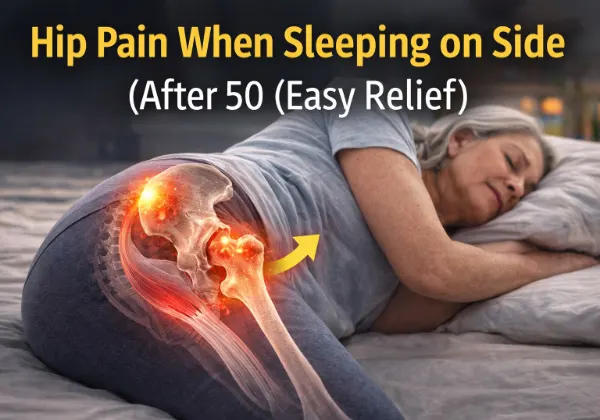
If you wake up with a sore hip after sleeping on your side, you’re not imagining it. Many adults over 50 experience this exact problem. What feels like a small discomfort at night can turn into stiffness and reduced mobility during the day.
The encouraging part? Most cases of hip pain when sleeping on side after 50 come from common, treatable causes. With a few smart changes, you can reduce pain and improve your sleep quality.
Let’s explore what’s really happening and how to fix it.
Table of Contents
Why Hip Pain Becomes More Common After 50
As you age, your body goes through natural changes that affect your joints and muscles.
Cartilage becomes thinner, which reduces cushioning in the joints. Muscles lose strength if not actively maintained. Tendons and ligaments also become less flexible. These changes increase sensitivity to pressure.
When you sleep on your side, your body weight presses directly on the hip joint. If the joint or surrounding tissue is already irritated, that pressure can lead to pain.
Common Causes of Hip Pain When Sleeping on Your Side
Greater Trochanteric Pain Syndrome (GTPS)
This condition is one of the most frequent causes of outer hip pain in people over 50.
It involves irritation of the tendons or bursae near the outer hip. The pain usually feels sharp or aching and gets worse when you lie on that side.
You may also notice discomfort when walking, climbing stairs, or standing for long periods.
Hip Bursitis
Bursae are small fluid-filled sacs that reduce friction in your joints. When they become inflamed, they can cause noticeable pain, especially under pressure.
Sleeping on your side compresses the inflamed area, which explains why pain often feels worse at night.
Osteoarthritis
Osteoarthritis develops when cartilage in the joint wears down over time.
This condition often causes:
- Deep, aching pain in the hip or groin
- Stiffness, especially in the morning
- Reduced range of motion
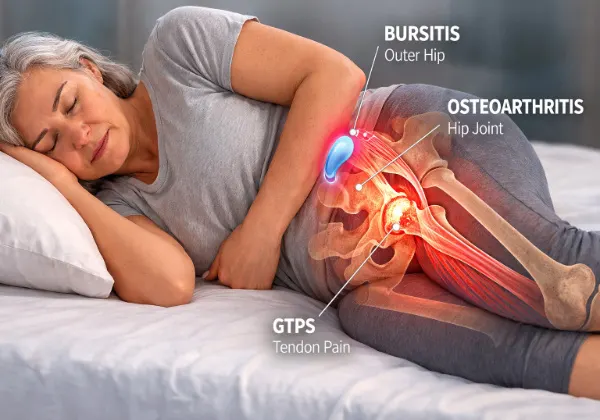
Side sleeping can aggravate symptoms because it increases joint compression.
Poor Sleeping Alignment
Sometimes the issue comes from how you sleep rather than a medical condition.
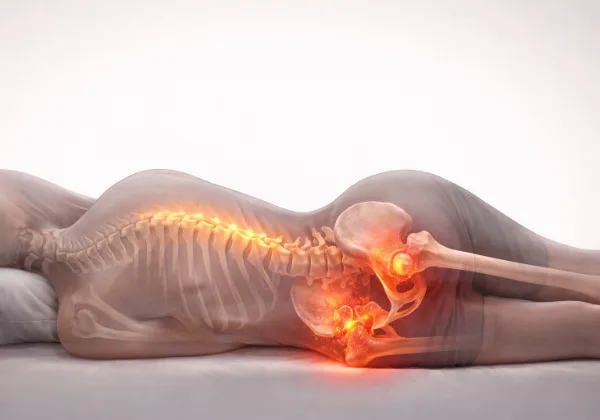
If your spine and hips are not aligned, your body compensates by placing extra stress on one side. Over time, this leads to discomfort.
Common alignment issues include:
- No pillow between the knees
- Twisted lower body posture
- Unsupportive mattress
Muscle Weakness
After 50, muscle loss becomes more noticeable unless you stay active.
Weak glute and hip muscles fail to support the joint properly. This increases pressure on the hip during sleep and makes pain more likely.
Why Side Sleeping Triggers Hip Pain
Side sleeping places your full body weight on one hip for several hours. Even a small imbalance or inflammation can become painful under constant pressure.
Think of it as prolonged stress on a sensitive area. The longer the pressure lasts, the more discomfort you feel.
Practical Solutions That Work
You don’t need complicated treatments. Simple adjustments often make a big difference.
Use a Pillow Between Your Knees
This is one of the most effective ways to reduce hip strain.
A pillow keeps your hips aligned and prevents your top leg from pulling your spine out of position. This reduces pressure on the lower hip.
Choose a firm pillow that holds its shape through the night.
Adjust Your Sleeping Position
If one hip hurts, avoid sleeping on that side. Use the opposite side to reduce pressure.
If both hips feel sore, try alternating sides or spending some time on your back with proper support.
Choose the Right Mattress
Your mattress plays a key role in how your body handles pressure.
A mattress that is too firm can create pressure points. One that is too soft may cause poor alignment. A medium-firm mattress usually provides the best balance of comfort and support.
Strengthen Your Hip Muscles
Strong muscles help stabilize your joints and reduce stress on them.
Focus on simple exercises such as:
- Glute bridges
- Side leg raises
- Clamshells
You don’t need long workouts. A few minutes a day can improve muscle support over time.
Stretch Before Bed
Tight muscles can pull on your hip and increase discomfort.
Gentle stretching before bed can help relax the surrounding muscles and improve flexibility. Focus on your hips, hamstrings, and lower back.
Avoid aggressive stretching. Keep movements slow and controlled.
Use Heat or Ice
Both heat and ice can help, depending on your symptoms.
- Use ice if you feel sharp or inflamed pain
- Use heat if your hip feels stiff or tight
Apply for about 15–20 minutes before sleep.
Maintain a Healthy Weight
Excess body weight increases pressure on your hip joints, especially during side sleeping.
Even modest weight loss can reduce stress on the joint and improve comfort.
When to See a Doctor
While most cases improve with self-care, some symptoms need medical attention.
Consult a healthcare professional if you notice:
- Pain that lasts more than a few weeks
- Severe or worsening discomfort
- Swelling, redness, or warmth
- Difficulty moving your hip
Early evaluation can prevent the condition from getting worse.
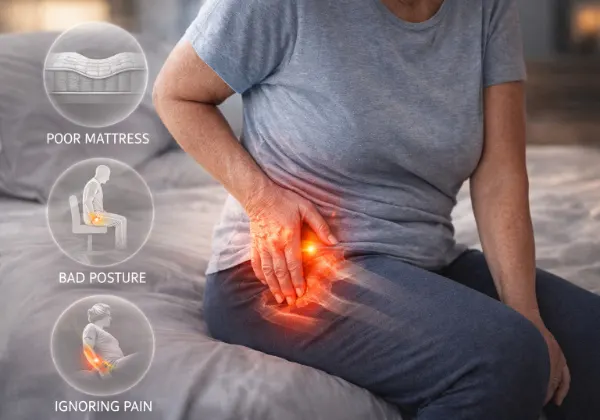
Mistakes That Can Make It Worse
Many people unknowingly worsen their symptoms through everyday habits.
Avoid:
- Sleeping without proper support
- Ignoring early signs of pain
- Overdoing exercises without proper form
- Using an old or unsupportive mattress
Small adjustments can prevent long-term issues.
A Simple Night Routine for Better Sleep
You don’t need a complicated plan. A short routine can help your body relax and reduce pain.
- Do light stretching for 5–10 minutes
- Apply heat or ice if needed
- Place a pillow between your knees
- Sleep on the less painful side
- Keep your spine in a neutral position
Consistency matters more than perfection.
You can also explore 10 Best Hip Stretches for Seniors: Instant Safe & Easy Daily Fix for simple daily stretches that help reduce stiffness and improve sleep comfort.
Frequently Asked Questions
Why do I have hip pain when sleeping on side after 50?
Hip pain when sleeping on side after 50 often happens due to joint wear, reduced muscle support, or conditions like bursitis and osteoarthritis. As you age, tissues become more sensitive to pressure, and side sleeping puts direct weight on the hip, which can trigger discomfort.
How can I relieve hip pain when sleeping on side after 50?
To relieve hip pain when sleeping on side after 50, place a firm pillow between your knees, use a medium-firm mattress, and avoid sleeping on the painful side. Gentle stretching and strengthening exercises can also reduce pressure on the hip over time.
Is hip pain when sleeping on side after 50 a sign of arthritis?
Hip pain when sleeping on side after 50 can be a sign of osteoarthritis, but not always. It may also result from bursitis or muscle imbalance. If the pain is persistent, stiff, or limits movement, it’s best to consult a doctor for proper diagnosis.
What is the best sleeping position for hip pain when sleeping on side after 50?
The best position for hip pain when sleeping on side after 50 is lying on the non-painful side with a pillow between your knees. This keeps your hips aligned and reduces strain. Some people also benefit from sleeping on their back with knee support.
When should I see a doctor for hip pain when sleeping on side after 50?
You should see a doctor if hip pain when sleeping on side after 50 lasts more than a few weeks, becomes severe, or affects your daily movement. Early evaluation helps identify conditions like arthritis or tendon issues before they worsen.
Final Thoughts
Hip pain can disrupt your sleep, but it doesn’t have to become a permanent problem. Most cases of hip pain when sleeping on side after 50 improve with better support, stronger muscles, and proper alignment.
Focus on small, consistent changes. Over time, they add up to better sleep and less pain.
Sources
- National Institute on Aging – Joint Health and Aging
- American Academy of Orthopaedic Surgeons (AAOS) – Hip Pain
- Mayo Clinic – Hip Pain Causes and Treatment
- Cleveland Clinic – Trochanteric Bursitis
- Harvard Health Publishing – Managing Joint Pain
Author Bio
Jennifer Collins is a wellness researcher and natural health writer focused on adults over 40. With 3+ years of experience in digital health content, Jennifer specializes in making science-backed nutrition and lifestyle strategies easy to follow and apply.
Health Disclaimer
This content is for informational purposes only and is not intended to diagnose, treat, or cure any disease. Always consult your healthcare provider before making changes to your diet or health routine. This article may include affiliate links, which come at no extra cost to you.