
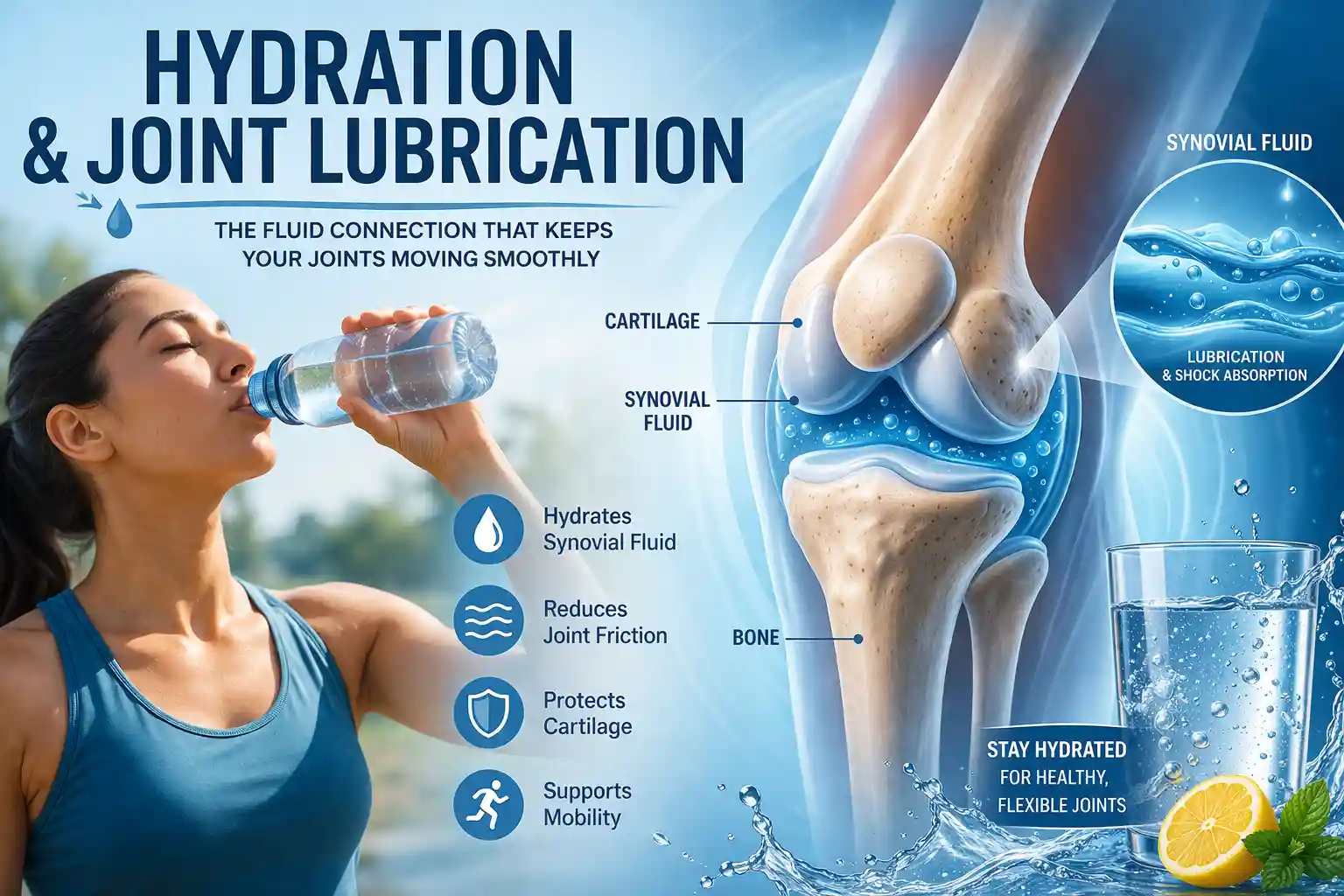
The relationship between water intake and body movement is far deeper than most people realize. Hydration and joint lubrication work together to support smooth, pain free motion in everyday life. Inside each joint, a specialized fluid called synovial fluid reduces friction and allows cartilage surfaces to glide without damage.
When hydration levels drop, the quality of this internal lubrication system can be affected. Research from institutions such as the National Institutes of Health highlights that connective tissues depend heavily on water to maintain structure and performance.
Joint moisture and lubrication also influence how comfortable your body feels during walking, exercise, or even simple tasks like bending or standing. In this article, we will explore how water supports joint health, how fluid systems in the body function, and what science says about maintaining mobility through proper hydration habits.
We will also examine how joint lubrication and hydration support science explains stiffness, flexibility, and long term joint comfort in a simple and practical way.
The biology behind joint fluid and movement
Joints are complex structures made up of cartilage, ligaments, and fluid filled spaces. Synovial fluid acts as a natural lubricant that reduces wear between moving surfaces. This fluid contains water, proteins, and molecules that give it thickness and elasticity.
Cartilage itself does not contain blood vessels, which means it relies on surrounding fluid to receive nutrients. This is where hydration becomes essential. Water helps transport nutrients into cartilage and supports waste removal from joint spaces.
Scientific literature from Harvard Health Publishing explains that joint health depends heavily on fluid balance and tissue hydration. Without enough water, the efficiency of joint movement may decrease, leading to discomfort or stiffness.
Hydration and joint lubrication science in human movement
Hydration and joint lubrication science shows how water directly affects the mechanical behavior of joints. Synovial fluid changes its viscosity depending on hydration levels, which influences how smoothly joints move under pressure.
When the body is well hydrated, this fluid maintains an optimal gel like consistency that reduces friction and absorbs impact. This is especially important during repetitive movement such as walking or lifting.
Studies from the National Center for Biotechnology Information show that cartilage behaves like a sponge, absorbing water and releasing it under pressure. This process helps distribute load evenly across joints and prevents excessive wear.
In practical terms, body hydration for joint function science explains why staying hydrated is not just about thirst but also about maintaining comfortable movement throughout the day.
How hydration affects joint health
Understanding how hydration affects joint health helps explain why water intake plays such a central role in mobility. Joints depend on consistent fluid levels to maintain cushioning and flexibility.
When hydration drops, cartilage loses some of its ability to retain water. This reduces its elasticity and may increase friction between joint surfaces. Over time, this can contribute to discomfort during movement.
The Centers for Disease Control and Prevention highlights that hydration supports overall physical performance and tissue function. Proper fluid intake also helps regulate inflammation, which is important for joint comfort.
Another important aspect of how water intake influences joint health is nutrient delivery. Water helps transport essential nutrients to cartilage cells, supporting repair and maintenance.
People who maintain steady hydration often experience better movement efficiency and reduced stiffness after rest periods.
Synovial fluid function and hydration in joint mechanics
Synovial fluid function and hydration are closely connected because this fluid is mostly water based. It acts as both a lubricant and a shock absorber inside joints.
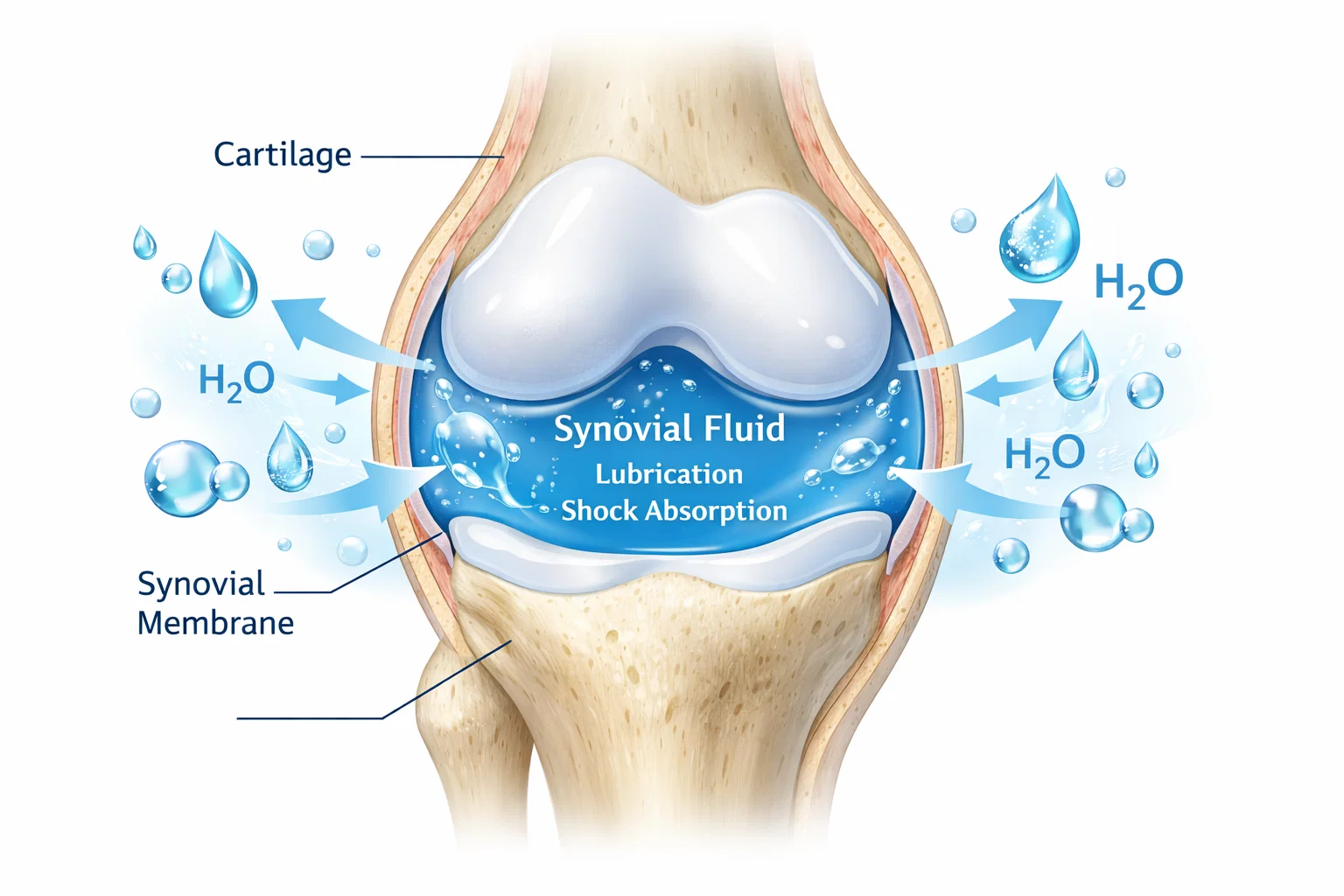
When hydration levels are balanced, synovial fluid activity and hydration work together to maintain smooth joint movement. The fluid reduces friction between cartilage surfaces and helps distribute mechanical stress evenly.
Research available through the National Institutes of Health database shows that synovial fluid depends on healthy cartilage cells for production. These cells require proper hydration to function effectively.
If hydration is insufficient, synovial fluid performance and hydration balance may weaken, resulting in reduced lubrication efficiency. This can lead to temporary stiffness, especially after periods of inactivity.
Best fluids for joint lubrication and mobility in daily life
Best fluids for joint lubrication and mobility focus on maintaining steady hydration throughout the day. Plain water remains the most effective option because it directly supports cellular hydration and joint fluid production.
Electrolyte balanced drinks can also help during physical activity or in hot environments. These fluids assist in maintaining water balance in the body, which supports joint function.
Hydrating foods such as fruits and vegetables contribute additional water intake and provide nutrients that support connective tissues. Herbal teas and natural broths are also beneficial options for hydration support.
Avoiding excessive sugar and caffeine helps maintain stable fluid levels. top fluids for joint lubrication and movement should always prioritize consistency rather than occasional high intake.
The internal mechanics of fluid and tissue balance
The human body relies on a complex system of fluid distribution to support movement. Water moves through cells, tissues, and joint spaces to maintain balance and function.
Cartilage health and water content play a major role in this system. When cartilage contains sufficient water, it becomes more elastic and better able to absorb pressure.
Synovial lubrication mechanism ensures that joints remain protected during movement. This system relies on water to maintain its thickness and efficiency.
Joint friction reduction occurs when fluid levels are stable, allowing smoother motion between joint surfaces.
Joint cushioning system helps absorb impact during activities like walking or running.
Fluid balance in joints is essential for maintaining comfort and mobility throughout daily life.
Hydration and mobility connection in daily activity
Hydration and mobility connection explains how water intake influences physical performance. When the body is hydrated, joints move more freely and with less resistance.
Joint movement efficiency improves when cartilage and synovial fluid maintain proper hydration levels. This reduces energy loss during movement.
Joint shock absorption system plays a key role in protecting bones from impact stress. Water helps maintain this system by supporting fluid consistency.
Hydration for flexibility is important for maintaining a full range of motion in joints and muscles.
Water balance physiology regulates how fluids are distributed throughout the body, ensuring that joints receive adequate support.
Hydration and inflammation control in joint health
Inflammation is a natural response in the body, but it must remain balanced for healthy joint function. Proper hydration helps regulate this process by supporting waste removal and temperature control.
Hydration and inflammation control also support recovery after physical activity. When the body is well hydrated, it can more efficiently transport nutrients and remove metabolic byproducts.
Dehydration and joint discomfort are often linked because reduced fluid levels can increase stress on cartilage surfaces.
Musculoskeletal hydration science shows that water is essential for maintaining tissue elasticity and reducing strain during movement.
Long term benefits of proper hydration for joints
Consistent hydration supports long term joint performance and comfort. It helps maintain cartilage structure and ensures that synovial fluid continues to function effectively.
Cartilage elasticity support improves when water intake is stable over time. This helps joints handle daily stress more efficiently.
Connective tissue hydration is essential for maintaining flexibility and strength in ligaments and tendons.
Joint performance optimization occurs when all fluid systems in the body function in balance, supporting smooth and efficient movement.
Articular cartilage health depends heavily on long term hydration habits that support nutrient delivery and waste removal.
Practical hydration habits for better joint support
Building consistent hydration habits is one of the simplest ways to support joint health. Drinking water throughout the day helps maintain stable fluid levels in joints.
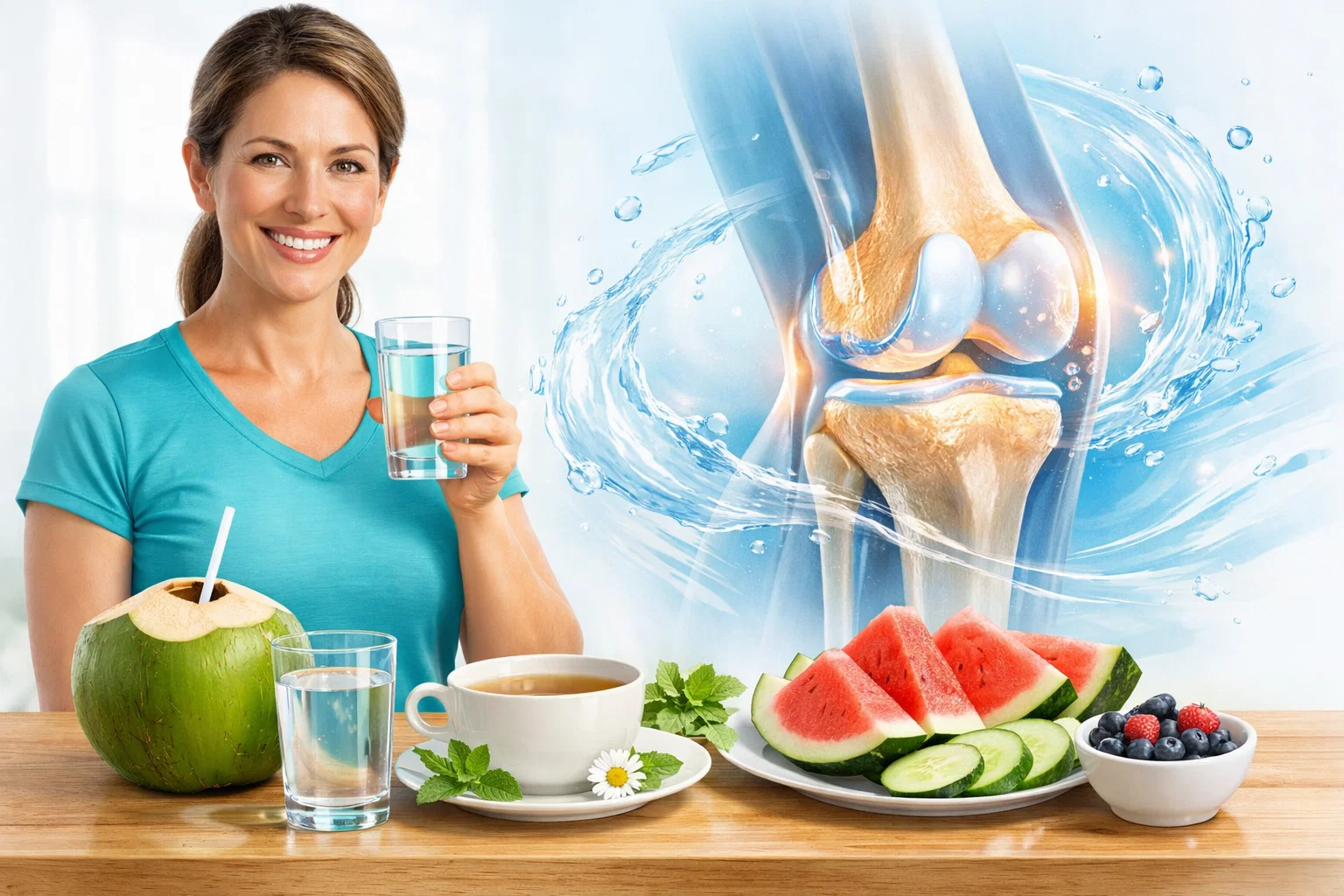
Starting the morning with water supports overnight fluid loss recovery. Regular hydration during physical activity helps maintain joint cushioning.
Including water rich foods such as fruits and vegetables adds to daily intake and supports tissue hydration.
Listening to early signs of thirst can help prevent mild dehydration before it affects joint comfort.
Also Read: Strength Training With Arthritis Safe Guide for Pain-Free Workouts After 40
Conclusion
Hydration and joint lubrication are deeply connected systems that support every movement of the human body. Water plays a central role in maintaining synovial fluid quality, cartilage flexibility, and overall joint comfort.
Hydration for joint movement science shows that even small changes in fluid intake can influence mobility and stiffness levels. This makes hydration one of the most important yet simple factors in maintaining joint health.
When hydration is consistent, joints function more efficiently, movement feels smoother, and daily activities become more comfortable.
Sources and section mapping
- National Institutes of Health
Supports introduction, synovial fluid function, cartilage hydration and musculoskeletal hydration science - National Center for Biotechnology Information
Supports hydration for joint comfort science section and cartilage fluid mechanics - Harvard Health Publishing
Supports joint hydration balance, joint comfort, and mobility explanation - Centers for Disease Control and Prevention
Supports hydration and physical performance, inflammation control, and activity related joint health insights
FAQs
1. How hydration affects joint health in everyday movement patterns
Understanding how hydration contributes to joint health is important because water directly influences cartilage flexibility and synovial fluid efficiency. When the body maintains proper hydration levels, joints experience smoother movement with less resistance. This helps during daily activities such as walking, bending, or standing for long periods. Poor hydration may reduce fluid cushioning in joints, leading to temporary stiffness and discomfort. Consistent water intake supports long term joint comfort and helps maintain natural mobility without unnecessary strain on connective tissues.
2. What role does synovial fluid function and hydration play in joint flexibility
synovial joint fluid function and hydration are closely linked to joint flexibility because this fluid depends on water content to maintain its lubricating properties. When hydration is sufficient, synovial fluid remains thick enough to reduce friction and support smooth movement between cartilage surfaces. This improves flexibility in major joints such as knees and shoulders. If hydration levels drop, synovial fluid efficiency may decrease, leading to reduced range of motion and stiffness after inactivity or physical exertion.
3. Which best fluids for joint lubrication and mobility support daily movement
Best beverages for joint movement and lubrication include plain water as the primary source of hydration because it directly supports joint fluid production and tissue balance. Electrolyte balanced drinks can also help maintain hydration during physical activity or hot conditions. Hydrating foods contribute additional water intake and support nutrient delivery to connective tissues. Herbal teas and natural broths are gentle options that help maintain hydration without added sugars. Consistent intake is more important than occasional high consumption for joint support.
4. How does joint hydration balance influence musculoskeletal hydration science
Joint hydration balance is an important part of musculoskeletal hydration science because it determines how effectively water is distributed across cartilage, ligaments, and synovial fluid. When hydration is balanced, tissues maintain elasticity and joints move with less friction. This supports smoother physical performance and reduces strain during activity. If hydration becomes inconsistent, musculoskeletal hydration science shows that tissue efficiency may decline, leading to stiffness and reduced mobility over time. Maintaining balance supports long term joint comfort and resilience.
5. Can cartilage health and water content affect joint stiffness reduction
Cartilage health and water content play a major role in joint stiffness reduction because hydrated cartilage acts like a shock absorber during movement. When cartilage contains sufficient water, it retains elasticity and reduces pressure between joint surfaces. This helps minimize stiffness, especially after rest or inactivity. If water content decreases, cartilage becomes less flexible, which may increase friction and discomfort. Proper hydration supports long term joint comfort by maintaining healthy cartilage structure and smooth movement patterns.
6. How does hydration and mobility connection improve joint performance optimization
Hydration and mobility connection directly influences joint performance optimization because water supports synovial fluid efficiency and cartilage flexibility. When the body is well hydrated, joints move more efficiently and with less resistance, improving overall physical performance. This reduces energy loss during movement and supports better endurance in daily activities. Poor hydration may limit joint efficiency and increase fatigue during motion. Maintaining consistent fluid intake helps optimize joint function and supports smoother, more controlled movement patterns.
7. What is the relationship between dehydration and joint discomfort in daily life
Dehydration and joint discomfort are closely related because reduced fluid levels can affect synovial fluid quality and cartilage cushioning ability. When the body lacks adequate hydration, joints may experience increased friction and reduced shock absorption. This can lead to stiffness or discomfort during movement, especially after prolonged rest or physical activity. Maintaining proper hydration helps restore fluid balance in joints, supports cartilage function, and reduces discomfort. Consistent water intake is essential for maintaining comfortable and efficient joint movement.