

Dr. Preet Pal SB, MD
Physician specializing in diabetes, metabolic health, and joint care management. Read More About Dr. Preet Pal’s Medical Credentials & Editorial Integrity Here
If you regularly pop your fingers, you have probably been warned that you are setting yourself up for crippling joint pain later in life. Many people naturally wonder: is cracking knuckles bad for arthritis, or is this warning simply an old wives’ tale passed down through generations?
Despite how loud or uncomfortable that popping sound might seem to an observer, scientific research consistently shows that habit-based knuckle popping does not cause osteoarthritis or rheumatoid arthritis.
Understanding the mechanics behind joint noise helps explain why this habit is generally harmless, what actually triggers hand degeneration, and when joint cracking warrants a doctor’s evaluation.
Quick Summary: Does Knuckle Cracking Cause Arthritis?
The Physical Mechanism (Cavitation)
Gas bubbles form and collapse in joint fluid
Pulling or bending your fingers expands the metacarpophalangeal (MCP) joint space, rapidly decreasing intra-articular pressure. Dissolved gas in the synovial fluid (mostly nitrogen) instantly forms a microscopic vacuum bubble that collapses, producing a distinct “pop.”
Impact on Joint Structure
No cartilage breakdown or structural damage
Rigorous clinical studies—including a famous 50-year self-trial and observational trials comparing habituated individuals to non-crackers—confirm that routine cracking does not erode articular cartilage or induce osteoarthritis.
When to Seek Clinical Care
Differentiating harmless pops from real joint pathology
Painless joint popping is safe. However, if joint cracking is accompanied by localized pain, swelling, warmth, morning stiffness lasting over 30 minutes, or reduced grip strength, consult a physician immediately.
Can You Get Arthritis From Cracking Knuckles? Understanding Cavitation
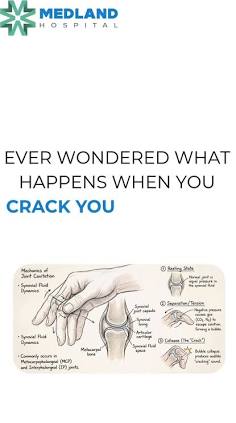
To understand why asking can you get arthritis from cracking knuckles yields a firm “no” from medical experts, we must look inside the joint capsule itself.
Your finger joints are enclosed in a protective connective capsule filled with synovial fluid. Think of synovial fluid as high-grade engine oil for your skeletal system. It lubricates the smooth articular cartilage covering the ends of your bones, enabling effortless movement without friction.
When you pull, twist, or bend a finger to crack it, you manually stretch the joint capsule. This rapid expansion creates a negative pressure environment inside the joint space.
Under this sudden drop in pressure, dissolved gases within the synovial fluid—primarily nitrogen and carbon dioxide—rapidly draw out of solution to form a microscopic gas cavity.
The audible “pop” occurs during this fluid dynamic process, known scientifically as tribonucleation or cavitation.
Once the gas bubble forms and collapses, it takes approximately 15 to 30 minutes for the gas to fully redissolve into the synovial fluid. This physiological reset period is why you cannot crack the exact same knuckle twice in immediate succession.
Importantly, this gas movement occurs strictly within the fluid chamber. It does not involve bones grinding together, ligaments tearing, or cartilage rubbing thin.
The Scientific Proof: What 50+ Years of Research Reveal
The belief that knuckle cracking leads to arthritis is one of the most pervasive health myths in modern culture. However, clinical researchers have put this exact theory to the test multiple times.
The Famous 50-Year Single-Subject Study
One of the most celebrated investigations was conducted by Dr. Donald Unger. To test the hypothesis, Dr. Unger crack the knuckles of his left hand at least twice a day for over 50 years, while leaving his right hand completely uncracked as a control.
After five decades and an estimated 36,500 knuckle cracks, radiologic evaluations showed zero arthritis in either hand, and no structural differences between the left and right joints. His dedicated self-experiment earned him the Ig Nobel Prize in Medicine in 2009.
Large-Scale Epidemiological Evidence
Broader population research mirrors Dr. Unger’s findings:
- Journal of the American Board of Family Medicine Study: Researchers evaluated 215 individuals aged 50 to 89. The prevalence of hand osteoarthritis among habitual knuckle-crackers was 18.1%, compared to 21.5% among non-crackers. The study concluded that knuckle cracking is not a risk factor for hand osteoarthritis.
- Uniformed Services University Clinical Evaluation: A trial examining 300 participants found no statistically significant correlation between decades of knuckle cracking and the development of osteophytes (bone spurs) or joint space narrowing.
If cracking knuckles directly damaged cartilage, epidemiological data would show noticeably higher rates of hand arthritis among frequent crackers. The data shows no such link.
What Actually Causes Hand Arthritis?
If cracking your fingers doesn’t destroy your joints, what does?
To understand true joint degradation, it helps to visualize your cartilage like the tread on a car tire. Over decades of driving, smooth tire tread gradually wears down due to friction, heavy loads, and structural fatigue.
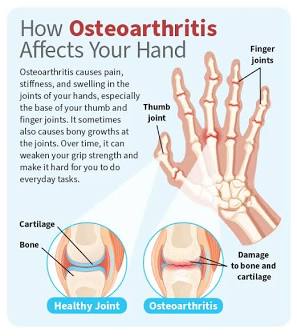
Similarly, osteoarthritis occurs when the smooth protective cartilage capping your bones slowly erodes, leaving rough bone surfaces to rub against each other.
| Feature / Biomarker | Painless Knuckle Cracking | Hand Osteoarthritis (OA) |
|---|---|---|
| Root Mechanism | Gas cavitation in synovial fluid | Progressive cartilage breakdown |
| Primary Symptom | Audible pop; temporary tension relief | Deep, aching joint pain; morning stiffness |
| Physical Findings | Normal joint range of motion | Bony enlarged joints (Heberden’s/Bouchard’s nodes) |
| Associated Inflammation | Absent | Mild to moderate localized edema |
| Impact on Grip Strength | Negligible under normal force | Noticeable decline over time |
| Clinical Treatment Needed | None | Topicals, therapy, exercise, NSAIDs |
Primary risk factors for developing hand arthritis include:
- Genetics and Family History: Hereditary factors heavily influence cartilage durability and joint alignment.
- Advanced Age: Cellular repair mechanisms in joint tissue naturally slow down over time.
- Prior Joint Trauma: Past bone fractures, severe sprains, or tendon ruptures accelerate localized wear and tear.
- Repetitive Mechanical Stress: Heavy industrial manual labor or high-impact joint loading places authentic strain on articular structures.
Keeping active and managing overall joint stress plays a critical role in preserving mobility as you age. Learning how to stay active with arthritis helps maintain functional grip strength without irritating vulnerable hand tissues.
Furthermore, systemic weight management directly influences joint inflammation markers throughout the entire body. Reviewing how weight loss helps reduce joint pain illustrates how reducing overall metabolic strain helps preserve cartilage longevity, even in non-weight-bearing joints like the hands.
Clinical Insights on Hand Health
Dr. Preet Pal’s Clinical Perspective “In my clinical practice, patients frequently ask whether their habitual finger popping is causing their hand pain. I reassure them that painless popping is harmless gas cavitation. However, if popping is accompanied by a grinding sensation—what we call crepitus—or if you experience morning stiffness lasting longer than 20 minutes, we are no longer looking at cavitation. That indicates active synovial inflammation or cartilage loss, which requires targeted therapeutic intervention.”
Are There Any Potential Risks to Habitual Cracking?
While cracking knuckles is not bad for arthritis, “harmless” does not mean completely immune to side effects if done aggressively.
In rare instances, forceful or compulsive joint popping can cause localized issues:
- Soft Tissue Irritation: Forcing a joint beyond its anatomical range of motion to force a pop can stretch surrounding ligaments and joint capsules.
- Reduced Grip Strength: Some early observational studies noted that extreme, long-term habit-crackers showed slight soft tissue swelling and minor reductions in grip force.
- Acute Ligamentous Sprains: Applying violent lateral force to a finger joint can occasionally strain collateral ligaments or dislodge tendons.
If you enjoy popping your knuckles for tension relief, do so gently using natural movement. Never force a joint to crack if it resists or causes discomfort.
When Joint Noises Signal a Real Medical Problem
Not all joint sounds are created equal. While gas popping in the fingers is physiological, other joint sounds can indicate structural joint pathology.
Crepitus vs. Cavitation
- Cavitation (Harmless): A sharp, single pop followed by a refractory period. It causes no pain and is accompanied by a sensation of pressure release.
- Crepitus (Pathological): A continuous crunching, grinding, or squeaking noise during movement. Crepitus occurs when damaged, rough cartilage or exposed bone surfaces rub directly against each other.
If your finger joints display any of the following warning signs, schedule a medical evaluation:
- Sharp pain during or immediately after cracking
- Visible swelling, redness, or heat around finger joints
- Bony enlargements at the middle joints (Bouchard’s nodes) or end joints (Heberden’s nodes)
- Difficulty making a fist or buttoning a shirt
- Joint locking, catching, or physical instability
Systemic body weight can also exacerbate generalized inflammatory responses in joint tissues. Understanding how weight affects joint pain highlights how metabolic factors amplify underlying joint degradation across the body.
Managing Hand Pain: Targeted Topical Relief
When hand stiffness or joint discomfort strikes—whether from early osteoarthritis, repetitive strain, or overworking your hands—relying solely on systemic oral pain medications isn’t always ideal.
For targeted comfort, topicals offer a localized approach to easing aching finger joints.
Balmorex Pro: Targeted Topical Support for Hand Mobility
If you suffer from stiff, aching fingers, Balmorex Pro offers deep-penetrating topical relief formulated specifically for vulnerable joint structures like hands, wrists, and knees.
Balmorex Pro: Targeted Topical Joint Support
From a clinical standpoint, topical formulations like Balmorex Pro excel because they deliver natural anti-inflammatory compounds (such as Arnica and Boswellia) directly through the dermal layer to surrounding joint tissues.
This localized delivery helps soothe nerve endings and calm surrounding tissue inflammation without subjecting your stomach to the gastrointestinal side effects often associated with long-term oral NSAID use.
Integrating a soothing topical cream into your daily hand care routine—combined with gentle range-of-motion stretches—helps maintain hand flexibility, calms aching knuckles, and keeps your fingers moving comfortably.
Final Verdict: Is Cracking Knuckles Bad for Arthritis?
The medical consensus is settled: cracking knuckles is not bad for arthritis, nor does it cause permanent joint damage. The pop is simply a physical reaction to pressure changes within the synovial fluid of your hand joints.
To keep your hands healthy for life, focus on proven joint care strategies:
- Maintain active hand mobility through daily range-of-motion exercises.
- Protect your hands from acute traumatic injuries during heavy physical work.
- Eat an anti-inflammatory diet rich in omega-3 fatty acids and antioxidants.
- Use targeted topical joint support when stiffness or overexertion occurs.
Painless knuckle popping is a harmless habit. Listen to your body, avoid forcing joint movements, and consult a physician if you ever experience pain or swelling.
Frequently Asked Questions
Is cracking knuckles bad for arthritis in the long term?
No, cracking knuckles is not bad for arthritis in the long term. Scientific studies have found no link between knuckle cracking and the development of arthritis. The sound comes from gas bubbles in the joint fluid, not from joint damage.
Can cracking your knuckles cause joint damage or arthritis?
Cracking your knuckles does not cause arthritis or permanent joint damage. Research shows that this habit does not harm cartilage or increase arthritis risk. However, excessive or forceful cracking may lead to temporary discomfort in some people.
Why do people think cracking knuckles is bad for arthritis?
Many people believe cracking knuckles is bad for arthritis because of the loud popping sound and long-standing myths. In reality, arthritis develops due to aging, genetics, or inflammation, not from joint cracking.
Is it safe to crack your knuckles every day?
Yes, for most people, daily knuckle cracking is safe and not linked to arthritis. If you feel pain, swelling, or reduced movement, you should stop and consult a doctor, as those symptoms are unrelated to normal knuckle cracking.
What actually causes arthritis if not knuckle cracking?
Arthritis is caused by factors like aging, joint wear and tear, autoimmune conditions, and injuries. Cracking knuckles is not a cause of arthritis, according to medical research and expert organizations.
Verified Medical Sources
- Harvard Health Publishing: Knuckle Cracking and Joint Health
- National Institute of Arthritis and Musculoskeletal and Skin Diseases (NIAMS): Hand Osteoarthritis Overview
- Journal of the American Board of Family Medicine: Knuckle Cracking Study
- Mayo Clinic: Osteoarthritis Symptoms and Risk Factors
- Arthritis Foundation: Understanding Joint Noises and Crepitus
Author Bio
Jennifer Collins is a wellness researcher and natural health writer focused on adults over 40. With 3+ years of experience in digital health content, Jennifer specializes in making science-backed nutrition and lifestyle strategies easy to follow and apply.
Health Disclaimer
This content is for informational purposes only and is not intended to diagnose, treat, or cure any disease. Always consult your healthcare provider before making changes to your diet or health routine. This article may include affiliate links, which come at no extra cost to you.