
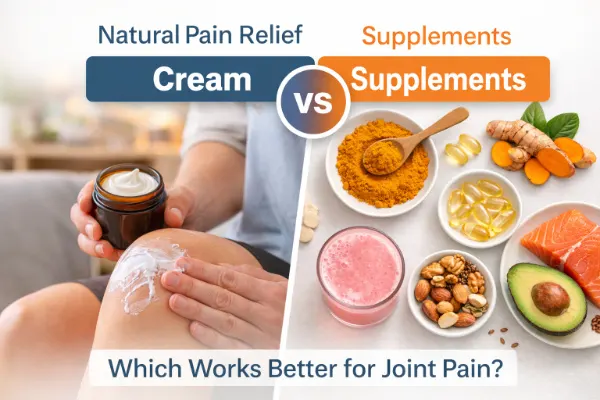
Joint pain has a way of showing up uninvited. One day you feel fine, and the next day your knees sound like a bowl of cereal. If you’ve ever stood in a pharmacy aisle wondering whether to grab a cream or a supplement, you’re not alone.
The debate around natural pain relief cream vs supplements keeps growing as more people look for safer and long-term solutions. Some people swear by topical gels. Others trust capsules and powders. So which option actually works better?
Let’s break this down in a clear, practical, and honest way so you can make a smart decision for your joints.
Understanding Joint Pain and Why It Happens

Joint pain does not happen randomly. It usually comes from inflammation, cartilage wear, or stiffness caused by aging, injury, or conditions like osteoarthritis.
According to the Centers for Disease Control and Prevention, millions of adults deal with joint pain daily, especially in knees, hips, and shoulders. That means the demand for effective and natural relief keeps rising.
When people search for the best way to treat joint pain, they often land on two main options: topical treatments and oral supplements.
What Are Natural Pain Relief Creams?
Topical pain relief creams are applied directly to the skin over the painful joint. These creams usually contain ingredients like menthol, capsaicin, camphor, or herbal extracts.
They work by interacting with nerve endings in your skin. Some create a cooling sensation, while others generate warmth. This process distracts your brain from pain signals, which gives you temporary relief.
Many natural formulations also include plant-based ingredients such as arnica or eucalyptus oil. These aim to reduce inflammation and improve blood flow in the affected area.
How Oral Supplements Work for Joint Pain
Oral supplements take a different route. You swallow them, and your body absorbs the ingredients through your digestive system.
Common ingredients include glucosamine, chondroitin, turmeric, collagen, and omega-3 fatty acids. These compounds target inflammation and joint health from within.
Research published by the National Institutes of Health shows that some supplements like glucosamine and chondroitin may support cartilage health, although results vary among individuals.
Unlike creams, supplements do not offer instant relief. They work gradually and often require consistent use for several weeks.
Topical vs Oral Joint Pain Relief: The Core Differences
The biggest difference between topical vs oral joint pain relief lies in how they act inside your body.
Topical creams focus on the surface. They target a specific area and provide localized relief. You apply them, and within minutes, you may feel a change.
Oral supplements work systemically. They affect your entire body and aim to reduce inflammation over time. This makes them suitable for chronic conditions affecting multiple joints.
If your pain feels sharp and localized, creams might help more. If your pain spreads across joints or comes from internal inflammation, supplements may offer better support.
Pain Cream or Pills: Which Works Faster?
If speed matters, pain creams usually win.
Topical creams can start working within minutes. The cooling or warming effect kicks in quickly, which helps you manage sudden discomfort.
On the other hand, supplements require patience. Most studies suggest giving them at least 4 to 8 weeks before expecting noticeable results.
That said, faster does not always mean better. Creams often provide temporary relief, while supplements may address the root cause over time.
Effectiveness Based on Type of Joint Pain
Different types of joint pain respond differently to treatments.
For muscle soreness or mild joint stiffness, topical creams can be highly effective. Athletes often use them after workouts for quick recovery.
For chronic conditions like osteoarthritis, oral supplements may provide more consistent support. Ingredients like turmeric contain curcumin, which has been studied for its anti-inflammatory effects.
A study published in the Journal of Medicinal Food found that curcumin may help reduce joint pain and improve function in people with arthritis.
So the best way to treat joint pain depends heavily on what kind of pain you’re dealing with.
Safety and Side Effects: What You Should Know

Safety matters just as much as effectiveness.
Topical creams generally carry fewer systemic side effects because they stay on the surface. However, some people may experience skin irritation or allergic reactions.
Oral supplements interact with your body more deeply. While many are safe, they can cause digestive issues or interact with medications.
For example, high doses of turmeric may affect blood clotting. Glucosamine may not suit people with shellfish allergies.
The U.S. Food and Drug Administration does not regulate supplements as strictly as medications, so quality can vary. Always choose reputable brands with third-party testing.
Convenience and Daily Use
Convenience often influences what people stick with long term.
Creams require application multiple times a day. They can feel greasy and may have a strong smell. Not ideal if you’re heading into a meeting.
Supplements fit easily into a daily routine. You take them once or twice a day, and that’s it.
However, consistency plays a key role. A supplement only works if you take it regularly. A cream only helps if you apply it when needed.
Cost Comparison Over Time
Cost is another factor worth considering.
Topical creams may seem cheaper upfront, but frequent use adds up over time. You may need to repurchase them often.
Supplements usually come in monthly supplies. While they may cost more initially, they can provide longer-term benefits if they address underlying inflammation.
Think of creams as short-term tools and supplements as long-term investments.
Can You Combine Both for Better Results?
Here’s where things get interesting.
You don’t always have to choose between natural pain relief cream vs supplements. Many experts suggest combining both approaches for better results.
Use a cream for immediate relief during flare-ups. At the same time, take supplements to support joint health in the background.
This dual strategy targets both symptoms and causes. It gives you fast comfort and long-term improvement.
What Science Says About the Best Way to Treat Joint Pain

Science does not give a one-size-fits-all answer.
Clinical studies show mixed results for both creams and supplements. Some people experience significant relief, while others notice little change.
This variation happens because joint pain has many causes. Age, activity level, diet, and overall health all play a role.
The American College of Rheumatology recommends a combination of lifestyle changes, physical activity, and appropriate treatments rather than relying on a single solution.
That means your choice should align with your specific condition and lifestyle.
Real-World Scenario: Choosing What Works for You
Imagine this.
You wake up with a stiff knee after a long walk. A topical cream can help you get through the day comfortably.
Now imagine ongoing joint discomfort that lasts for months. In this case, supplements may support long-term recovery.
Your situation decides your solution.
Frequently Asked Questions
What is better for joint pain: natural pain relief cream vs supplements?
Natural pain relief cream vs supplements depends on your pain type and goals. Creams work best for quick, localized relief because they act directly on the painful area. Supplements support long-term joint health by reducing inflammation from within. If you want fast relief, choose a cream. If you want lasting improvement, supplements may work better.
Do natural pain relief creams work faster than supplements?
Yes, in most cases, natural pain relief creams work faster than supplements. Creams can provide relief within minutes by affecting nerve signals in the skin. Supplements take time because your body needs to absorb and process them. In the natural pain relief cream vs supplements comparison, creams win for speed, while supplements focus on long-term results.
Can I use both pain creams and supplements together for joint pain?
Yes, you can combine both in most cases. Many people use a dual approach when comparing natural pain relief cream vs supplements. A cream can handle sudden pain, while supplements support joint health over time. This combination often provides better overall results, but you should consult a healthcare professional if you take medications.
Are natural pain relief supplements safer than topical creams?
Both options are generally safe when used correctly, but they work differently. In the natural pain relief cream vs supplements debate, creams have fewer systemic effects since they stay on the skin. Supplements affect your whole body and may interact with medications. Safety depends on your health condition, dosage, and product quality.
What is the best way to treat joint pain naturally at home?
The best way to treat joint pain often includes a mix of strategies. When comparing natural pain relief cream vs supplements, using both can be effective. Add regular exercise, a balanced diet, and proper rest for better results. This combined approach targets both symptoms and root causes, which improves long-term joint health.
Final Verdict: Cream or Supplements?
So, what wins in the debate of natural pain relief cream vs supplements?
There is no universal winner.
Topical creams work best for quick, targeted relief. They act fast and help you manage sudden pain.
Oral supplements work better for long-term joint support. They take time but may help reduce inflammation and improve joint function.
If you want the best way to treat joint pain, consider using both wisely. Think of creams as your emergency tool and supplements as your daily support system.
If you’re considering a topical solution, this detailed Balmorex Pro Cream Review 2026: Ingredients, Benefits and Real Results breaks down how one of the most talked-about pain relief creams actually performs in real life.
Key Takeaway
When choosing between pain cream or pills, focus on your pain type, lifestyle, and expectations. Quick relief or long-term improvement. Localized pain or widespread discomfort. Your answers will guide your choice.
Sources
Centers for Disease Control and Prevention