

If you’ve ever found yourself staring at the ceiling at 2 a.m. because of shoulder pain at night, you’re not alone. Many people struggle with shoulder pain at night can’t sleep issues, especially after age 40. What feels like mild discomfort during the day can suddenly turn into sharp, stubborn pain once you lie down.
This article explains why shoulder pain at night gets worse, what causes it, and most importantly, how to sleep better despite the pain. Everything here is based on real medical understanding, not guesswork.
Table of Contents
Why Shoulder Pain at Night Feels Worse

Let’s start with the big question. Why does shoulder pain at night can’t sleep feel so intense compared to daytime pain?
1. Reduced Blood Flow While Lying Down
When you lie flat, your body redistributes blood flow. This can increase pressure around inflamed tissues in your shoulder joint. That extra pressure often leads to more pain.
2. Lack of Distraction
During the day, your brain stays busy. At night, there’s no distraction. Your brain focuses more on pain signals, making shoulder pain at night feel stronger.
3. Compression from Sleeping Position
If you sleep on your side, especially the painful one, you compress the shoulder joint. This can worsen inflammation and lead to that classic shoulder pain at night can’t sleep situation.
4. Natural Inflammatory Cycles
Your body releases fewer anti-inflammatory hormones at night. This natural rhythm can make pain conditions feel worse in the evening and early morning.
Common Causes of Shoulder Pain at Night
Not all shoulder pain is the same. Understanding the root cause helps you fix the problem faster.
Rotator Cuff Injuries
This is one of the most common causes of shoulder pain at night can’t sleep. The rotator cuff helps stabilize your shoulder. Small tears or inflammation can cause sharp pain, especially when lying down.
Frozen Shoulder
Also called adhesive capsulitis, this condition causes stiffness and deep aching pain. Many people report severe shoulder pain at night with limited movement.
Bursitis
The shoulder has small fluid-filled sacs called bursae. When they become inflamed, even slight pressure during sleep can trigger pain.
Tendonitis
Overuse or aging can inflame shoulder tendons. This leads to persistent discomfort, often worse at night.
Poor Sleeping Posture
Sometimes the problem isn’t medical. It’s mechanical. Bad sleeping posture can trigger or worsen shoulder pain at night can’t sleep issues.
How Sleeping Position Affects Shoulder Pain
Your sleeping position plays a major role in your comfort.
Sleeping on the Painful Shoulder
This is the worst position. It compresses tissues and reduces circulation. If you already struggle with shoulder pain at night, this position will make it worse.
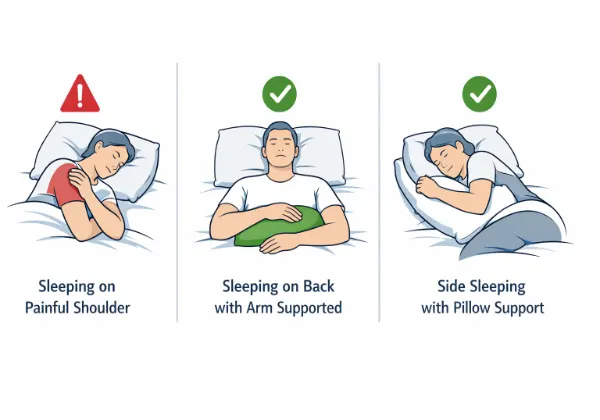
Sleeping on the Opposite Side
This is better, but only if you support your painful shoulder properly. Without support, gravity pulls the shoulder forward, causing strain.
Sleeping on Your Back
This is usually the best position for people dealing with shoulder pain at night can’t sleep. It keeps your spine neutral and reduces pressure on the shoulder.
Best Sleeping Positions to Reduce Shoulder Pain at Night
Let’s get practical. Here’s how you can sleep better tonight.
Back Sleeping with Support
Lie on your back and place a pillow under your affected arm. This keeps your shoulder in a relaxed position.
Side Sleeping with Pillow Support
If you prefer sleeping on your side, hug a pillow. This prevents your shoulder from collapsing inward.
Slight Incline Position
Try elevating your upper body slightly using extra pillows. This can reduce pressure and improve comfort.
Why Your Mattress and Pillow Matter
Your bed setup can either help or worsen shoulder pain at night can’t sleep.
Mattress
A mattress that’s too soft allows your body to sink, increasing joint pressure. Too firm, and it creates pressure points. A medium-firm mattress usually works best.
Pillow
Your pillow should support your neck and keep your spine aligned. If your head sits too high or too low, it affects shoulder positioning.
Simple Home Remedies for Shoulder Pain at Night
You don’t always need medication. Some simple strategies can make a big difference.
Apply Ice or Heat
Use ice for inflammation and heat for stiffness. Apply for 15 to 20 minutes before bed.
Gentle Stretching
Light stretching can improve flexibility and reduce tightness. Avoid aggressive movements.
Warm Shower Before Bed
A warm shower relaxes muscles and improves blood flow, helping reduce shoulder pain at night.
When Shoulder Pain at Night Signals a Bigger Problem
Not all pain is harmless. Watch for these signs:
- Pain that lasts more than a few weeks
- Limited range of motion
- Weakness in the arm
- Pain that wakes you every night
If you experience these, consult a doctor. Persistent shoulder pain at night can’t sleep issues may require medical evaluation.
Persistent stiffness along with shoulder pain at night can’t sleep may point to a more serious issue like frozen shoulder. You can learn the early warning signs in this guide: Frozen Shoulder Symptoms Over 50: Early Warning Signs You Shouldn’t Ignore (Stop Pain Fast).

Medical Treatments That Actually Work
If home remedies don’t help, doctors may suggest:
Physical Therapy
This is often the first step. It improves strength and flexibility.
Anti-inflammatory Medications
Over-the-counter medications can reduce pain and swelling.
Corticosteroid Injections
In severe cases, injections can provide temporary relief.
Surgery
Rare, but sometimes necessary for severe rotator cuff tears.
Lifestyle Changes That Help Prevent Shoulder Pain at Night
Small changes can prevent long-term problems.
Improve Posture
Poor posture during the day often leads to shoulder pain at night.
Avoid Overuse
Limit repetitive shoulder movements, especially overhead activities.
Strengthen Shoulder Muscles
Strong muscles support joints and reduce injury risk.
The Real Reason You Can’t Sleep with Shoulder Pain
Let’s be honest. The biggest frustration isn’t the pain itself. It’s the sleep loss.
When you deal with shoulder pain at night can’t sleep, your body enters a cycle:
Pain → Poor sleep → Increased sensitivity → More pain
Breaking this cycle is the key to recovery.
Quick Night Routine to Sleep Better with Shoulder Pain
Here’s a simple routine you can follow tonight:
Start with a warm shower. Do light stretching. Apply ice or heat depending on your condition. Set up your pillows for proper support. Avoid using your phone in bed. Then lie down in a supported position.
Consistency matters more than perfection.
Frequently Asked Questions
Why is my shoulder pain worse at night and I can’t sleep?
Shoulder pain at night can’t sleep issues usually happen due to inflammation, reduced movement, and pressure on the joint while lying down. At night, your body has fewer distractions, so pain feels more intense. Conditions like rotator cuff injury, bursitis, or frozen shoulder often worsen when you lie on the affected side.
What is the best sleeping position for shoulder pain at night can’t sleep?
The best position for shoulder pain at night can’t sleep is sleeping on your back with a pillow supporting your affected arm. If you prefer side sleeping, lie on the opposite side and hug a pillow to keep your shoulder stable and reduce strain.
How do I relieve shoulder pain at night fast?
To relieve shoulder pain at night can’t sleep, apply ice or heat before bed, do gentle stretching, and adjust your sleeping position. A supportive pillow and proper mattress can also reduce pressure on the shoulder and help you sleep better.
When should I worry about shoulder pain at night?
You should be concerned if shoulder pain at night can’t sleep lasts more than a few weeks, limits your movement, or causes weakness in your arm. Persistent night pain may indicate a rotator cuff tear or frozen shoulder and should be evaluated by a doctor.
Can a mattress or pillow cause shoulder pain at night can’t sleep?
Yes, an unsupportive mattress or wrong pillow can worsen shoulder pain at night can’t sleep. A mattress that is too soft or too firm can increase pressure on your shoulder, while poor pillow support can misalign your neck and shoulder, leading to more pain.
Final Thoughts
Shoulder pain at night is common, but it’s not something you have to live with. The right sleeping position, proper support, and a few simple habits can dramatically improve your sleep.
If your shoulder pain at night can’t sleep problem continues, don’t ignore it. Early treatment prevents long-term damage.
And remember, your shoulder isn’t trying to ruin your sleep on purpose. It’s just asking for better support and care.
Sources
- American Academy of Orthopaedic Surgeons (AAOS)
- Mayo Clinic – Shoulder Pain
- Cleveland Clinic – Shoulder Pain at Night
- National Institute of Arthritis and Musculoskeletal and Skin Diseases (NIAMS)
Author Bio
Jennifer Collins is a wellness researcher and natural health writer focused on adults over 40. With 3+ years of experience in digital health content, Jennifer specializes in making science-backed nutrition and lifestyle strategies easy to follow and apply.
Health Disclaimer
This content is for informational purposes only and is not intended to diagnose, treat, or cure any disease. Always consult your healthcare provider before making changes to your diet or health routine. This article may include affiliate links, which come at no extra cost to you.