
If you’ve crossed 45 and suddenly feel a sharp twinge when bending your knee, you’re not alone. Many adults start noticing knee discomfort during simple movements like sitting down, climbing stairs, or squatting. The question people often ask is simple: why does my knee hurt when I bend it after 45?
The answer usually comes down to natural aging changes inside the joint. Cartilage wears down, muscles weaken, and decades of movement start to show their effects.
But aging alone doesn’t explain everything. Several common conditions can trigger knee pain when bending, and many of them improve with the right care.
Let’s break down what actually happens inside your knee after 45, what might cause the pain, and what you can realistically do about it.
Table of Contents
Why Knee Pain Often Starts After Age 45
Your knees handle a lot of work. Every step, squat, or climb up the stairs puts pressure on the joint.
According to the American Academy of Orthopaedic Surgeons, the knee joint absorbs forces equal to 2–3 times your body weight during walking and even more during bending movements.
After 45, a few natural changes occur:
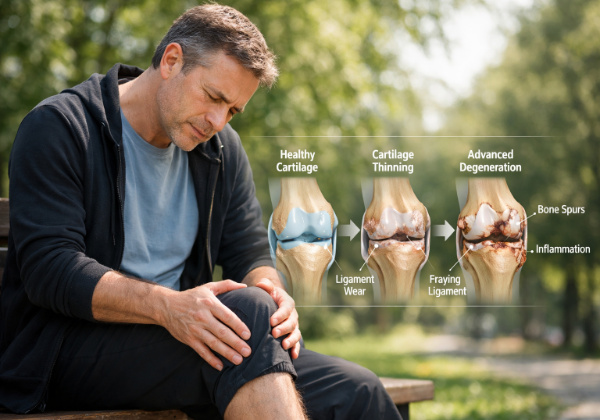
- Cartilage becomes thinner and less elastic
- Joint lubrication decreases
- Muscles supporting the knee lose strength
- Small injuries accumulate over time
These changes make the knee more sensitive to stress when bending.
That’s why many people first notice discomfort during movements like:
- Getting up from a chair
- Kneeling
- Climbing stairs
- Squatting down
Many adults also notice discomfort specifically on the inside of the knee as they age. If you’re experiencing this type of pain without a clear injury, you may want to read Inner Knee Pain After 40 With No Injury? Causes & Fixes to understand what might be happening.
If you keep wondering, “why does my knee hurt when I bend it after 45?”, the next sections explain the most common medical reasons.
1. Early Osteoarthritis
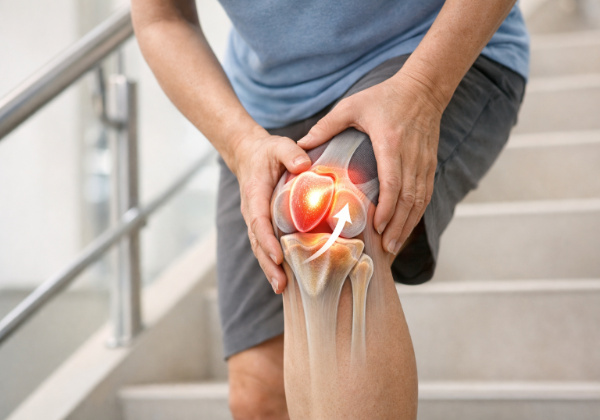
One of the most frequent causes of knee pain after 45 is osteoarthritis.
Osteoarthritis occurs when the protective cartilage inside the joint slowly wears down. Cartilage normally allows the bones to glide smoothly during movement. When it thins, the bones create more friction.
This friction often causes pain during bending.
Common symptoms include
- Pain while bending the knee
- Stiffness after sitting or sleeping
- Grinding or crackling sensations
- Mild swelling around the joint
According to the Centers for Disease Control and Prevention (CDC), osteoarthritis affects over 32 million adults in the United States, and the knee remains one of the most commonly affected joints.
The condition usually develops gradually, which explains why many people notice symptoms only after their mid-40s.
2. Meniscus Wear or Degenerative Tears
Inside your knee sit two pieces of cartilage called menisci. These structures act like shock absorbers between the thigh bone and shin bone.
Over time, these tissues become thinner and more fragile.
Even a simple movement like twisting while standing up can create a degenerative meniscus tear after 45.
Signs of meniscus damage
- Pain during bending or squatting
- A catching or locking sensation
- Clicking sounds inside the knee
- Difficulty fully straightening the leg
Research published in the New England Journal of Medicine shows that degenerative meniscus tears become common after age 40, even without major injuries.
So if bending your knee suddenly hurts, the meniscus may be involved.
3. Patellofemoral Pain (Kneecap Pain)
Another common explanation for the question “why does my knee hurt when I bend it after 45?” involves the kneecap.
The kneecap (patella) slides along a groove in the thigh bone when the knee bends. If the movement becomes slightly misaligned, the cartilage under the kneecap becomes irritated.
Doctors call this patellofemoral pain syndrome.
Typical symptoms
- Pain at the front of the knee
- Discomfort when bending or climbing stairs
- Pain after sitting with bent knees for long periods
- A dull ache around the kneecap
Weak thigh muscles often contribute to this condition. As muscle strength decreases with age, the kneecap may track less smoothly.
The good news: strengthening exercises often help significantly.
4. Tendon Irritation
Tendons connect muscles to bones. Around the knee, the most important tendons include:
- Quadriceps tendon
- Patellar tendon
These tendons can become irritated from repetitive stress, especially if someone suddenly increases activity levels.
Doctors call this tendinitis or tendinopathy.
Symptoms may include
- Pain during bending
- Tenderness below or above the kneecap
- Mild swelling
- Pain after activity
Middle-aged adults often experience tendon irritation after starting new exercise routines or doing repeated squatting activities.
Your knee might simply be telling you to slow down.
5. Muscle Imbalance and Weakness
Muscle strength plays a huge role in knee health.
The quadriceps, hamstrings, and glute muscles stabilize the knee joint during movement. If these muscles weaken, the knee absorbs more stress.
After age 40, people naturally lose muscle mass in a process called sarcopenia.
Without strong muscles supporting the joint, bending movements can cause discomfort.
You might notice pain when:
- Standing up from low chairs
- Climbing stairs
- Squatting to pick something up
Strength training often reduces this type of pain dramatically.
6. Bursitis
Your knee contains small fluid-filled sacs called bursae. These sacs reduce friction between tissues.
Repeated kneeling or pressure can inflame these sacs, leading to knee bursitis.
Symptoms include
- Swelling in front of the knee
- Pain when bending or kneeling
- Warmth or tenderness
People who spend long periods kneeling—such as gardeners, cleaners, or construction workers—often develop this condition.
Why Bending the Knee Triggers Pain
Bending the knee increases pressure inside the joint.
Studies published in the Journal of Biomechanics show that knee bending can increase joint pressure significantly, especially during squatting or climbing stairs.
When structures inside the knee become irritated or worn down, this pressure creates pain.
That’s why bending often reveals problems that feel invisible during walking.
When Knee Pain Is Usually Harmless
Not every knee pain signals a serious condition.
Mild discomfort often improves with simple changes.
Pain may be temporary if:
- It appears after heavy activity
- It improves with rest
- There is no swelling or instability
- The knee still moves normally
Many people experience occasional knee pain as the joint adapts to normal aging changes.
Warning Signs You Should See a Doctor
Some symptoms deserve medical attention.
Consider seeing a doctor if you notice:
- Severe swelling
- Knee locking or catching
- Inability to bear weight
- Persistent pain lasting several weeks
- Visible joint deformity
These signs may indicate structural damage that needs evaluation.
Doctors often use physical exams and imaging tests like X-rays or MRI scans to identify the cause.
Practical Ways to Reduce Knee Pain After 45
The encouraging news: many knee problems improve with lifestyle changes.
Small adjustments can reduce joint stress and improve function.
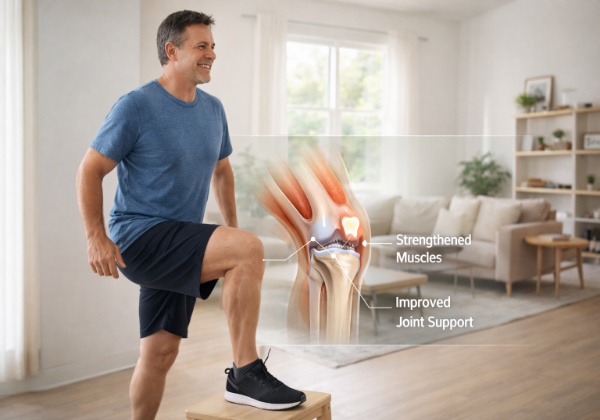
1. Strengthen Your Leg Muscles
Strong muscles stabilize the knee.
Focus on exercises such as:
- Straight leg raises
- Wall sits
- Step-ups
- Glute bridges
The American College of Sports Medicine recommends strength training at least two days per week for adults.
2. Maintain a Healthy Weight
Body weight significantly affects knee pressure.
Research from Johns Hopkins Medicine shows that losing one pound reduces knee joint load by about four pounds during daily activity.
Even modest weight loss can reduce knee pain.
3. Keep Moving (But Choose Smart Activities)
Movement nourishes joint cartilage and improves circulation.
Low-impact exercises work best:
- Walking
- Cycling
- Swimming
- Elliptical training
These activities strengthen muscles without excessive joint stress.
4. Improve Flexibility
Tight muscles increase knee strain.
Regular stretching of the hamstrings, calves, and quadriceps helps maintain joint alignment.
Simple stretching routines can take less than five minutes per day.
5. Use Supportive Footwear
Shoes affect knee mechanics more than many people realize.
Supportive footwear reduces impact forces during walking.
Worn-out shoes can increase knee stress, especially during bending movements.
Can Knee Pain After 45 Be Prevented?
While aging cannot be stopped, many knee issues remain preventable.
Healthy habits protect the joint for years.
Focus on:
- Maintaining muscle strength
- Staying physically active
- Avoiding sudden activity spikes
- Using proper movement technique
- Keeping body weight within a healthy range
These habits reduce the risk of long-term knee damage.
Frequently Asked Question
Why does my knee hurt when I bend it after 45?
Knee pain when bending after age 45 often happens because of natural joint changes. Cartilage becomes thinner, muscles weaken, and years of daily movement can stress the knee. Common causes include early osteoarthritis, meniscus wear, tendon irritation, and kneecap alignment issues. If the pain lasts for several weeks or comes with swelling or instability, a medical evaluation may help identify the exact cause.
Is it normal for knees to hurt when bending after age 45?
Mild knee discomfort can become more common after 45 because joints experience gradual wear over time. However, persistent pain when bending is not something you should ignore. It may indicate cartilage wear, muscle weakness, or joint inflammation. Strengthening leg muscles and staying active often helps reduce symptoms.
What conditions cause knee pain when bending after 45?
Several conditions can cause knee pain when bending in middle age. The most common include osteoarthritis, degenerative meniscus tears, patellofemoral pain syndrome, tendon inflammation, and bursitis. These problems often develop slowly due to aging, repetitive movement, or muscle imbalances.
When should I worry about knee pain after 45?
You should consider seeing a doctor if knee pain lasts longer than a few weeks, worsens over time, or comes with symptoms such as swelling, locking, instability, or difficulty bearing weight. These signs may suggest structural damage that requires professional evaluation.
How can I relieve knee pain when bending after 45?
Many people improve knee pain by strengthening the muscles around the joint, maintaining a healthy weight, and choosing low-impact activities like walking, cycling, or swimming. Stretching tight muscles and wearing supportive footwear can also reduce stress on the knee during bending movements.
The Bottom Line
If you keep asking “why does my knee hurt when I bend it after 45?”, the answer usually lies in natural joint changes combined with everyday wear and tear.
Common causes include:
- Early osteoarthritis
- Meniscus wear
- Kneecap irritation
- Tendon inflammation
- Muscle weakness
Most cases improve with strengthening exercises, weight management, and smart activity choices.
Your knees have worked hard for decades. With the right care, they can keep supporting you for many more years.
And if your knees occasionally complain when you bend them? Think of it as their polite reminder that they’ve been carrying you around for quite a while.
Sources
- Centers for Disease Control and Prevention (CDC) – Osteoarthritis Statistics
- American Academy of Orthopaedic Surgeons – Knee Anatomy and Joint Forces
- Johns Hopkins Medicine – Knee Arthritis and Weight Loss
- American College of Sports Medicine – Physical Activity Guidelines
- New England Journal of Medicine – Meniscal Tears in Middle-Aged Adults
Author Bio
Jennifer Collins is a wellness researcher and natural health writer focused on adults over 40. With 3+ years of experience in digital health content, Jennifer specializes in making science-backed nutrition and lifestyle strategies easy to follow and apply.
Health Disclaimer
This content is for informational purposes only and is not intended to diagnose, treat, or cure any disease. Always consult your healthcare provider before making changes to your diet or health routine. This article may include affiliate links, which come at no extra cost to you.