

Joint pain can feel like an uninvited guest that refuses to leave, especially after 50. Knees complain when you climb stairs, shoulders protest when you reach overhead, and your back reminds you that you are not 25 anymore. The good news is simple and backed by science. Movement helps. The right movement helps even more.
If you are searching for the best exercises for joint pain over 50, this guide will walk you through proven, safe, and effective options. These exercises support flexibility, strength, and mobility without putting unnecessary stress on your joints. You will not find gimmicks here. Everything comes from trusted health sources and real physiological principles.
If your joint pain feels limited to just one side, it may not be random. You can explore the deeper reasons in our guide on Arthritis in One Knee Only: Causes, Symptoms & What to Do Today After 40.
Let’s make your joints happier, one smart movement at a time.
Why Exercise Matters for Joint Pain After 50

A lot of people think rest fixes joint pain. That idea sounds logical, but it often backfires. When you stop moving, muscles weaken, joints stiffen, and pain increases.
Research from the Centers for Disease Control and Prevention shows that regular physical activity reduces pain and improves function in people with arthritis. Exercise helps lubricate joints, strengthen supporting muscles, and improve balance. Think of it as oiling a rusty hinge.
You do not need intense workouts. You need consistent and joint-friendly movements.
What Makes the Best Exercises for Joint Pain Over 50
Not all exercises treat your joints kindly. Some movements increase strain and worsen discomfort. The best exercises for joint pain over 50 share a few key features.
They are low impact, which means they do not put heavy stress on joints. They improve flexibility so your joints move more freely. They also build strength to support your joints and reduce pressure.
Most importantly, they feel manageable. If an exercise feels like punishment, you will not stick with it.
Warm-Up First Because Your Joints Deserve It
Before jumping into any routine, spend five to ten minutes warming up. This step increases blood flow and prepares your joints.
A simple warm-up can include gentle arm circles, slow walking, and light stretching. Skipping this step is like starting a car in winter and immediately flooring the accelerator. Not a great idea.
20 Best Exercises for Joint Pain Over 50
1. Walking
Walking remains one of the best exercises for joint pain over 50. It is simple, free, and effective. It improves circulation, strengthens muscles, and supports joint health without overloading your body.
Start with 10 to 15 minutes daily and gradually increase.
2. Swimming
Water supports your body weight, which reduces stress on joints. Swimming allows full body movement while keeping impact low.
If you dislike swimming laps, water walking or gentle aqua aerobics works just as well.
3. Cycling
Cycling strengthens your legs and improves mobility without harsh joint impact. Stationary bikes are especially helpful for beginners or those with balance concerns.
4. Chair Squats
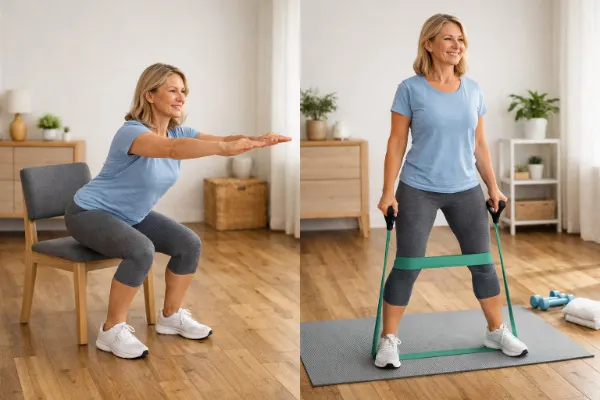
This exercise strengthens your thighs and glutes, which support your knees.
Sit on a chair and stand up slowly. Then sit back down with control. Repeat 8 to 12 times.
5. Wall Push-Ups
Wall push-ups build upper body strength without straining your shoulders.
Stand facing a wall, place your hands on it, and perform push-ups. This version feels much easier on joints compared to floor push-ups.
6. Leg Raises
Straight leg raises strengthen your hip and thigh muscles, reducing knee stress.
Lie on your back and lift one leg slowly. Hold for a few seconds and lower it.
7. Heel Raises
Strong calves improve ankle stability and balance.
Stand behind a chair, hold it for support, and raise your heels. Lower them slowly.
8. Shoulder Rolls
Shoulder stiffness becomes common with age. Shoulder rolls improve mobility and reduce tension.
Roll your shoulders forward and backward in a slow, controlled motion.
9. Hamstring Stretch

Tight hamstrings can worsen lower back and knee pain.
Sit on a chair, extend one leg, and gently reach toward your toes.
10. Yoga
Yoga combines flexibility, balance, and strength. It also reduces stress, which surprisingly affects joint pain.
Choose beginner-friendly styles like Hatha or gentle yoga.
11. Tai Chi
Tai Chi focuses on slow, flowing movements. Studies from Harvard Health highlight its benefits for balance and joint health.
It feels almost like meditation in motion.
12. Resistance Band Exercises
Resistance bands provide gentle strength training without heavy weights.
You can use them for arm curls, leg presses, and shoulder exercises.
13. Step-Ups
Step-ups strengthen your legs and improve coordination.
Use a low step and move slowly. Hold onto a railing if needed.
14. Cat-Cow Stretch
This movement improves spinal flexibility and reduces back stiffness.
Alternate between arching and rounding your back while on your hands and knees.
15. Hip Bridges
Hip bridges strengthen your lower back and glutes.
Lie on your back, bend your knees, and lift your hips slowly.
16. Ankle Circles
Ankle stiffness affects balance and mobility.
Sit or lie down and rotate your ankles in circles.
17. Seated Marching
This exercise improves hip mobility and circulation.
Sit in a chair and lift your knees one at a time like marching.
18. Arm Raises
Arm raises improve shoulder mobility and strength.
Lift your arms to shoulder height and lower them slowly.
19. Side Leg Raises
This exercise strengthens hip muscles, which support your knees.
Stand and lift one leg to the side. Keep your movements slow and controlled.
20. Stretching Routine
A full body stretching routine helps maintain flexibility.
Focus on major muscle groups like legs, back, shoulders, and arms.
How Often Should You Exercise
Consistency matters more than intensity. Aim for at least 150 minutes of moderate activity per week, as recommended by the World Health Organization.
That sounds like a lot, but it breaks down to about 30 minutes a day, five days a week. You can even split it into shorter sessions.
Safety Tips You Should Not Ignore
Listen to your body. Pain is not always a badge of honor. If something hurts sharply, stop immediately.
Start slow and progress gradually. Jumping into intense routines can lead to injuries.
Use proper footwear to support your joints. Stay hydrated and avoid exercising on hard surfaces for long periods.
If you have existing conditions like arthritis or osteoporosis, consult a healthcare professional before starting a new routine.
Common Mistakes People Make
Many people either overdo it or avoid exercise completely. Both extremes harm your joints.
Another common mistake involves ignoring flexibility. Strength matters, but flexibility keeps joints moving smoothly.
Some people also skip recovery. Your body needs time to repair and adapt.
The Role of Weight and Lifestyle
Excess weight puts extra pressure on your joints, especially knees and hips. Even small weight loss can reduce joint pain significantly.
A balanced diet rich in anti-inflammatory foods like fruits, vegetables, and omega-3 fatty acids supports joint health.
Sleep also plays a role. Poor sleep can increase inflammation and pain sensitivity.
When Will You See Results
Patience pays off. You may notice improved flexibility within a few weeks. Pain reduction and strength gains may take longer.
Consistency remains the key factor. Think of exercise as a long-term investment, not a quick fix.
Frequently Asked Questions
What are the best exercises for joint pain over 50?
The best exercises for joint pain over 50 include low-impact activities like walking, swimming, cycling, yoga, and strength training with resistance bands. These exercises improve flexibility, reduce stiffness, and strengthen the muscles that support your joints. Consistency matters more than intensity, so starting slow and staying regular delivers the best results.
Can exercise really reduce joint pain after 50?
Yes, regular movement can significantly reduce discomfort. The best exercises for joint pain over 50 help increase blood flow, improve joint lubrication, and strengthen surrounding muscles. Studies from trusted sources like the CDC and Mayo Clinic confirm that physical activity can ease arthritis symptoms and improve daily function.
How often should I do the best exercises for joint pain over 50?
Most experts recommend at least 150 minutes of moderate activity per week. You can break this into 30 minutes a day, five days a week. The best exercises for joint pain over 50 work best when done consistently, even in shorter sessions like 10 to 15 minutes.
Which exercises should I avoid if I have joint pain over 50?
High-impact activities like running on hard surfaces, jumping exercises, and heavy weightlifting can increase joint stress. Instead of these, focus on the best exercises for joint pain over 50 that are gentle and controlled. Always listen to your body and avoid movements that cause sharp pain.
Are strength exercises safe for joint pain over 50?
Yes, strength training is safe and highly beneficial when done correctly. The best exercises for joint pain over 50 often include light resistance training because stronger muscles reduce pressure on joints. Use resistance bands or light weights and focus on proper form to avoid injury.
Final Thoughts
The best exercises for joint pain over 50 do not require expensive equipment or complicated routines. They focus on gentle, consistent movement that supports your body.
Your joints are not fragile. They just need the right kind of care.
Start small, stay consistent, and keep moving. Your future self will thank you, and your knees might even stop complaining during stairs.
Sources
Centers for Disease Control and Prevention Physical Activity and Arthritis
Harvard Health Publishing Exercise and Joint Health
World Health Organization Physical Activity Guidelines
Arthritis Foundation Exercise Benefits
Mayo Clinic Exercise for Arthritis
Author Bio
Jennifer Collins is a wellness researcher and natural health writer focused on adults over 40. With 3+ years of experience in digital health content, Jennifer specializes in making science-backed nutrition and lifestyle strategies easy to follow and apply.
Health Disclaimer
This content is for informational purposes only and is not intended to diagnose, treat, or cure any disease. Always consult your healthcare provider before making changes to your diet or health routine. This article may include affiliate links, which come at no extra cost to you.