

Waking up stiff should not feel normal. Yet millions of people deal with back pain, joint discomfort, and restless sleep every night. The truth is simple. Your mattress plays a bigger role than you think. If your sleep surface does not support your body properly, it can quietly worsen pain over time.
This guide will help you find the best mattress for back and joint pain 2026 using real data, practical logic, and trusted research. No hype. No fluff. Just what actually works.
If your pain shoots down your legs or feels nerve-related, these simple home-based movements can help. Check out this detailed guide on Sciatica Pain Relief Exercises at Home: 8 Moves for Fast Relief.
Table of Contents
Why Your Mattress Matters for Back and Joint Pain

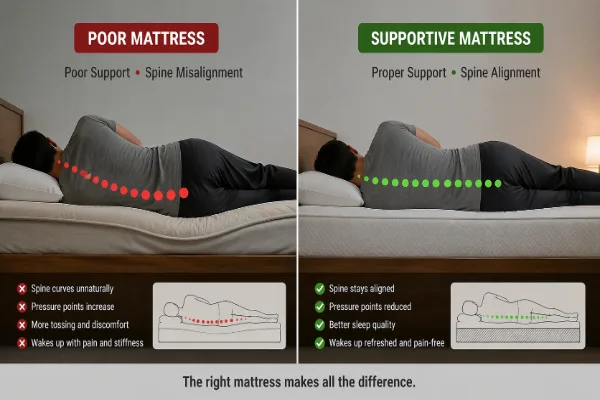
Your body spends about one third of its life in bed. During sleep, your spine should stay in a neutral position. Your joints should feel supported, not compressed. If your mattress fails to do this, pain builds up instead of healing.
Research from the National Institutes of Health shows that proper spinal alignment during sleep reduces chronic lower back pain and improves sleep quality. A poor mattress disrupts that alignment. That leads to pressure points, muscle strain, and joint stiffness.
A good mattress does three things well:
It supports your spine
It relieves pressure on joints
It adapts to your body shape
When these three factors align, your body recovers faster overnight.
What Causes Morning Stiffness
Morning stiffness does not come out of nowhere. It usually comes from poor sleep posture combined with an unsupportive bed for back pain.
When your mattress is too soft, your body sinks too deeply. Your spine curves unnaturally. When it is too firm, it creates pressure on joints like hips and shoulders. Both situations increase inflammation and discomfort.
Studies published in Sleep Health Journal confirm that medium firm mattresses often provide the best balance between support and comfort for most adults with back pain.
How to Choose the Right Mattress for Joint Pain
Finding the right mattress for joint pain is not about picking the most expensive option. It is about choosing the right combination of support and comfort.
Firmness Level Matters More Than You Think
Firmness sits at the center of comfort. Most experts recommend a medium firm mattress for back and joint pain. It keeps your spine aligned while still cushioning your joints.
If you sleep on your side, you may need slightly softer cushioning to protect your hips and shoulders. Back sleepers benefit from medium firm support. Stomach sleepers need a firmer surface to prevent the lower back from sinking.
Material Makes a Real Difference
Different materials affect how your mattress feels and performs over time.
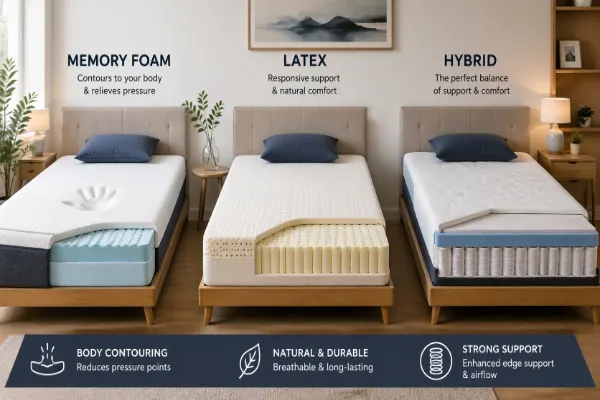
Memory foam adapts to your body. It reduces pressure on joints. That makes it a popular choice for people dealing with arthritis.
Latex offers similar pressure relief but feels more responsive. It also lasts longer and stays cooler.
Hybrid mattresses combine foam and coils. They provide both support and airflow. Many people find hybrids ideal as a mattress arthritis solution because they balance comfort and durability.
According to research from Harvard Medical School, pressure relief plays a key role in reducing joint pain during sleep. Materials like memory foam and latex excel in this area.
Motion Isolation Helps Pain Recovery
If you share your bed, motion transfer can disturb your sleep. Every small movement interrupts your rest cycle. That reduces recovery time for muscles and joints.
Memory foam and hybrid mattresses with pocketed coils reduce motion transfer effectively. Better sleep means better healing.
Best Types of Mattresses for Back and Joint Pain 2026
Let’s break down the most effective options based on current research and real world use.
Memory Foam Mattresses
Memory foam remains one of the best choices for joint pain relief. It contours around your body and reduces pressure points. This helps people with arthritis, hip pain, and shoulder discomfort.
NASA originally developed memory foam to improve cushioning. Today, it helps millions sleep better.
However, traditional foam can trap heat. Many modern brands now use cooling gel layers to fix this issue.
Latex Mattresses
Latex offers natural support with a slight bounce. It does not sink as much as memory foam. That makes it easier to move during sleep.
It also resists dust mites and mold. This makes it a good option for people with allergies.
Latex works well as a sleep surface joint health solution because it balances pressure relief with durability.
Hybrid Mattresses
Hybrid mattresses combine foam layers with pocketed coils. This design provides both support and comfort.
The coils support your spine. The foam relieves pressure on joints. This combination often works best for people with both back pain and joint issues.
Hybrids also allow better airflow, which helps regulate temperature during sleep.
Adjustable Beds
Adjustable beds allow you to change your sleeping position. You can elevate your head or legs to reduce pressure on certain joints.
According to the Cleveland Clinic, elevating the legs slightly can reduce lower back stress and improve circulation.
This option works well for people with severe pain or specific medical conditions.
Best Mattress Firmness for Different Sleep Positions
Your sleeping position changes everything. A mattress that works for one person may fail for another.
Back sleepers need support under the lower back. A medium firm mattress usually works best.
Side sleepers need cushioning for hips and shoulders. A slightly softer mattress helps reduce pressure.
Stomach sleepers need firm support. A soft mattress can cause the spine to dip and create pain.
Choosing the right firmness based on your sleep style improves spinal alignment and reduces joint stress.
Signs Your Current Mattress Is Causing Pain
Not sure if your mattress is the problem? Your body gives clear signals.
You wake up stiff or sore
Your pain improves during the day
Your mattress feels uneven or saggy
You sleep better in hotels or on different beds
The Better Sleep Council reports that most mattresses lose proper support after seven to ten years. If your mattress falls in this range, it may be time for an upgrade.
How a Good Mattress Improves Joint Health
A proper sleep surface joint health setup does more than reduce pain. It actively supports healing.
When your body stays aligned, muscles relax fully. Blood circulation improves. Inflammation decreases.
This leads to deeper sleep cycles. During deep sleep, your body repairs tissues and reduces stress hormones.
Better sleep also improves mood and energy levels. Pain becomes easier to manage when your body gets enough rest.
Mattress Features That Actually Help
Not all features matter. Some sound good in ads but do little in real life. Focus on what truly helps.
Pressure relief remains the most important factor. Look for materials that cushion joints without sacrificing support.
Zoned support systems help distribute weight evenly. They provide extra support under the lower back and softer cushioning under shoulders.
Cooling technology matters if you sleep hot. Overheating can disrupt sleep and worsen discomfort.
Edge support helps you get in and out of bed easily. This becomes important for people with joint pain.
Common Mistakes to Avoid
Many people choose a mattress based on price or brand name alone. That often leads to disappointment.
Do not pick a mattress that feels too soft in the store. It may feel comfortable for a few minutes but fail overnight.
Avoid ignoring your sleeping position. It directly affects what type of support you need.
Do not keep an old mattress for too long. Even high quality materials break down over time.
Mattress for Arthritis and Chronic Pain
People with arthritis need extra pressure relief. Joint inflammation makes even small pressure points painful.
Memory foam and latex mattresses often work best. They reduce stress on sensitive joints and improve comfort.
The Arthritis Foundation suggests choosing a mattress that supports the spine while minimizing joint pressure. This combination helps reduce morning stiffness.
A mattress arthritis solution should feel supportive but not hard. Your joints should feel cushioned, not compressed.
If your pain shoots down your legs or feels nerve-related, these simple home-based movements can help. Check out this detailed guide on Sciatica Pain Relief Exercises at Home: 8 Moves for Fast Relief.
How to Test a Mattress Properly
Testing a mattress takes more than lying down for five minutes.
Spend at least ten to fifteen minutes in your usual sleep position. Pay attention to your spine alignment. Notice any pressure on your hips or shoulders.
Many companies now offer trial periods. This allows you to test the mattress at home for several weeks.
Your body may take time to adjust. Give yourself at least two weeks before making a final decision.
Frequently Asked Questions
What is the best mattress for back and joint pain 2026?
The best mattress for back and joint pain 2026 is typically a medium firm mattress that supports spinal alignment while relieving pressure on joints. Memory foam and hybrid mattresses work well because they balance comfort and support. Your sleeping position also plays a key role in choosing the right option.
Is a firm or soft mattress better for back and joint pain?
A medium firm mattress is usually better for back and joint pain than very firm or very soft options. A firm mattress may create pressure on joints, while a soft mattress can cause the spine to sink out of alignment. The goal is to keep your spine neutral and your joints cushioned.
Can a mattress really help reduce joint pain and stiffness?
Yes, the best mattress for back and joint pain 2026 can significantly reduce stiffness and discomfort. A supportive mattress improves sleep posture, reduces pressure points, and allows muscles and joints to recover overnight. Poor mattresses often make pain worse over time.
Which mattress type is best for arthritis and joint pain?
Memory foam and latex mattresses are often the best choices for arthritis and joint pain. They contour to the body, reduce pressure on sensitive joints, and improve overall comfort. Hybrid mattresses are also a good option if you want added support with better airflow.
How often should I replace my mattress for back and joint health?
You should replace your mattress every 7 to 10 years to maintain proper support. An old or sagging mattress can worsen back and joint pain. If you wake up stiff or notice uneven surfaces, it may be time to upgrade to the best mattress for back and joint pain 2026.
Final Thoughts
Choosing the best mattress for back and joint pain 2026 is not about trends. It is about understanding your body and making a smart decision based on real factors.
A good mattress supports your spine, reduces pressure on joints, and improves sleep quality. These benefits add up over time. You wake up refreshed instead of stiff. Your pain decreases. Your energy improves.
Think of your mattress as an investment in your health. Because it is.
Sources
National Institutes of Health Sleep and Pain Research
Harvard Medical School Sleep and Health Studies
Sleep Health Journal Mattress Firmness Study
Cleveland Clinic Sleep and Back Pain Guide
Arthritis Foundation Sleep Recommendations
Better Sleep Council Mattress Lifespan Data
Author Bio
Jennifer Collins is a wellness researcher and natural health writer focused on adults over 40. With 3+ years of experience in digital health content, Jennifer specializes in making science-backed nutrition and lifestyle strategies easy to follow and apply.
Health Disclaimer
This content is for informational purposes only and is not intended to diagnose, treat, or cure any disease. Always consult your healthcare provider before making changes to your diet or health routine. This article may include affiliate links, which come at no extra cost to you.