
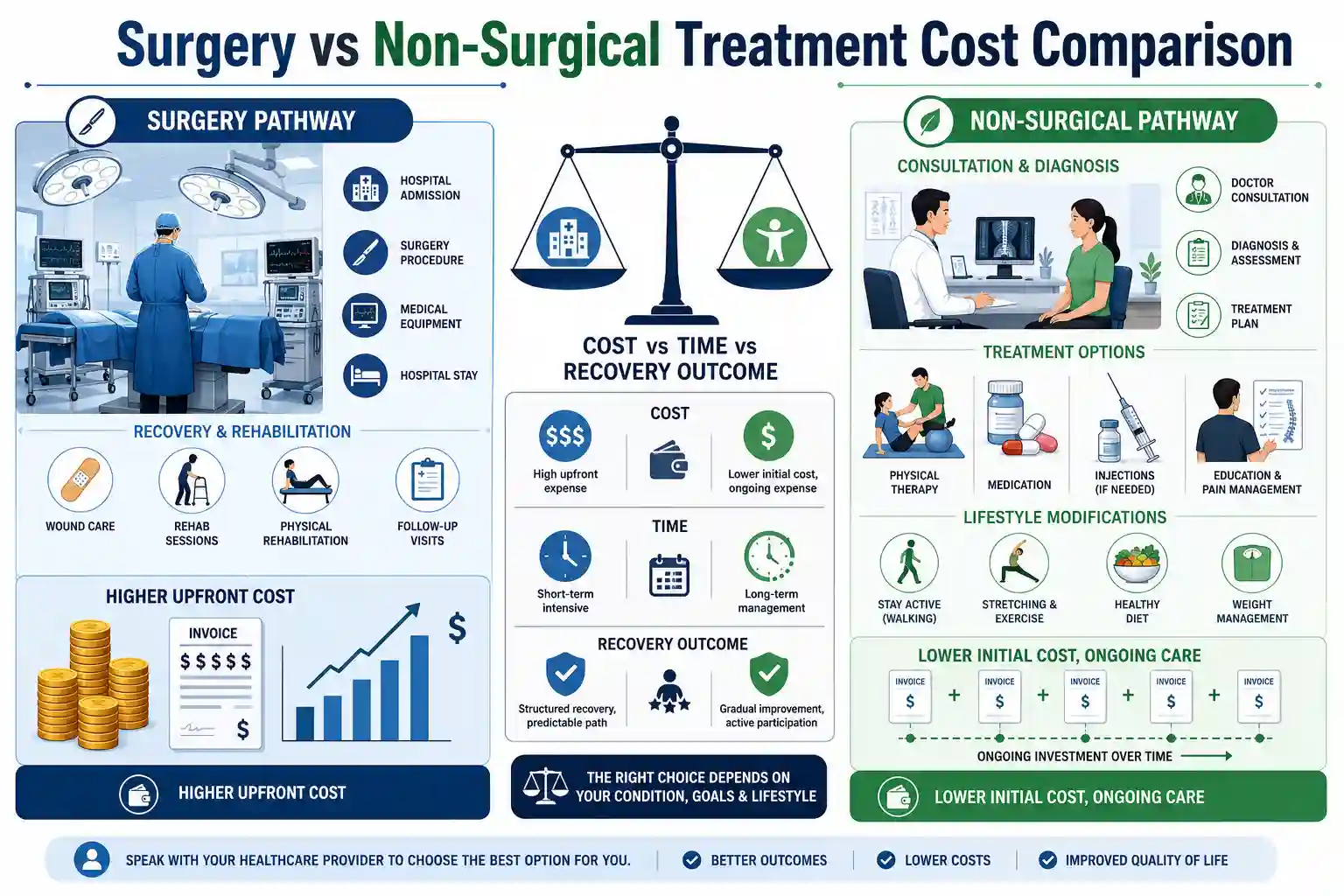
Healthcare decisions rarely depend on medical outcomes alone. Financial considerations often play an equally important role. Patients, families, employers, insurers, and healthcare systems increasingly evaluate whether a procedure delivers enough benefit to justify its cost. This has made the topic of surgery vs non-surgical treatment cost more relevant than ever.
In many conditions, surgery can provide faster symptom relief or long-term correction of a problem. However, surgery often involves hospital fees, anesthesia, imaging, specialist consultations, rehabilitation expenses, and potential complication-related costs. Non-surgical approaches may include medication, physical therapy, lifestyle modifications, injections, or observation. These treatments generally have lower upfront costs but may require ongoing care over months or years.
The financial picture becomes even more complex when indirect costs such as missed work, caregiver support, recovery time, and long-term healthcare utilization are considered. Understanding the true economic impact of both approaches helps patients make informed decisions while supporting better medical decision making. This article examines treatment costs, healthcare expenditure, patient outcomes, and long-term value to provide a balanced comparison.
Understanding the two treatment approaches
Before comparing costs, it is important to understand what each treatment pathway involves.
Surgical treatment refers to procedures performed to repair, remove, reconstruct, or correct a medical condition. Examples include spinal surgery, joint replacement, fracture repair, appendectomy, and various orthopedic procedures.
Conservative care typically includes noninvasive or minimally invasive methods designed to manage symptoms, improve function, and support recovery without an operation. Common examples include physical therapy, medications, exercise programs, injections, activity modification, and chronic condition management strategies.
Many healthcare guidelines recommend conservative care as a first-line treatment before surgery is considered. This approach is particularly common for musculoskeletal disorders, chronic pain conditions, and some orthopedic injuries. Research reviews have found that conservative management often serves as the initial treatment pathway for many common conditions because it can reduce risks while preserving function.
Direct healthcare costs: where the biggest differences appear
The most obvious distinction between treatment pathways is the initial financial investment.
Surgical procedures often involve multiple cost components, including surgeon fees, operating room expenses, anesthesia services, hospital stays, diagnostic testing, postoperative care, and follow-up appointments. Even minimally invasive procedures may require substantial healthcare resources.

Non-surgical treatments generally spread expenses over time. Patients may pay for repeated physician visits, rehabilitation services, medications, imaging studies, and monitoring. Although individual costs are lower, the cumulative total can become significant in chronic conditions.
A major factor influencing healthcare expenditure is the condition being treated. For some disorders, surgery creates a large upfront cost but reduces future treatment expenses. For others, conservative management achieves similar outcomes at a lower overall cost.
Research examining distal radius fractures in adults aged 65 years and older found that operative treatment generated significantly higher healthcare costs primarily because of the initial surgery. The study concluded that surgical treatment was not cost effective compared with nonoperative management within the evaluated period.
Surgery cost comparison across different medical conditions
A meaningful surgery cost comparison requires looking beyond a single disease.
Economic studies consistently show that the value of surgery depends on several factors:
Severity of the condition
Patients with severe disease often gain greater functional improvements from surgery. These benefits may justify higher upfront treatment costs through improved quality of life and reduced future healthcare utilization.
Risk of recurrence
Some conditions have high recurrence rates when treated conservatively. In such cases, repeated treatment expenses may eventually approach or exceed surgical costs.
Duration of benefit
The longer surgical benefits persist, the more favorable cost effectiveness becomes. Researchers evaluating displaced clavicle fractures found that surgical treatment became increasingly cost effective when long-term functional improvements continued for several years.
Quality adjusted life years
Health economists frequently evaluate treatments using quality adjusted life years, often called QALYs. This metric combines lifespan and quality of life into a single measurement. A treatment that improves function, reduces pain, and enhances independence may generate additional QALYs, making higher costs easier to justify.
Hidden costs that patients often overlook
Patients frequently focus only on medical bills when evaluating treatment options. However, indirect costs can significantly influence total healthcare value.
Lost productivity
Recovery from surgery may require days, weeks, or months away from work. Depending on occupation and recovery complexity, lost income can become a major expense.
Caregiver support
Some patients need family members or professional caregivers during recovery. This support may create additional financial and emotional burdens.
Transportation and travel
Repeated appointments for rehabilitation, imaging, and follow-up care can increase overall treatment costs.
Long-term symptom management
Patients who choose conservative care may require ongoing interventions for pain management, mobility improvement, and function preservation. These recurring expenses can accumulate over time.
Research evaluating healthcare economics frequently includes these indirect costs because they contribute substantially to overall treatment outcomes and healthcare value.
Surgery vs non-surgical treatment cost in long-term financial planning
When evaluating surgery vs non-surgical treatment cost, the timeline matters significantly.
A treatment that appears less expensive today may become more costly over several years. Likewise, a high-cost procedure may eventually reduce healthcare expenditure by eliminating ongoing treatment needs.
For example, studies examining uncomplicated appendicitis have explored whether nonoperative management can provide long-term economic advantages. Researchers found that long-term cost effectiveness depends on recurrence rates, quality of life outcomes, and future healthcare needs rather than solely on initial treatment expenses.
This principle applies to many conditions, including spinal disorders, orthopedic injuries, and degenerative diseases. Long term healthcare expenses of surgery should always be weighed against ongoing conservative management costs, future interventions, and potential disease progression.
Patients should consider financial outcomes over several years rather than focusing only on immediate expenses.
The role of rehabilitation expenses in overall costs
Rehabilitation often represents a significant component of treatment costs regardless of whether surgery is performed.
After surgery, patients may require structured rehabilitation programs to restore strength, mobility, and function. Physical therapy costs can continue for weeks or months.
Patients receiving conservative care often depend heavily on rehabilitation as a primary treatment strategy. They may participate in ongoing therapy sessions, home exercise programs, and functional training.
According to the World Health Organization, rehabilitation plays a crucial role in improving independence, reducing disability, supporting recovery, and potentially reducing future hospitalization needs. Rehabilitation can also help shorten hospital stays and reduce readmissions, creating economic benefits for healthcare systems and patients.
Because rehabilitation expenses occur in both treatment pathways, they should always be included in comprehensive cost evaluations.
Comparing patient outcomes and healthcare value
Financial decisions should never be separated from clinical outcomes.
A lower-cost treatment is not automatically better if it delivers poorer results. Likewise, an expensive intervention may provide exceptional value if it significantly improves function and quality of life.
Researchers often assess healthcare value by considering:
Pain reduction
Reduced pain can improve daily functioning, work productivity, sleep quality, and overall well-being.
Functional improvement
The ability to perform daily activities independently represents a major benefit for many patients.
Return to work
Earlier recovery and return to employment can offset treatment costs through restored productivity.
Long-term health status
Improved long-term health may reduce future healthcare utilization and chronic condition management expenses.
Studies involving lumbar disc herniation found that surgery generated greater quality of life improvements compared with nonoperative care, although costs were also substantially higher. The resulting cost effectiveness depended on how healthcare systems valued those additional quality-adjusted life gains.
When non-surgical treatment alternatives may offer better value
Many patients assume surgery provides the best outcome. However, evidence does not always support that assumption.
Several studies have shown that non-surgical treatment alternatives can achieve outcomes similar to surgery for selected patient groups. This is particularly relevant when conditions are mild, symptoms remain manageable, or the likelihood of spontaneous improvement is high.
Benefits of conservative management may include:
Lower upfront costs
Avoiding hospitalization and surgical fees can significantly reduce initial healthcare expenditure.
Reduced procedural risk
Nonoperative care eliminates anesthesia risks and many surgical complications.
Greater flexibility
Treatment plans can often be modified as symptoms change.
Shorter immediate recovery periods
Many patients continue daily activities while receiving treatment.
For carefully selected individuals, non-surgical treatment choices may deliver strong patient outcomes while minimizing treatment costs and healthcare utilization. Research involving fracture management and various musculoskeletal conditions has demonstrated situations where nonoperative care remains economically attractive.
Cost of surgery vs conservative treatment in chronic conditions
The cost of surgery vs conservative treatment becomes particularly important in chronic diseases.
Conditions such as osteoarthritis, chronic back pain, degenerative spinal disorders, and certain orthopedic injuries often require long-term management. In these cases, decision-making extends beyond immediate symptom relief.
Factors influencing costs include:
- Frequency of physician visits
- Medication use
- Imaging requirements
- Rehabilitation needs
- Future procedures
- Disease progression
- Productivity losses
Healthcare economists increasingly evaluate surgical versus conservative care financial outcomes by examining lifetime costs rather than annual expenses. This broader perspective provides a more accurate assessment of healthcare value and treatment effectiveness.
For some chronic conditions, surgery may reduce future healthcare utilization. For others, conservative management remains the more efficient use of healthcare resources.
How insurers and healthcare systems evaluate cost effectiveness
Healthcare systems increasingly rely on cost utility analysis and cost effectiveness evaluations when determining treatment recommendations.
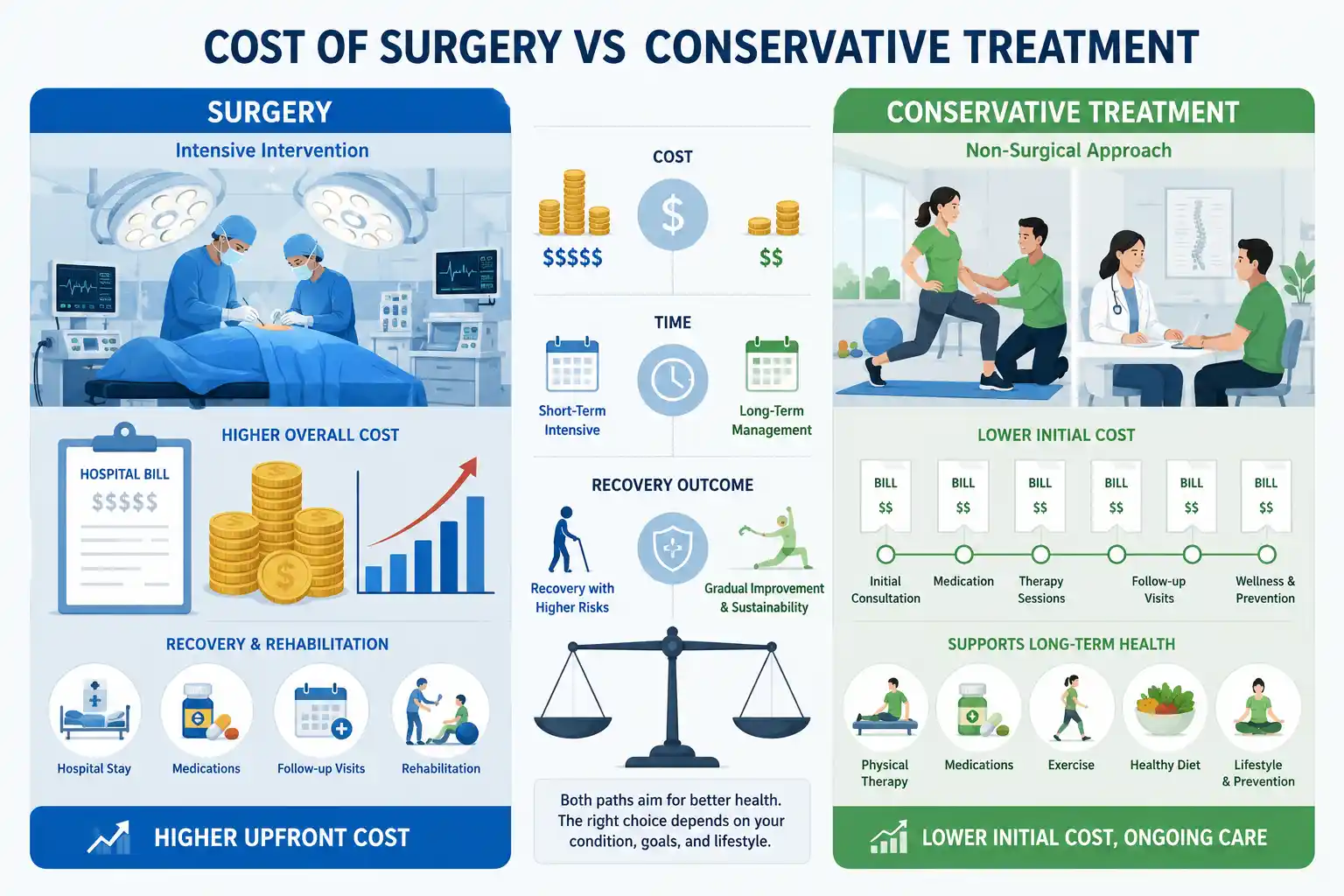
These analyses examine:
- Treatment costs
- Patient outcomes
- Quality adjusted life years
- Recovery costs
- Healthcare utilization
- Long-term value
A treatment is generally considered more favorable when it provides meaningful health improvements at a reasonable additional cost.
This approach does not focus solely on spending less money. Instead, it aims to maximize healthcare value by balancing expenditures with measurable improvements in patient outcomes.
As healthcare costs continue to rise globally, cost effectiveness research has become a critical component of policy development and clinical decision making.
Factors patients should discuss before choosing a treatment
Every patient situation is unique. Cost comparisons should always be personalized.
Important questions include:
What are the expected outcomes?
Understanding realistic benefits helps establish whether additional costs are justified.
What are the total recovery costs?
Recovery costs may include therapy, medications, transportation, and lost productivity.
How likely is future treatment?
Some conditions have higher recurrence rates that affect long-term expenses.
What is the impact on daily life?
Functional improvement, independence, and return to work often carry substantial value beyond direct medical costs.
What are the risks?
Complications can increase treatment costs and prolong recovery.
By considering these factors together, patients can make decisions that align with both medical needs and financial priorities.
Conclusion
The debate surrounding surgery vs non-surgical treatment cost cannot be resolved with a single answer because value depends heavily on the condition, patient characteristics, expected outcomes, and long-term healthcare needs.
Surgery often involves higher upfront hospital costs, rehabilitation expenses, and recovery costs. However, it may provide substantial functional improvements, reduced future healthcare utilization, and better quality of life in selected cases. Conservative care frequently offers lower immediate expenses, fewer procedural risks, and effective symptom management, particularly when supported by evidence-based rehabilitation and chronic condition management strategies.
The most effective approach is not automatically the least expensive one. Instead, patients should evaluate the cost of surgery vs conservative treatment alongside patient outcomes, healthcare value, quality adjusted life years, and long-term financial implications. When clinical evidence, personal goals, and economic considerations are balanced appropriately, treatment decisions become more informed, practical, and sustainable.
Sources and references
World Health Organization (WHO) – Rehabilitation
PubMed Central – Surgical treatment is not cost-effective compared to nonoperative treatment for displaced distal radius fractures
PubMed Central – Operative versus nonoperative management of appendicitis
PubMed – Cost effectiveness of surgical versus nonoperative treatment for lumbar disc herniation
PubMed – Early surgery compared to nonoperative management for mild degenerative cervical myelopathy
PubMed – Is surgery for displaced midshaft clavicle fractures cost-effective?
PubMed – Cost-effectiveness of operative versus nonoperative treatment of displaced midshaft clavicle fractures
PubMed Central – Systematic review of economic evaluations of conservative treatments
FAQs
Are non-surgical treatment alternatives always cheaper than surgery?
Not necessarily. Non-surgical treatment alternatives usually have lower upfront costs because they avoid hospital stays, operating room fees, and anesthesia charges. However, they may require ongoing physical therapy, repeated physician visits, medications, injections, and long-term monitoring. Over several years, these recurring expenses can add up significantly. In some cases, a surgical procedure with a higher initial price may reduce future healthcare utilization and provide lasting symptom relief. The overall financial value depends on the condition being treated, the duration of care, and the patient’s long-term outcomes.
How does surgery cost comparison differ between acute and chronic conditions?
A surgery cost comparison for acute conditions often focuses on immediate treatment expenses, recovery time, and short-term outcomes. Examples include appendicitis or traumatic injuries, where the primary question is whether surgery resolves the problem quickly and effectively. Chronic conditions such as osteoarthritis or degenerative spinal disorders require a broader evaluation that includes ongoing symptom management, rehabilitation expenses, future procedures, and long-term healthcare utilization. In these situations, economists and clinicians often examine lifetime costs and quality-adjusted life years to determine which treatment pathway provides better overall healthcare value.
Why do healthcare economists use quality adjusted life years?
Quality adjusted life years, or QALYs, help healthcare economists measure both the length and quality of life generated by a treatment. A year lived in perfect health receives a higher value than a year lived with significant pain or disability. This approach allows researchers to compare very different treatments using a common metric. By incorporating patient outcomes such as pain reduction, mobility, independence, and overall well-being, QALYs help determine whether the additional benefits of a treatment justify its additional costs and support more informed healthcare decision making.
Can rehabilitation expenses exceed initial treatment costs?
In some cases, rehabilitation expenses can become a substantial portion of total healthcare expenditure, especially for chronic conditions that require prolonged therapy. Patients may need multiple physical therapy sessions each week, home exercise programs, assistive devices, and ongoing follow-up care. While a single therapy session is usually less expensive than surgery, the cumulative cost over months or years can be significant. This is why rehabilitation should be included when evaluating the total cost of surgery vs conservative treatment and when comparing the long-term value of different treatment strategies.
What role does healthcare utilization play in treatment decisions?
Healthcare utilization refers to how frequently a patient uses medical services such as physician visits, imaging studies, hospital care, rehabilitation, and prescription medications. Treatments that reduce the need for ongoing services may provide better long-term healthcare value, even if they have higher upfront costs. Conversely, a lower-cost treatment that requires frequent follow-up care can increase overall healthcare expenditure over time. Evaluating healthcare utilization helps patients, insurers, and policymakers understand the broader economic impact of treatment choices and identify approaches that balance effectiveness with efficient use of healthcare resources.
How do treatment outcomes affect healthcare value?
Treatment outcomes are a central component of healthcare value because they measure the real benefits patients receive from care. Improvements in pain levels, physical function, independence, return to work, and overall quality of life can justify higher treatment costs if those benefits are substantial and long lasting. Poor outcomes, repeated complications, or ongoing disability can reduce healthcare value even when initial expenses are relatively low. By examining both financial costs and patient outcomes, healthcare providers can better determine which treatment options deliver the greatest overall benefit for individuals and healthcare systems.
Why is cost utility analysis important in medical decision making?
quality-adjustedCost utility analysis helps healthcare providers and policymakers compare treatment costs with measurable health benefits while evaluating the cost of surgery vs conservative treatment. This approach supports more efficient resource allocation, identifies treatments that deliver the greatest healthcare value, and improves long-term healthcare planning by balancing financial investment with patient outcomes and quality adjusted life years.
Author Bio
Jennifer Collins is a wellness researcher and natural health writer focused on adults over 40. With 3+ years of experience in digital health content, Jennifer specializes in making science-backed nutrition and lifestyle strategies easy to follow and apply.
Health Disclaimer
This content is for informational purposes only and is not intended to diagnose, treat, or cure any disease. Always consult your healthcare provider before making changes to your diet or health